
Ethiopia has officially launched its National Electrification Program 3.0 (NEP 3.0), a strategic national framework aimed at expanding electricity access, improving service reliability, and harnessing power more effectively to support economic growth, agricultural production, and public services across the country.
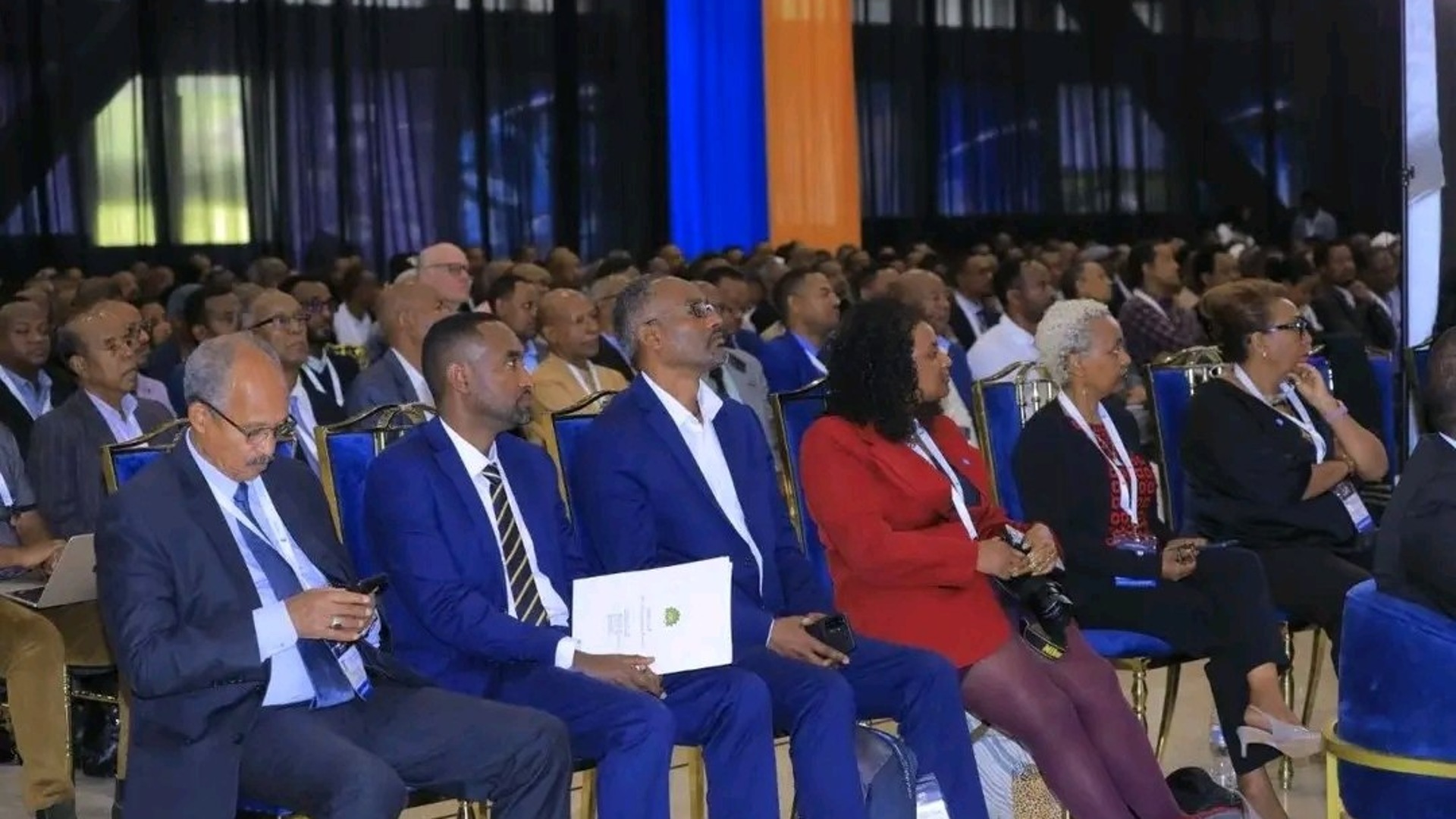
The Ministry of Water and Energy introduced the program on October 27, 2026, during the third Ethiopian Water and Energy Week in Addis Ababa. The launch brought together government institutions, power utility providers, regulators, international development partners, financial institutions, and private-sector leaders to outline the nation’s core water and energy priorities.
Held under the theme “Advancing Science-Based Policy and Partnerships for a Water- and Energy-Secure Future,” the event comes as Ethiopia works to bridge persistent gaps between grid expansion and the actual quality of electricity delivered to households, businesses, and essential public facilities.
Mesfin Dabi, Executive Officer for Electrification and Energy Information at the Ministry of Water and Energy, emphasized that the initiative marks a fundamental shift: moving beyond merely extending transmission lines and installing meters to ensuring power actively drives productive economic activities and enhances public service delivery.
The refined strategy highlights the economic leverage of electrification—targeting agricultural processing, irrigation, grain milling, poultry farming, textile production, and digital infrastructure. Simultaneously, it prioritizes reliable service for homes, schools, and health centers while rectifying long-standing inefficiencies within the power distribution network.
NEP 3.0 builds on the nation’s previous electrification roadmap, which aimed for universal access by 2025 through a blend of 65 percent grid extensions and 35 percent off-grid solar systems and mini-grids. While generation capacity expanded, universal access targets remained unmet.
The updated framework establishes a long-term goal of universal access by 2035, integrating data-driven planning to determine optimal connection methods. The NEP 3.0 report—prepared by the Ministry in June 2026 with World Bank financing—recommends using geographic information systems, population distribution modeling, and projected demand to prioritize cost-effective rollouts.
A core finding of the report is the disparity between basic access and quality service. World Bank Multi-Tier Framework data for 2025 shows that while 65 percent of Ethiopian households had basic energy access, only 44 percent met the minimum Tier 1 threshold for reliable, capacity-sufficient supply. Basic systems like solar lanterns provide lighting but cannot support commercial equipment or heavy household appliances.
In 2025, urban electricity access stood at 91 percent, compared to 56 percent in rural areas. Decentralized off-grid technologies remain vital for remote communities where traditional grid extension is cost-prohibitive. NEP 3.0 targets approximately 4.4 million off-grid household connections by 2035, inviting private-sector participation in mini-grid operation and maintenance.
Electrification efforts in rural regions have often struggled to boost local incomes automatically. Reliable electricity enables smallholders and rural enterprises to run processing machinery, preserve yields, extend operating hours, and replace expensive diesel generators. However, restricted access to commercial credit for small enterprises remains a key barrier to acquiring the equipment necessary for productive use.
On the infrastructure side, Ethiopia has made major generation gains over the past decade. Driven largely by flagship projects like the Grand Ethiopian Renaissance Dam (GERD), installed generation capacity has expanded from roughly 4,462 megawatts to 9,752 megawatts, while the transmission network has grown beyond 20,000 kilometers.
Despite these generation milestones, end-user reliability remains constrained by weak local distribution networks, aging transformers, high technical and commercial losses, and financial bottlenecks. Weaknesses in procurement, inter-institutional coordination, and cost recovery continue to cause project delays.To resolve these systemic operational bottlenecks, NEP 3.0 mandates synchronized investments across transmission and distribution infrastructure alongside grid expansion.