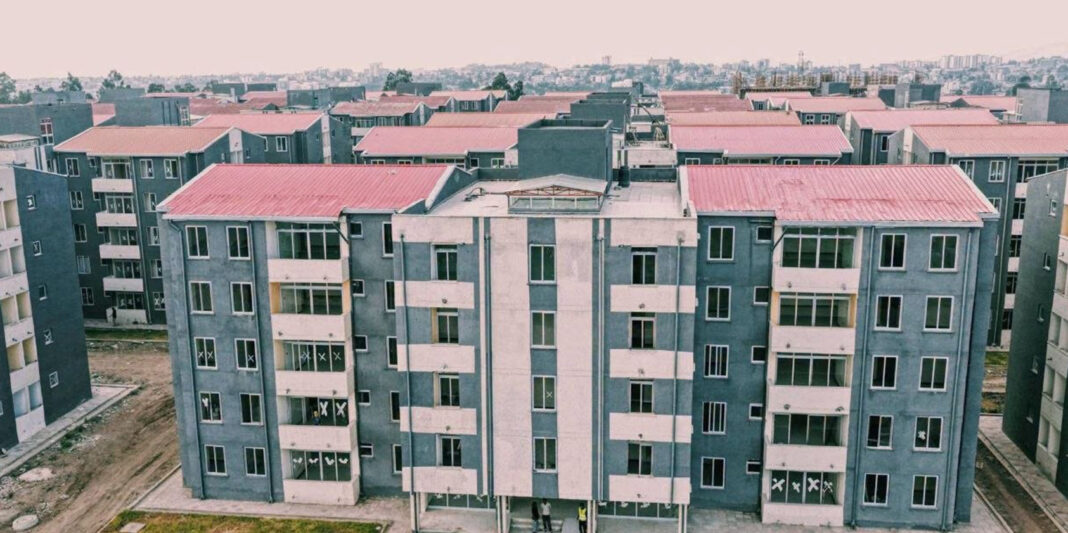
After waiting nearly two decades for homes under the Addis Ababa City Administration’s housing schemes, some registered savers are losing hope of receiving the houses they were promised as frustration mounts over the prolonged suspension of housing lotteries.
Seyoum, who registered for a one-bedroom apartment under the government’s 20/80 housing development programme in 2005, was 25 when he began saving for a home. Now 45, he says he has spent much of his adult life waiting while continuing to struggle with rental costs.
“When I registered, I thought I would soon move out of a rented house and live in my own home. I was 25 at the time. Now I am 45,” he told Capital.
Seyoum said he married and had two children after registering for the programme, but his housing situation has remained unchanged. Each time the administration announced the results of a new housing lottery without his name appearing, he said, he became disappointed but continued hoping for another opportunity.
“Now I no longer believe I will get a house in my lifetime,” he said.
Aynalem, who requested that her father’s name not be published, has also spent years waiting for a home. She registered under the 40/60 housing scheme during the second round of registration in 2013 before travelling to Saudi Arabia in 2016 to work and support her family.
She said she saved and deposited 800,000 birr over several years, hoping that completing the required payments would improve her chances of receiving a housing unit. However, despite making the payments, she has yet to receive a home and continues to live with her mother and son.
Aynalem said she would have invested the money in a business had she known the housing programme would take so long. Her savings have remained in her bank account, while rising living costs and the burden of renting continue to affect her family, she said.
Growing frustration among housing-scheme registrants has prompted a social media campaign calling on the Addis Ababa City Administration to resume housing lotteries and distribute homes to registered savers.
Participants are posting videos and photographs of their savings records and bank accounts, sharing their experiences and appealing directly to government officials and state media outlets. The campaign has also encouraged others registered under the 20/80 and 40/60 programmes to speak about their prolonged wait.
Administrators of social media platforms bringing together housing applicants told Capital that although the city administration continues to construct housing complexes, registered savers have not received homes through the expected lottery process.
They alleged that some newly constructed housing units have instead been allocated to people displaced by urban development projects, including corridor and riverside development. They argue that housing built using the savings of registered applicants should also address the expectations of those who have contributed to the schemes for years.
According to the group administrators, the city administration has not conducted an official housing lottery for registered savers for about four years.
The concerns come amid a wider housing affordability crisis, with rising rental costs, expensive construction materials and limited access to home financing making homeownership increasingly difficult for many households.
Desalegn Kebede, a civil engineer and chief executive officer of Abuklemesis Real Estate Consultants, said the housing shortage is driven by several interconnected challenges, including rising property prices, increasing construction costs, declining numbers of housing developers and limited purchasing power among citizens.
He said households in Ethiopia spend as much as 70 percent of their income on rent, significantly exceeding the 40 percent threshold generally considered unaffordable.
Although more than 100,000 housing units are reportedly under construction in Addis Ababa through different programmes, Desalegn said much of the supply targets middle- and high-income households, leaving lower-income groups with few affordable options.
He argued that housing policies should encourage the development of homes designed for lower-income households while expanding affordable rental and homeownership opportunities.
“Not everyone can afford to buy a house, but people should have access to affordable housing, either through renting or purchasing,” he said.
Desalegn said addressing the crisis requires coordinated action from the government, private developers, financial institutions and prospective homebuyers. Developers need to identify market demand and introduce affordable housing designs, while financial institutions should expand access to financing for both developers and buyers.
He also called for stronger government incentives, including tax exemptions for housing developers, wider adoption of mass-housing technologies and greater participation by foreign investors.
On land allocation, Desalegn questioned the existing 70/30 arrangement, under which developers receive land for housing projects while the government takes a share of the resulting housing units. He argued that the arrangement can increase construction costs and ultimately push up selling prices.
He further said banks remain reluctant to finance housing developers, while high interest rates and limited repayment periods make mortgage financing difficult for buyers. The current home-loan repayment period of up to 20 years, he said, is constrained partly by banks’ limited financial capacity and dependence on savings to fund lending.
With interest rates ranging from 18 to 25 percent, Desalegn said borrowing to purchase a home can become more expensive than continuing to rent.
He acknowledged that the government has introduced policies and programmes to address the housing shortage but said implementation remains a major challenge. He called for stronger measures to ease pressure on the real estate sector and make housing more affordable.
The Addis Ababa City Administration last officially handed over housing units to beneficiaries on November 15, 2022, when 25,733 homes were distributed in the 14th round. Although the administration has repeatedly announced the construction of more than 100,000 housing units through various programmes, it has yet to announce another lottery for registered housing savers.
Prime Minister Abiy Ahmed announced last year that the government planned to construct 1.5 million houses over five years to address the country’s housing shortage.
During a recent visit to housing development construction sites in Addis Ababa, the Prime Minister reiterated the government’s commitment to delivering homes within the five-year period, acknowledging the challenges citizens face because of the housing shortage.
“We have promised our people to build and deliver houses within five years, and we are working day and night to fulfil this promise. We fully understand the challenges and concerns our people face due to the housing shortage. We fully understand that providing quality and affordable housing is not only a development goal, but also a trust and responsibility we have to our citizens,” he said.
In subsequent posts on his social media accounts, Abiy said the government’s priority was to achieve tangible results, ease the housing burden on citizens and improve living conditions for families across the country.
However, his remarks did not specify when the administration would resume housing lotteries or distribute newly constructed homes to people registered under the existing savings schemes, leaving long-time contributors uncertain about when they might receive the houses they have been waiting for.
Meanwhile, preparations to establish a 100-billion-birr mortgage bank have begun as part of broader efforts to expand housing finance.
The National Bank of Ethiopia and the International Finance Corporation (IFC) have signed an agreement related to the initiative, with the IFC announcing 200 million dollars in support. The proposed institution is expected to provide financing for housing construction and purchases.