Saturday, November 21, 2026
Home Blog Page 1079

Ethiotelecom Launches 5G Services in Hawassa

0

Ethiotelecom has officially launched its 5G services in Hawassa, marking a significant milestone in the country’s digital transformation efforts. The announcement comes after the successful completion of the construction of 5th generation mobile network service stations in the city, positioning Ethiopia among the few countries globally to implement this advanced technology.

Frehiwot Tamiru, CEO of Ethio Telecom, emphasized the importance of this launch, stating, “We are committed to delivering the fifth-generation mobile service, which is the world’s ultimate technology. This initiative aligns with our vision of digital transformation and enhances our capacity to provide modern digital solutions.”

Previously, Ethio Telecom introduced 5G services in major cities such as Addis Ababa, Adama, Jigjiga, Dire Dawa, Harar, and Bahir Dar. The recent rollout in Hawassa expands the reach of this cutting-edge technology to various areas in the South region.

The 5G network offers remarkable capabilities, including data speeds of up to 10 Gbps and ultra-low latency of just 1 millisecond. This advanced infrastructure will enable up to one million multi-technology devices to connect within a single square kilometer, significantly enhancing data transfer capabilities and meeting the growing demand for internet services.

According to Frehiwot, the implementation of the 5G network will alleviate network congestion and provide customers with high-quality communication and digital finance services. Ethio Telecom’s expansion into 5G aims to create smart infrastructure that supports various sectors, including health services, agriculture, education, mining, manufacturing, transportation, and entertainment.

In addition to modernizing telecommunications infrastructure, Ethio Telecom believes that this initiative will bolster competitiveness and foster Ethiopia’s digital economy by facilitating data-driven decision-making and ensuring reliable real-time data flow.

Ethiopia ranks 7th in Africa for social media users

0

Ethiopia has emerged as the 7th largest country in Africa for social media users, boasting approximately 24.83 million active accounts. This growth is part of a broader trend across the continent fueled by rapid smartphone penetration, which has transformed how people connect, communicate, and conduct business.

As social media platforms become increasingly central to digital business opportunities, they are democratizing access to the global economy. Young, educated, and digitally-savvy Africans are discovering unprecedented opportunities that encourage them to remain in their home countries rather than seek prospects abroad.

Leading the continent is Nigeria, with a staggering 103 million social media users. The country’s digital landscape is dominated by platforms such as Facebook, Instagram, and Twitter, where a youth-driven culture has played a pivotal role in shaping politics and activism, notably during the #EndSARS movement.

Following Nigeria is Egypt, with 82.01 million social media users. Egypt’s platforms serve as vital spaces for political discourse and activism while also fostering trends in fashion and e-commerce.

South Africa ranks third with 45.34 million users, where social media has become essential for connectivity and marketing. Instagram and Twitter are particularly popular for customer service and brand interaction.

Morocco comes next with 34.47 million users, showcasing a blend of Arabic, French, and Berber influences in its content creation. The country’s social media ecosystem is rapidly growing, particularly among young Moroccans interested in tourism and cultural promotion.

Algeria follows closely with 33.49 million users despite government restrictions on internet usage. The young population actively engages on platforms like Facebook and Instagram to discuss fashion, music, and political issues.

The Democratic Republic of Congo has 28.31 million social media users who primarily use platforms like Facebook and WhatsApp for communication and entrepreneurship.

In this rapidly evolving digital landscape, Ethiopia’s significant social media growth reflects broader trends across Africa where connectivity is reshaping economies and empowering young people to drive change within their communities. As the digital revolution continues to unfold, Ethiopia’s youth are increasingly leveraging social media for activism and content creation, contributing to the nation’s growing digital economy.

Ethiopia Contributes to Global Seed Security with Historic Deposit

0

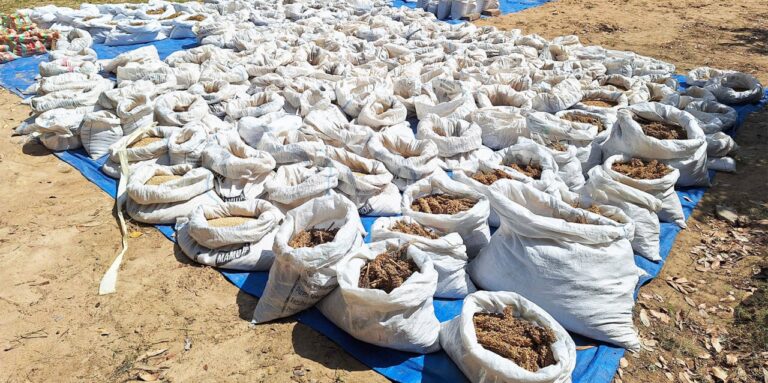
Ethiopia has made a significant contribution to global food security by depositing 1,750 seed samples into the Svalbard Global Seed Vault, a crucial facility for preserving genetic diversity in crops. This deposit includes 447 species and subspecies, many of which had not been previously stored in the Seed Vault, highlighting Ethiopia’s commitment to safeguarding its agricultural heritage.

The Svalbard Global Seed Vault, located in Norway, recently received over 30,000 new seed samples from 23 depositors across 21 countries, marking one of the largest deposit events in its history. This initiative underscores the urgent need to conserve crop diversity in the face of escalating climate change and other global crises.

Stefan Schmitz, executive director of the Crop Trust, emphasized the importance of these efforts, stating, “Climate change and conflict threaten infrastructure and impact food security for over 700 million people in more than 75 countries worldwide.” The recent deposits from Ethiopia and other countries are part of a broader strategy to back up seed collections and ensure that vital genetic resources are available for future generations.

Ethiopia’s contribution is particularly significant given that women perform 75% of farm labor in the country and play a crucial role in producing high-value crops. The seeds deposited include varieties that are essential for developing resilient agricultural practices amid changing climatic conditions.

Nicholas Obare, country program lead of AGRA (Sustainable Growing Africa’s Food Systems), noted that the VALUE4HER initiative aims to empower women farmers by providing them with access to resources and training. This initiative complements Ethiopia’s efforts to enhance food security through sustainable agricultural practices.

As the world faces unprecedented challenges related to food production and climate resilience, Ethiopia’s proactive approach in contributing to the Svalbard Global Seed Vault reflects its commitment to preserving agricultural biodiversity. This effort not only supports local farmers but also contributes to global initiatives aimed at ensuring food security for all.

With ongoing support from international organizations and a focus on empowering women in agriculture, Ethiopia is poised to play a vital role in shaping resilient food systems both locally and globally.

PM addresses Franco-Valuta policy

0

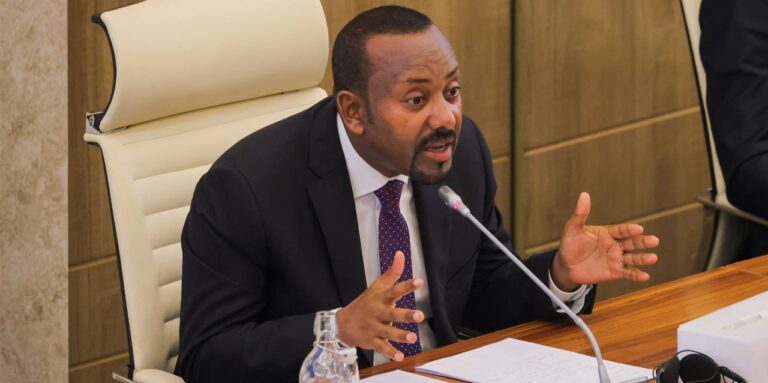
Prime Minister Abiy Ahmed addressed the business community’s and experts’ concerns over Franco-Valuta’s openness policy. Ethiopia will triple Egypt’s wheat production, making it Africa’s top producer.

Abiy’s most recent statement, made during his appearance in parliament this week, calls for the repeal of the Franco-Valuta openness policy, which had been in effect for three months.

A few weeks ago, Capital revealed that illegal actors now have a means to channel foreign currency via their unlawful scheme thanks to the Franco-Valuta openness policy, which was put into place in tandem with macroeconomic reform and the liberalization of the FX market.

Experts said that it would be challenging for the authorities to taint the black market.

The illicit foreign exchange market is created by people operating at key crossings, according to industry experts, including importers and bank executives contacted by Capital very recently.

The government has liberalized the exchange rate in relation to the reform, which takes effect on July 29. This allows the market to establish the exchange rate based on the market or the interests of traders (individuals and banks).

The government reported that since the reform went into force, the gap between the legal and parallel currency markets has shrunk to three percent, according to a statement by Mamo Esmelealem Mihretu, Governor of the National Bank of Ethiopia. In addition, the inward remit has increased vertically, which has enhanced banks’ liquidity.

Experts in the field, however, assert that the forex market is being impacted by some of the government’s actions made in relation to the reform.

Specifically, they emphasized that the government’s Franco-Valuta strategy is indeed acceptable.

“The idea behind the government’s decision to launch the Franco-Valuta plan makes sense because the free flow of products and services is essential to a market economy, but the choice was made relatively early,” they said.

Before the reform, relatively few necessities were subject to the Franco-Valuta, while other items were meant to be imported after the official banking process.

Through the Franco-Valuta scheme, foreign exchange is accessed outside of the banking system.

The freedom to transport goods and services is what motivates the Franco-Valuta.

Zemen Bank President Dereje Zebene claims that it is not necessary to adhere to the same bureaucracy as the banking system.

As the government opened up the exchange rate, importers told Capital that the goal of implementing an effective Franco-Valuta was to permit the free flow of goods and services.

“This is good, but the concept is misinterpreted in the market, and some traders are abusing the opportunity to evade even some legal responsibilities,” the importers said.

According to experts, people prefer simple ways to obtain foreign exchange. “And as long as the country allows the payment instrument that the importer uses to buy the goods, anyone can import small to large goods or services without any preconditions,” the experts stated about the Franco-Valuta scheme.

 “Controlling it is challenging; therefore, in the absence of a system to verify the resource’s source, it will serve as a haven for illegal activity and promote a parallel market,” they clarified.

“You are supposed to ease the requirements at banks since you opened up the Franco-Valuta, which may access foreign currency from informal sources,” Dereje told Capital.

“The liberalized exchange rate will draw individuals seeking true value for their money, but if they have other options, they will pursue them, which will not be consistent with our current circumstances,” a banker stated.

“Improving the legal system’s liquidity is also essential to reducing illegal acts,” he added.

According to him, most merchants would choose to employ the most straightforward scheme, regardless of how the revenue administration decides to handle the tax inquiry.

“It will be used if banks have a plentiful supply of foreign currency, which would lower the exchange rate and benefit importers. However, even though the official system is improving, since you launched the Franco-Valuta when there are some problems, the forex flow will be impacted,” he continued.

“Ample resources should be available in the banking system if authorities prefer to continue on the current decision,” stated the head of Zemen Bank three weeks ago. The government should, in my opinion, keep allowing the Franco-Valuta for a few essential goods rather than allowing it for everything.

Abiy said on Thursday, October 31, that although the opening of Franco Valuta was not a component of macroeconomic reform, it was implemented with the intention of promoting the recovery of the nation’s outflow of resources.

He told lawmakers, “The other target was to give banks time to adjust to the economic opening up and fill the market with ample commodities, even though it has negative impact.”

“A new change will be applicable very soon on the Franco Valuta system, as the result that we evaluated indicated that it would not need to apply the policy further,” Abiy continued.

The PM stated that the nation would produce 30 million tons of wheat this fiscal year, a huge triumph for his government.

According to him, 8.2 million hectares would be used for farming, which is defined as producing fewer than 40 quintals per hectare.

Egypt is now Africa’s largest producer of wheat, with an annual production of over 9.5 million tons, followed by Ethiopia, which is estimated to produce over seven million metric tons.

The PM claims that the nation would surpass the continent’s leading wheat producer in terms of production by three times within the budget year.

According to him, the shipping of 450,000 tons of coffee, Ethiopia’s main source of foreign exchange, is anticipated to bring in USD 2 billion throughout the budget year.