Saturday, November 21, 2026
Home Blog Page 1080

Ethiopia among targeted countries in growing global threat from Grandoreiro Banking Trojan

0

Ethiopia is among the countries now targeted by the Grandoreiro banking trojan, a significant cyber threat that has expanded its reach into Africa and Asia. According to a recent report by Kaspersky, the Grandoreiro malware has been active since 2016 and is responsible for approximately five percent of global banking trojan attacks in 2024.

Kaspersky’s Global Research and Analysis Team (GReAT) revealed that the trojan is currently targeting over 1,700 financial institutions and 276 cryptocurrency wallets across 45 countries. This includes several African nations, such as Algeria, Angola, Ghana, Ivory Coast, Kenya, Mozambique, Nigeria, South Africa, Tanzania, Uganda, and notably Ethiopia.

Despite efforts to combat this threat, including the arrest of key operators in early 2024, Grandoreiro continues to evolve. The malware’s creators have developed lighter versions to evade detection and continue their operations. The new variants are particularly concerning as they have been linked to an increase in incidents reported in Mexico, where around 51,000 cases were recorded this year alone.

Fabio Assolini, head of Kaspersky’s Latin American division, noted that the fragmented nature of these newer versions indicates a shift in tactics among cybercriminals. “These developments underscore the evolving nature of the threat,” he explained. “Fragmented and lighter versions may represent a trend that could extend beyond Mexico and into other regions.”

Kaspersky’s analysis indicates that the Grandoreiro trojan employs sophisticated techniques to mimic legitimate user behavior, making it harder for security systems to detect fraudulent activity. By recording mouse movements and simulating real user patterns, the malware aims to bypass machine learning-based security measures.

As Ethiopia grapples with this emerging cyber threat, Kaspersky emphasizes the need for heightened awareness and robust cybersecurity measures among financial institutions and users alike. The spread of Grandoreiro serves as a stark reminder of the importance of international cooperation in combating cybercrime and protecting vulnerable economies from financial exploitation.
Huawei awards university students for ICT competition achievements

0

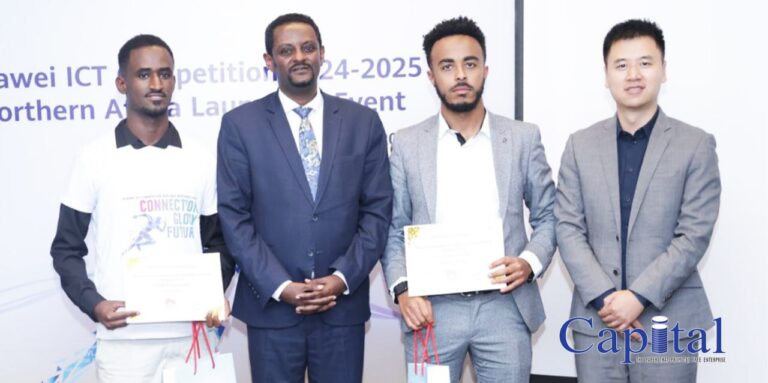
Huawei has recognized the accomplishments of university students who participated in the national and continental finals of the Huawei ICT Competition. The company celebrated these achievements while also announcing the launch of the 2024-2025 competition, aimed at fostering technological skills among students across Ethiopia.

The ICT competition, organized in collaboration with the Ministry of Education, saw over 2,500 students register this year. Of these, 120 qualified for the national finals and received participation certificates, while nine students represented Ethiopia at the sub-continental competition in Tunisia, where they secured a commendable third-place finish. Additionally, a team of three students achieved notable success at the international finals held in Shenzhen, China.

Liming, Head of Public Relations for Huawei Ethiopia, highlighted the significance of the ICT competition during a recent ceremony. “The Huawei ICT competition is invaluable for our young people and serves as a catalyst for their personal and professional development,” he stated. “By participating, students gain experience with cutting-edge technologies while honing their technical skills to prepare for a changing job market.”

Zelalem Assefa, CEO of the Ministry of Education’s ICT and Digital Education sector, emphasized the competition’s role in enhancing employment opportunities and fostering entrepreneurial thinking among students. He commended Huawei for its commitment to developing student skills through initiatives like the ICT Academy.

Seminew Keske, representing the Minister of Innovation and Technology, noted that competitions like the Huawei ICT Competition equip young people with essential technical skills while promoting critical thinking, teamwork, problem-solving, and innovation—qualities vital for developing future leaders in technology.

At the event, Huawei officially launched its 9th International ICT Competition for 2024-2025, with registration open until December 31. This annual competition aims to enhance and showcase students’ skills in information and communication technology (ICT), providing a platform for participants to demonstrate their knowledge and practical abilities in various ICT fields.

Urgent call for peace and stability in the Horn of Africa

0

The Horn of Africa is facing a critical juncture as civil wars and conflicts continue to threaten the lives of countless civilians, leading to widespread persecution and economic crises. In light of these escalating challenges, there is an urgent need to restore peace and stability in the region.

The ongoing turmoil in the Horn of Africa has not only heightened tensions within the continent but has also drawn international concern. Factors contributing to this instability include inadequate government action, a lack of civil society participation, and the exclusion of marginalized groups, including people with disabilities, from peace-building processes.

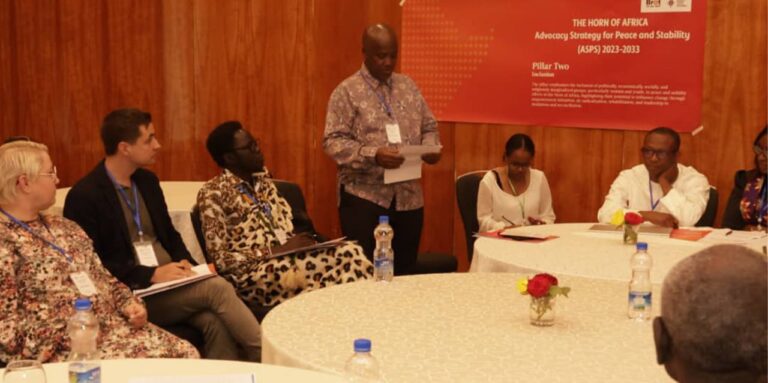
In response to these pressing issues, the American Friends Service Committee (AFSC) and Bread for the World launched the Horn of Africa Advocacy Strategy for Peace and Stability (ASPS) on October 16-17, 2024, in Addis Ababa. This ten-year regional strategy aims to address chronic problems and promote sustainable peace initiatives across the Horn of Africa.

Moses Chasich, Director of Salama Hub, emphasized the urgency of the situation, stating, “The call to action to restore peace and stability in the East and Horn of Africa has never been more dire.” He warned that without sustained efforts in conflict management, post-conflict reconstruction, governance improvement, and sociopolitical culture change, the region could face worsening conditions over the next five to ten years.

The ASPS focuses on five key pillars: research-based advocacy, inclusion, transitional justice and healing, governance, and climate and environmental justice. Chasich highlighted the importance of including people with disabilities in implementing this strategy, particularly in its second pillar.

In conflict-affected East Africa, individuals with disabilities have demonstrated their resilience and potential, underscoring the necessity of advocating for disability rights at a political level. The ASPS serves as a framework for programs and projects aimed at fostering peace-building efforts throughout the region.

G-24 demands significant reforms at international financial institutions to address global challenges

0

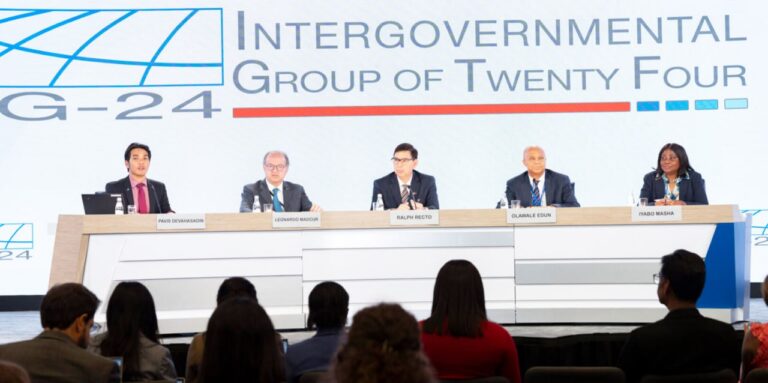
Significant reforms at the international financial institutions are demanded by the Intergovernmental Group of Twenty-Four on International Monetary Affairs and Development (G-24).

The Group, which acknowledges the significant evolution of the system over the decades, said that there must be recognition that rapid transformations are occurring at an unprecedented pace.

“We must therefore critically assess if the Bretton Woods System is adapting quickly enough to the rapidly changing and increasingly volatile global environment,” the current Chair and Secretary of Finance of the Philippines, Ralph Recto, said at the press conference held during the International Monetary Fund (IMF) and the World Bank annual meeting in Washington, DC.

“We are counting on our recently concluded meeting to set an unprecedented level of multilateral cooperation and action,” the Chair said.

He stated that the G-24 has identified key reforms that will enhance the system’s effectiveness and empower both the IMF and the World Bank Group to better serve their members.

According to the Chair, the IMF must create a new mechanism to support countries with sound fundamentals during liquidity crises.

“With the immediate submission of eradicating poverty on a livable planet, the World Bank needs more ambitious goals for its concessional and non-concessional windows, commensurate with the challenges of achieving inclusive and sustainable development by 2030,” he added.

The G-24 calls for the sovereign debt resolution framework to be reformed to deliver comprehensive, predictable, swift, and impactful debt relief, addressing the urgent needs of vulnerable economies.

In his remarks at the press conference, Recto stated that in order to provide developing countries with a greater voice and representation, the structural changes and governance of the Bretton Woods Institutions must be accelerated.

“Decades of individual and international efforts to end poverty and inequality, fight climate change, and fund growth-enhancing initiatives will come to a standstill, if not be reversed, in the absence of both improvements and actions,” he added.

Regarding the reform, G-24 Director Iyabo Masha emphasizes that the approval of these measures must pass both the World Bank and IMF boards.

She also revealed that the change was only initiated by the Bretton Woods project.

“So now they are in the process of consultations, going around countries, going around regions, so I will say that at a minimum, maybe by next Spring Meeting, they will have an update on where they are in the process and maybe some final decision by the Annual Meetings,” she said.

The G-24 coordinates the position of developing countries on monetary and development issues in the deliberations and decisions of the Bretton Woods Institutions (BWI). Ethiopia is one of the members and served as Chair recently.

In particular, the G-24 focuses on issues on the agendas of the International Monetary and Financial Committee (IMFC) and the Development Committee (DC), as well as in other relevant international fora.

At the meeting, Minister of Finance Ahmed Shide highlighted the importance of creating innovative and fast-responding financial safety net mechanisms to address the shortage of affordable liquidity countries face in times of crisis.

He supported the need for quota, representation, and governance reforms and adjustments in the IMF to ensure that emerging markets and developing countries can have access to adequate financing and decision-making power proportional to their economic weight.