Monday, October 19, 2026
Home Blog Page 136

International lenders to finalize Bishoftu Airport funding by March 2027

0

Ethiopian Airlines is pressing ahead with plans to build its new mega-airport in Bishoftu, with international lenders expected to finalize multi-billion-dollar financing approvals by March 2027, according to the airline.

The carrier said land-clearing work and the rehabilitation of displaced farmers have largely been completed, clearing the way for the project to move into the contractor selection phase. Ethiopian Airlines Group Chief Executive Officer Mesfin Tasew outlined the latest milestones and timeline changes during the group’s 2025/26 budget year report last week.

The first phase of the project was launched in January with a groundbreaking ceremony attended by Prime Minister Abiy Ahmed and senior government officials. The airport, which is expected to cost more than $10 billion, is being developed as Africa’s largest airport and Ethiopian Airlines’ new global hub.

Designed to handle up to 60 million passengers, the Bishoftu Airport is intended to help position Ethiopia among the world’s top 20 aviation hubs by 2035. The project is located about 40 kilometers southeast of Addis Ababa.

Mesfin said the airport has attracted more than $8 billion in financing demand and that the African Development Bank is serving as lead arranger. He said the bank has indicated a willingness to provide $500 million once board approval is secured.

Other institutions that have shown interest in financing the project include the US International Development Finance Corporation, the US Export-Import Bank, JPMorgan Chase and other foreign lenders.

The airline said the financing approvals are expected to be completed by March 2027. Mesfin also said construction companies had asked for more time to prepare bids and carry out the necessary studies, consult with lenders and organize subcontractors.

As a result, the deadline for selecting construction contractors has been pushed from August to January next year. Mesfin said the revision will not change the project’s final completion date or alter its overall execution plan.

The pre-qualification process for engineering, procurement and construction-financing across four major work packages was completed in April, and several major international companies have been shortlisted. Among them are China Communications Construction Company, Webuild, Vinci Construction Grands Projets, Samsung C&T and Beijing Urban Construction Group.

Ethiopian Airlines said the project remains aligned with its long-term schedule. The land grading and clearing work that began in January is expected to be completed by January 2027.

The airline also said it has completed rehabilitation work for farmers displaced by the project and is working with affected communities to support new sources of income and jobs. Mesfin said only a small part of the transition work remains and will be finalized in the coming months.

The airport will include an “Airport City” with hotels, business parks and entertainment areas, along with a 38-kilometer high-speed railway and a 12-lane highway connecting the site to Addis Ababa.
Africa tops China’s Belt and Road engagement as Ethiopia draws major green energy investment

0

Africa remained the leading destination for Chinese Belt and Road Initiative engagement in the first half of 2026, with Chinese investment in the region almost tripling from the same period a year earlier, according to a new report by Christoph Nedopil of the University of Queensland and the Green Finance Development Center.

The report says Chinese BRI engagement across the region reached $33.5 billion in investment announcements in the first half of the year, making Africa the top regional recipient and marking the strongest first-half performance ever recorded for Chinese BRI investment in the continent. It adds that Ethiopia was the largest African recipient of Chinese energy engagement, driven by a major green energy development agreement worth $14.8 billion.

Overall, the report found that total Chinese BRI engagement — combining investments and construction contracts — hit a first-half record of $126.4 billion across about 186 deals, including $49.8 billion in investment and $76.5 billion in construction. It said 2026 H1 was the highest first six months for BRI engagement since the initiative began in 2013.

Energy remained the dominant sector, with China’s energy-related engagement reaching $36.3 billion in the half-year period. More than half of that energy engagement was classified as green, including wind, solar, waste-to-energy and hydropower projects, which the report said was a new record in both absolute and relative terms. The report also noted that more than 20 gigawatts of green electricity projects were confirmed through investment and construction, exceeding the total for all of 2025.

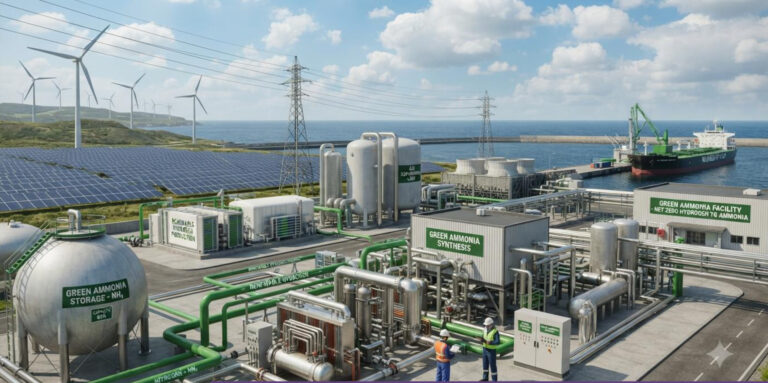
Ethiopia featured prominently in that shift. The report says a green energy agreement between the Ethiopian Investment Commission and Mingyang Smart Energy Group was initially announced at $10 billion and later expanded and licensed in May 2026 to $14.17 billion, including green ammonia production facilities. The first phase alone allocates $7.47 billion to physical generation assets and is one of the largest private foreign direct investments in Ethiopia’s history.

The report also highlights a resurgence in metals and mining, which reached a record $21.8 billion in the first half of 2026. Egypt led that category with a $10 billion steel mill, while Kazakhstan and Indonesia also attracted major Chinese processing investments. The report said the emphasis was increasingly on processing facilities rather than raw mining.

In transport, Chinese engagement rose for the first time since 2020, reaching $18.2 billion, all through construction contracts. Major projects included rail and port infrastructure in the Middle East and Asia, while the report said transportation-related engagement again underscored the BRI’s focus on connectivity and trade routes.

The report also points to a growing role for private Chinese companies, whose share of total BRI engagement climbed from 12.5 percent in 2020 to 47.7 percent in the first half of 2026. While state-owned enterprises still dominate construction, private firms are taking a larger role in investment, especially in technology and energy-related sectors.

Christoph Nedopil said in the report’s outlook that continued global trade frictions and fossil fuel volatility could further push Chinese engagement toward green energy, minerals processing and manufacturing localization in BRI countries. He said Africa’s strong performance may reflect both new industrial opportunities and shifting tariff dynamics in global trade.

For Africa, the findings suggest that Chinese capital remains a major source of investment, especially in energy, mining and infrastructure. Ethiopia’s outsized role in the latest data also shows how the continent is positioning itself at the center of the transition to green industrial projects.

Young artists showcasing Africa’s contemporary culture in Ethiopia

0

Some of Africa’s most accomplished contemporary artists will converge in Addis Ababa on July 29 for one of the continent’s largest international cultural showcases, as the “Unity” exhibition opens alongside the inaugural World Public Summit Africa on July 29–30, 2026.

Featuring artists from 16 African countries, the exhibition forms the cultural centerpiece of the summit and showcases the richness, diversity, and growing global influence of contemporary African art through paintings, sculpture, collage, digital art, and mixed-media installations.

The exhibition brings together acclaimed artists from Cameroon, the Democratic Republic of Congo, Ethiopia, Ghana, Kenya, Madagascar, Namibia, Nigeria, Rwanda, Senegal, South Africa, Sudan, Tanzania, Tunisia, Zambia, and Zimbabwe, alongside an Afro-Brazilian artist whose work reflects Africa’s enduring cultural connections across the diaspora.

Curated around the theme “Unity,” the exhibition explores shared identity, cultural memory, hope, and the future through diverse artistic voices. Rather than presenting Africa as a single narrative, it celebrates the continent’s remarkable cultural diversity while highlighting the common values that connect its peoples.

The exhibition forms part of the World Public Summit Africa, which is being held under the theme “A New World: Africa in Shaping a Shared Future.”

The summit will bring together over 700 government leaders, diplomats, business executives, academics, innovators, civil society organizations, and cultural leaders to explore new opportunities for international cooperation and sustainable development.

Among the featured artists are Nigeria’s Precious Longret Samuel, whose work examines culture as a living repository of collective memory, Ethiopia’s Selamawit Gebretsadik, who explores unity through natural symbolism, and Senegal’s Khalifa Mané, whose work reflects on the responsibility of building a shared future for generations to come.

Secretary-General of the World Peoples Assembly, Andrey Belyaninov, said the exhibition demonstrates the growing role of culture in strengthening dialogue between nations.

“Art is one of humanity’s most universal languages and one of the most effective instruments of public diplomacy. It brings people together where words alone may fail, helping us discover what unites us despite our differences. Holding the World Public Summit in Addis Ababa is a recognition of Africa’s role as one of the centers shaping a new world.

“Today, we understand more clearly than ever: the future cannot be built alone. It is born in dialogue, in trust, in the ability to listen to one another and to act together.”

Tsegaye Chama, General Secretary of the Global Black Center, promised that “The Summit will be delivered with exceptional distinction, reflecting the magnitude and spirit of the World Peoples Assembly.” It embodies a unity that is not transactional but purposeful and conscious, a unity that shapes new contours for a world that works for all peoples of the world.”

One of the summit’s other significant initiatives is an international, interdisciplinary scientific study examining the socioeconomic impact of the Zambezi River on the development of six African nations: Angola, Zimbabwe, Zambia, Namibia, Botswana, and Mozambique.

Titled “The Zambezi River: Economy, Society, Soul,” the initiative reflects the summit’s broader vision of exploring Africa’s development through interconnected perspectives—economic opportunity, social progress, and cultural identity.

With delegates expected from across Africa and around the world, expectations are high that the inaugural World Public Summit Africa will establish a lasting platform for dialogue, inspire new partnerships, strengthen regional and global cooperation, and reinforce Africa’s growing voice in shaping the future of global development. It is symbolic that after the summit concludes, the exhibition will continue its journey in Moscow. It will inspire new cultural initiatives and help strengthen friendship among nations.

UNFPA survey finds young people want partnerships, children and stability, but say conditions stand in the way

0

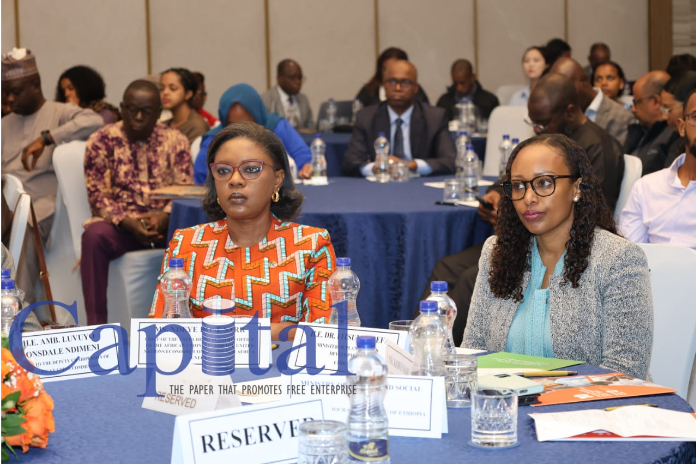
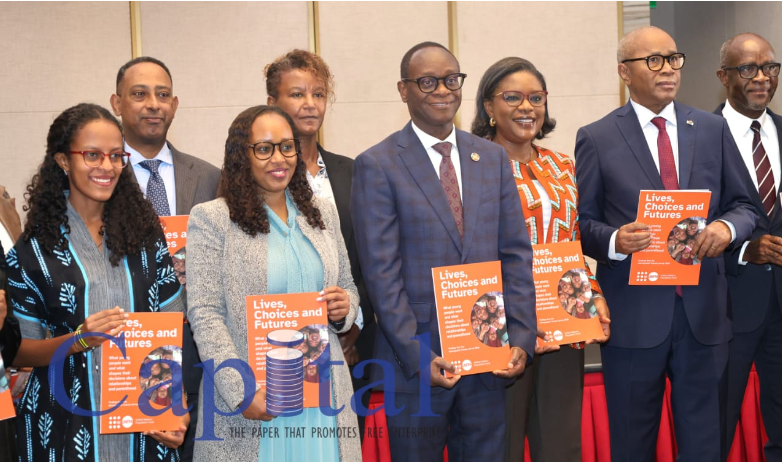
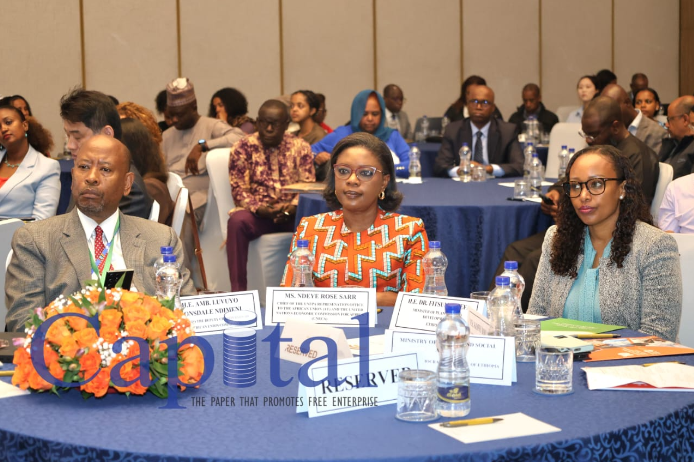
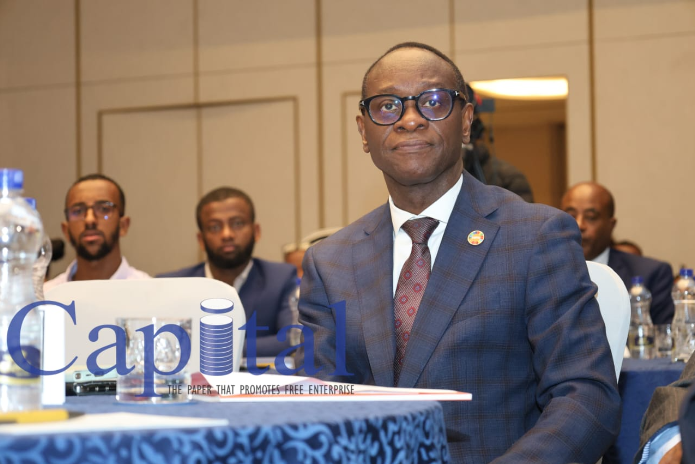
Young people across the world still want relationships, families and a positive future, but many say economic insecurity, housing costs and weak support systems are making those goals harder to reach, according to a new UNFPA survey.

The Demographic Futures Survey 2026, titled Lives, Choices and Futures, found that economic security and good health are the top life goals for young adults, while family life remains important for a large share of respondents. It also found that two thirds of respondents feel somewhat or very positive about the future, even as they worry about conflict, inequality and economic pressure.

The survey covered 108,926 Internet-connected young adults aged 18 to 39 across 73 countries and territories. UNFPA said the findings show that many young people continue to aspire to partnerships, marriage and parenthood, but that those aspirations are shaped by financial security, stable employment, housing affordability and broader social conditions.

Economic worries were prominent across the sample. More than three quarters of respondents said conflict and security risks, as well as economic insecurity and inequality, were somewhat or very worrying, while artificial intelligence ranked as the least worrying of the issues tested. At the same time, the report found that optimism remains strong in many lower-income settings, especially in West and Central Africa and East and Southern Africa.

The survey also found that family aspirations remain common. More than two thirds of respondents said their ideal relationship pathway includes marriage, either before or after cohabitation, while 16 percent said they ideally want to remain single. Among respondents aged 25 to 39 who ideally want to marry or live with a partner, around one quarter are currently single and not dating, with the share higher among men than women.

Financial security emerged as the strongest factor in partnership formation, with 81 percent of respondents rating it as important. Economic and housing constraints were the most commonly cited barriers to partnership, and respondents also placed high value on emotional well-being, independence from parents and having children.

When it came to parenthood, two children was the most commonly reported ideal family size in most regions. The survey found that financial security, stable employment and emotional readiness were the leading preconditions for feeling ready to have children, while economic and housing constraints were the most frequently cited barriers to parenthood.

UNFPA said the findings point to a gap between aspiration and reality, and suggest that many young people want families but need stronger economic and social support to make those choices possible. The report also notes that attitudes toward family life, work and caregiving continue to be shaped by gender norms, with women generally rating the preconditions and barriers to parenthood as more important than men.

The survey adds that young people’s views on opportunity and inequality vary sharply by region and income level, but perceptions of inequality remain widespread across the board. It also shows that social media and online platforms are deeply embedded in young people’s daily lives, with entertainment, work, news and keeping in touch with family and friends among the most common uses.

UNFPA said the survey is meant to inform policy discussions on employment, housing, reproductive health, childcare and gender equality. The agency argued that creating the right conditions would help young people build the lives they want, have the children they want and choose the timing that works for them.