Monday, April 6, 2026
Home Blog Page 1647

Harvesting hope in Ethiopian dairy farming

0

In the rolling hills just outside Debre Birhan, where the horizon seems to stretch endlessly, Haile Meskel tends to his farm with a quiet determination that belies the challenge he faces. With hands weathered by labor and a spirit unyielding, he has devoted himself entirely to the task of supplying milk to the local cooperative. As we step into his home, Haile Meskel welcomes us warmly, his eyes reflecting the pride he takes in his work. His small garden, a verdant oasis amidst the dusty plains, is where he spends the majority of his days, tending to his cows with a tenderness born of years of practice.

Similar to many Ethiopian farmers, Haile Meskel upholds traditional milking practices. Before daybreak, he rises early and milks his cows, ensuring their utmost comfort and well-being. With practiced hands, he meticulously prepares the milk for transport to the milk collectors, exemplifying his unwavering commitment to maintaining the highest standards in milk production. For several years in milk production, this is what Haile Meskel and his family have been doing.

H/Meskel’s and his fellow farmers’ journey towards providing quality milk for milk suppliers is still far from smooth and easy. He has faced numerous hardships along the way, particularly in sourcing livestock food and receiving the necessary training to ensure the milk’s quality. The most significant challenge he encounters is the financial burden of purchasing livestock food, which consumes a substantial portion of his income, approximately 50 to 70%. Even after affording the livestock food H/Meskel understood that the key to producing quality milk lay in the cows’ and also in the tenderness of their care. However, it is also crucial for him to understand the methods and strategies he can employ to enhance his abilities in producing milk of high quality.

In Ethiopia, dairy production is generally based on the subsistence of smallholders like Haile Meskel with a relatively small number of small and medium commercial dairy farms. Within the smallholder specialized urban and peri-urban dairy production system, which is predominantly practiced in and around cities and towns, farmers raise crossbred and exotic breeds of cows specifically for milk production and sale.

Milk is sold either directly to processors or to cooperatives. Except in a few areas where dairy producers are organized into milk marketing cooperatives. Milk marketing is predominantly through informal/unorganized channels where raw milk is sold primarily on a contractual basis and butter in nearby open markets.

Filagot Dairy Cooperative is one of the cooperatives with more than 50 farmers supplying milk including Haile Meskel. Holland Dairy is the one who won the Bid to receive milk from the cooperative. According to this, the cooperative has been supplying milk to Holland Dairy.

Collaborating with milk cooperatives has had a significant positive impact on the lives of farmers, as their income has significantly increased. Today, H/Meskel stands as a testament to his unwavering spirit and the positive change that can be achieved when farmers are supported and empowered. ‘’ Previously, we used to supply milk to traders, without having the authority to negotiate or discuss the price of their own milk. However, our situation has improved since partnering with Holland Dairy’’ said H/Meskel. His dedication to supplying quality milk to the dairy factory has not only improved his own life but also uplifted his community, creating a ripple effect of progress and prosperity.

Explaining how they are working with the dairy Factory, every three months, they enter into contractual agreements with legal counsel. If necessary, they initiate a bidding process, allowing the winning bidder to collect the milk from the cooperative, as explained by Workneh Assefa, The chairman of Filagot Dairy Cooperative.

Holland Dairy, a dairy factory that has been receiving milk from Filagot Dairy Cooperative for the past several years, has provided the farmers full contract with a fair price. As the farmers stated, compared to private traders, supplying to Holland has helped them secure income even in the fasting times when there will be a very low demand for dairy products.

Holland Dairy collects milk at five different locations outside of Addis Ababa, on these locations Holland has so-called, Milk Collection Points. There are cooled tanks to store the milk before they transport it to the factory in Bishoftu daily. 

Jean-Paul Rieu is the Commercial Director of Holland Dairy, it has been a year since he joined the Ethiopian Dairy industry. For him, the relationship with farmers and the cooperatives is crucial to ensure the best quality. And provide qualitative yogurt to the market. ‘’The relationship with our farmers is key to the success of our yogurts. We support them wherever possible’’ said Jean-Paul Rieu.

The marketing of dairy products encounters difficulties during the extended fasting periods observed by followers of the Coptic Orthodox Church, particularly in areas where there is no value addition to ensure extended shelf life. This lack of preservation facilities poses an additional challenge, especially during fasting periods that can last up to 55 days. In this case, the market will be very volatile. It will get hard for farmers to sell their milk.

In contrast to other dairy factories, Holland Dairy stands out by continuing to receive milk from suppliers even during fasting seasons. When we inquired about how Holland Dairy ensures fair pricing throughout the milk process, farmers supply milk consistently throughout the year without the need for reservations. Taddese Ketema, Deputy General Manager of Holland dairy, explained that this approach creates a safer and more stable market for farmers, enabling them to concentrate on delivering high-quality milk without concerns about price fluctuations.

‘’Our aim is to create a reliable and trustworthy dairy industry. An industry built on transparency that delivers high quality product adhering to food safety regulations and is trusted by its customer. It would be a huge success if all Ethiopians could access high quality and safe dairy products, so that they can trust every dairy product available, every single day. A product that they can provide it to their children without hesitation for pure enjoyment.’’ Said Tadesse.

The owners of Holland Dairy are renowned worldwide for their expertise in the dairy industry, making the knowledge and skills they possess highly valuable for farmers. Holland is providing comprehensive training programs that cover various aspects of dairy farming, including livestock feeding and milk supply. The emphasis on training is driven by their commitment to producing high-quality dairy products.

The dairy sector in Ethiopia faces a range of challenges that hinder its growth and development. The development and extension approach in this sector suffers from fragmentation and lack of cohesion, resulting in scattered interventions and limited continuity. Disease surveillance, prevention, and control measures are inadequate, leading to increased risks and losses. The high cost of production further adds to the challenges faced by the sector. Milk quality remains a concern, with high losses and inadequate quality control measures in place. Every Ethiopian household holds a shared concern for the quality of dairy products.

Despite all challenges, there is an opportunity to leverage several favorable factors for its growth and development. These include the ongoing projects and successful experiences that can serve as valuable lessons for scaling up the industry. The presence of private sector investments in dairy processing, feed processing, and input supply further contributes to the industry’s potential.

Djibouti Ports corridor road urges caution ahead of anticipated weather challenges in Horn of Africa

0

Transporters are advised to exercise caution in the upcoming months due to anticipated weather conditions in the Horn of Africa, as forecasted by the Djibouti Ports Corridor Road (DPCR).

The Djiboutian highway management enterprise referred to the IGAD weather prediction, which anticipates above-average rainfall in Djibouti, the major port outlet for Ethiopian cargos, from June to September.

According to DPCR, established in 2017 to design, develop, maintain, and finance highways linking Djibouti ports to neighboring nations, road users should exercise extreme caution. They advised people to “stay up to date on the latest forecasts, avoid flooded areas, and equip their vehicles for wet weather.”

Climate change has caused Djibouti to experience unexpected and uncommon weather conditions in recent years, interfering with truck operations and impacting the road network.

DPCR is jointly owned by Djibouti Ports and Free Zones Authority and the Djibouti Road Agency.

The IGAD Climate Prediction and Applications Centre (ICPAC) issued the June to September 2024 seasonal forecast, indicating an increased likelihood of above-normal rainfall over most parts of the Greater Horn of Africa (GHA).

On May 21, IGAD stated that areas expected to experience these above-normal conditions include Djibouti, Eritrea, central and northern Ethiopia, western and coastal Kenya, much of Uganda, South Sudan, and Sudan.

Conversely, parts of northern Somalia, isolated areas over western Ethiopia, and northwestern South Sudan are expected to experience drier-than-normal conditions.

“The climate patterns in the JJAS (rainfall conditions for June to September) 2024 period closely resemble those of 1998 and 2010, both of which experienced wetter-than-normal conditions over much of the region,” it added.

As per the forecast, an early to normal onset is expected in several parts of the region, including central and northern Ethiopia, Eritrea, Sudan, and South Sudan. However, a delayed onset is likely in Djibouti, parts of eastern and western Ethiopia, central and western Sudan, and southern South Sudan.

The temperature forecast shows a probability of warmer-than-normal conditions across the region, particularly over northern Sudan, central and western Ethiopia, Somalia, Kenya, Rwanda, Burundi, and Tanzania.

Guleid Artan, ICPAC’s Director, noted that “The Greater Horn of Africa (GHA) stands as a region that is highly susceptible to the adverse impacts of climate change, which pose significant challenges to the resilience of our communities. The forecasted wetter-than-normal conditions for June to September 2024 echo the patterns of 1998 and 2010, highlighting the level of impact especially for South Sudan and Sudan, which may experience impacts of floods.”

In line with the World Meteorological Organization’s guidelines and recommendations, ICPAC has adopted an objective seasonal forecast method to generate climate forecasts for the Greater Horn of Africa.

May 2024 initialized seasonal forecasts from 9 Global Producing Centres (GPCs) were utilized and processed to develop the June – September 2024 seasonal climate outlook.

In a related development, DPCR and Salaam African Bank have entered into a loan agreement to finance the rehabilitation project of the Doudoubalala-Dikhil section of National Road 1. This collaboration marks a crucial step for the road and financial sector of Djibouti.

This audacious project aims to renovate a crucial section of Djiboutian road infrastructure, with the major objective of improving regional connectivity and local socio-economic development.

This is the first time that a local Djiboutian bank has committed to financing a road project of such scale, marking a crucial step in the economic and financial development of the country.

Africa’s Business Leaders convene in Kigali for landmark Africa CEO Forum

0

Kigali, Rwanda

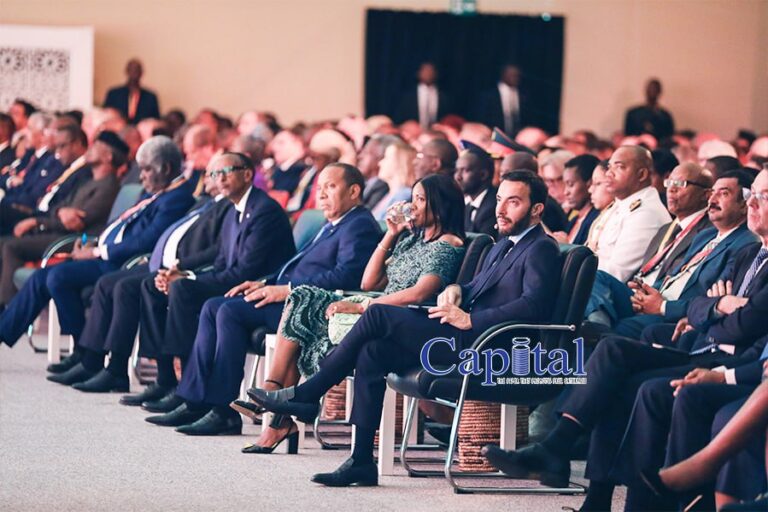
The prestigious Africa CEO Forum 2024 concluded last week in Kigali, Rwanda, drawing over 2,000 of Africa’s top business leaders, 5 heads of state, investors, and media from across the continent and globe. The event, a collaboration between Jeune Afrique Media Group and the International Finance Corporation (IFC), served as a significant platform for discussing the key economic and business trends shaping the African continent.

A highlight of the forum was a dedicated session exploring Rwanda’s investment opportunities, showcasing the country’s strategic initiatives and favorable business environment. “A solid governance system and strong support for private sector investments have made Rwanda a role model for leadership and strategic investments,” said Amir Ben Yahmed, CEO of Jeune Afrique Media Group.

The forum addressed critical issues facing African economies, including high unemployment, insecurity, low internet connectivity, foreign exchange crises, and cross-border payment frictions. CEOs stressed the need for greater collaboration between the public and private sectors to develop home-grown solutions and remove barriers to talent mobility and policy harmonization across the continent.

Rwanda’s President Paul Kagame emphasized that the willingness to execute is even more important than having solutions. “Anything that can be done in any part of the world can be done in Africa. Why can’t we start doing it already?” Kagame challenged.

The event also highlighted the significant opportunity presented by Africa’s growing population, which is expected to account for 25% of the world’s population by 2050. However, only a few countries are effectively harnessing this demographic dividend to transform their economies.

The conference featured insights from experts at Boston Consulting Group on the five key forces shaping the world today: geopolitics, generative artificial intelligence, the green revolution, global debt, and Generation Alpha. The latter, comprising those born after 2010, will make up 50% of Africa’s population in the next five years, presenting a substantial labor pool for the continent.

One of the standout moments was a call from Aigboje Aig-Imoukhuede, chairman of Access Holdings, for African countries to be proactive in setting their own agendas and inviting the world to join, rather than merely waiting to be invited to the table.

In a testament to its pivotal role in Africa’s infrastructure and industrial development, the Africa Finance Corporation (AFC) was awarded the prestigious Panafrican Champion Award at the forum. This recognition underscores AFC’s commitment to driving transformative projects, such as Djibouti’s first wind farm and the Lobito Corridor rail project, that are advancing the continent’s economic integration and prosperity.

The Africa CEO Forum 2024 concluded with a renewed sense of optimism and a call to action for African leaders and businesses to take charge of their economic destiny, embrace innovation, and collaborate to unlock the continent’s tremendous potential.

Veteran journalist Amare Aregawi honored for four decades of service

0

Amare Aregawi, a seasoned journalist who founded and served as the general manager of the Media and Communications Center, has been honored for his distinguished career spanning four decades.

Aregawi, the founder of The Reporter publications, was awarded a lifetime achievement award by the Kibir Award, which recognizes writers and journalists in various categories.

“Amare Aregawi is an iconic figure in the Ethiopian media landscape,” said the Kibir Award organizers. “His unwavering dedication to journalism and his commitment to shaping the discourse in the country over the past four decades are truly commendable.”

Amare, an Ethiopian journalist, founded the Media & Communications Center, which publishes The Reporter, a prominent Amharic and English newspaper headquartered in Addis Ababa. He also serves as the editor-in-chief of the bilingual newspaper and co-owns the TV network ARTS TV.

Prior to his current roles, Amare was in charge of Ethiopia’s public television network, EBC (formerly ETV), following the fall of the Derg dictatorship in 1991.

Amare’s illustrious career has not been without its challenges. In 2008, he was arrested in connection with an article about labor practices that criticized Dashen Brewery, a local beer brand. The brewery filed a defamation suit against the newspaper, leading to Aregawi’s arrest on August 22, 2008. He was released on bail shortly thereafter.

Shortly after his arrest, and following a series of editorials criticizing the business community, Amare was assaulted and left unconscious following a parent-teacher meeting at his son’s school. The International Press Institute connected the attack to his reporting and called on the government to “do everything in their power to ensure that Ethiopian journalists are free to carry out their profession without fear of attack.”

Despite the obstacles he has faced, Amare has remained a steadfast champion of independent journalism and has continued to shape the media landscape in Ethiopia. His lifetime achievement award is a testament to his unwavering commitment to the profession and his significant contributions to the country’s media industry.