



Digital inclusion

In this interview with Capital, Kaleab Ameha, Chief Executive Officer of Pitron Tech Solutions, discusses how the company is helping modernize Ethiopia’s financial sector through digital tools designed for cooperatives, microfinance institutions and other underserved financial providers. He also explains how Pitron’s partnership with Temenos, its local engineering expertise and its Pitron FinOS platform are working to advance financial inclusion under Ethiopia’s Digital 2030 agenda. Excerpts;
Capital: While the contribution of Ethiopia’s digital economy to GDP is still around 3.9 percent, the government is implementing the Digital Ethiopia 2030 strategy. How does Pitron FinOS support this national vision of making financial services more accessible?
Kaleab Ameha: I believe Digital Ethiopia 2030 is not only about putting government services online or increasing internet access. It is about making technology useful for ordinary Ethiopians. One of the biggest opportunities we have is financial inclusion, because millions of Ethiopians are still underserved by formal financial services.
When we started designing Pitron FinOS, we spent time researching Ethiopia’s cooperative sector. We found that there are more than 18,000 cooperatives serving over 25 million citizens. That immediately showed us where we could make the biggest impact.
Most SACCOs and many MFIs still depend on manual processes or disconnected systems. Staff spend a lot of time processing paperwork, members wait longer to receive services, and management has limited visibility into institutional performance. We built FinOS specifically to solve these challenges.
The platform allows institutions to digitize the complete member journey — from registration, savings and loan applications to approvals, repayments, communication, reporting and management dashboards. Instead of spending days processing information manually, institutions can provide services much faster and with greater transparency.
We also believe that digital transformation should not happen in isolation. That is why we designed FinOS to integrate with world-class technologies like Temenos Core Banking while also connecting with Ethiopia’s digital ecosystem, including Fayda digital identity and other national platforms where appropriate.
For us, Digital Ethiopia 2030 becomes practical when a farmer in a rural cooperative can apply for a loan digitally, when a cooperative manager can monitor thousands of members from one dashboard, and when institutions can make better decisions using real-time data.
Our contribution is helping cooperatives and MFIs become modern digital financial institutions without losing sight of local realities.
Capital: There are more than 23,000 primary SACCOs in Ethiopia. How does FinOS solve the operational challenges they face?
Kaleab: When we visited cooperatives and spoke with their management teams, we noticed that many of them were facing similar challenges.
Many institutions still keep member records manually. Loan approvals require physical paperwork moving from one office to another. Reports are prepared manually. Members often have to visit branches multiple times just to complete one service.
These are not technology problems alone. They are operational problems that affect efficiency, customer satisfaction, transparency and growth.
Pitron FinOS digitizes these processes from beginning to end.
Member registration becomes digital. Loan requests move through predefined approval workflows. Savings and repayments are updated instantly. Management receives real-time reports instead of waiting until the end of the month.
The platform also improves communication between institutions and their members through notifications, announcements and digital engagement tools.
Another important area is management visibility. Executives can immediately see branch performance, outstanding loans, savings growth, repayment performance and operational activity from one dashboard.
This allows management to make decisions based on actual data rather than assumptions.
Ultimately, our objective is very simple: reduce paperwork, improve efficiency, increase transparency and allow cooperatives to spend more time serving their members instead of managing files.
Capital: Pitron recently partnered with Temenos AG. What is the strategic significance of this partnership for Ethiopia?
Kaleab: We are very excited about this partnership because it combines global experience with local innovation. Temenos has been serving the Ethiopian banking industry for many years. It is one of the world’s leading core banking technology providers, trusted by banks across more than 150 countries.
Our partnership allows us to bring that global experience closer to Ethiopian SACCOs and MFIs. Many smaller financial institutions have always believed that international core banking systems are designed only for large commercial banks. Together with Temenos, we want to change that perception by making world-class banking technology more accessible.
Pitron acts as the local implementation and integration partner. We provide local consulting, implementation, support, customization, training and ongoing customer engagement.
At the same time, we integrate our own locally developed platform, Pitron FinOS, with Temenos Core Banking to provide complete end-to-end digital transformation.
This means institutions benefit from internationally recognized banking technology while still receiving solutions designed specifically for Ethiopia.
We believe international partnerships are most successful when they respect local knowledge. That is exactly how we approach this partnership.
Capital: National Bank regulations continue to evolve. How will FinOS help MFIs improve operational efficiency and sustainability?
Kaleab: As the financial sector grows, compliance becomes increasingly important.
Digital platforms naturally improve governance because every transaction, approval and operational activity can be tracked. FinOS creates standardized digital workflows that reduce manual errors and improve accountability. Institutions can generate reports much faster, monitor their portfolios more effectively and maintain better operational controls.
The system also helps management understand customer behavior, loan performance, repayment trends and operational efficiency through real-time dashboards.
Better information leads to better decisions. When institutions become more efficient, they reduce operational costs, improve customer service, strengthen financial sustainability and become better prepared for future regulatory requirements.
Our objective is not only to build software, but also to help financial institutions become stronger organizations.
Capital: What local challenges has an Ethiopian engineering team been able to solve that foreign providers cannot?
Kaleab: Being local gives us a very important advantage. Our engineers understand how Ethiopian financial institutions actually operate because we work with them every day.
We understand local regulations, local languages, local workflows, infrastructure limitations and customer expectations. For example, FinOS supports multiple Ethiopian languages because accessibility matters. We also design workflows that reflect how cooperatives actually make decisions rather than forcing them to change everything simply because the software requires it.
Another advantage is speed. When regulations change or customers request improvements, our engineering team can respond quickly because development happens locally.
Customers also benefit from local implementation, local support and local training. International technology brings valuable experience, but local innovation ensures that technology works effectively within Ethiopia.

Capital: Pitron is known for customized solutions. How do you balance customization with global standards?
Kaleab: Actually, we do both. Some people know Pitron because of our custom software development, but we are also an enterprise technology implementation company.
We build our own products like Pitron FinOS while implementing internationally recognized platforms such as Temenos Core Banking and Odoo Enterprise.
Every institution has different requirements. Sometimes a standard enterprise solution is the best choice. Other times, institutions require additional functionality designed specifically for Ethiopia.
Our strategy is to combine both approaches. We follow international implementation standards while building integrations and additional capabilities that solve local business challenges.
All our products are designed with modern APIs, making integration straightforward across banking systems, ERP platforms, payment platforms and other enterprise applications. That flexibility is one of our biggest strengths.
Capital: Internet access and digital literacy are still developing. How will Pitron encourage adoption?
Kaleab: Technology should never be complicated. When people open FinOS, they should immediately understand how to use it.
That is why we invest heavily in user experience. The platform is simple, clean and designed for both institutional users and ordinary cooperative members.
We currently support four Ethiopian languages in addition to English because language should never become a barrier to digital transformation. Technology alone is not enough. Every implementation includes training for management, operational staff, administrators and end users. We also provide continuous technical support after implementation because successful digital transformation depends on people, not only software.
When users become comfortable with technology, adoption naturally increases.
Capital: Agriculture supports most Ethiopians. How does FinOS contribute to agricultural finance?
Kaleab: Agriculture remains the foundation of Ethiopia’s economy. Many farmers receive financial services through cooperatives and microfinance institutions. FinOS helps these institutions manage agricultural financing more efficiently by digitizing customer information, collateral records, loan processing, repayment monitoring and portfolio management.
Better information enables better lending decisions. Institutions can understand customer history more accurately, monitor agricultural loan performance and identify repayment trends earlier. This improves both financial inclusion and institutional sustainability. Our role is to provide financial institutions with the technology they need to expand responsible lending to rural communities.
Capital: Financial information is highly sensitive. How does Pitron protect customer data?
Kaleab: Security is something we take very seriously. From the beginning, we designed FinOS with enterprise-grade security principles.
The platform uses role-based access controls, secure authentication, encrypted communications, detailed audit logs, secure APIs, backup strategies and disaster recovery planning. We also continuously improve our security practices as technology evolves.
Beyond the technology itself, we also train customers on security awareness and governance because cybersecurity depends on people as much as systems.
As Ethiopia continues strengthening its cybersecurity and data protection framework, we remain committed to ensuring that our platform evolves alongside national requirements and international best practices.
Capital: Ethiopia’s fintech sector is growing rapidly. What makes Pitron FinOS different?
Kaleab: Most fintech companies focus on one service. Some specialize in payments. Others focus on lending or digital wallets. Pitron FinOS focuses on transforming entire financial institutions. Our primary customers are SACCOs and MFIs because we believe they are among the most important drivers of financial inclusion in Ethiopia.
Instead of offering only one feature, we provide a complete digital operating platform covering members, savings, loans, reporting, communication, workflows, analytics and management.
Another difference is interoperability. FinOS is designed to integrate with core banking platforms like Temenos, ERP systems, national digital identity platforms, payment systems and future financial infrastructure.
Our vision is to become the digital operating platform that enables Ethiopian cooperative financial institutions to grow confidently in the digital economy.
Capital: What KPIs will determine whether FinOS has been successful after one year?
Kaleab: For us, success is measured by impact rather than the number of software installations. The first KPI will be the number of SACCOs and MFIs successfully digitized. The second will be the number of members actively using digital services.
We will also measure operational improvements such as reduced loan processing time, faster customer onboarding, improved reporting and reduced paperwork. Another important indicator will be customer satisfaction, because technology only creates value when people actually use it.
From a financial inclusion perspective, we want to see more citizens accessing financial services digitally through the institutions using FinOS. Internally, we will also monitor platform availability, security performance, system reliability and customer support responsiveness.
Our long-term vision is much bigger than software deployment. We want Pitron FinOS to become part of Ethiopia’s financial infrastructure by helping cooperatives and microfinance institutions become more efficient, more transparent and more inclusive. If, after one year, institutions are serving more members faster, making better decisions with data and expanding financial access to communities that previously had limited services, then we will consider that a meaningful success.
Building local capacity seen as key to sustainable cardiac care
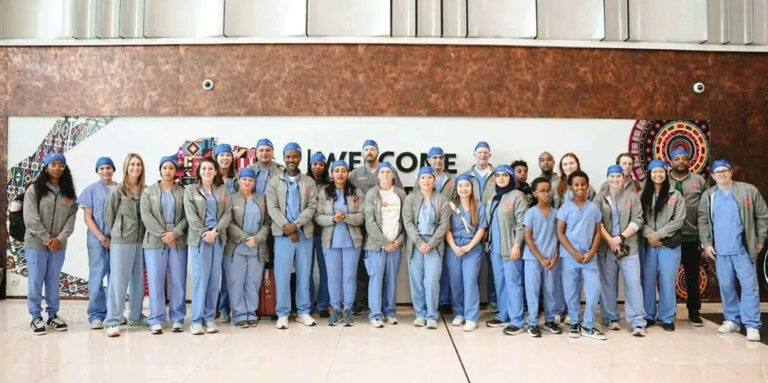
Experts say Ethiopia can only solve its cardiac care crisis in the long term by building local medical capacity, as the country continues to face a shortage of specialists and the high cost of treatment.
Dr. Hailu Tamiru Dhufera, regional director of Heart Attack Ethiopia, said advanced cardiac care requires specialized expertise, technology and expensive equipment. He said the organization’s current medical mission alone needs more than 2.9 million US dollars to cover equipment and operating costs.
Heart Attack Ethiopia has carried out 481 complex cardiac surgeries and interventions across its first four missions over the past three years. Its fifth mission is underway, with a target of treating more than 200 patients. The campaign has already treated 61 patients in its opening days.
Dr. Hailu said temporary missions cannot meet the scale of Ethiopia’s need. “We do missions to stop missions,” he said, stressing that the country needs permanent local capacity rather than repeated short-term interventions.
The challenge is compounded by a severe shortage of specialists. With a population of more than 130 million, Ethiopia has fewer than 45 cardiologists and only five cardiac surgeons, leaving nearly 15,000 patients on a waiting list for life-saving surgery. Many of the cases are linked to rheumatic heart disease and congenital heart disease.
To bridge the gap, the organization is focusing on training and knowledge transfer. More than 59 international volunteer clinicians from the United Kingdom, Canada, India and the Mayo Clinic are working alongside local teams. Six Ethiopian specialists have also been enrolled in a two- to four-year super-specialty training program in India through a partnership with Amrita University.
A study in The Annals of Thoracic Surgery found that an all-Ethiopian team performed its first 1,000 cardiac surgeries locally between 2017 and 2025, with annual surgeries rising from 31 to 204 and a 30-day mortality rate of 2.9 percent.
The organization is also shifting toward local fundraising, with a gala dinner set for Saturday, July 11, to support its long-term work.
