Friday, November 13, 2026
Home Blog Page 1776

“I want to be one of the Best in the World” Selemon Barega

0

Despite his parents not wanting him to pursue a career in running, Selemon Barega defied the odds to become one of the best in the world. 

As the reigning Olympic 10,000m champion, the Ethiopian 24-year-old knows that just focusing on training won’t guarantee him another gold medal, and that running is as much of a mental game as it is physical. 

“Now there are many up-and-coming athletes from where I was at, and being an inspiration for them, I feel immense happiness.

They ask a lot of questions. They ask how they can start their running journey, how they can be like me,” says Barega. “Back then, the villagers didn’t have awareness about running.

Parents wouldn’t allow you to run, they used to strongly encourage us to only pursue education. But now, when they see evidence through media, radio and television, they have awareness. Now parents allow their children to run. “Many people have started this journey and I tell those who have already started that if they work hard, they can achieve success. 

There are a few who are studying and also running, and I tell them that if they keep working hard on both paths, they will succeed.

“Many people would like to be an Olympic medallist, and I’m one of them. You don’t win just because you have good skills. 

The weather conditions, psychological readiness and other factors must be stable at that moment. For example, when I prepare for the Olympics, I must prepare my mind beforehand to win the gold medal, and I work hard to turn that thought into reality. 

“By evaluating what I did at the Tokyo Olympics to win the gold medal, analysing the preparation process, and discussing with my coaches about what I should do this season to replicate my success in Tokyo.” 

Safaricom’s First Grand Run to take place in Arba Minch

0

The first round of the 2024 Safaricom Great Arba Minch Run is set to take place on July 14, 2024, in the city of Arba Minch.

The race, which is part of Safaricom’s grand running series, aims to promote environmental sustainability by reducing carbon emissions and the use of plastic and paper. The event also aims to raise awareness within the community about responsible waste disposal and recycling.

The race will feature a 7km adult race as well as a children’s race. Safaricom Ethiopia, the naming partner, is co-hosting the event alongside its partner M-PESA. The organizers are working to make the registration process as paper-free as possible, in line with the event’s sustainability objectives.

In addition to Safaricom Ethiopia and M-PESA, the competition has also received support from other sponsors, including Pepsi, GIZ, World Vision, Top Water, and Haile Resort.

The Safaricom Great Arba Minch Run is part of the company’s broader efforts to promote environmentally responsible practices and raise awareness about sustainability in the communities it serves. By organizing a large-scale running event with a focus on reducing waste and emissions, Safaricom is aiming to inspire participants and the local community to adopt more eco-friendly habits.

The event’s location in Arba Minch, a city known for its natural beauty and biodiversity, further underscores the organizers’ commitment to hosting the race in a manner that minimizes its environmental impact and preserves the local ecosystem.

Unforgettable, forgotten: Enset- a remarkable crop of East Africa

0

Agriculture isn’t just a means of producing food; it’s also an art form. When dedicated farmers tend to their farms, the resulting produce is just as beautiful. This is especially true for the Enset Plant, which has been cultivated for over 10,000 years in Ethiopia. It’s the only edible species of its kind in Africa and possibly the world. Today, this crop serves closet of life yielding multiple purposes, providing food and nutrition security, cash crops, and environmental conservation for over 30 million people in the South, Southwest, Central, and Oromia regions, expanding towards the Northern parts and that of East Africa as a whole.

Our homeland Ethiopia is luckily enriched with abundant natural resources that gears our development. What is needed is seeing things with opened eye and giving due consideration if we must dump poverty and ensure development. It is a trend oftentimes being said that Ethiopia is full of resources. But those resources had not been utilized fully for growth and development. Still we have remained with unleashing the potential in different aspects for example agriculture, mineral etc.  One and untapped aspect is crops, plants, animals, and others. Among all, enset is a crop for which less attention given comparing to its diverse purpose as a means of food source with different nutrients. Other indigenous plants, animals or crops might be lost due to different disasters especially weather, but enset resists drought and sustains for the harsh time of consumption both for human and animals.  

So far enset was not known that it is such significant crop which benefits both for human and animals.  Even there was an instant to mentioned it as useless with no advantage and disadvantage because due attention was not given by concerned bodies; but now a days it is being studied and tremendous results are being released on its sustainable agro ecosystems resilience, agronomy and variety improvement, enset processing technology, value addition and marketing of indigenous food products and other aspects.

Traditionally, people have wondered how a single plant like Enset can feed thousands. Some have even used lyrics to celebrate Enset as a wonderful, all-purpose plant given by Almighty God to humanity and when the governors know about its uses, they will never refrain to reward the farmers. Enset products, along with its different Ethiopian cultural food counterparts, for example, in the Kembata area (Atakana, Bilambilo, Mucho) and the Sidama area (Bursame, Chukame, Omolcho), and other areas, are very unique in their kind and nutritional content. They are used as a main dish. All Enset cultural food counterparts in the Kembata, Gurage, Hadiya, Silte, Wolayita, Sidama, Sheka, Gedeo, and Oromia areas are not only mentioned as a food, but also as a rich source of carbohydrate starch, fat, and unique amino acid proteins that satisfy for a long time once eaten.

Enset is much more accessible to the stallholder in the area than other crops due to its various food alternatives. Currently, teff is extraordinarily priced at over 10,000 birr per quintal, while a single enset costs up to 1,500 birr and provides an abundance of products such as kocho, bu’la, ha’micho, leaf for sell and animal feed, fiber and composting. This affordability enables the farmers to access enset products and also profit from selling them. Additionally, from existing data sources, enset makes a substantial contribution to the national agricultural GDP, as illustrated in the table below.

Generally, enset is needlessly neglected that would never have been neglected, with too much high economic and nutritional value in east Africa. Therefore, immediate concern by all stakeholders should be given to rescue Enset from an epidemic (Enset bacterial wilt) that has been tearing farmers. It is also mandatory to enhance the productivity of enset since it is a crop that competently answers the quest of our food security. If all stakeholders give it due attention as a result different efforts that are being done on enset could be scaled up. These efforts are, for example, encouraging value additions of enset products like making processing enset flour for the bakery to prepare cake, cookies and best bread serving as a delicious diet for diabetic patients with low glycaemic index or gluten-free bread as comfortable as bread baked from that of the ‘teff’ flour.  It is recently succeeded and other similar achievements from enset would take enset to the role of being a super food both for Ethiopians and foreigners.

Table. Trends in enset contribution to national agricultural GDP

YearNominal Agricultural GDP (Billion Birr)Value of enset produced (Billion Birr)Share to the nominal Agricultural GDP (%)
2012/2013251.80110.7543.98
2013/2014267.8033.6912.58
2014/2015274.00227.4283.00
2015/2016573.10241.2142.09
2017/2018600.90295.7349.21
2018/2019624.00335.4953.76

Source: Estimation adopted from data of Central Statistical Agency of Ethiopia

During my trip to the Guraghe zone (eastern and western parts), I was invited to attend an innovation platform organized by EIAR and Wolkite Research Center. There, I learned about the enset plant and farming system, which are endangered by Enset Bacterial wilt infections, where a farmer lost up to 150 matured enset plants- which is a great economic loss after nurturing the crop by a farmer about six to seven years (pictures in below). The occurrence of the disease on enset has been well established since 1938 in Ethiopia, according to professionals. Despite many efforts to maintain the natural balance under control, the disease pressure has reached its climax since 2000. As a result, this strategic crop and its natural farming system are observed to be in a diminishing state. It is necessary to give urgent attention to the farming system and productivity, as it is threatened by the rival bug. The government is currently striving for several development actions, in which enset is considered a strategic commodity that opens windows of opportunity to invest in the enset-based farming system. It appears too late and much efforts are untapped and forgotten in promoting this golden commodity.

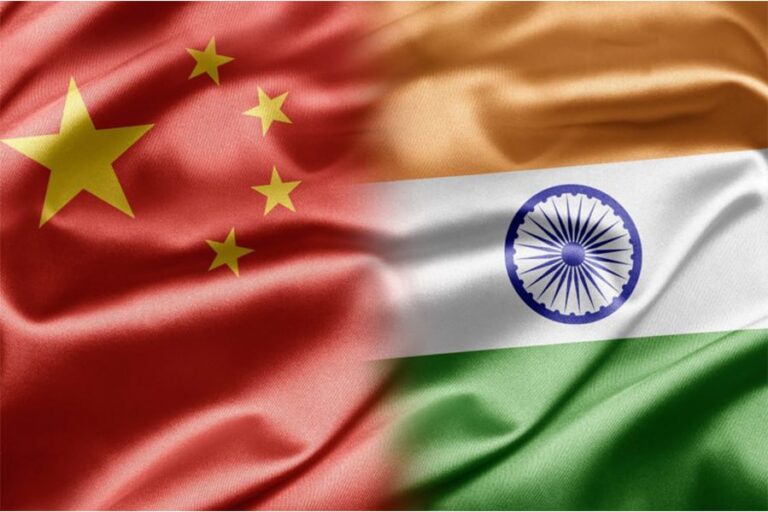
China, India and the Global Economy

According to the World Bank and IMF, China and India are both now growing much faster than the West. Their greater populations mean that their output will overwhelm the West’s well before 2100. The global economy history book indicated that their brutal realism about international economic relations, so similar to the attitudes of Britain in 1815 and the United States in 1915, will ensure their success.

Martin Hutchinson, a renowned British author and market analyst, asserted that  just as the 19th Century belonged to Britain and the 20th Century to the United States, so the 21st Century will belong to China and India, with no other obvious claimant to the 22nd century. He noted that China and India’s assertiveness, in both economic and geopolitical spheres, is reminiscent not of the hesitant Britain and United States of today, but of their activities in the period when they were rising to global hegemony, around 1815 and 1915 respectively.

According to history, around 1815, Britain claimed the right to seize neutral merchant ships, prevent them from trading with France and collect any British citizens who might be serving on them. Its effective closure of United States trade through the 1807 Orders in Council was the main cause of the War of 1812. Around 1915, the United States maintained massive protective tariffs against the world’s trade, far higher than others’. It also built the Panama Canal and invaded Mexico and Haiti, asserting its rights in the Western Hemisphere much as Vladimir Putin does in neighboring countries today.

Martin Hutchinson stated that, India follows the relatively benign model of Britain 1815 and the United States 1915 fairly closely. Indeed, India is not yet quite as assertive in foreign policy as was either previous emerging hegemon. China on the other hand is in many respects more like the Kaiser’s Germany, claiming disputed areas of ocean by building artificial islands thereon. They are also building a navy that, like the Kaiser’s High Seas Fleet, can be aimed at only one other power, the existing hegemon.

Economically, the case for China and India’s emergence is rock solid. According to figures by Price Waterhouse Coopers earlier this year, even if there is considerable slowing in growth after 2020, by 2050 China will have a GDP of $61 trillion to the United States $41 trillion. Meanwhile, India with GDP of $42 trillion will also have surpassed the United States to become the world’s second largest economic power. In practice, Price Waterhouse Coopers’s estimates are likely to be too conservative. Certainly its estimate of growth for the United States between now and 2050 is higher than has been achieved in the “recovery” from the 2008-9 debacle. Its estimates of growth for India and China both look low.

That is not to say China and India will be as rich as the United States in per capita terms by 2050, even if they grow faster than Price Waterhouse Coopers estimates. Nevertheless they will be considerably richer than they are currently, especially in India’s case. With total GDPs larger than the United States they will be able to project force more effectively than will the United States, even with the help of its NATO allies. Russia, fading from sixth place in GDP (on a purchasing power parity basis) in 2014 to eighth place in 2050, less than one tenth the size of China, will also be a declining force internationally, even if it has managed to annex a few neighboring economic basket cases.

According to Martin Hutchinson, looking beyond 2050, it is difficult to see what might dislodge China and India from their hegemony. Price Waterhouse Coopers estimation revealed that, of individual countries in 2050, in economic terms, the fourth is Indonesia, with a GDP about 30% of the United States and double that of the largest European country, Germany. In terms of population, China and India are several times the size of the next largest country, and will remain so, increasing their geopolitical clout accordingly.

They will still be much poorer than the United States in 2050, and so they will presumably enjoy some further catch-up in terms of wealth and living standards and hence increase their lead in terms of raw GDP. India’s year 2100 population is projected as 1.6 billion by the United Nations and China’s at 1 billion. This compares with a mere 450 million projected for the United States.

Martin Hutchinson noted that it is possible of course that other countries may combine, in much the same way as the EU has attempted so painfully to do. Nigeria’s population is projected as 752 million in 2100. Africa’s population as a whole is projected to approach 4 billion, since fertility rates will remain much higher there than in other regions throughout the 21st century. The world’s population overall is now projected in 2100 to be a grossly overcrowded 11.2 billion. China and India together will represent only 23% of the total compared with today’s 31%, thus be theoretically vulnerable to a new competitor.

An African federation, if one could be formed, would have four times China’s population and 2½ times India’s in 2100. It might have approached those much richer countries in terms of total GDP, while remaining much poorer per capita. That would suggest that the 22nd Century might well belong to such a federation, if it came into existence. But consider the difficulties that have been faced by the European Union.

As it is obvious, most of those African states share a common history and culture, if not language. It seems very unlikely that Africa’s 54 countries will be able to form themselves into a federation tight enough to act as one superpower. It is of course possible that a subgroup of those countries may do so. However it would probably still lag China and India in terms of GDP, even if not in population.

Martin Hutchinson stated that, in any case, if there is to be another geopolitical transition taking place after 2100, it will be for China and India to worry about, not for us inhabitants of what will then be second-class powers. In general, we can anticipate a transition to Chinese/Indian hegemony philosophically, if not without regret. The main difficulty will be that of having two hegemons whose emergence will not be simultaneous.

China is emerging already, whereas India requires another 20-30 years before its economic clout is sufficient to bring top-level geopolitical power with it. This staggered emergence clearly has the potential for conflict. With today’s technology, that could greatly damage the rest of us, even if we stayed out of it directly.

Transition between hegemons does not have to result in war. Britain handed over peacefully to the United States, for example. But it brings risks higher than in periods of hegemonic stability. Politically, both China and India are at present reasonably benign, much more so than the 20th Century Soviet Union. We should also remember that China has a history of global hegemony and one which does not look much like European hegemons.