Wednesday, May 6, 2026
Home Blog Page 18

Climate shocks are deepening in Ethiopian cities, study warns

0

Climate change is making life more difficult for urban businesses in Ethiopia, where floods, heat waves and erratic weather are increasingly disrupting the livelihoods of women entrepreneurs and micro and small enterprises, according to a new report by the Center for Financial Inclusion, an independent think-tank housed at Accion. The study says extreme weather is becoming more frequent and more severe in cities such as Addis Ababa and Dire Dawa, exposing the limits of existing infrastructure and financial protection.

The April 2026 report, Early Warnings, Faster Recovery: How Climate Information and Finance Shape Women’s Resilience in Urban Ethiopia, says more than one-third of micro and small enterprise owners in Addis Ababa report being affected by climate shocks, while fewer than 20 percent can access emergency funds. It adds that many women-led businesses are operating informally, with limited savings and weak access to digital tools, leaving them highly exposed when disaster strikes.

The study, based on survey data and focus group discussions with more than 800 women microentrepreneurs in Addis Ababa and Dire Dawa, found that timely climate warnings can significantly improve recovery. Access to early alerts was associated with a 37 percent increase in rapid business recovery after a shock, especially when combined with savings or other financial tools.

Researchers said the findings are especially important because urban Ethiopia is already under pressure from rapid migration, poor drainage, informal settlement growth and uneven infrastructure. The report notes that 67 percent of Addis Ababa residents live in flood-prone areas, while Dire Dawa has long been vulnerable to flash floods and extreme heat.

The report also warns of an “adaptation trap,” in which the entrepreneurs hit hardest by climate shocks are the least able to invest in future protection because they have already depleted their resources. That makes the poorest and most vulnerable women entrepreneurs the least likely to recover quickly or build resilience for the next disaster.

The authors argue that climate resilience is no longer only a development issue but a business survival issue. They say cities need stronger early-warning systems, better access to emergency finance and more practical climate information delivered through trusted channels if urban enterprises are to withstand repeated shocks.

The report also highlights the role of information access in driving resilience, saying women with both financial services and climate alerts were better able to take preventive steps such as reinforcing roofs or elevating shelves. But it cautions that the most vulnerable still face barriers to using such tools, even when alerts are available.

Ethiopia drives Africa’s renewable energy growth, IRENA says

0

Ethiopia is emerging as one of Africa’s main renewable energy markets, helping drive the continent’s highest annual capacity increase in 2025, according to the International Renewable Energy Agency’s latest Renewable Capacity Statistics 2026. The report says Africa’s renewable power capacity rose sharply last year, with Ethiopia among the countries leading that expansion alongside South Africa and Egypt.

The IRENA report says renewable energy continued to dominate new global power additions in 2025, with Africa recording its strongest annual increase to date. It notes that while solar and wind power accounted for most new capacity worldwide, Africa’s overall growth was still far below the pace seen in China, the United States and the European Union.

For Ethiopia, the finding reinforces the country’s growing role in the clean energy transition. The report does not break out Ethiopia’s exact capacity in the summary, but it identifies the country as one of the main contributors to Africa’s record renewable energy expansion in 2025.

IRENA said renewables accounted for 46 percent of global installed power capacity at the end of 2025 and 74 percent of new global power additions during the year. The agency said the trend reflects the economic competitiveness of renewable power, but warned that much faster growth is still needed to make clean electricity the world’s dominant source.

The report also said Africa’s renewable capacity reached a new high in 2025, driven by Ethiopia, South Africa and Egypt, while the Middle East also saw strong growth led by Saudi Arabia. It said the growth shows the widening spread of renewable investment outside traditional markets, even though global deployment remains uneven.

For Ethiopia, the momentum could support broader energy security goals, including grid expansion, industrial power supply and rural electrification. The country has long relied on hydropower, but the IRENA data suggests it is increasingly part of a wider renewable energy mix that also includes solar and wind.

IRENA said the global transition still faces major planning and grid-flexibility challenges, particularly as renewable energy approaches a larger share of total generation capacity. The agency added that the next phase will require stronger policies, better infrastructure and more distributed generation if the world is to move toward a just and sustainable energy future.

Addis Ababa hosts inaugural China-Africa Entrepreneurs Summit, with AU calling for youth-led growth

0

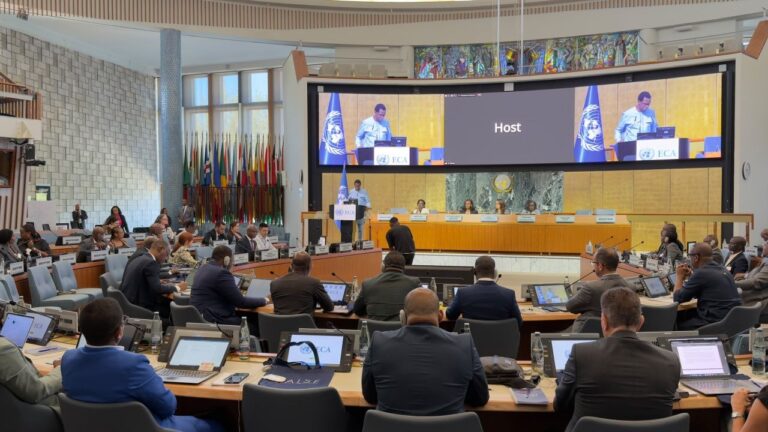
The inaugural China-Africa Entrepreneurs Summit opened on Tuesday at African Union headquarters in Addis Ababa, bringing together political leaders, diplomats, and business representatives from China and Africa for a forum focused on trade, investment, industrial cooperation, and entrepreneurship.

Ethiopian President Taye Atske-Selassie said the summit was especially timely because it focused on entrepreneurship and jobs, a subject he said resonates deeply with Africa’s aspirations. He said the 2026 China-Africa People-to-People Exchange Year should be rooted in dignity and mutual respect, arguing that such a foundation can be translated into transformative trade and investment rather than extraction. He also described China-Africa cooperation as a “joint community with a shared future”.

Taye said the summit theme, “Deepening Practical China-Africa Cooperation and Embarking on a New Journey for Development,” came at a moment of geo-economic uncertainty shaped by competition over strategic minerals and disregard for Africa’s sustainable future. He said Africa is not a future promise but a present reality where business can flourish, especially with the operationalization of the African Continental Free Trade Area and the expansion of the digital ecosystem.

The Ethiopian president said entrepreneurship in Africa must rest on agro-industry and youth empowerment, adding that there is a vast opportunity to make every young person an entrepreneur in the agro-industrial chain. He welcomed China’s decision to grant zero-tariff access to African countries starting in May 2026, saying it would help entrepreneurs enter the Chinese market without duties and accelerate export-led growth. He added that this would also support global trade at a time of severe supply-chain challenges.

Taye said the AfCFTA should become the center of the joint strategy for business cooperation, noting that Chinese investors who establish operations across Africa would gain a strategic foothold in the world’s largest single market. He said Ethiopia has already begun trading under the AfCFTA system and is implementing the investment protocol to unlock manufacturing and logistics opportunities [4]. He also said Ethiopia’s reform agenda has placed private-sector development at the heart of economic transformation.

A second priority, Taye said, is to move beyond simple technology transfer and establish joint research and development centers that bring together Chinese expertise and African creativity in artificial intelligence, green energy, mobility, and the digital economy. He said such centers would help develop technologies designed specifically for the African context and bridge the digital divide so that rural African entrepreneurs can access global markets as easily as traders in Shanghai.

Amb. Jiang Feng, head of mission of the People’s Republic of China to the African Union, said China-Africa relations had been elevated to an “all-weather China-Africa community with a shared future for the new era” after the 2024 Beijing FOCAC summit, and said China’s next phase of opening-up would create new opportunities for African partners. He said China will begin implementing 100% zero-tariff treatment on all tariff lines for products from 53 African countries with diplomatic ties starting May 1, 2026, and described the measure as a major opening for African exports to the Chinese market.

China-Africa trade reached a record US$348 billion in 2025, up 17.7% year on year, Jiang said, adding that China is already implementing 30 infrastructure connectivity projects and 30 clean-energy projects across Africa. He said the summit should help entrepreneurs from both sides build new links in agriculture, manufacturing, new energy, digital economy, mining, and finance.

AU Commission Chairperson Mahmoud Ali Youssouf welcomed participants to the African Union and thanked the Ethiopian government for its hospitality, saying the continent is widely seen as the future engine of global growth. He said Africa’s Agenda 2063 and the African Continental Free Trade Area place trade, integration, and private-sector dynamism at the center of the continent’s development strategy.

Youssouf said Africa should learn from China’s experience in agricultural reform, industrial acceleration, and technological transformation, arguing that agriculture and industrialization must advance together. He also stressed the importance of the energy, mining, infrastructure, and digital trade sectors, saying technological progress can shorten the time needed for transformation.

The AU Chairperson thanked China for applying zero-tariff treatment to products from many African countries and called on Chinese companies to invest more in Africa and build win-win value chains and supply networks with African firms. He said the AU wants special attention placed on youth and women entrepreneurs, and urged that the China-Africa Entrepreneurship Alliance be institutionalized.

In his remarks, Song Shangzhe, Deputy Director General of the China International Import Expo Bureau and Deputy Secretary General of the Hongqiao Forum Secretariat, from Ministry of Commerce of China said the CIIE team had traveled across the world to show that the expo is committed to following up on FOCAC commitments and helping African businesses access the Chinese market. He cited examples including Benin pineapples, Madagascar mutton, and Namibian baobab products, saying the platform has helped move African goods from exhibition to trade, e-commerce, and joint product development.

EIB, NBE move to launch Ethiopia’s first green taxonomy

0

The European Investment Bank, in partnership with the National Bank of Ethiopia, is preparing to roll out Ethiopia’s first national green taxonomy, a policy tool officials say could help attract climate finance, guide sustainable investment and support the country’s shift toward a more climate-resilient economy.

The initiative is being developed under the Greening the Financial Systems Programme, with funding from the governments of Germany and Luxembourg. Its goal is to create a common framework for defining which economic activities qualify as green, transitional or in need of major environmental improvement.

European Investment Bank representative to Ethiopia and the African Union Leïla Traoré said the taxonomy will serve as a kind of “dictionary” for sustainable finance, giving banks, regulators and investors a clearer basis for deciding where capital should flow.

“We are supporting the National Bank as Ethiopia builds its first National Green Taxonomy,” Traoré told Capital. “This is not just about agriculture; it’s a multi-sectoral effort including energy, transport and more.”

The technical support agreement for the initiative was signed in May 2025 between National Bank of Ethiopia Vice Governor Solomon Desta and Traoré. Since then, the project has moved into the implementation phase, with the EIB working alongside Ethiopian financial institutions to strengthen their capacity to assess climate-related risks.

Officials say the taxonomy is expected to help Ethiopian lenders and foreign investors speak the same language when it comes to green finance. By setting national standards, the framework aims to reduce uncertainty over what counts as a sustainable investment and help direct more money into projects that can withstand climate pressures.

The initiative also has a practical role in agriculture, which remains central to Ethiopia’s economy. Traoré said the taxonomy will help banks move beyond simply rejecting risky loan requests and instead offer more climate-resilient financing options.

“Instead of just saying no, the bank says, ‘Look, we want you to be strong and resilient,’” she said, adding that lenders could steer farmers toward solar-powered irrigation or drought-resistant crops.

The EIB says this kind of guidance can make banks not just lenders, but advisers helping businesses and farmers adapt to climate change. That, in turn, could improve repayment prospects while reducing exposure to drought and other weather-related shocks.

The bank argues that having a clear national taxonomy can also make Ethiopia more attractive to global investors. Traoré pointed to the European Union as an example, saying regions with well-defined green finance systems tend to draw a larger share of international climate funds.

According to the EIB, the taxonomy gives investors a clearer map of opportunities in the country and helps signal that Ethiopia is serious about aligning growth with environmental sustainability. The framework is also meant to support transparency in a global market where definitions of green finance can vary widely.

The EIB says it has brought to Ethiopia experts who have worked on 25 taxonomies around the world, but stressed that the process is being led by Ethiopian authorities. Traoré said the country retains full ownership of the policy direction.

“We have left the leadership to the country,” she said. “We support them with our knowledge and experience, but they are the ones who decide what is best for Ethiopia.”

To make the process more inclusive, the National Bank of Ethiopia has set up a steering committee that brings together government ministries, civil society, the Ethiopian Capital Market Authority and private sector representatives. Officials say the multi-stakeholder approach is intended to ensure the taxonomy reflects both national priorities and market realities.