Saturday, April 4, 2026
Home Blog Page 1845

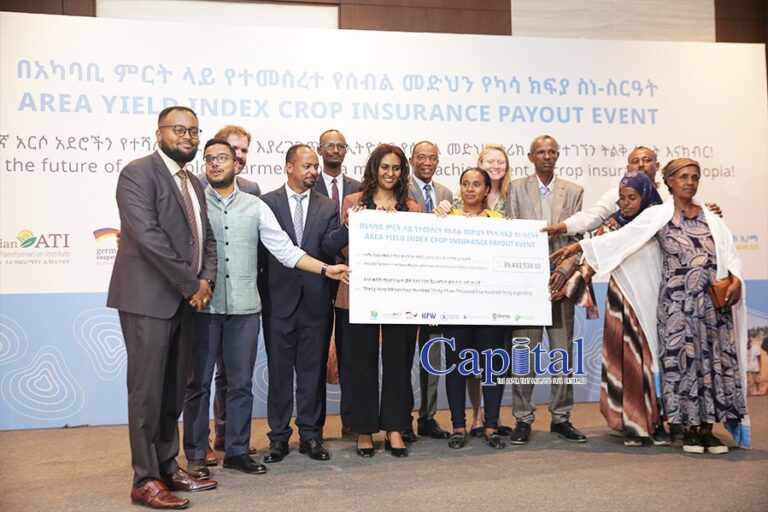
Ethiopia launches largest crop insurance compensation program

0

Ethiopia’s agricultural sector is witnessing a historic milestone with the launch of the country’s largest crop insurance compensation program. Pula, an agricultural insurance and technology company, will be distributing 39 million Birr in crop insurance compensations to 122,000 farmers via Oromia Insurance.

This significant initiative is a collaborative effort involving the Agricultural Transformation Institute (ATI), the World Food Program (WFP), and Pula Advisors. It marks a new era in Ethiopian agriculture, aiming to secure a prosperous future for smallholder farmers across the nation.

The program’s inauguration celebrated this achievement under the theme, “Celebrating Success and Securing the Future for Smallholder Farmers.” Pula Advisors, known for their extensive work in agricultural insurance across Africa and Asia, designed and implemented this comprehensive program after thorough research and numerous international field trips.

One of the key advancements of this crop insurance program is its integration with the Input Voucher System (IVS). This integration has not only broadened access but has also significantly reduced the insurance premiums for farmers. Unlike previous insurance offerings that provided coverage separately, often limiting access and increasing costs, this program offers expansive coverage against a variety of risks including pests and diseases.

The launch of this program represents a significant leap forward in managing agricultural risks and reinforces Ethiopia’s commitment to enhancing the sustainability and profitability of its agricultural sector.

Persistent Gender Disparities Hinder Women’s Safety and Productivity in Zimbabwe

0

In Zimbabwe, gender-based violence (GBV) is a significant concern, with a substantial number of women experiencing physical and sexual violence. Approximately 39.4% of women have been subjected to physical violence, and an estimated 11.6% have faced sexual violence. Although there has been a decline in child marriage rates, 16.2% of women were married before the age of 18 as of 2022.

While Zimbabwe has taken several legislative steps against GBV by adopting various international and domestic laws, the Zimbabwe Gender-Based Violence Assessment  underscores the necessity for more effective enforcement of GBV legislation and the establishment of legal frameworks that categorically criminalize GBV acts. Zimbabwe is a party to several global and regional legal instruments that promote gender equality and combat GBV. Additionally, the 2013 National Constitution of Zimbabwe is forward-thinking, prohibiting gender discrimination and all forms of GBV.

The GBV Assessment commends the policymakers’ commitment to eliminating violence against women and children in Zimbabwe, as espoused in the recently launched Zimbabwe National Strategy to Prevent and Address Gender-based Violence 2023–2030. However, the assessment notes that more work must be done on the legislative front. “The 2007 Domestic Violence Act needs to be amended to tackle harmful cultural practices and extend coverage to GBV incidents outside the domestic sphere,” said Eneida Fernandes, World Bank Country Manager for Zimbabwe.

The assessment urges prompt law harmonization and recommends strengthening coordination platforms to avoid duplication of efforts and overlapping mandates. All sub-platforms should report to the National Gender Forum. It also calls for strengthening the Anti-Domestic Violence Council, which has been inefficient recently.

Recommendations from the report, to prevent GBV, suggest designing, implementing, and evaluating targeted, systematic, evidence-based awareness campaigns to alter social and gender norms towards non-violence and respectful relationships, particularly in GBV hotspots. For GBV response, it is recommended that the justice delivery system be improved by addressing the bottlenecks that lead to delays in GBV case resolutions and establishing “Fast Track” GBV courts.

Accompanying the GBV assessment is the Zimbabwe Gender Assessment, which notes that despite advancements in gender equality, such as securing women’s reproductive rights, achieving gender parity in primary education, and increasing female enrollment in higher education, significant gender inequalities remain. These include the underrepresentation of women in wage employment, their overconcentration in the informal labor market, high youth unemployment among women, and high rates of teenage pregnancies and child marriages.

An intersectoral strategy would be essential to address the remaining dimensions of gender inequality. To meet women’s empowerment goals and targets in the country, it will be important to address the drivers of inequality in human endowments (health), economic opportunities, ownership and control of assets, as well as voice and agency. 

Helene Rex, World Bank Practice Manager, Social Sustainability and Inclusion

The Gender Assessment reveals that women are less likely to be employed in wage work and more likely to earn less than men. The labor force participation rate for me is 53% compared to 34% for women, and men outnumber women in most sectors. In the agriculture, forestry, and fishing sectors, men account for 58% of the industry labor market, while women make up 42%. Only 22% of working women are employed in wage or salaried positions, compared to 41% for men. Waged women employees earn, on average, about two-thirds of their male counterparts. This is driven by women’s concentration in less renumerated fields, limited work experience and skills, and unequal family and household care responsibilities.

To address gender disparities, recommendations from the report include, among other things, supporting socio-economic skills training for women, which has been shown to increase business outcomes among women microentrepreneurs. It also recommends supporting childcare services, such as offering preferential tax regimes to childcare centers and ensuring that women can engage across all areas of the economy. Addressing the gender divide in land ownership and assets and ring-fencing low-cost finance for women to purchase and own titled land and agricultural implements would also contribute to closing the gender gap.

Distributed by APO Group on behalf of The World Bank Group.

Polio Immunization drive launched in Tigray on African Vaccination Week

0

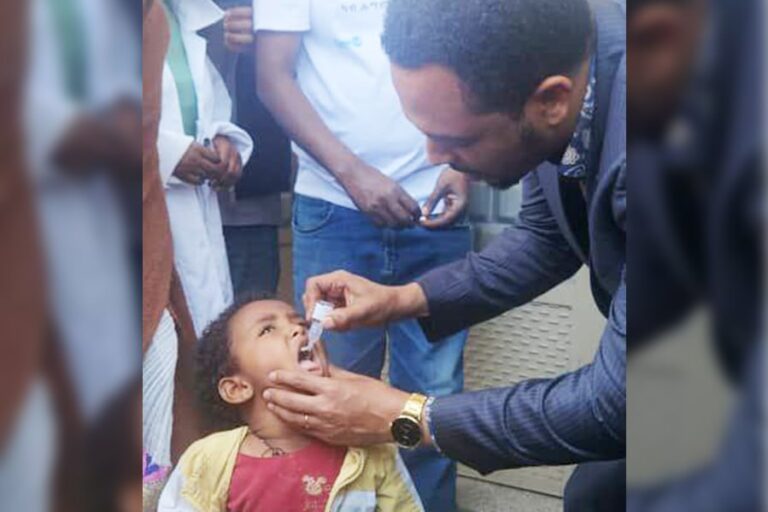
In a significant stride towards public health, Tigray regional state hosted the launch of the Polio National Immunization Days (NIDs) on April 23, coinciding with the African Vaccination Week.

This year’s vaccination campaign, launched by the Ministry of Health, together with Global Polio Eradication Initiative (GPEI) partners kicked off on the eve of the 14th National Vaccination Week. The campaign aims to administer Supplementary Immunization Activities to all children under five years old, providing them with Oral Polio Vaccine. Additionally, the campaign will emphasize Routine Immunization to ensure all children below one year of age receive timely vaccinations at health facilities.

Dr. Dereje Duguma, State Minister of Health graced the launch saying that the government is committed to work to ensure every child is vaccinated and reduce significantly zero dose children throughout the country. The campaign will reach over 1.5 million children at various launching sites and door to door in remote areas through mobile and transit teams across the region. 

A Logistical Review Committee has been established to oversee the campaign’s smooth execution, involving approximately 5,000 supervisors and coordinators across zonal, woreda, and kebele levels. The massive logistical effort will employ at least 15,000 team members and hundreds of vehicles to ensure wide-reaching immunization coverage across the region.

Reflecting on the global fight against polio, Teguest Yilma, Chair of the Rotary National Polio Plus Committee, remarked, “From witnessing 12 cases of wild poliovirus every 15 minutes in 1988 to just 12 cases worldwide in 2023, we’ve made remarkable progress. This achievement is a testament to the perseverance of countless health workers and the indisputable efficacy of vaccines.”

Despite the significant reduction in polio cases, the recent detection of new cases underscores the continuous threat the disease poses. “Polio anywhere is a threat everywhere,” Teguest cautioned, highlighting the need for ongoing vigilance to eradicate the disease entirely and prevent its resurgence.

The Tigray Polio NIDs event not only marks a pivotal moment in the local fight against polio but also serves as a reminder of the collective effort required to sustain health achievements and protect future generations.

Eritrea: Workshop Focusing on Tripartite Labor Relations

0

The National Confederation of Eritrean Workers, as part of the activities marking International Workers’ Day, organized a workshop under the theme “Professional Competence Development Stimulant” focusing on tripartite labor relations.

The workshop featured discussion papers on the meaning and significance of tripartite labor relations, presented by notable figures including Mr. Yohannes Michael, Head of Labor Relations, Mr. Mokonnen Asfaha, Acting Head of Labor at the Ministry of Labor and Social Welfare, Mr. Semereab Habte, Manager of Alfa Food Production and member of the Employers Federation, and Ms. Meaza Michael, Secretary of the Transportation and Communications Federation at the National Confederation of Eritrean Workers.

The presentations highlighted exemplary experiences of tripartite labor relations in Eritrea, which involve the government, employers, and workers which are recognized by the International Labor Organization.

Mr. Woldeyesus Elisa, Director General of Labor at the Ministry of Labor and Social Welfare, emphasized the importance of the workshop in fostering a common understanding among workers and employers.

Mr. Kibreab Kidane, Deputy Secretary General of the National Confederation of Eritrean Workers, discussed the significant role the confederation plays in the tripartite labor relations and its efforts to address the demands of workers.

In related news, the World Day for Safety and Health at Work was observed on 27 April in Asmara under the theme “Ensuring Safety and Healthy Work Now in a Changing Climate.”

Mr. Woldeyesus Elisa spoke at the event, noting the encouraging progress being made in ensuring the health and safety of workers in the workplace. He also urged employers, employees, and concerned institutions to overcome challenges due to natural and man-made consequences to achieve the desired outcomes.

This year marks the 21st international observance of the World Day for Safety and Health at Work and the first national observance in Eritrea.

Distributed by APO Group on behalf of Ministry of Information, Eritrea.