Wednesday, October 21, 2026
Home Blog Page 189

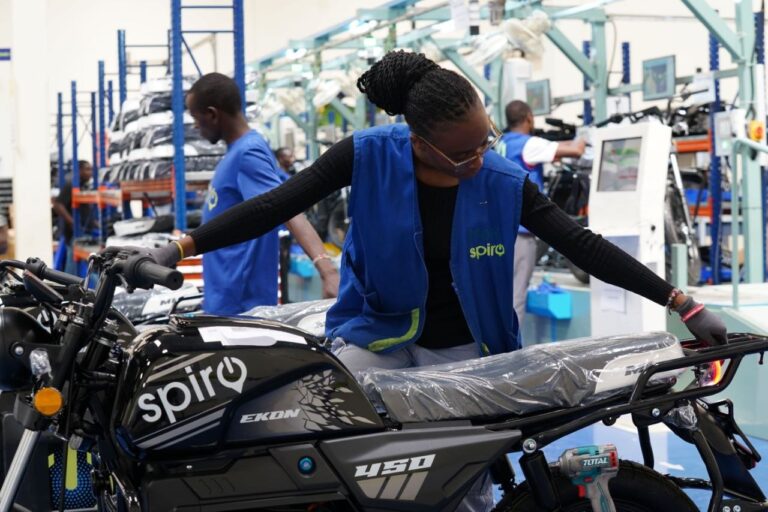
Spiro closes $270 million round with new $55 million backing from NewTrails Capital

0

By our staff reporter

African electric mobility platform Spiro has closed its latest funding round at $270 million after securing a fresh $55 million investment from Chinese growth-stage fund NewTrails Capital. The company said the new capital will support expansion of its battery-swapping network, manufacturing footprint and electric vehicle infrastructure across high-growth African markets.

Spiro said the latest raise reinforces growing international investor confidence in scalable EV and clean energy infrastructure platforms as African economies push to reduce fuel imports, strengthen energy security and modernize urban transport systems. The company is already operating in seven of Africa’s fastest-growing urban markets.

The financing round also includes support from existing institutional and impact investors such as FEDA, Impact Fund Denmark, Equitane, Nithio and the Africa Go Green Fund, Spiro said. The company described the closing as a major milestone in its push to scale across the continent.

Founder and Chairman of Equitane Gagan Gupta said the company has already deployed 100,000 electric vehicles and 2,500 smart-swap stations across seven active markets, adding that the business has moved beyond the proof-of-concept stage. He said the partnership with NewTrails Capital marks a new chapter for Spiro as it prepares for further expansion in Africa and beyond.

NewTrails Capital Founding Partner Yufan Zhang said Spiro is helping drive what he called an energy revolution in African mobility. He said the company’s strengths include its localized operating model, vertically integrated supply chain, digitally enabled ecosystem and ability to scale quickly.

Zhang also said Spiro has built a system that integrates vehicles, batteries, energy replenishment, payments and service networks in a way that addresses long-standing structural gaps in African transport markets. He added that NewTrails sees the investment as a long-term bet on Africa’s energy transition and green technology sector.

Spiro said the new funding will also help advance its localization strategy, including manufacturing and supply-chain development on the continent, particularly through Chinese suppliers.

The company’s latest fundraising underscores a broader trend of global capital moving into Africa’s clean transport and energy systems, especially as governments and private operators seek alternatives to imported fuel and high-emission mobility.

Beyond Discounts: Building a Sustainable Electronic Taxi Industry 

0

#Advertorial

The electronic taxi industry in Ethiopia has grown rapidly over the past decade, transforming the way people move around cities and creating new economic opportunities for thousands of drivers. As competition intensifies and new players enter the market, consumers are benefiting from lower fares, promotional offers, and a wider range of choices.

While affordable transportation is welcome, industry observers are increasingly asking an important question: how can the sector balance affordability, driver welfare, innovation, and long term sustainability? 

One of the key discussions in the industry today revolves around aggressive discounting and driver incentive programs. Many platforms including the new entrants such as Yango use promotional campaigns and performance based rewards to attract customers and encourage driver participation. These initiatives can create short term benefits for both passengers and drivers by increasing trip volumes and boosting earnings opportunities.

However, transportation experts note that higher trip volumes do not always translate into higher profitability for drivers. Completing a large number of trips often requires extended working hours and increased vehicle utilization. Over time, this can lead to higher spending on fuel, maintenance, tires, oil changes, and repairs, while also affecting the long term value of the vehicle.

“The challenge for many drivers is understanding the difference between cash flow and profitability,” one industry observer noted. “Higher weekly earnings may not always reflect the actual costs associated with operating a vehicle over time.”
Driver wellbeing is another important consideration. Long working hours can contribute to physical fatigue, stress, and road safety concerns.
 
“My name is Mekonnen, and like many drivers, I used to focus on how much money I made each week. Over time, I learned that the real question is how much remains after paying for fuel, repairs, oil changes, and other vehicle costs. Higher earnings can be encouraging, but understanding the true cost of operating a vehicle is just as important.” Mekonnen explained the challenges.
 
As the industry continues to grow, maintaining a balance between productivity, safety, and quality of life will remain critical.
The discussion also extends beyond drivers. Industry stakeholders continue to debate how competition can remain healthy and sustainable while encouraging innovation and consumer choice. Supporters of aggressive pricing argue that lower fares benefit customers and encourage companies to improve efficiency and service quality. Others believe that long term industry growth requires business models that create value not only for passengers but also for drivers, partners, and investors.

The future of Ethiopia’s electric taxi sector will depend on finding the right balance between affordability, innovation, and sustainability. A healthy market is one where consumers receive reliable services, drivers earn fair returns, companies continue investing in technology and safety, and competition drives continuous improvement.
There are also broader economic considerations. Locally built technology companies play an important role in creating jobs, supporting entrepreneurship, developing digital skills, and contributing to the national economy. As the digital mobility ecosystem evolves, maintaining a competitive environment that encourages both local innovation and responsible investment will be increasingly important.

As competition grows, industry stakeholders may continue to call for greater transparency around driver economics, pricing practices, and market sustainability. These discussions can help strengthen the sector and ensure that growth benefits all participants.

Ultimately, the success of Ethiopia’s e-taxi industry should not be measured by discounts alone. Its long term success will depend on its ability to create value for passengers, drivers, businesses, and the wider economy. Sustainable competition, responsible growth, and continuous innovation will be key to building a stronger mobility ecosystem for the future.

Because in the long run, the strongest mobility platforms are not only those that attract customers, but those that create lasting value for everyone they serve.

Ethiopia Selected as Africa’s Meteorology and Hydrology Training Center

0

It has been officially announced that the Ethiopian Meteorology Institute and Arba Minch University have been formally approved to serve as Regional Training Centers (RTC) for the World Meteorological Organization (WMO).

This decision was passed during the 80th session of the World Meteorological Organization’s Executive Council meeting currently being held in Geneva, Switzerland. It was noted that this opens a major door for Ethiopia to become a hub for meteorological professional skills in the African region.

Furthermore, it is expected to greatly assist the country in playing a significant and leading role in hydrology, meteorology, and climate service training across the continent.

It was revealed that the journey for Ethiopia to secure this prestigious continental training center status took more than two years and involved passing numerous strict criteria.

The process included formally presenting the country’s interest to the WMO Secretary-General and the Africa Management Board, as well as conducting an institutional internal capacity self-assessment.
Beyond this, external evaluations were conducted by independent bodies, and gaining full endorsement from the WMO Capacity Development Panel was the primary factor ensuring this success.

Following this major continental recognition, it was stated that the next steps will involve swiftly making the training centers fully operational and ensuring that professionals from across the continent are efficiently trained.

Ethiopia Highlights Benefits of New Africa-Wide Biotechnology Information Portal

0

Ethiopia is set to benefit from improved access to biotechnology and biosafety information following the launch of a new continental digital platform aimed at enhancing transparency and supporting evidence-based decision-making across Africa.

The newly introduced Biotech Africa Database, developed by the International Service for the Acquisition of Agri-biotech Applications (ISAAA AfriCenter) and its partners, brings together country-specific information on biotechnology regulations, approval decisions and procedures governing the movement of biotech products across African borders.

The online platform is designed to provide a single source of reliable and up-to-date information on the import, export and transit requirements of biotech products, making it easier for regulators, traders, researchers and policymakers to access essential regulatory data.

For years, biotechnology and biosafety information in Africa has been dispersed across multiple government agencies, official gazettes and regulatory documents, creating challenges for stakeholders seeking timely and accurate information. This fragmentation often led to compliance difficulties, delays in trade processes and uncertainty for businesses operating in several countries.

The new database seeks to eliminate these obstacles by consolidating regulatory information in one accessible location, thereby promoting regional cooperation, informed decision-making and the responsible adoption of agricultural biotechnology.
Speaking at the launch event, ISAAA AfriCenter Director Dr. Margaret Karembu described the initiative as a significant milestone for the continent’s agricultural transformation.

“Today we have opened a door where data replaces rumours, where a farmer in Kampala sees the same biotech information as a researcher in Kaduna, a trader in Johannesburg and a policymaker in Addis Ababa,” she said.

Ethiopia is among 73 countries worldwide that either cultivate or trade biotech crops. The country has approved two genetically modified crops for commercial production: insect-resistant maize and bollworm-resistant cotton. Both are regulated by Ethiopia’s biosafety authority, the Environmental Protection Authority.

The country also permits the importation of genetically modified food and animal feed, provided the necessary regulatory authorization is obtained.

Globally, more than 20 biotech crops are grown across 31 countries, covering approximately 218.7 million hectares of farmland. In addition, 29 countries import biotech products for food, feed and industrial processing.

Across Africa, ten countries have approved the cultivation of six biotech crops, namely cassava, cotton, cowpea, maize, potato and soybean. These countries include South Africa, Sudan, Malawi, Ethiopia, Kenya, Nigeria, Eswatini, Ghana, Burkina Faso and Rwanda.
Biotech crops have been developed to address key agricultural challenges by incorporating traits such as drought tolerance, resistance to pests and diseases, enhanced nutritional value, higher productivity and herbicide tolerance.

Africa currently cultivates nearly 4 million hectares of biotech crops, accounting for about two percent of the world’s total biotech farming area.

Experts say agricultural biotechnology has already improved the livelihoods of more than 17 million smallholder farmers in developing countries by increasing crop yields and reducing reliance on expensive chemical inputs. The technology is also helping farming communities build stronger resilience against climate-related and production challenges.

For Ethiopia, the new platform is expected to strengthen regulatory efficiency, facilitate regional trade and support the country’s ongoing efforts to modernize agriculture and improve food security.
