Wednesday, September 30, 2026
Home Blog Page 218

Moral education: Ethiopia’s missing pillar of modern schooling

0

While Ethiopia’s education system has made important strides in expanding access and academic learning, one pressing question remains: are we giving enough attention to the moral and character development of our students? The consequences are increasingly visible in everyday life. Rising corruption, misuse of public resources, erosion of trust, and even the normalization of violence – these are not just law-and-order failures. They are symptoms of a deeper educational gap, one that begins in classrooms yet reverberates across society.

At its core, moral education is not an optional add-on. It is the very essence of any meaningful education system, the formation of disciplined, responsible, and patriotic citizens. Without it, education risks producing individuals who are skilled but lacking a moral compass. In such a context, knowledge can be misused, power abused, and institutions weakened from within. Ethiopia, today, is precisely facing this dilemma.

From Central Pillar to Peripheral Concern

Ethiopia has not always overlooked moral education. Historically, both the formal education system and indigenous learning institutions placed strong emphasis on character formation. During the imperial era, moral instruction was deeply embedded in schooling, often reinforced through religious teachings and community values. Similarly, traditional institutions such as church-based schools cultivated discipline, humility, respect, and a strong sense of social responsibility.

However, this emphasis began to fade during the Derg regime, when moral education was sidelined, partly due to its perceived association with religious or ideological traditions. In the years that followed, particularly under the EPRDF, moral education was effectively replaced by civics education, later rebranded as “civics and ethical education.” While this shift introduced important concepts such as rights, duties, and governance, it largely emphasized cognitive understanding over moral formation.

The result is a system where students may learn about ethics in theory but are not adequately guided in living those values in practice. Moral education became a subject to be memorized, rather than a process to be internalized.

The Gap: Knowing Values vs. Living Them

Today, Ethiopia faces a widening gap between what is taught and what is practiced. Schools may promote values such as honesty, respect, and responsibility, yet these are often undermined by broader social realities. When students observe corruption, injustice, or misuse of authority in their environments, the credibility of classroom lessons is weakened.

This gap is not unique to Ethiopia, but its consequences are particularly severe in a context marked by political polarization, economic pressures, and social fragmentation. The erosion of moral norms affects not only individual behaviour but also national cohesion, institutional integrity, and long-term development.

Recent discussions in policy and academic circles acknowledge that moral decline is becoming a critical issue. However, recognition alone is insufficient. The real challenge lies in how moral education is conceptualized and delivered. Current approaches remain overly theoretical, relying on textbooks and lectures that fail to engage students in meaningful ethical reflection or practice.

So how can Ethiopia close this gap? The answer may lie in its own traditions.

Ironically, Ethiopia already possesses rich and effective models of moral education within its own traditions. Indigenous learning systems, particularly institutions such as ‘Abenet schools’, have long employed pedagogical approaches that go beyond instruction to shape character.

A recently published article by Dr. Molla Bekalu Mulualem on the pedagogies of Qene Bet schools highlights several key methods. Teachers engage in role modelling by embodying the values they teach. They use storytelling to convey moral lessons through narrative. Mentorship and guidance foster close relationships between teachers and students. Peer counselling encourages collective responsibility among learners, while structured discipline is reinforced through clear rules and expectations.

These approaches are powerful because they treat moral education not as a subject but as a lived experience embedded in daily practice. They engage emotions, relationships, and behaviour, not just cognition. Modern schools, by contrast, often separate moral instruction from lived reality. Yet there is no inherent reason why these indigenous methods cannot be adapted and integrated into contemporary education systems.

The Way Forward: Reintegrating Moral Education

If Ethiopia is serious about addressing moral decline, it must move beyond rhetoric and make real, lasting changes. This does not mean returning to the past uncritically, but rather drawing from both tradition and modern pedagogy to create a more holistic approach.

  1. Moral education should be reintegrated as a core objective of schooling, not treated as a secondary or optional component. This requires revisiting curricula to ensure that values are not only taught but practiced.
  2. Pedagogy must change. Teachers should be equipped with methods that emphasize experiential learning, including discussion, reflection, mentorship, and real-life application. Moral education cannot be delivered through lectures alone.
  3. Schools must cultivate environments that reinforce values through institutional culture: clear rules, fairness, accountability, and respect. Students learn as much from what schools do as from what they say.

Finally, there must be alignment between schools, families, and communities. Moral education is not the responsibility of schools alone; it is a shared societal task.

A National Imperative

Ethiopia stands at a critical juncture. The challenges it faces, social, political, and economic – cannot be addressed through technical solutions alone. They require a foundation of trust, integrity, and shared values.

Moral education is not a luxury reform to be considered later. It is a national imperative. Without it, the risk is not only continued social decay but a gradual weakening of the very fabric that holds the nation together.

The message is clear: if Ethiopia seeks sustainable development and national cohesion, it must invest not only in what its citizens know, but in who they become.

Taddese Alemu Zerfu (Ph.D) is a Research Fellow at the International Food Policy Research Institute (IFPRI)

West Asia’s make-or-break moment

0

The shifting balance of power in West Asia, characterized by unprecedented military exchanges and the erosion of established red lines, leaves little room for gradual adjustments. In this volatile landscape, only bold strategic realignments can prevent further escalation and reshape the geopolitical framework.

This is a critical turning point where the success or failure of endeavors—whether in sports, business, relationships, or politics—is determined. The outcomes are effectively binary: success or failure, advancement or collapse, triumph or setback. One must either rise to the occasion or fall short.

This moment serves as the ultimate test, where an endeavor can either succeed decisively or fail completely. In high-stakes situations, a single decision, performance, or response can dictate the ultimate result. There is no middle ground; one must confront the moment of truth and choose between a “go” or “no go” alternative.

When underlying discipline, skill, and mindset are robust, individuals tend to rise to the occasion and seize opportunities. Conversely, if these foundations are weak or confidence fragile, the same pressures can lead to failure, reinforcing the collapse side of the binary equation. Thus, there is a pressing need to make calculated compromises to favor the stronger option.

This is a moment where preparation meets pressure, resulting in either triumph or collapse. Pressure typically amplifies underlying strengths, sharpening discipline and mindset to facilitate success, while weaknesses may trigger failure.

Strong foundations foster confidence and focus, transforming anxiety into composure for execution. However, there are inherent risks in such moments. The current status in West Asia appears to reflect this dynamic, with foundations unevenly distributed across the region.

Iran’s Axis of Resistance has spent decades establishing what it considers a solid foundation—layered deterrence through proxies, missile arsenals, and economic resilience despite sanctions. Yet, the pressure from Israel’s targeted assassinations (such as Soleimani, Haniyeh, and Nasrallah) and weakened air defenses is testing whether this foundation is genuinely robust or merely brittle. The rapid collapse of Assad’s regime in Syria within just 11 days in December 2024 showcased how quickly perceived strength can devolve into vulnerability.

Israel possesses extraordinary tactical foundations—intelligence, air power, and technological innovation. However, the pressures of a multi-front war (in Gaza, Lebanon, Yemen, and the potential threat from Iran) expose a different narrative: strategic overstretch and diplomatic isolation. The failure on October 7 was the ultimate “choke” moment, where preparation and intelligence were tested under pressure.

Systems designed to withstand expected pressures often falter when faced with novel challenges. The U.S. shock-and-awe doctrine struggled against the resistance and tactics in Iraq, while Russia’s extensive preparations stumbled during Ukraine’s unexpected shift from defense to offense in the first year of the conflict.

A common trend emerges: strategies are often built on the assumption that opponents will engage on one’s own terms. For Iran, the “unpleasant alternative” is either humiliation or escalation; for Israel, it is either endless attrition or a risky preemptive strike.

Today, every front of conflict is populated by actors trained for yesterday’s wars while facing new scenarios involving UAVs, drones, and hybrid warfare technologies. The introduction of UAV swarms, electronic warfare, and low-cost munitions is altering the strategic calculus. Every major player in West Asia is acutely aware of the unpleasant alternatives they face.

Evidently, Assad’s fall in December 2024 was a seismic shock, but it may be more indicative of the Axis’s geographic overreach than its structural weaknesses. Syria has always represented the longest logistical land bridge for Hezbollah to Iran. Its collapse in just 11 days suggests that the fragility of the entire Axis is not the issue; rather, it highlights Tehran’s precarious ability to project power through failed states like Syria and post-withdrawal Iraq, relying on nearby collaborators at critical moments.

Israel’s war economy is currently under significant strain. While the U.S. can support munitions, it cannot address budget deficits or workforce depletion. In contrast, Iran has adapted to a sanctions economy for 45 years, yet the pain it experiences is disturbingly high. The question is not about who is stronger or who will exhaust their resources first. The “novel pressure” of drone and UAV warfare significantly alters the calculus of war. Although Iran’s strike of over 300 drones and missiles was partially intercepted, it learned that it could compel Israel to spend $1 billion on interceptors in response to just $50 million in drones.

The warfare of the 2020s has revolutionized cost asymmetry. Iran’s one-way attack drones cost between $20,000 and $50,000, while interceptors from Israel, the UAE, Qatar, and Kuwait (such as Arrow and David’s Sling) range from $2 million to $4 million per shot. In a prolonged conflict, this disparity disrupts the defender’s operational calculus, necessitating a more complex approach to warfare. Israel cannot afford to fight optimally; it can only afford to fight decisively and quickly.

This multi-front war sends a clear message to Israel: Iran poses a greater threat than anticipated. If Iran cannot be prevented from developing nuclear capabilities at this moment, it will likely possess a nuclear arsenal within 12 to 18 months.

The pressing question is which side’s system will break first and whether that break will be controlled or catastrophic. Regardless of the outcome, we are at a pivotal moment. When the nuanced strategies of conflict dissolve into a binary decision of success or failure, there is no room for error or half-measures. The unforgiving arithmetic of modern hybrid warfare demands critical thinking at every step to achieve a decisive outcome. Failure to do so could result in severe technological repercussions.

In the current landscape of West Asian geopolitics, the long-standing shadow conflict between Iran and Israel has escalated into a direct, high-stakes confrontation. Decades of proxy warfare, covert operations, and strategic maneuvering have culminated in a situation where traditional deterrence offers no safety net.

West Asia now stands at a critical juncture where the margin for error has vanished, leaving only the potential for decisive success or catastrophic failure. It is clear that neither Iran nor Israel will emerge victorious in any conventional sense.

However, both sides have demonstrated a remarkable capacity to absorb pressure without breaking. Israel endured the tactical choke of October 7, a historic event, while Iran has survived the losses of key figures like Soleimani, Haniyeh, and Nasrallah, as well as the degradation of its air defenses. The cost asymmetry of drone warfare and the pressures of hybrid conflict shift the balance toward the side that unravels first.

With neither side willing to compromise on their terms, the only remaining option is to pursue diplomatic channels in search of middle ground. The outcome is not simply a victory for one and a defeat for the other; rather, it presents a choice between two forms of failure: a controlled halt or a catastrophic collapse. While neither side desires the latter, both are caught in a cycle of escalation, as backing down would appear to be the same as succumbing to defeat.

The likelihood of a controlled halt hinges on effective diplomacy. Achieving this requires both sides to reach a mutually recognized pain threshold—a point at which they can cease hostilities and claim some degree of success. Iran seeks sanctions relief or a credible nuclear assurance, while Israel demands a weakened Hezbollah and guarantees that Iran is at least 12 months away from developing a weapon. However, these objectives appear incompatible.

This is a critical moment for Washington, Doha, and Abu Dhabi, as well as for Tehran and Jerusalem. The pressing question is whether these actors will recognize the looming danger before it is too late. We find ourselves at a pivotal juncture where escalating tensions in West Asia could lead to disastrous miscalculations that might plunge the region—and beyond—over the edge.

We are at a crossroads in history, witnessing the potential emergence of either a healthy resolution or a flawed outcome. A controlled halt would indeed be the wiser choice. Let us hope for this outcome; wishing for a peaceful resolution is preferable to the alternative.

The political economy of landslide victories in solo contests

0

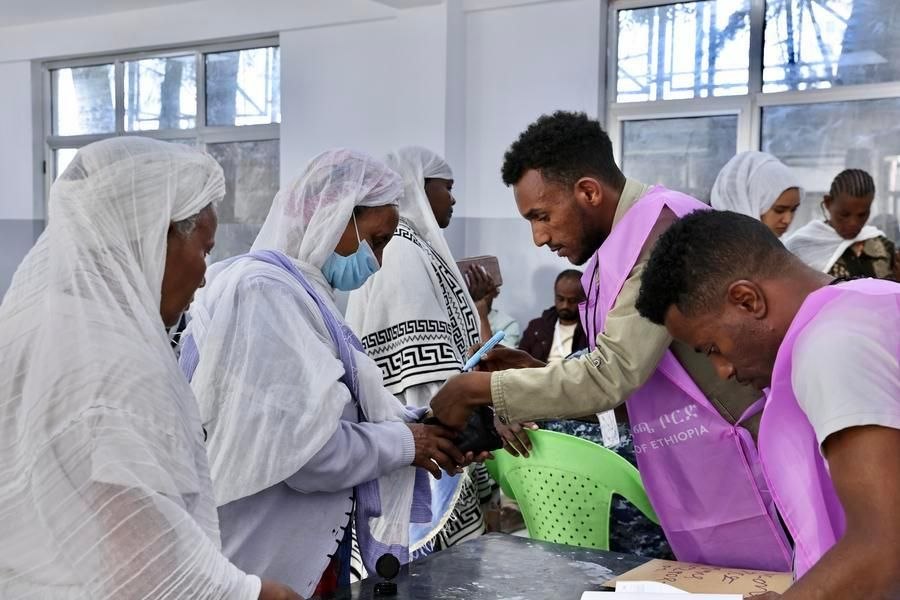
Landslide electoral victories are often interpreted as unequivocal mandates, signaling overwhelming public support for a political leader or party. However, when such victories occur in contexts where candidates run virtually unopposed or where meaningful competition is absent, the political economy underlying these outcomes warrants closer scrutiny. Recent electoral experiences across Africa illustrate that landslides in “solo” or weakly contested races are less about mass endorsement and more about the strategic configuration of institutions, resources, and power.

At the surface level, a landslide suggests legitimacy. High vote shares often exceeding 80 or even 90 percent appear to reflect national unity or widespread satisfaction with incumbents. Yet, political economy analysis compels us to interrogate the conditions under which such outcomes are produced. Elections are not merely expressions of voter preference; they are embedded in systems of incentives, constraints, and asymmetries that shape both participation and competition.

A central feature of landslide victories in solo-like contests is the management of political competition. This can occur through formal and informal mechanisms. On the formal side, electoral laws, candidate registration requirements, and party regulations may impose barriers that limit opposition participation. High nomination fees, stringent signature requirements, or restrictive media rules can effectively narrow the field of viable challengers. Informally, opposition actors may face fragmentation, co-optation, or strategic disincentives to run, particularly when the probability of victory is perceived to be negligible.

The result is a form of “pre-electoral selection” in which the outcome is largely determined before ballots are cast. In such settings, the landslide is not the culmination of a competitive process but rather the confirmation of an already consolidated equilibrium. This does not necessarily imply the absence of popular support; incumbents may indeed enjoy genuine backing. However, the magnitude of victory is amplified by the absence of credible alternatives.

Resource asymmetry further entrenches this dynamic. Incumbent governments typically command access to state resources, which can be deployed legally or otherwise to reinforce political dominance. Public spending, infrastructure projects, and social programs may be timed to coincide with electoral cycles, creating tangible incentives for voter support. At the same time, control over administrative apparatuses enables incumbents to shape the electoral environment, from voter registration processes to the allocation of polling stations.

In many recent African elections, the intertwining of political authority and economic control has been particularly salient. Governments often operate within patronage-based systems where access to economic opportunities is mediated by political affiliation. Under such conditions, voting behavior is not solely an expression of ideological preference but also a strategic calculation link with livelihood security. Supporting the incumbent becomes a rational choice when opposition victory is unlikely and when dissent carries potential economic or social costs.

The role of institutions is equally critical. Independent electoral commissions, judicial oversight, and media pluralism are essential components of competitive elections. Where these institutions are weakened or aligned with incumbents, the playing field becomes uneven. Media dominance, in particular, shapes public perception by controlling narratives around performance, to oppose and national identity. In solo-like contests, the absence of alternative voices reinforces the inevitability of the incumbent’s victory, further discouraging opposition mobilization.

Recent elections in Africa provide empirical grounding for these dynamics. In several cases, incumbents have secured overwhelming victories amid boycotts, fragmented opposition coalitions, or disqualified candidates. These outcomes are often accompanied by high official turnout rates, which are presented as evidence of democratic vitality.

From a political economy perspective, landslide victories in solo contests can be understood as equilibrium outcomes in systems characterized by high barriers to entry and concentrated power. Incumbents invest in maintaining this equilibrium through a combination of policy issues, institutional control, and narrative framing. Opposition actors, facing unfavorable odds, may choose to withdraw, boycott, or engage in limited participation, further reinforcing the incumbent’s dominance.

Importantly, these dynamics are not static. They evolve in response to both domestic and international pressures. Economic performance, for instance, plays a prominent role. Sustained growth and relative stability can bolster incumbents’ legitimacy, even in the absence of robust competition. Conversely, economic issues characterized by inflation, unemployment, or fiscal stress, can erode support and create openings for challengers. However, in tightly controlled systems, such openings may not translate into electoral competitiveness if institutional constraints remain binding.

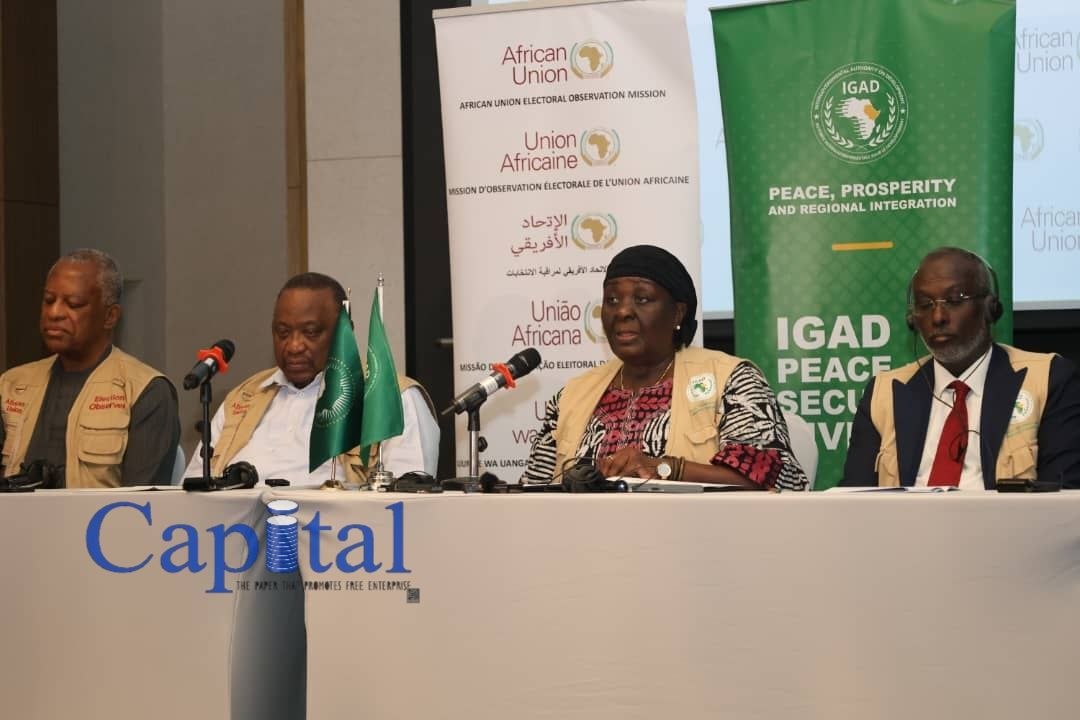
International actors also influence the political economy of elections. Donor organizations, regional organizations, and observer missions often emphasize procedural aspects of elections, such as the absence of violence or the technical conduct of voting. While these factors are important, they may overlook deeper structural issues related to competition and inclusiveness. As long as elections meet minimal standards, landslide victories in solo contexts may receive tacit acceptance, thereby legitimizing outcomes that are substantively uncompetitive.

The implications of such electoral patterns are significant for governance and accountability. Landslides in the absence of competition can weaken the incentive structures that underpin responsive governance. When political survival is largely assured, incumbents may face reduced pressure to address citizens concerns or to implement reforms. Over time, this can lead to governance deficits, including inefficiency, corruption, and policy stagnation.

At the same time, it would be overly simplistic to dismiss all landslide victories as illegitimate. In some contexts, opposition weakness reflects genuine dynamics, such as fragmentation along ethnic or ideological lines. Moreover, incumbents may command broad support due to historical legitimacy, developmental achievements. The analytical challenge lies in distinguishing between landslides that emerge from competitive processes and those that are products of constrained environments.

To move toward more competitive electoral systems, reforms must address both institutional and economic dimensions. Lowering barriers to entry for candidates, strengthening the independence of electoral bodies, and ensuring media pluralism are critical steps. Equally important is the diversification of economic opportunities, which can reduce dependence on political patronage and enable more autonomous voting behavior.

In conclusion, landslide victories in solo or weakly contested elections are best understood through the lens of political economy. They reflect the interaction of institutional design, resource distribution, and strategic behavior by both incumbents. While such outcomes may project an image of overwhelming support, they often mask underlying asymmetries that shape the electoral landscape.

Veterinarians: Africa’s First Line of Defense for Public Health

0

What comes to mind when you think about public health threats? Perhaps you picture hospital wards, busy emergency rooms, or doctors treating patients. However, most diseases that threaten human health do not begin in hospitals, they often start quietly in animals with first warning signs often seen on farms, in livestock markets, abattoirs or in communities where humans and animals interact closely everyday. Yet, in African countries, the professionals best positioned to detect these threats early– the veterinarians remain underutilized in the design and implementation of our public health systems.

As the world marks World Veterinary Day, under the theme “Veterinarians: Guardians of Food and Health,” we are reminded of the critical role veterinarians play not only in animal health but also in protecting our health, our food, and national resilience. In Africa, this role is important as millions of families depend on livestock for food, and income.

Veterinarians are uniquely positioned at the frontline of zoonotic disease detection (diseases that pass from animals to human beings). They are our first line of defense. Diseases such as rabies and brucellosis clearly illustrate the close biological link between animal and human health. In many cases, the first smoke signals of a pandemic aren’t coughs in humans, they are sick animals, meaning, if veterinarians can detect a disease early in animals, communities can be warned, and response becomes faster enabling prevention of the disease in good time before people start falling ill. 

Although African countries have made commendable progress in establishing human and animal health reporting platforms, including digital tools that have improved data capture and transmission, these systems still operate largely in silos. Animal health officers may detect unusual illness patterns in livestock while hospitals begin seeing unexplained symptoms in people, yet the two sets of information are not always connected quickly enough. As a result, valuable information remains underutilized and opportunities for coordinated responses are often missed. Evidence from Kenya national surveillance data shows that animal health data has not yet reached its full potential as an early warning system for human disease. This is not because there is no link between animal and human health, but because of persistent systemic challenges, including fragmented surveillance systems, under-reporting, inconsistent data quality, weak diagnostic capacity, and uneven reporting across regions. In some areas, disease events may go unreported altogether, while in others, limited diagnostic capacity affects accuracy. Together, these gaps hinder animal health data from serving as a reliable and timely early warning signal.

Climate change further complicates this challenge. Changes in rainfall patterns, rising temperatures, floods, droughts and wildlife interactions are altering how diseases spread. Drought may force people and animals to share water sources more closely increasing the risk of disease transmission. Wildlife may move into new locations bringing pathogens into contact with livestock and humans. That is why environmental information matters too.

To truly stay ahead of disease threats, African countries need systems that connect the dots between animal health, human health, and the environment. This is the essence of the One Health approach, which recognizes that the health of people, animals, and the environment is interconnected and must be addressed collectively. A strong One Health system would allow veterinarians, doctors, environmental experts, laboratories, and county officials to share information in real time, analyse risks together and respond faster.

When disease risks are not detected early in animals, outbreaks are often identified only after they have spread to humans. This leads to higher healthcare costs, disruption of livelihoods, and increased pressure on already strained health systems. Food safety is also compromised, as undetected animal diseases can threaten the safety and quality of animal-source foods. Ultimately, weak early warning systems result in avoidable human suffering and economic losses.

We cannot afford to wait until diseases reach hospital wards before we act. African governments must prioritize the operational integration of surveillance systems by establishing platforms that enable real-time data sharing and joint analysis across animal, human and environmental sectors. At both the national and county levels, One Health coordination mechanisms should be strengthened to support routine joint surveillance, risk assessment, and response planning.

Veterinarians must be integrated into public health decision-making and not only called upon when livestock are sick. They should participate in disease surveillance, early warning, and outbreak response. Investments are needed to improve data quality, enhance diagnostic capacity, and strengthen frontline reporting systems.

Development partners also have a role to play. They should align their support toward integrated, sustainable systems instead of fragmented, disease-specific programs. Building strong, interconnected systems will yield greater returns than uncoordinated efforts.

To effectively detect and respond to health threats, we must stop treating animal, human and environmental health as separate issues. Evidence from a national surveillance study conducted in Kenya shows the weak links between these sectors continue to limit our ability to identify and respond to emerging risks. Interconnected systems enable stronger data sharing, interoperability, and joint analysis turning fragmented systems into powerful early warning tools, enabling faster and more coordinated responses.

Safeguarding human health begins with interconnected systems that integrate animal, human, and environmental signals, and at the center of these efforts must be veterinarians, the often overlooked but essential first line of defense.