Wednesday, September 30, 2026
Home Blog Page 217

Ethiopia receives €110 million from EIB Global to support agri-finance, with focus on women

0

The European Investment Bank’s international development arm, EIB Global, is committing €110 million to help farmers in Ethiopia improve productivity, expand their businesses and cope with climate change. The Development Bank of Ethiopia (DBE)will channel the EIB Global credit line to local institutions that lend to agricultural enterprises in rural areas, with 50% earmarked for women and 20% targeting climate adaptation. 

The operation supports the third phase of Ethiopia’s “Rural Financial Intermediation Programme”, or RUFIP III, a flagship Ethiopian government initiative to strengthen the agricultural sector’s access to finance, competitiveness and resilience. Funds will be managed by the Development Bank of Ethiopia and on-lent to Rural Financial Institutions, including microfinance institutions and Rural Savings and Credit Cooperatives (RUSACCOs).

The final beneficiaries of this financing will mainly be smallholder farmers and MSMEs, with an emphasis on women and youth. Women make up more than half of Ethiopia’s agricultural workforce and have unequal access to finance. Closing this gap advances European Union goals to enhance rural financial inclusion worldwide.

The operation is also expected to contribute to climate action and environmental sustainability by 20%, particularly in supporting resilience of rural communities to droughts, floods or pests and thus contributing to adaptation goals aimed at appropriate environmental risk management procedures.

Ethiopian agricultural businesses to get €40 million in financing under EIB Global accord with Zemen Bank

0

Agricultural businesses in Ethiopia will be eligible for as much as €40 million in financing as a result of an agreement between the European Investment Bank Group’s development arm, EIB Global, and domestic lender, Zemen Bank SC. Under the accord, EIB Global is providing a credit line of €20 million to Zemen Bank, which will in turn match the sum. This is the first direct loan to a commercial bank extended by EIB Global in Ethiopia.

The deal involves on-lending by Zemen Bank to Ethiopian small and medium-sized enterprises (SMEs) licensed to operate in the country and export primarily in the agriculture sector. There will be a 30% focus on businesses that promote climate action and environmental sustainability. Gender is also a feature of the initiative, with at least 30% of the overall funding to be directed towards SMEs that are owned or led by women or provide employment, products and services for women.

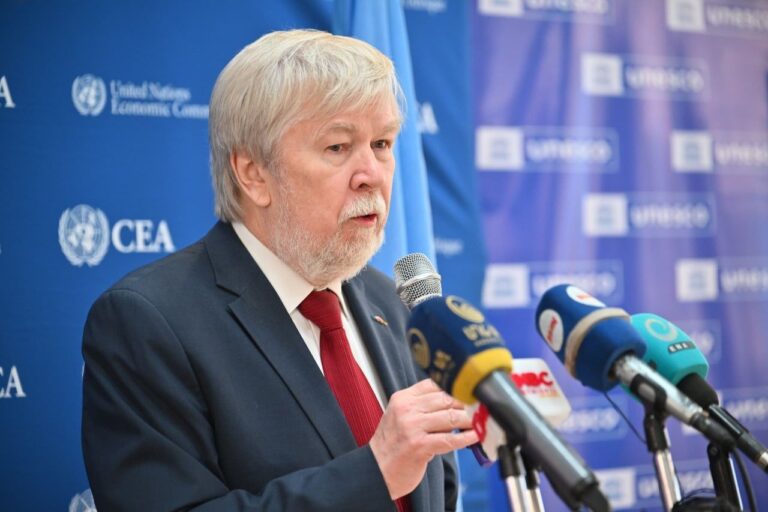
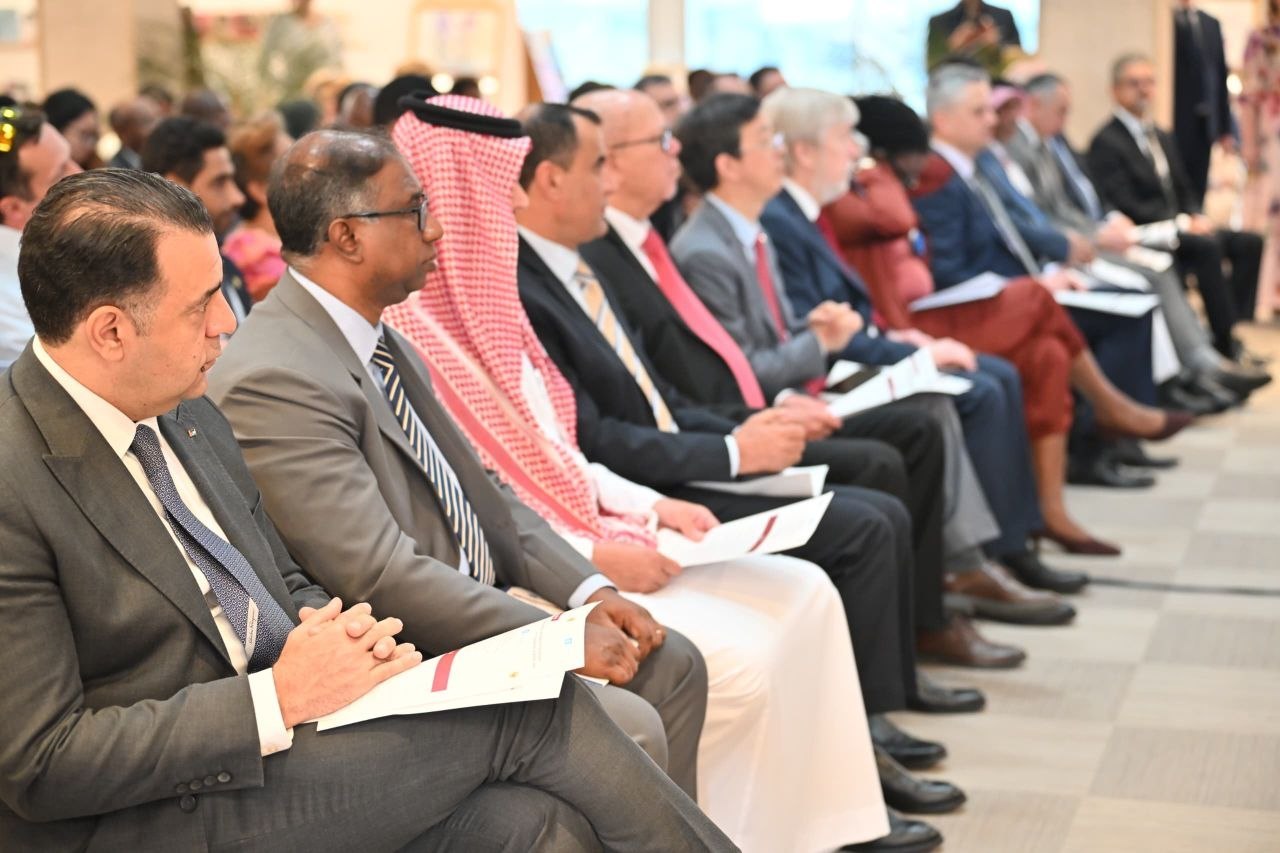
The agreement was announced today in Addis Ababa at a European Union-Ethiopia Business Forum attended by European Commissioner for International Partnerships Jozef Sikela and Ethiopian officials. Agriculture accounts for more than a third of Ethiopia’s gross domestic product (GDP).

Why the EU–Ethiopia Business Forum matters for investment

0

The EU–Ethiopia Business Forum arrives at an important moment for Ethiopia’s economy. After years of uncertainty, reform fatigue and external shocks, the country needs more than expressions of confidence. It needs credible capital, predictable policy and practical partnerships that can turn reform into investment and investment into jobs. The forum matters because it helps connect those three things in one place.

At its best, the forum is not just a meeting of officials and business leaders. It is a signal that Ethiopia is open for business and that European partners are prepared to engage with the country on a more strategic, long-term basis. The European Commission’s renewed financial commitment, including support for budget priorities and private-sector development, strengthens that signal and can help reduce the perception of risk that often keeps investors on the sidelines.

What makes the forum especially relevant is its focus on sectors that can drive broad-based growth. Clean energy, agribusiness, health and digital transformation are not abstract policy themes; they are the engines of productivity, export growth and employment. By bringing these sectors to the center of the discussion, the forum helps shift the investment conversation away from short-term aid dependency and toward commercially viable, development-oriented growth.

The event also matters because it creates a bridge between policy reform and private capital. Investors rarely move on potential alone; they need confidence in the rules, the infrastructure and the institutions that support their operations. The forum offers a platform to discuss de-risking, financing mechanisms and public-private partnerships, which are essential in a market where businesses still face regulatory bottlenecks, financing gaps and infrastructure constraints.

Ethiopia’s reform agenda is a key part of that equation. If tax administration, customs systems, investment procedures and financial-sector reforms continue to improve, the country becomes more attractive not only to European firms but also to domestic entrepreneurs seeking to expand. The recent initiatives announced alongside the forum show that policy credibility and investment promotion can reinforce one another when they are aligned.

The forum is also important because it helps Ethiopia move from being seen mainly as a recipient of external support to being recognized as a market with strategic potential. That shift in perception can be powerful. Around 300 European companies are already active in Ethiopia, and that base can grow if the business environment becomes more predictable and the partnership deepens beyond isolated projects into a sustained pipeline of investment.

Still, the forum will only matter if it leads to execution. Business forums can generate headlines, memorandums and announcements, but investors will judge the outcome by what follows: faster implementation, clearer regulation, stronger institutions and bankable projects. The challenge now is to make sure the enthusiasm generated in Addis Ababa translates into real factories, farms, power systems, logistics improvements and digital services on the ground.

In that sense, the EU–Ethiopia Business Forum should be seen as a beginning rather than an endpoint. It offers Ethiopia a chance to align reform, diplomacy and investment promotion in a way that could unlock long-term growth. If the momentum is sustained, the forum may be remembered not for the speeches it produced, but for the confidence it helped build.

Africa’s Energy Wealth: Why Good Governance Must Power a Just Transition

0

Africa’s energy challenge is not a shortage of resources. It is a shortage of governance that works.

The continent holds some of the world’s richest solar potential, vast wind corridors, major gas reserves, hydropower capacity, and critical minerals. Yet Africa still consumes less electricity per capita than in almost any other region. Millions of homes remain unconnected. Industries depend on diesel. Hospitals ration power.

Geology cannot explain this contradiction; only institutions can.

A fair energy transition for Africa will not be decided by how quickly we install solar panels or sign climate commitments. It will be decided by whether our governance systems can convert resources into reliable power, affordable access, and inclusive growth.

Governance is what determines whether projects reach completion or remain abandoned; whether contracts are honoured or disputed; whether investors stay or leave; and whether communities benefit or feel excluded.

Africa is not transitioning from abundance. We are transitioning from scarcity.  In that reality, a fair transition must first deliver access, affordability, and reliability. Climate responsibility matters, but development responsibility matters just as much.

This is why good governance sits at the centre of Africa’s energy future.

Good governance doesn’t replace capital. It attracts it. It doesn’t generate power. It enables power generation to survive politics, currency shocks, and institutional uncertainty.

Across the continent, the evidence is clear. Where regulation is predictable, projects move. Where procurement is transparent, financing costs fall. Where institutions are independent, investor confidence grows. Kenya’s clean energy progress, Senegal’s improving power sector credibility, and Uganda’s hydropower expansion came from institutional discipline, not ideology.

Namibia’s energy story is similar: where governance is steady, projects advance. With clear regulation and credible institutions, Namibia has built investor confidence in solar and wind, positioning itself as a disciplined player in Southern Africa’s clean energy transition.

Public budgets alone will never fund Africa’s energy transition.  Private capital is essential and urgent.

But capital responds only to credibility.  If policies change midstream, money flees immediately.

 When politics overrides contracts, confidence collapses. Governance is a matter of economic survival.

A just transition also demands honest balance. Africa’s energy transition cannot precede prosperity; hydrocarbons remain essential until it is secured. Natural gas remains a vital transition fuel.  When properly governed, oil and gas revenues can fund renewable energy deployment, grid expansion, education, and healthcare.

The fairness of the transition is determined less by resource choice than by how revenues are managed and reinvested.  

A just transition is one where:

  • Renewables expand access.
  • Gas stabilises grids.
  • Oil revenues fund diversification.
  • Local capacity is built.
  • Communities see lasting benefit.

Fairness is not speed. Fairness is inclusion.

Africa must not be asked to leapfrog over development stages that others climbed slowly, using the same resources we are now told to abandon. The transition must respect history while preparing for the future.

Governance goes beyond systems.  It is about leadership. Leadership that protects institutions, resists short-term politics, and understands that energy is the backbone of national survival.

Africa’s energy wealth is real. But wealth becomes prosperity only when governance converts it into an opportunity for ordinary people.

Our sun will not develop us.  Our gas will not industrialise us by accident.

Our wind will not educate our children.

Only governance, focused on fairness and development, can achieve this transformation.

Africa does not reject transition, but insists on one with justice, made possible by good governance.

We reject transition without justice.

And good governance is what makes a just transition possible