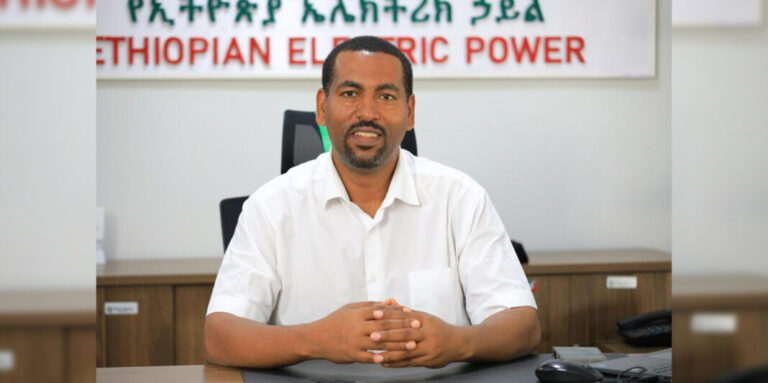
Teshome Kebede, Director of the Association of Ethiopian Microfinance Institutions (AEMFI), warns that the sector stands at a “structural turning point.” With foreign banks and fintechs entering Ethiopia’s newly liberalized market, MFIs must embrace digital transformation or risk marginalization.
In this exclusive interview ahead of AEMFI’s landmark 26th anniversary conference at UNECA, Teshome outlines the urgent “Next Generation” agenda: financial liberalization, digital ecosystems, and climate-resilient services.
Capital: AEMFI’s UNECA conference marks 26 years of microfinance in Ethiopia. Why is the “Next Generation” theme particularly urgent now, given the entry of foreign banks and fintechs into the market?
Teshome Kebede: The urgency of the “Next Generation Microfinance” theme at AEMFI’s UNECA conference goes beyond symbolism; it signals a structural turning point in Ethiopia’s financial sector after 26 years of microfinance development. This theme is timely because Ethiopia’s microfinance sector is entering a new competitive and technological era, driven by two significant disruptions: financial liberalization and digital transformation.
Historically, Ethiopia has safeguarded its financial sector, allowing microfinance institutions (MFIs) to flourish with minimal external competition. However, this era is ending as the government has opened the banking sector to foreign investors, enabling foreign banks to establish subsidiaries, branches, and acquire shares in local institutions. Several foreign banks have already begun applying for licenses, indicating that market entry is imminent.
As a result, MFIs will now face competition from well-capitalized, technologically advanced global institutions that offer superior products, pricing, and customer experiences. This makes the “Next Generation” theme urgent, as MFIs must evolve from being protected players to competitive, market-driven institutions.
Ethiopia’s fintech ecosystem is rapidly evolving and reaching a critical inflection point, transitioning from a closed financial system to an emerging digital landscape. The rapid expansion of mobile money, digital payments, and interoperable platforms, along with new players such as payment platforms, telecom-led finance, and digital lenders, is reshaping service delivery.
Traditional microfinance models—branch-based, manual, and slow—risk becoming obsolete. The “Next Generation” must prioritize digital lending, mobile-first service delivery, data-driven credit scoring, and embedded finance solutions.
For nearly three decades, microfinance in Ethiopia has primarily focused on expanding access. However, the challenge has grown deeper. Financial inclusion gaps remain, particularly in rural areas, shifting the priority from mere access to effective usage and impact. Digital tools are facilitating movement toward integrated ecosystems for credit, insurance, savings, and investment. Consequently, MFIs must transition from being mere lenders to becoming full-service financial inclusion platforms.
National reforms are accelerating, with digital payment strategies and interoperability frameworks expanding. Capital markets, investment banking, and private sector financing are emerging, and regulatory frameworks are evolving to support innovation and competition. MFIs must align with a more integrated financial ecosystem rather than operate in isolation.
A new generation of clients—youth, urban entrepreneurs, and digitally connected populations—expect instant services, mobile access, transparent pricing, and personalized financial products. If MFIs fail to adapt, fintechs and foreign banks will capture this segment.
After nearly three decades of remarkable progress, Ethiopian microfinance stands at a crossroads. The entry of foreign banks and the rise of fintech are not threats; they are signals that the future belongs to institutions that are faster, smarter, and more client-centric. The ‘Next Generation’ is not a vision for tomorrow; it is an urgent transformation for today. This moment presents a clear strategic choice: to reinvent and become digital, inclusive, and competitive leaders or risk stagnation and marginalization in a liberalized market.
Capital: MFIs face a stark choice: modernize with digital platforms or merge to survive. How is AEMFI assisting smaller institutions in meeting the National Bank’s 75 million ETB capital requirement by 2028?
Teshome: The National Bank of Ethiopia’s directive mandating all microfinance institutions (MFIs) to achieve a paid-up capital of ETB 75 million by January 2028 is a crucial reform aimed at strengthening the sector. However, it places significant pressure on smaller institutions. At AEMFI, we recognize that this challenge extends beyond mere compliance; it is a transformation issue. Our commitment is to ensure that no viable institution is left behind. To this end, we are assisting our member institutions in developing realistic, phased capital build-up plans as required by the regulator. Our focus is shifting from reactive compliance to strategic capital planning, aiming not just for survival through closure but for survival through growth and collaboration.
The ETB 75 million requirement symbolizes more than just capital; it represents credibility, resilience, and competitiveness. At AEMFI, we are helping our members not only to meet this threshold but also to leverage this moment for transformation by fostering stronger capital, smarter partnerships, and digital innovation. The future of microfinance in Ethiopia will not belong solely to the largest institutions but to those that can adapt most effectively.
Capital: Your shared core banking system now serves 40 MFIs. With Ethiopia’s Digital 2025 strategy accelerating, what’s the timeline for rolling out mobile wallets, AI credit scoring, and digital-first services?
Teshome: The MFIs’ shared core banking platform is not the final goal; it serves as a foundational layer for broader digital transformation in alignment with Ethiopia’s Digital 2025 and the emerging 2030 agenda. The pressing question is not whether we will go digital but how quickly we can scale the next layer. The strategic advantage of having 40 MFIs on a shared core banking system lies in building shared digital infrastructure, reducing acquisition and implementation costs, and accelerating sector-wide adoption, rather than having each MFI invest separately. This approach aligns directly with the national strategy’s focus on shared infrastructure and interoperability to prevent duplication.
The next phase is not about building systems but about unlocking ecosystems. With shared infrastructure already established, our timeline is expedited: mobile integration will occur in the short term, AI-driven lending in the medium term, and fully digital-first MFIs will emerge in the coming years. The future is nearer than we think, and we are collaboratively shaping it. This transition will enable MFIs to move from collateral-based lending to data-driven lending, particularly benefiting youth, women, and informal clients.
Capital: Interest-free banking demand is surging in pastoralist regions like Somali and Afar. How is the “dual-window” system performing, and what Sharia-compliant innovations are you prioritizing?
Teshome: The rising demand for interest-free (Sharia-compliant) financial services in regions such as Somali and Afar is not a fleeting trend; it signifies a structural shift in client preferences. For many pastoralist and underserved communities, access to finance is not only about availability but also about alignment with religious and cultural values. The introduction of the dual-window model, allowing MFIs to offer both conventional and interest-free products, stands out as one of the most significant innovations in Ethiopia’s microfinance sector in recent years.
So far, we are observing:
Strong uptake of interest-free products, especially in pastoralist and predominantly Muslim regions.
Significant new client acquisition, including previously excluded populations.
Improved trust and deeper engagement with communities historically outside the formal financial system. In many instances, the dual-window approach is not cannibalizing conventional products; rather, it is expanding the overall market.
This model has proven particularly effective in:
Pastoralist economies, where income is seasonal and asset-based (livestock).
Engaging women and youth, who were previously hesitant to utilize interest-based services.
Reaching remote areas where informal, faith-based finance has dominated.
The success of the dual-window system demonstrates that financial inclusion is not a one-size-fits-all solution. In regions like Somali and Afar, interest-free finance serves as an entry point rather than an alternative. Our priority now is to scale this model through digital delivery, diversified Sharia-compliant products, and enhanced institutional capacity—ensuring that inclusion is not only broader but also deeper and more resilient.
Capital: Commercial bank credit caps indirectly squeeze MFI liquidity. As foreign banks target down-market segments, what regulatory changes is AEMFI advocating to protect microfinance market share?
Teshome: The focus is not solely on protecting market share; it is about preserving the integrity of Ethiopia’s financial inclusion framework. Microfinance institutions (MFIs) serve client segments that differ fundamentally from traditional banking clients, and regulations must reflect this reality. AEMFI strongly advocates for a regulatory approach that supports an inclusive, competitive, and proportionate policy environment. One of our key advocacy points is that MFIs should not be subjected to the same regulations as commercial banks; instead, capital, liquidity, and reporting requirements should align with their social mandate and client profile. This approach will help ensure that MFIs remain viable while being sound and well-governed.
Credit caps and tightening liquidity conditions can disproportionately impact MFIs, which rely heavily on wholesale funding. We propose establishing a dedicated refinancing window at the National Bank of Ethiopia specifically for MFIs, along with access to concessional or blended finance facilities and emergency liquidity support tailored to the sector. These measures would stabilize lending capacity and prevent larger banks from crowding out MFIs. Additionally, we advocate for the formal recognition of microfinance as a priority sector within the financial system, which would create incentives for banks to allocate funds to MFIs, implement credit guarantee schemes, and provide targeted policy support for underserved segments such as rural communities, women, youth, and pastoralists.
It is crucial to emphasize that microfinance is not merely another financial segment; it is a vital development tool. We must ensure that the expansion of commercial and foreign banks into down-market segments does not result in mission drift. Client protection, responsible lending, and inclusion are paramount. This is not about shielding MFIs from competition; rather, it is about ensuring that competition does not compromise inclusion. We need a forward-looking and proportionate regulatory environment that enables MFIs to compete, collaborate, and continue serving the millions who remain underserved by traditional banking.
Capital: The leader-straggler gap is widening. Are voluntary mergers gaining traction, and what happens to MFIs that can’t meet capital rules? Will the NBE force consolidations?
Teshome: The widening gap between leading and smaller MFIs is evident, reflecting differences in capital strength, digital readiness, and governance capacity. However, it is important to note that this moment is not solely about consolidation; it represents a strategic repositioning of the sector. The leader-straggler gap serves as a signal rather than a crisis. While consolidation will be part of the future, it must be strategic, voluntary, and centered on client needs. AEMFI’s role is to ensure that this transition strengthens the sector as a whole, leaving no viable institution behind and no community underserved. As of now, there are no indications of mergers and acquisitions within the microfinance sector.
Capital: Climate shocks are devastating smallholders. How are you embedding weather-index insurance, drought-linked credit, and green microfinance into MFI offerings through your ILO partnerships?
Teshome: Climate shocks have become systemic threats for smallholders and microenterprise clients, rather than occasional events. Droughts, floods, and erratic rainfall directly impact repayment capacity, livelihoods, and financial resilience. In response, the association is actively exploring how to integrate climate-smart solutions into Microfinance Institution (MFI) offerings by leveraging partnerships. Climate shocks are now a permanent feature of our landscape. Through various collaborations, AEMFI is helping MFIs transition from reactive lending to climate-smart financial solutions, incorporating weather-index insurance, drought-linked credit, and green microfinance into their daily operations. This initiative aims to protect livelihoods, enhance resilience, and foster a sustainable future for Ethiopia’s smallholders. As a result of these efforts, MFIs are expanding their green lending products, which include:
Solar home systems
Water-saving irrigation equipment
Climate-resilient livestock and crop technologies
These loans not only support livelihoods but also mitigate environmental vulnerability, contributing to a sustainable finance ecosystem. Additionally, MFIs are piloting weather-indexed insurance products that automatically pay out when rainfall or temperature thresholds are exceeded. This innovation reduces credit default risk and ensures that smallholders are shielded from climate shocks, leading to financial inclusion that is both resilient and responsive to climate realities.
Capital: Looking five years ahead, what will Ethiopia’s microfinance landscape look like? Will we see 10 large digital-first institutions serving 30 million customers, or will fragmentation persist?
Teshome: In five years, Ethiopia’s microfinance sector is expected to undergo significant transformation, fueled by digitalization, regulatory reforms, and heightened competition. The landscape will likely see a consolidation and specialization trend rather than a simple “big vs small” scenario. Ethiopia’s microfinance sector will be both larger and more intelligent. A few digital-first institutions are anticipated to emerge as leaders in scale and efficiency, while specialized MFIs will continue to serve last-mile clients, ensuring that inclusion, innovation, and resilience remain central to the sector.
We expect a core group of leading MFIs to be fully digital, well-capitalized, and professionally managed.
These institutions will utilize mobile wallets, AI-driven credit scoring, and shared digital platforms to efficiently reach urban and semi-urban populations.
They will set benchmarks for service quality, operational efficiency, and innovation as market leaders.
Fragmentation will persist, with smaller MFIs remaining essential in rural and pastoralist regions, offering specialized, community-focused services.
These smaller institutions may thrive through partnerships, shared infrastructure, and targeted specialization, rather than competing directly with larger digital players.
Drivers of Change
Regulatory reforms: Capital requirements, tiered licensing, and inclusion-focused policies will promote consolidation while safeguarding small institutions.
Digital acceleration: Shared core banking and national payment systems will enhance scale and efficiency, paving the way for digital-first leaders.
Competition from banks and fintechs: MFIs will need to innovate to retain clients, particularly in the down-market segments.
Client demand for value: Youth, women, and micro-entrepreneurs will increasingly favor institutions that offer fast, convenient, and diversified financial services.