Thursday, October 1, 2026
Home Blog Page 258

EMTI graduates first female ETO Cohort

0

The Ethiopian Maritime Training Institute (EMTI) has announced that Ethiopia will soon be recognized as a source nation on the global maritime workforce map. For nearly fifteen years, the academy has trained highly qualified Electro-Technical Officer cadets and has now expanded its programs to include new disciplines and a greater focus on gender diversity.

On March 16, EMTI held a recognition ceremony for seafarers who successfully earned their Certificates of Competency (CoC). As an internationally accredited maritime education and training institution, EMTI adheres to the International Maritime Organization’s Standards of Training, Certification, and Watchkeeping (STCW). The ceremony honored a distinguished group of Chief Engineers, Second Engineers, and Third Engineers, marking a significant milestone for both their careers and Ethiopia’s growing presence in the global maritime industry.

During the event, Francois Joubert, CEO of EMTI, reaffirmed the institute’s commitment to growth through the introduction of new training programs.

“Every segment of the maritime workforce that currently looks to the Philippines, Indonesia, or Eastern Europe will one day look at Ethiopia as a quality alternative—a reliable source from a nation that takes maritime training seriously,” he said.

Joubert also celebrated a historic achievement for the institute: the graduation of its first 27 female cadets from the ETO26 cohort.

Netsanet Mazengia, Managing Director of EMTI, reiterated the institute’s dedication to nurturing the next generation of Ethiopian maritime professionals. She emphasized the importance of the female graduates’ accomplishments and encouraged them to pursue their maritime careers with confidence, determination, and resilience.

“EMTI continues to play a vital role in preparing Ethiopian engineering graduates for careers at sea. Through specialized maritime training aligned with international standards, the institute equips its graduates with the knowledge and skills required to serve aboard vessels operated by the world’s leading shipping companies,” the academy stated.

The institute added that as Ethiopia strengthens its role in the global maritime workforce, EMTI remains committed to developing highly skilled seafarers who will contribute to both the international shipping industry and the country’s maritime ambitions.

Joubert mentioned that some newly certified officers could not attend the ceremony due to their deployment in the Strait of Hormuz.

“In one of the most geopolitically charged waterways on earth—a corridor where commerce and conflict currently share the same narrow lane—our Ethiopian engineers are standing their watches, maintaining their equipment, and fulfilling their duties with professionalism and composure,” he said.

According to EMTI, over 3,000 Ethiopian seafarers have been trained at the academy, with more than 9,000 international maritime certificates issued, and Ethiopia now included on the IMO White List.

With technical oversight provided by professional partners and strategic alignment with the YCF Group, EMTI specializes in training graduate engineers for roles as Engine Watch Officers (EWO) and Electro-Technical Officers (ETO) aboard international merchant vessels.

Since its establishment, EMTI has positioned Ethiopia as a reliable source of skilled maritime professionals, with graduates serving aboard international fleets across Europe, Asia, and the Middle East. To date, the institute has trained over 2,600 cadets, and more than 1,600 Ethiopian seafarers are currently serving on international vessels.


EdTech entrepreneurs fight “Tough Battle” to scale innovations across Ethiopia

0

Ethiopia’s social entrepreneurs are battling to transform high-quality educational innovations from promising pilots into nationwide solutions, with experts warning that without urgent investment and systemic support, many ideas risk dying on the drawing board.

Sofia Breitholtz, CEO of Reach for Change, highlighted the core obstacles: “difficulty of scaling” and “challenges of implementing” new technologies within Ethiopia’s market constraints. While creative solutions abound, she said, transitioning effective pilots into regional or national services demands more than good ideas – it requires robust business training, government partnerships and reliable funding pathways.

Unlike mature markets, Ethiopia’s social entrepreneurship ecosystem struggles with “lack of institutional adoption,” where proven innovations fail to integrate into public school systems or local infrastructure. Breitholtz stressed the need to push solutions beyond Addis Ababa to reach underserved regions, particularly female students facing educational barriers and children with disabilities lacking accessible learning tools.

Reach for Change Ethiopia, marking a decade in the sector, is stepping up with a five-year, Mastercard Foundation-backed initiative alongside the Ministry of Education. Country Manager Mekdim Gulilat announced up to $60,000 in grants and technical support for young EdTech entrepreneurs modernizing education through technology.

The program – now welcoming 12 more participants to reach 36 total – targets scalable businesses already operating beyond the idea stage. Support spans phased milestone-based funding, marketing and branding training, business management coaching, and digital content design courses with Carnegie Mellon University.

Crucially, solutions must align with Ethiopia’s national curriculum while building platforms to connect founders with local and international investors. “Young entrepreneurs often can’t meet bank collateral requirements,” the organization noted. These grants provide critical leverage, with coaching and networks proving as vital as cash.

Qualifying ventures must demonstrate potential to solve regional problems – from rural girls’ education gaps to disability-inclusive learning. The funding releases in tranches tied to performance, ensuring accountability while building sustainable growth capacity.

Industry leaders say Ethiopia’s EdTech moment has arrived, fueled by rising smartphone penetration and post‑pandemic digital acceleration. Yet without bridging pilot‑to‑scale gaps, the country risks losing homegrown talent to foreign competitors or abandoning innovations at the local level.

Reach for Change’s model offers a blueprint: pair financial risk‑taking with institutional buy‑in and capacity building. Success stories already emerging show EdTech firms expanding from single woredas to multi‑regional operations, delivering curriculum‑aligned apps, AI tutoring tools and accessible learning platforms.

The stakes extend beyond individual startups. Ethiopia aims to educate 30 million students by 2030 amid teacher shortages and infrastructure gaps. Scaling proven EdTech could unlock learning for millions, but only if pilots secure the ecosystem support to thrive.

As Mekdim Gulilat put it, the real win lies in “bolstering the country’s educational ecosystem through innovation” – not isolated experiments, but integrated solutions reshaping classrooms nationwide.

Ethiopia among world’s highest child mortality hotspots – UN Report flags neonatal crisis

0

Ethiopia ranks near the bottom globally for child survival, with an under‑five mortality rate placing it 135th out of 147 countries in the latest UN Inter‑agency Group for Child Mortality Estimation (UN IGME) report, underscoring persistent gaps despite decades of health investments.

Sub‑Saharan Africa bears 58 per cent of worldwide under‑five deaths at 2.83 million in 2024, with a regional rate of 71.6 deaths per 1,000 live births, 19 times higher than Australia/New Zealand. Ethiopia’s rate reflects this burden, lagging far behind global averages amid conflict, fragility and stalled SDG progress.

Nearly half of all under‑five deaths now happen neonatally (first 28 days), up from 41 per cent in 2000, with prematurity (17 per cent), pneumonia (13 per cent) and birth asphyxia/trauma (10 per cent) topping causes globally – patterns mirroring Ethiopia’s challenges. In sub‑Saharan Africa, infectious killers like malaria, pneumonia and diarrhoea claim one in three post‑neonatal lives, compounded by malnutrition.

Progress has slowed sharply since 2015: the region’s under‑five annual reduction rate fell from 3.8 to 2.0 per cent, neonatal from 1.9 to 1.0 per cent. Ethiopia, classified as fragile/conflict‑affected, sees rates nearly triple the non‑fragile average (74.1 vs. 25 per 1,000).

Rural poverty, low maternal education and short birth intervals double risks, with boys slightly more vulnerable biologically. Off SDG track, Ethiopia must at least double its decline pace for 2030 targets – or risk 27.3 million global under‑five deaths by then, 62 per cent in sub‑Saharan Africa.

UN IGME urges Ethiopia to prioritize newborn care, immunization, nutrition and primary services in fragile zones to avert millions more deaths – achievable if high‑burden nations match high‑income averages (5.1/1,000).

NBE moves to regulate SACCOs, pension funds

0

The National Bank of Ethiopia (NBE) has announced a significant change in its regulatory approach, focusing on the “shadow” financial sector to mitigate systemic risks and promote fair market competition. NBE Vice Governor Solomon Desta emphasized the importance of this initiative for national financial stability, revealing that Savings and Credit Cooperative Societies (SACCOs) and pension funds will soon be subject to rigorous central oversight.

For decades, Ethiopia’s financial landscape has been divided. On one side are commercial banks and microfinance institutions, which are closely regulated by the NBE. On the other are SACCOs and large pension funds, which handle billions of Birr but operate under fragmented regulations.

SACCOs, in particular, have transformed from small community-based entities into significant financial players. Traditionally governed by the Ethiopian Cooperative Commission rather than the NBE, these institutions have benefited from lower regulatory costs and lighter capital requirements compared to commercial banks.

Vice Governor Solomon highlighted that “some SACCOs are now competing with licensed and regulated financial institutions.” He cautioned that “if we want a stable and robust financial system, this regulatory gap can no longer persist.”

The Governor pointed out that a modern financial system cannot thrive while substantial capital accumulations remain unregulated. With some SACCOs now rivaling commercial banks in scale, he warned that a liquidity crisis in one could lead to a “contagion effect” throughout the economy. The reform will also extend NBE oversight to pension funds.

The NBE defines “Regulatory Arbitrage” as the practice where financial institutions exploit sectors with looser oversight to gain an unfair market advantage. In Ethiopia, this manifests when cooperatives offer inflated interest rates or loan terms that banks, constrained by strict NBE reserve and prudential requirements, cannot match.

The concern extends beyond unfair competition to encompass systemic stability. Without NBE oversight, these institutions lack the safety nets available to the banking sector, such as the Ethiopia Deposit Insurance Fund.

Narayana SL, Managing Director of Skydive Consulting, stated, “If a large SACCO or pension fund encounters a liquidity crisis, the repercussions for the overall economy could be catastrophic. You cannot implement a ‘Homegrown Economic Reform’ while leaving billions in assets unregulated.”

Currently, the NBE acts more as an owner than a supervisor, but it plans to introduce strict investment guidelines to safeguard the lifelong savings of millions of Ethiopians. This will prevent pension assets from being invested in high-risk projects or non-performing government debts.

While industry experts support this initiative, they caution that implementation may be challenging. Consolidating thousands of community-based associations will require a significant digital transformation and must be executed carefully to avoid undermining financial access for lower-income segments of society.

Although pension funds currently report to the NBE, the bank is seen more as a “passive owner” than an active supervisor. The Vice Governor made it clear that the era of “indirect” oversight has ended. The NBE is now advocating for pension funds to be treated as systemic financial institutions, requiring them to adhere to strict investment guidelines, actuarial supervision, and transparent reporting.

Integrating these institutions into the regulatory framework presents significant challenges. The experience of six large microfinance institutions that transitioned to commercial banks demonstrated that moving to a higher level of regulation demands considerable human resources and the development of digital infrastructure.

The National Bank is currently collaborating with the Ethiopian Cooperative Commission to study how to incorporate SACCOs into the regulatory framework without compromising their social utility. Additionally, recommendations are being made to policymakers to empower the National Bank of Ethiopia (NBE) to directly supervise pension funds.

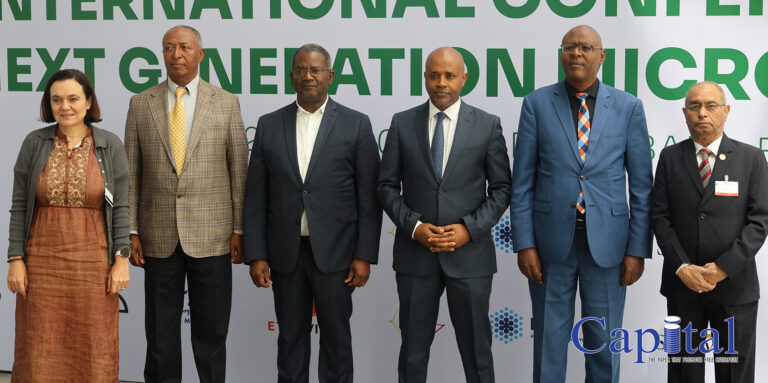
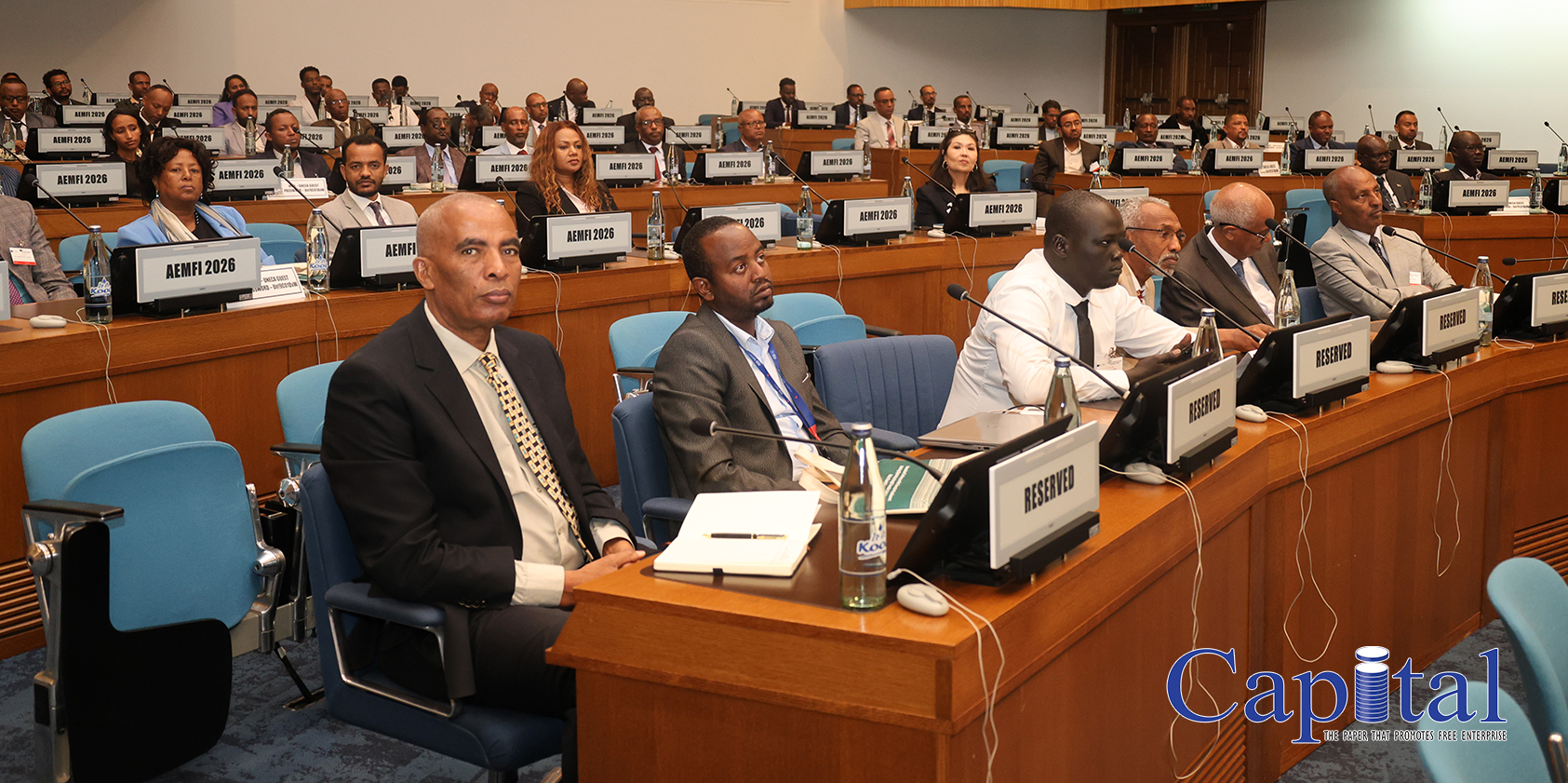
These developments were showcased at the 13th International Microfinance Conference in Addis Ababa, organized by the Association of Ethiopian Microfinance Institutions (AEMFI) in partnership with the European Union and the International Fund for Agricultural Development (IFAD).

Teshome Kebede, CEO of AEMFI, noted that while the microfinance sector has supported nearly 5 million citizens over the past 28 years, both global and national financial landscapes are shifting rapidly. “Customer needs from five or six years ago are vastly different from today and what will be expected in the future,” he stated, emphasizing that institutions can no longer rely on traditional, slow processes and must embrace customer-centric services.

The evolving financial sector in Ethiopia—marked by the entry of foreign banks and licensed Fintech firms—will intensify competition. To remain viable, institutions must prioritize digitalization, enabling customers to access services via mobile phones from anywhere.

In addition to technological advancements, there is a call for institutions to modernize service delivery by aligning loan and savings products with the living conditions of customers, focusing on innovation, and creating accessible financial options for youth and women to broaden their market reach.

Currently, there are 62 microfinance institutions in the country. It is crucial for these institutions to leverage international experience and address capacity gaps to effectively reach the millions of citizens still lacking access to essential services.