Thursday, October 1, 2026
Home Blog Page 260

Ethiopian banks post solid 15% loan growth in 2024 amid rising NPLs – Deloitte

0

Ethiopia’s banking sector surged ahead in 2024 with net loans and advances climbing 15.5 per cent to ETB 1.44 trillion, outpacing real GDP growth of 8.1 per cent despite 19.9 per cent inflation, according to Deloitte East Africa’s 2026 Banking Industry Outlook.

Customer deposits mirrored the expansion, rising 15.3 per cent to ETB 2.49 trillion and maintaining a stable loans‑to‑deposits ratio of 1.73 – a sign of strong resource mobilization fueling credit to agriculture, manufacturing and construction sectors.

Profitability proved resilient: return on assets (ROA) held steady at 2.0 per cent, while return on equity (ROE) edged down to 24.6 per cent from 25.7 per cent, reflecting larger capital bases and higher provisioning against risks.

Asset quality showed strain, however, with the non‑performing loans (NPL) ratio ticking up to 3.9 per cent from 3.6 per cent – still below regional red lines but signaling credit pressures amid economic headwinds.

The Commercial Bank of Ethiopia (CBE), the sector behemoth, leads digital modernization by piloting generative AI to summarize regulatory documents and boost efficiency, alongside early cloud infrastructure shifts to ease data center loads.

Deloitte highlights Ethiopia’s banks embracing regional trends: Gen AI for fraud detection and customer service; data analytics for behavioral credit scoring; and hybrid phygital models blending branches with mobile apps amid fierce deposit competition.

Regulators like the National Bank of Ethiopia (NBE) are tightening with AI guidelines and Basel III alignment, while banks eye diversification into bancassurance and fintech to offset net interest margin squeezes.

With global shocks like Middle East conflicts hitting oil importers, Ethiopia’s banks must sharpen risk management and fee‑based revenues to sustain momentum into a Basel‑heavy 2026.

Gambela Investment Commission challenges MIDROC over stalled rice, cotton projects

0

The Gambela Investment Commission has issued a strong critique of MIDROC Investment Group for its large-scale agricultural projects that have been stalled for the past decade, despite the group acquiring extensive land. The Commission has formally requested a clear plan for the future of these rice and cotton development initiatives, which were once projected to be the largest in East Africa.

Lou Obup, Commissioner of the Gambela Investment Commission, expressed concern about the lack of progress at the Saudi Star project in the Alwero and Abobo areas. Saudi Star, a subsidiary of MIDROC, began operations ten years ago with the goal of establishing Gambela as the regional hub for grains and crops.

The investment included the construction of a large dam capable of developing 10,000 hectares of land, a 35-kilometer canal system, and a unique rice threshing factory in East Africa. However, Lou noted that the project has been “diminishing and weakening,” stating, “These assets are currently non-functional. Your involvement in the region’s agricultural sector has dwindled. What is your plan to revive this investment?”

Jamal Ahmed, CEO of the Group, attributed the project’s setbacks to research gaps, natural conditions, and labor shortages. He acknowledged that the initial rice production study was a “flawed study” concerning the crop growth cycle in Gambela’s lowlands. Although MIDROC constructed a 35-kilometer irrigation canal, moisture levels fell just as the rice reached the critical “milking stage,” and unpredictable rainfall during harvest complicated crop collection.

Additionally, environmental and social factors presented significant challenges. “Migratory birds during the dry season were a major issue,” Jamal remarked. He also revealed a serious labor retention crisis in the region, explaining that due to an insufficient workforce, cotton fields remained unharvested.

Despite these challenges, MIDROC has no plans to abandon the region. Jamal Ahmed introduced a “re-engineered investment plan” aimed at addressing previous labor and climate issues. This plan includes importing small-scale harvesting technology from Vietnam, tailored to the moisture conditions of Gambela’s rice fields. To tackle the labor shortage that has left cotton to spoil, the group intends to fully mechanize operations at the Abobo farms, replacing manual labor with modern harvesters.

While the Commission invited MIDROC to explore opportunities in Gambela’s gold mining and hotel sectors, Jamal emphasized that their immediate focus remains on stabilizing existing agricultural operations.

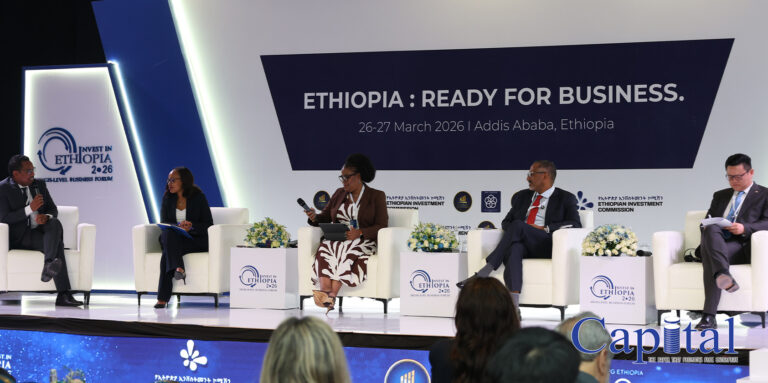
These discussions occurred during the 4th “Invest in Ethiopia” Forum, under the theme “Ethiopia is Ready for Investment.”

During the forum, Madalo Minofu, Country Manager for the International Finance Corporation (IFC), clarified that the institution’s investments are not confined to the capital. The IFC is working to establish “risk-sharing facilities” with local banks and microfinance institutions to ensure credit reaches agricultural and mining entrepreneurs throughout all regions.

This strategy aims to address the financing challenges faced by economic actors in rural and remote areas. However, investors at the forum highlighted that overcoming infrastructure deficits is fraught with challenges.

Concerns were raised about “bitter truths,” including the high logistics costs associated with Ethiopia being a landlocked country, a shortage of specialized skills in modern construction and pharmaceutical manufacturing, and an urgent need for transparent and predictable policy consistency.

To address these various concerns, the IFC and its sister organization, the Multilateral Investment Guarantee Agency (MIGA), are providing guarantee coverage to protect foreign capital from non-commercial risks. This initiative is designed to safeguard investors entering the Ethiopian market for the first time.

Forex reform sparks legal dispute between ESIG, Agrocorp

0

The Ethiopian Sugar Industry Group (ESIG) is embroiled in a legal dispute following the termination of a supply agreement, triggered by recent foreign exchange liberalization reforms.

Founded under Ethiopian Investment Holdings in 2022, ESIG oversees sugar sales and manages milling projects.

It now faces a 1.4 billion birr lawsuit from Agrocorp International, a Singaporean agricultural commodity trading company, over the annulment of a contract to supply 100,000 metric tons of sugar.

According to information obtained by Capital, the two parties entered into a contract in April 2024 to supply sugar aimed at stabilizing the market. This was necessary as domestic sugar mills, including the autonomous factories at Wonji Shoa, Metehara, Kessem, Fincha, and Tana Beles, were operating well below capacity.

After several months of unsuccessful negotiations, ESIG decided to cancel the contract, leading to the current litigation. The group cited potential price increases stemming from changes in the foreign exchange regime introduced in July 2024 as part of significant macroeconomic reforms.

Sources indicate that ESIG contends it should not be held to the agreement due to the substantial devaluation of the birr, which the group claims would inflate the cost of imported sugar beyond initial estimates. During negotiations, ESIG asserted that it was not liable for the contract because it had not issued a letter of credit (LC).

Agrocorp countered that the LC serves as a payment mechanism and does not invalidate the contract. After months of fruitless discussions, Agrocorp—familiar with the Ethiopian market and public procurement processes—filed a lawsuit in court.

Agrocorp alleges that ESIG breached the agreement, resulting in significant financial losses, and is seeking compensation for damages due to the contract’s cancellation. The original contract specified that Agrocorp would supply 100,000 metric tons of sugar, to be shipped in four lots. Following the breakdown of negotiations, the company filed its claim with a higher court in February 2025.

The contract detailed that the sugar was to be loaded from an Indian port, and Agrocorp claims its losses stem from payments already made for procuring the sugar. When the agreement was finalized, the sugar was priced at USD 880 per metric ton on a CFR (cost and freight) free-out basis at Djibouti Port, with shipments to be managed by the Ethiopian Shipping and Logistics. The contract also included a 12-month deferred payment provision.

Attempts by Capital to contact Weyo Roba, Chief Executive Officer of ESIG, were unsuccessful, and the group’s public relations department declined to comment, citing the ongoing court proceedings.

Ethiopia’s annual sugar demand is approximately 750,000 tons, while local production meets only around 400,000 tons. The remaining demand is fulfilled through imports, which are now predominantly handled by private importers as the country seeks to shift away from a state monopoly and promote greater private sector involvement.

The government has expressed strong interest in privatizing some public sugar mills; however, past responses to invitations for investment have been disappointing. A few years ago, the government approached potential large domestic investors, offering various incentives to take over parts of the factories—either independently or in partnership with international firms—but those efforts have yet to yield results.

Addis Ababa Building Livable, World-Class Urban Infrastructure, Says Mayor

0

Addis Ababa is undergoing a significant transformation through large-scale urban infrastructure development aimed at creating a livable, inclusive, and globally competitive city, Mayor Adanech Abiebie said.

Speaking at the Italy–Ethiopia Infrastructure and Urban Regeneration Forum, the mayor emphasized that ongoing projects, ranging from modern buildings and transport systems to riverside developments are reshaping the capital and improving residents’ quality of life.

“We are building a habitable, livable, and world-class city for our people, leaving no one behind,” she said, highlighting that infrastructure expansion is central to the city’s long-term vision.

Adanech noted that Addis Ababa’s rapid construction drive reflects Ethiopia’s broader ambition for prosperity, with the capital serving as a model for urban transformation across the country and beyond.