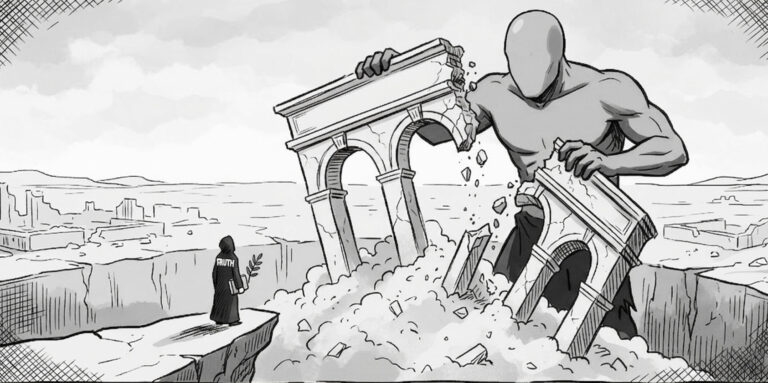
These days, the U.S.-China relationship is characterized by intense rivalry, high-stakes trade disputes and significant interconnected economic ties. These two nations representing the world largest economies, cause tensions to remain high over sky be it in tariff, tread, regional security and stiff technological competition. The world is wondering whether the intensified pressure under the second period of Trump administration where the motto is MAGA (Making America Great Again) would cause a jump to unwanted escalation.
In principle nothing is wrong with the effort to make America great but if it is at the expense of others it would undoubtedly create tense environment. Recent developments prioritize deals and summits over confrontation. Trump imposed high tariffs early in 2025, such as 90-120% to minimise Chinese imports and hikes on others up to 150%, intensifying trade disputes. By November 2025, a framework deal led China to suspend retaliatory tariffs since March 2025, dropping their rate on U.S. exports to 21.9% and removing some non-tariff barriers.
Tensions persist in tech chokepoints like semiconductors and rare earths, with mutual awareness leverage preventing full rupture but risking tactical flare-ups. Anything can crack up anywhere any time if the competition is running to create global hegemony with premeditated but covert operation to undermine each other benefit. We don’t really know what would transpire with highly polarized leadership of the time.
The US is setting its eyes on European land (green land), besides it involves with Israel and Iran war. It also openly threatens neighbouring countries sovereignty like Canada’s and Cuba’s and Venezuela’s throwing away all established rules. The aggressive threats in tariff and military actions challenge traditional alliances and economic norms of the world. The geopolitical and economic ball in president Trump court needs careful handling.
The president ordered 25% tariffs on most Canadian and Mexican imports (10% on energy) under emergency powers, sparking retaliatory measures from others while there is supreme Court invalidation in February 2026. He threatened 100% tariffs on Canada over its China agri/EV deal and up to 150% on autos if tariffs persist, while imposing global 10% rates post-court ruling. This is a moment of truth where free trade is abused openly and the world is watching the gamble.
An executive order authorizes tariffs on countries selling oil to Cuba, citing ties to Russia, Hamas, and Hezbollah, to pressure regime change. These moves prioritize U.S. leverage amid global tensions, including the ongoing U.S.-Israeli strikes on Iran. This is not about healthy competition for development with free and fair trade.
Of Course China’s economy continues with robust growth in 2026 at around 4.8% GDP, driven by surging exports to emerging markets despite U.S. tariffs, opening doors for other developing nations via resilient supply chains and mineral dominance. However, uneven playing fields persist with subsidies and proxy funding distorting fair trade, as Trump’s tariffs disrupt global commerce and test WTO rules.
Exports to emerging economies grew resiliently, with real growth at 8% in 2025, boosting high-tech and competitive goods amid policy easing. Thus, there is a need for pragmatic handling of trade relation to prevent economic and political rupture. The reliance on trade with emerging markets creates a dependency that forces geopolitical rivals to maintain a dialogue.
No truly level field exists, as state subsidies, non-market practices, and geopolitical funding exists. As trade dominance surface in critical sectors like EVs and minerals, WTO is currently in a state of paralysis, facing reform calls for plurilaterals, transparency, and transitional aid to least-developed countries, amid U.S. tariff disputes.
Since consensus among 164 members is impossible, the future lies in plurilateral agreements as the ripple effect is sever for LDC (Least Developed Countries). Such pragmatic handling via variable geometry could prevent escalation while addressing distortions. If the rich nations otherwise rewrite the rules for the green transition without providing the technology transfer or financing LDCs to participate, they will cement a new form of permanent inequity.
Geopolitical funding (from China or US allies) often force LDCs to extract raw materials, but the processing and profit (the “trade dominance”) happens in the industrial power. This locks LDCs into the bottom of the value chain, exposing them to price volatility without the benefits of free trade and industrialization.
Price volatility can lead to economic instability in LDCs as they struggle to balance budgets and plan for future development. Random fluctuations in commodity prices can result in sudden drops in national revenue, impacting public services and infrastructure projects. Further dependence on raw material exports leaves LDCs vulnerable to global market challenge, hindering their economic growth and hampering their diversification efforts.
Superpower rivalry in the name of free trade traps, developing nations attempt to make economic progress. Their geopolitical gamble at the expense of the poor is with vested interest.
While covert proxy wars remain undergoing in limited extent, the U.S.-China and others economic warfare may pass over proxy to destabilize LDC. Their competition for resource in Africa, Asia and Latin America could indirectly harm LDCs in these continents via debt traps, fragmented aid, and other mechanism of resource contests.
Such geopolitical dynamics has already resulted systemic wave of economic and political challenge. In Southeast Asia, border clashes like Thailand-Cambodia escalate with U.S.-Thai alliances versus China’s BRI ties to Cambodia, risking humanitarian crises without full superpower invasion.
Thus, there is a need for structural changes to reduce the dependency on raw material exports, to withstand volatility of commodity prices effect which creates significant vulnerabilities that undermine development efforts and economic stability of Less Developed Countries (LDCs) in the global economic system.
Major powers often pursue strategic interests that may not align with the development needs of poorer nations. Their competition for resources and influence can manifest itself in various ways – from investment patterns, aid conditionality’s to trade agreements and diplomatic pressure.
While LDCs recognize the need to diversify their economies, the path to diversification is uptight with difficulties including limited capital, vested interests of the super powers in the name of free trade and the geopolitical atmosphere effect. The path forward likely requires both structural reforms at the international level – including more stable commodity pricing mechanisms, fairer trade rules, and development-focused investment frameworks and domestic strategies that build resilience, add value to exports and gradually reduce the dependency on volatile primary commodities.
The challenge lies in smart handling of these complex dynamics of geopolitical gamble of the super powers for economic dominance while maintaining policy space for development-oriented strategies. LDCs debt burdens from Chinese, IMF and World Bank loans is complicating workout.
LDCs are indeed squeezed between superpower rivalry and multilateral debt demands, complicating workouts as Chinese bilateral loans resist haircuts while IMF/World Bank conditionality limits fiscal flexibility. Besides, geopolitical crosscurrents amplify this, forcing policy trade-offs amid U.S.-China bids for influences and the current Middle East conflict’s ripple effects at play. LDCs are being caught in the crosscurrents of geopolitical condition and complex debt negotiations.
Currently it is imperative to consider the effect of the likelihood of the Strait of Hormuz closure which is no longer a distant hypothetical but a central and immediate reality of the current conflict. This has immediate potential oil price impacts, supply chain disruptions, and may cascade into LDC vulnerabilities and inflation risks. As of this week, Iran has declared the Strait closed, and global energy and shipping markets are reacting in real-time. This development dramatically amplifies the pressures on LDCs. The closure translates directly into concrete economic shocks.
Brent crude surged above $79/barrel and it has potential to hit $100-$120/barrel if disruption prolonged. 33% of global fertilizer (sulphur, ammonia) transits through Hormuz as Iran bans all food/agricultural exports Urea prices is spiking (e.g., +$60/ton in Egypt. Strait “closed” by Iran, traffic halted. Major insurers cancel war risk coverage. Shipping giants (Maersk, CMA CGM) suspend transit through this route. Rerouting via Africa adds ~40% t costs plus delays. Come what may, inflationary pressures may rise worldwide.
In summary, LDCs being squeezed from all sides—creditors, superpowers, regional conflicts must make every endeavour to neutralize or reduce the effect with pragmatic approach to secure way out or reduce the burden of confluence of overwhelming external pressures.