Friday, October 2, 2026
Home Blog Page 280

Global Study Finds 41% of Young Adults Face ‘Mind Health Crisis’

0

A comprehensive new report released last week by the nonprofit research organization Sapien Labs reveals that 41% of internet-enabled young adults aged 18 to 34 are experiencing a “mind health crisis” that significantly hinders their ability to lead productive lives. The finding is based on data collected from approximately 1 million individuals across 84 countries.

The Global Mind Health in 2025 report, compiled by experts in neuroscience, psychology, and computational science, documents a striking reversal in mental well-being among younger generations. According to the research, young adults enjoyed the highest level of mental well-being of any age group as recently as the early 2000s. Today, however, they are four times more likely than adults over 55 to suffer from mental health challenges severe enough to impair daily functioning.

The study identifies four primary drivers behind this decline: the early adoption of smartphones in childhood, increased consumption of ultra-processed foods, deteriorating family relationships, and a diminishing sense of spirituality. Researchers found that these factors collectively contribute to struggles that extend beyond depression and anxiety, affecting emotional control, focus, and the ability to maintain relationships.

Tara Thiagarajan, the report’s lead author and founder of Sapien Labs, emphasized the progressive nature of the decline. She noted that the challenges facing young adults are multifaceted and that addressing them requires looking beyond traditional mental health treatments. “We need to stop chasing the symptoms and instead begin tackling the broader problems that erode productivity and well-being,” Thiagarajan said.

The study utilized an assessment tool called the Mind Health Quotient to evaluate individuals’ cognitive, emotional, and social capacities. The findings reveal significant geographic disparities, with young adults in sub-Saharan Africa—the world’s lowest-income region—scoring substantially higher than their peers in wealthy nations such as the United States, Canada, and Australia. Researchers suggest this points to a possible inverse relationship between national wealth and mind health.

Data also showed that young adults in sub-Saharan Africa reported stronger spiritual connections and later exposure to smartphones, factors that correlated with better mental health outcomes. Nonetheless, across all countries studied, younger adults consistently fared worse than older generations.

Previous research from Sapien Labs indicates that the generational gap in mental health widened sharply during the COVID-19 pandemic and has remained largely unchanged since. Thiagarajan warned that the entry of a large cohort of young people with compromised mind health into the workforce could have serious economic repercussions.

The report calls for policy interventions such as banning smartphones in schools, establishing minimum age requirements for social media use, and increasing research into the health impacts of food additives. It estimates that ultra-processed foods alone may account for 15 to 30 percent of the mental health burden among young adults.

David Blanchflower, a professor of economics at Dartmouth College, described the findings as a wake-up call. He said the data reveal a crisis capable of undermining entire economies and societies and stressed the urgent need to address root causes rather than symptoms.

Bank Employees Raise Concerns Over Taxation of Concessional Loans

0

Industry groups warn current rules could strain middle-income professionals

Employees in Ethiopia’s banking sector are raising concerns over the tax treatment of low-interest loans provided by employers, warning that the current framework is placing a heavy financial burden on middle-income professionals.

Industry representatives say the taxation of concessional housing and vehicle loans—commonly offered as part of employee benefit packages—has significantly reduced take-home pay for many workers.

The issue centers on the treatment of the interest rate differential between the concessional rate offered by banks and what authorities consider the prevailing market rate. Under Ethiopia’s tax rules, this difference is classified as an in-kind benefit and is therefore subject to personal income tax.

Bank employees say the approach effectively taxes a benefit they never receive in cash.

“We are being taxed on funds we never physically receive,” said a senior loan officer at a private bank. “The difference between the concessional rate and the market rate is treated as income, which significantly increases our tax liability.”

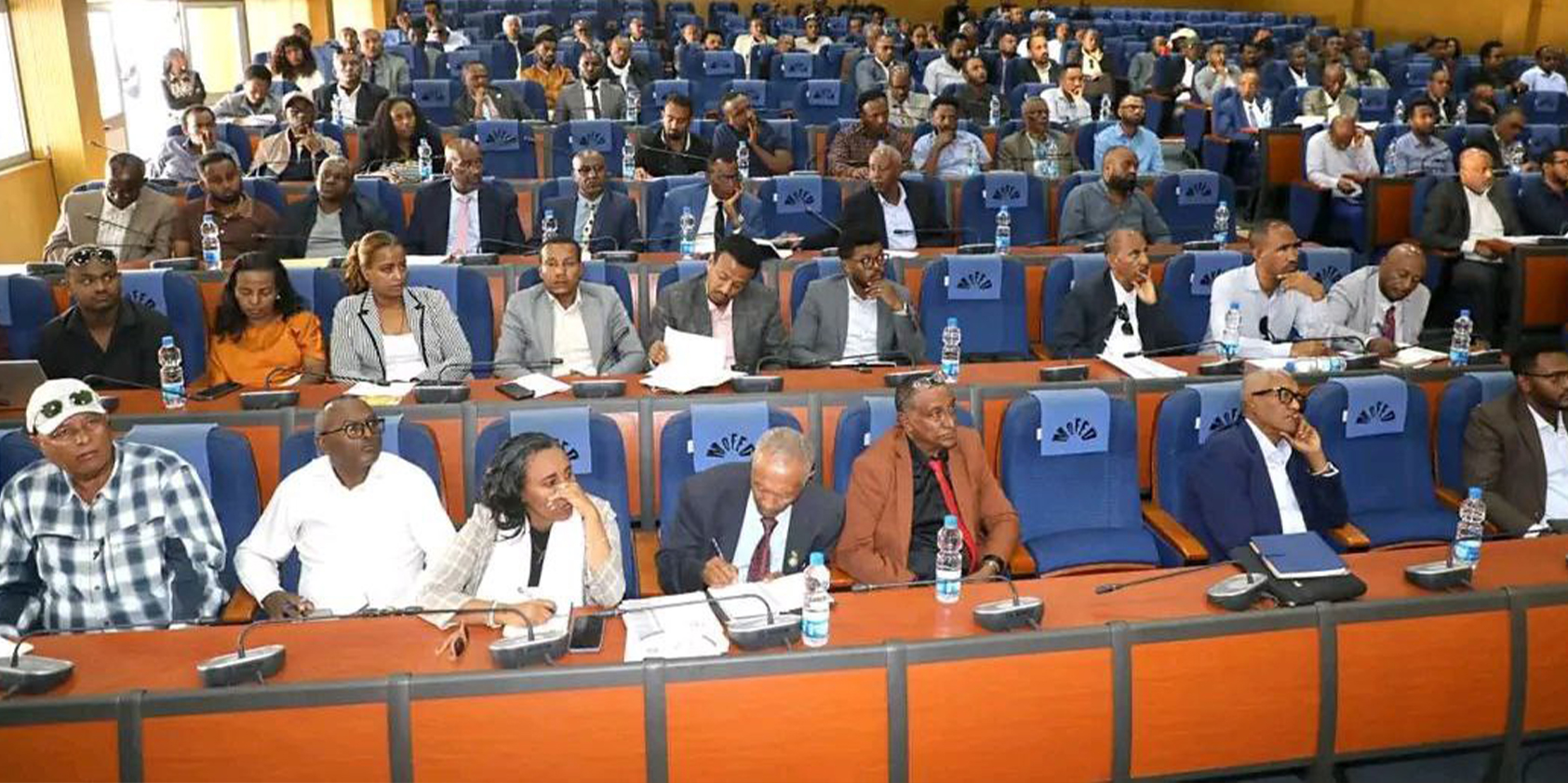
The concerns were raised during a consultative forum organized by the Ministry of Finance to discuss proposed income tax regulations with representatives from the business community, tax professionals, and legal experts.

For years, financial institutions in Ethiopia provided employees with housing and vehicle loans at concessionary interest rates of around seven percent—previously aligned with the minimum savings rate set by the National Bank of Ethiopia. Industry participants say such benefits have long been an important tool for attracting and retaining skilled professionals in the sector.

However, recent regulatory interpretations and tax audit practices have adopted a benchmark market rate of about 15 percent when calculating the taxable benefit. The eight-percentage-point difference between the concessional and market rate is then treated as taxable income.

According to representatives of the Federation of Financial Institutions Employees and Labor Unions, the combined effect of income tax, pension contributions, and loan repayments can substantially reduce net earnings.

One example presented during the forum suggested that an employee earning a gross monthly salary of 30,000 birr could see take-home pay fall to roughly 4,400 birr after deductions.

“The current structure taxes a notional benefit rather than actual cash received,” a federation representative said, arguing that the system places disproportionate pressure on middle-income professionals.

In response, the Ethiopian Bankers Association, together with several labor federations, has submitted a proposal to the government calling for the introduction of a statutory cap on deductions related to benefit taxation.

Industry analysts warn that if the issue remains unresolved, the financial sector could face challenges in retaining experienced professionals, particularly as skilled workers increasingly seek opportunities abroad or in other domestic industries.

Officials at the Ministry of Finance have not yet issued a formal response to the proposal. However, the government has previously emphasized that expanding the tax base remains a central objective of Ethiopia’s economic reform agenda.

Financial experts note that while the government recently increased the tax-exempt income threshold from 600 birr to 2,000 birr—a move intended to ease the burden on low-income earners—middle-income workers continue to face growing tax pressures.

The Federation of Financial Institutions Trustees’ Union has formally requested that the Ministry of Finance and the Ministry of Revenues review the implementation of in-kind benefit taxation.

Meanwhile, tax specialists have also raised concerns about other provisions in the draft income tax regulation.

Legal expert noted that the proposed rules governing Limited Liability Partnerships (LLPs) could create additional administrative burdens for professional service firms. Under the draft framework, LLPs would be required to remit taxes within 30 days of any distributable income payment—a requirement that could result in frequent tax filings and increased compliance costs.

Another concern relates to the calculation of advance tax payments, which currently relies on the previous year’s tax assessment notice. Experts say the inclusion of disputed audit findings—some of which may still be under appeal—could force businesses to make inflated advance payments, potentially creating cash-flow pressures.

Tibebe also pointed to a provision stating that “any payment shall be considered distributable income,” warning that the wording could lead to the misclassification of legitimate financial transactions, such as loans extended to business partners.

To address this risk, he recommended revising the language to allow for exceptions where supporting evidence is provided.

Real Estate Lease Price Hikes Erode Investor Confidence in Ethiopia

0

Frequent lease price increases in Ethiopia’s real estate sector are increasingly eroding investor confidence. A recent lease payment dispute between the Sheger City Administration and residents of the CCD (Country Club Developers) gated community has also raised broader questions about the country’s land lease system and adherence to due legal process.

Legal experts warn that the controversy has triggered significant concern within Ethiopia’s real estate industry. Beyond raising fundamental questions about the sanctity of contracts and land tenure security, the dispute is undermining public trust in the system that governs urban land ownership.

For years, the promise of a “99-year lease” has been a cornerstone of Ethiopia’s strategy to attract domestic and diaspora investors into the housing development market. The guarantee of long-term tenure has helped fuel significant investment in residential real estate.

However, a recent directive issued by the Sheger City Revenues Authority has shaken that sense of stability. The directive requires residents—including those who have held legal title deeds for decades—to sign entirely new lease agreements and pay “adjusted” fees that many homeowners describe as exorbitant.

According to official documents released in January 2026, residents are being required to conclude new lease contracts based on a revised valuation of approximately 4,541 birr per square meter. The directive is not framed as a proposal. City authorities have warned that residents who fail to comply could face severe legal consequences.

Citing Tax Administration Proclamations No. 202/2009 and 203/2009, the city administration announced that properties belonging to those who refuse the order could be seized and sold at auction.

Legal scholars argue that the move lacks a clear legal basis in federal law and may violate the constitutional division of authority between federal and regional governments.

Arba Beyene, Co-founder and Partner at Ethio Alliance Advocates LLP and a legal consultant, says the primary legal framework governing the dispute is the Urban Lands Lease Holding Proclamation No. 721/2011—the federal law that regulates urban land tenure across Ethiopia.

According to Arba, the proclamation was designed to ensure certainty and security for leaseholders, not to serve as a flexible tool for local administrations seeking additional revenue.

“The proclamation was designed to give certainty and security to holders, not to be a ‘water tap’ that local administrations can open whenever they want additional revenue,” he said.

Under Article 16 of the federal law, the core terms of a lease contract—including its duration, grace periods, payment schedules, and construction timelines—must be clearly defined at the outset. Importantly, the proclamation contains no provision allowing a city administration to unilaterally increase lease prices after a contract has been signed and the land has already been occupied.

“If the federal legislature intended for lease prices to fluctuate with inflation or market conditions, it would have included a price revision clause with a defined ceiling,” Arba explained. “The absence of such a clause appears intentional and is meant to protect the rights of leaseholders.”

The Sheger City Administration, however, has defended the revised pricing as a necessary adjustment to reflect current market values. Analysts say the city may be conflating two separate legal concepts: benchmark pricing for new land allocations and binding contractual obligations for existing leases.

Current laws require municipalities to revise their lease benchmark prices every two years, but this process is intended to apply only to new land supplies—land that has not yet been auctioned or leased. Applying 2026 benchmark prices to a contract signed in 2010, legal experts argue, contradicts the fundamental legal principle that laws and regulations should not be applied retroactively.

The implications of the dispute extend far beyond the CCD community. The concept of a 99-year lease has long served as a key incentive for attracting real estate investment in Ethiopia.

If lease costs can be increased dramatically after contracts are signed, analysts warn, the promise of long-term tenure risks becoming meaningless.

Economists say such uncertainty could have a chilling effect on future investment in the housing sector.

“Who will invest millions in building a home today if the price of the underlying land can change tomorrow?” one analyst asked. “This creates a sense of tenure insecurity. Homeowners begin to feel like government tenants who never know when the next adjustment will arrive.”

Under Ethiopia’s constitutional framework, the federal government holds the authority to enact framework laws governing land and natural resources. Regional governments and city administrations are responsible for land administration, but they cannot issue directives that contradict federal legislation.

Legal analysts therefore argue that Sheger City’s directive may represent an overreach of administrative authority. By imposing new financial obligations not provided for under the Federal Lease Proclamation, the city risks acting beyond its administrative mandate.

Industry observers warn that such actions could create a dangerous precedent in which property rights depend on the decisions of local administrators rather than the stability of national law.

“When the government says, ‘Accept the new price or we will seize and sell your property under tax law,’ that is not a negotiation—it is a threat,” one industry expert noted.

Experts stress that while revenue collection is important for urban administrations, it should not come at the expense of the rule of law. Many are now calling for federal authorities to clarify the legal boundaries of municipal power to prevent similar disputes from spreading and potentially destabilizing Ethiopia’s urban land tenure system.

Aysha II Wind Farm to Add 40 MW as Second Phase Nears Completion

0

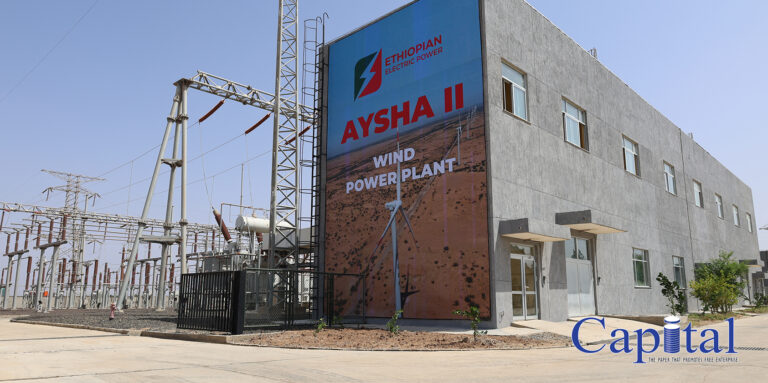
The Ethiopian Electric Power (EEP) has announced that the second phase of the Aysha II Wind Farm is expected to be completed in less than a year, marking a significant milestone for one of the country’s most efficient renewable energy projects.

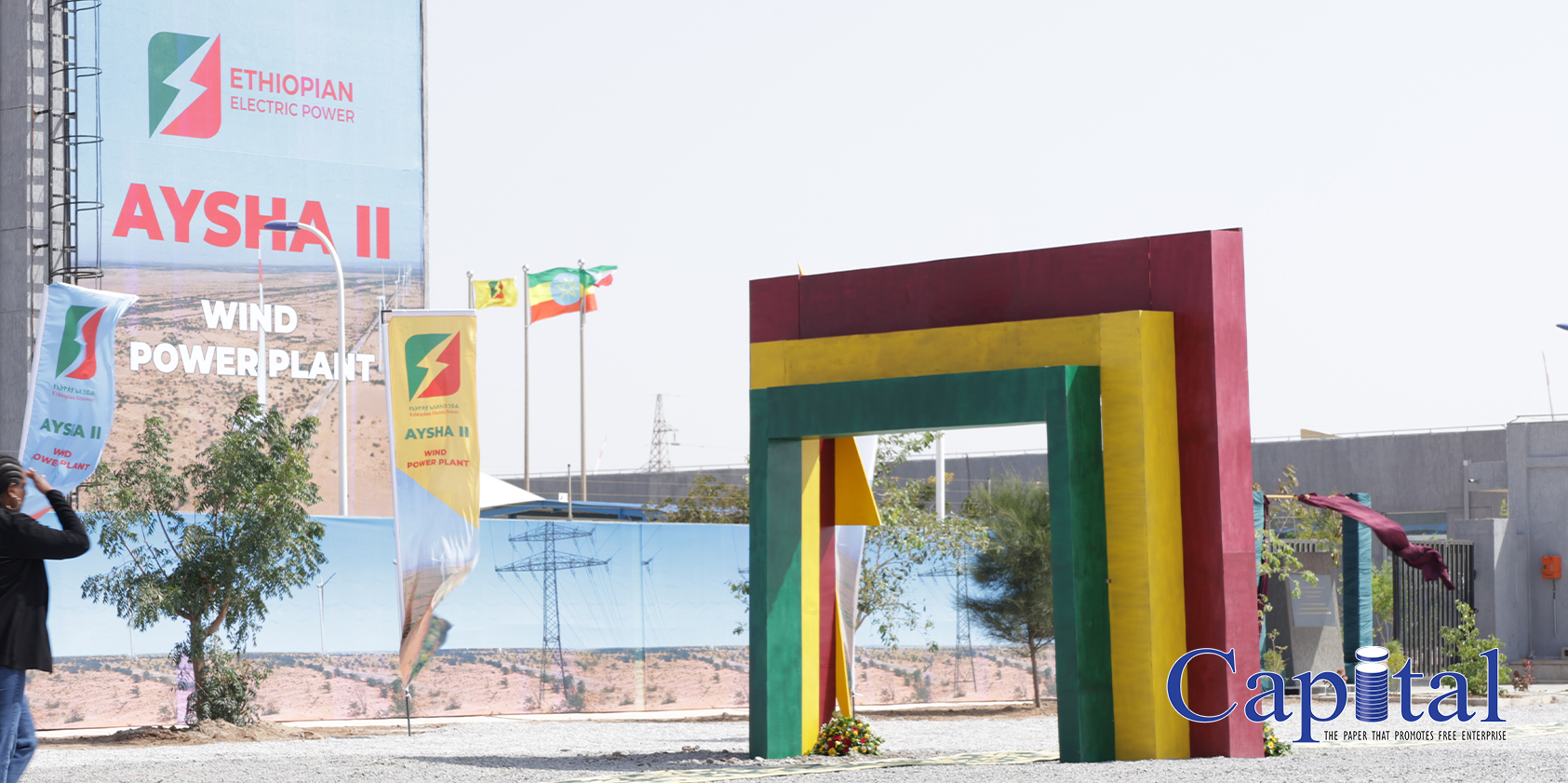
The first phase of the project was inaugurated recently in the presence of regional leaders, including Prime Minister Abiy Ahmed, Somali President Hassan Sheikh Mohamud, and Djibouti President Ismail Omar Guelleh.

Samson Tadesse, Project Manager for Aysha II at EEP, said most preparations for the second phase are already in place. The wind turbines have arrived at the site, while towers and other essential equipment are currently being shipped from China. Transporting the materials and completing installation at the site—located less than 40 kilometers from Djibouti and 30 kilometers from the Somaliland border—will be the main tasks remaining. Once complete, the second phase will contribute an additional 40 megawatts to the national grid. Foundation work for the turbine towers has already been finalized.

The Aysha II project, designed entirely by EEP, initially secured financing from the Export-Import Bank of China. However, disbursements were suspended over concerns about Ethiopia’s rising debt levels, prompting EEP to fund and complete the project using its own resources.

Located about 670 kilometers east of Addis Ababa near an international transmission line connected to Djibouti, the wind farm is considered a strategic asset with strong potential for regional energy exports. The original financing agreement, signed nearly a decade ago, had the Chinese Exim Bank covering 85 percent of costs, with the Ethiopian government responsible for the remaining 15 percent. According to Moges Mekonnen, Head of Corporate Communication at EEP, only 40 percent of the promised funds were ever released.

Despite these financial challenges, the wind farm began generating power three years ago. The first phase, now fully operational, contributes 80 MW toward the total installed capacity of 120 MW. The funding delays left the Chinese contractor, Dongfang Electric Corporation, to continue work without consistent payment, until EEP stepped in to complete the project independently.

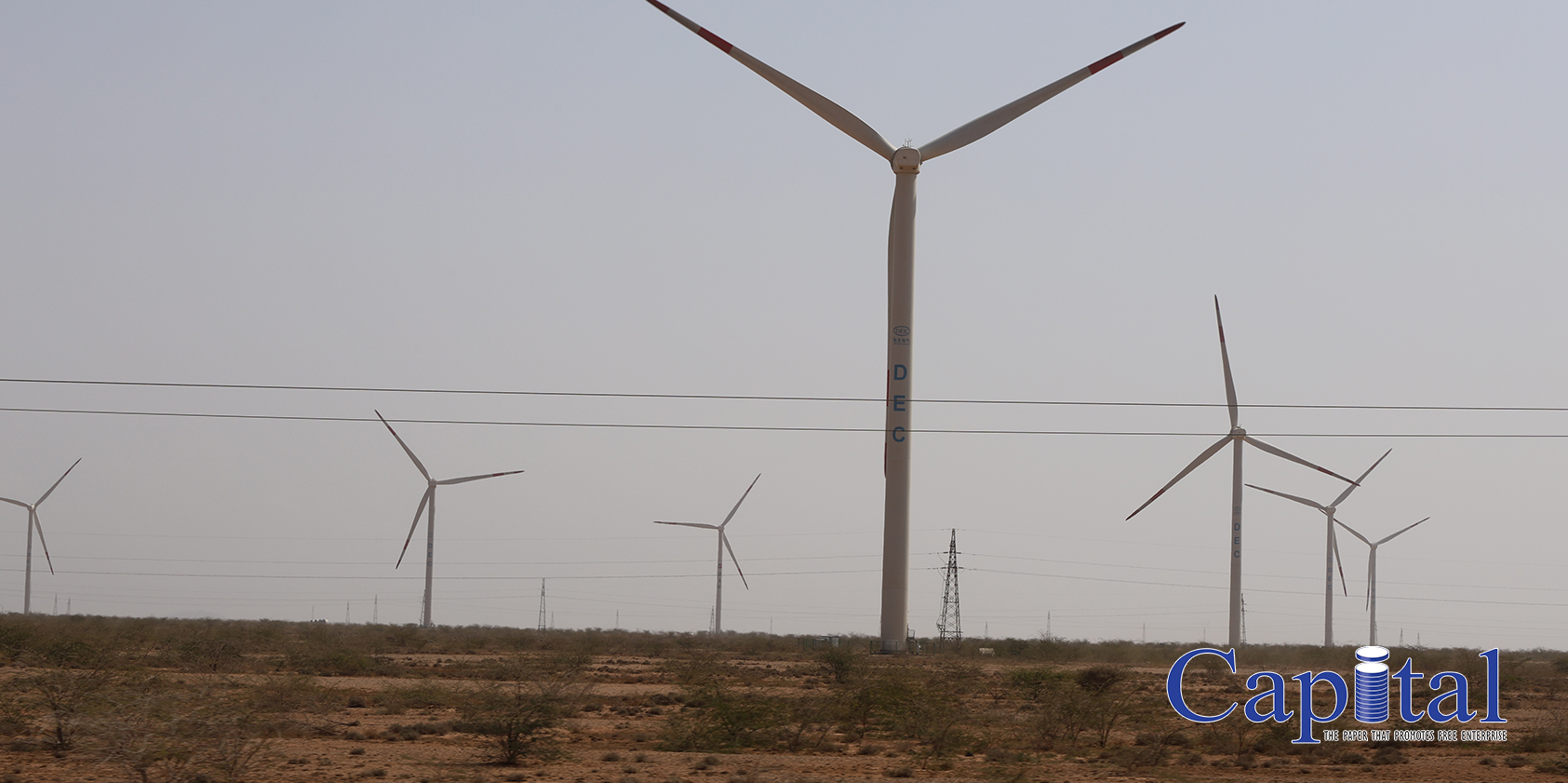
The facility comprises 48 turbines, each with a 2.5 MW capacity, at an estimated total cost of USD 257.3 million. Situated in the Sitty Zone of the Somali Region, about 170 kilometers east of Dire Dawa, the wind farm is expected to generate significant foreign currency through energy exports to Djibouti, which already imports Ethiopian renewable energy.

Dongfang Electric Corporation brought extensive experience to the project, having previously contributed to multiple electromechanical and hydropower initiatives across Ethiopia. The official inauguration of the first phase held on January 31 underscored the project’s regional significance and Ethiopia’s commitment to expanding its renewable energy capacity.

In a related development, Ethiopian Investment Holdings, the parent company of the EEP, reviewed the power generator’s performance for the first half of the fiscal year at the end of last week.

During the six-month period, EEP reported a profit of 7.1 billion birr, while its foreign currency earnings surged by 138 percent.

The company supplied 20.6 billion birr worth of electricity to the Ethiopian Electric Utility, along with two billion birr to large industries, 220 million birr to the Railway Corporation, and 180.2 million dollars to the data mining sector.

According to EEP CEO Ashebir Balcha, the company’s total foreign currency earnings during the period amounted to 248 million dollars, generated from both electricity exports and data mining services.

In the first half of the budget year, power production reached 18.3 terawatt-hours, marking a 35 percent increase compared to the same period last year and achieving 90.4 percent of the target.

The Grand Ethiopian Renaissance Dam contributed 51 percent of the total electricity generated during this period.