Friday, October 2, 2026
Home Blog Page 281

Amhara Bank Reports 178pc Profit Surge in Eight Months

0

Amhara Bank reported strong financial performance during the first eight months of the 2025/26 fiscal year, posting a profit before tax of 1.82 billion birr—a 178 percent increase compared with the 655 million birr it recorded during the entire previous fiscal year.

In a press statement issued Thursday, the Bank attributed the performance to steady operational growth and expanding market presence in Ethiopia’s increasingly competitive banking sector.

Total assets climbed to 53 billion birr, rising by nearly 10 billion birr from the 43.4 billion birr reported on June 30, 2025. Customer deposits also expanded significantly, reaching 37.9 billion birr as of February 28, 2026, up from 31.5 billion birr eight months earlier.

The Bank also reported improvements in the quality of its loan portfolio. Its non-performing loan (NPL) ratio declined to 4.9 percent, aligning with regulatory requirements and broadly reflecting industry averages. Over the same period, strengthened credit monitoring and recovery measures enabled the Bank to collect more than 9.9 billion birr in outstanding loans.

Digital financial services have also expanded. According to the statement, the Bank has disbursed over 5.1 billion birr in microloans through its digital platforms, benefiting more than 240,000 customers. Nearly 90 percent of the borrowers are women, highlighting the Bank’s efforts to promote financial inclusion.

In addition, customers can now transfer up to one million birr through the Bank’s mobile banking platform, reflecting ongoing upgrades to its digital service capabilities.

The latest figures underline Amhara Bank’s rapid growth as one of the newer entrants in Ethiopia’s banking industry, as it continues to expand its balance sheet, improve loan quality, and broaden access to digital financial services.

Ethiopian Vessels Operating at Full Capacity Despite Regional Conflicts

0

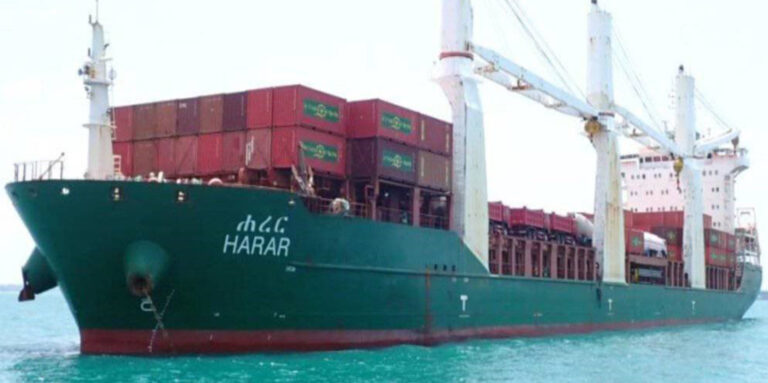
Amid escalating conflicts in the Middle East and the Red Sea region—disruptions that have severely affected global maritime transport corridors—Ethiopian Shipping and Logistics (ESL) says its fleet continues to operate at full capacity.

While many international shipping companies have resorted to cancelling routes and sharply increasing freight rates, Ethiopia’s national carrier is maintaining services by leveraging diplomatic relations and its strategic position to ensure the continuity of the country’s import and export trade.

A senior ESL official told Capital that while several global shipping giants have diverted vessels—leading to extended transit times of several months—Ethiopian vessels continue to navigate key trade routes, effectively filling the logistics gap created by the crisis.

The Red Sea and the Gulf of Aden have become high-risk zones, placing significant pressure on the maritime industry. Following the outbreak of conflict in the Middle East, major carriers such as Maersk have rerouted vessels around the Cape of Good Hope in South Africa—a detour that adds weeks to voyages and millions of dollars in additional costs.

For Ethiopia—which conducts more than 95 percent of its international trade through the Port of Djibouti—such disruptions pose significant risks. Yet ESL says it has adopted a different strategy.

“As a matter of policy, we do not operate in zones of direct active conflict,” the ESL source explained. “However, while many international carriers have suspended services on certain routes, we have not closed any. Our vessels remain operational, and there has been no interruption.”

The official added that the company is stepping into routes and markets vacated by other carriers to support Ethiopian exports. “Our objective is to bridge the gap, not to withdraw,” he said.

Ethiopia’s longstanding diplomatic ties have also helped safeguard its maritime operations. “Thanks to the strength of our diplomatic engagement, there is no direct threat of attack on our vessels,” the source said. “We are using this advantage to help fill the void in the market.”

According to the official, the company is also introducing new procedures to ensure the timely delivery of essential imports. As international shipping lines withdraw from regional routes, freight rates have surged globally while delivery times have lengthened considerably.

“Many Ethiopian importers continue to rely on other carriers largely due to a lack of information,” the official noted. “If they were fully aware of our services, many would opt for the national carrier.”

Under Ethiopia’s multimodal transport framework, most imports are required to be processed through the national system operated by ESL unless the Ministry of Transport and Logistics (Ethiopia) grants a waiver. Recently, however, six public and private enterprises received licenses to participate in multimodal transport operations, handling cargo from ports of entry to warehouses across the country.

“In the current environment, we are not only more cost-competitive but also significantly faster,” the official said. “While some carriers are taking three to four months due to rerouting, we are delivering cargo within 30 to 31 days.”

According to the International Monetary Fund, Ethiopia’s economy is projected to grow by around 7.2 percent in 2026. Efficient and reliable cargo movement plays a critical role in sustaining that growth by helping contain inflation, streamline supply chains, and strengthen export competitiveness.

ESL officials say the company is prioritizing domestic cargo despite rising global operational costs.

“This is not the time to turn customers away,” the source said. “Ethiopian cargo remains our top priority.” He added that the company is absorbing higher fuel and operating expenses internally in order to avoid passing steep price increases on to local traders.

Meanwhile, developments on land are also strengthening Ethiopia’s logistics network. In February 2026, Ethiopia and regional partners signed an agreement to establish the DESSU (Djibouti–Ethiopia–South Sudan–Uganda) Corridor Management Authority, a multilateral initiative backed by the African Development Bank. The project aims to connect the Red Sea to the Great Lakes region, reduce transport costs, and streamline trade procedures.

At the same time, Ethiopia is expanding the use of the Ethio‑Djibouti Railway to ease pressure on road transport and maritime logistics. In February, a pilot project launched by Abiy Ahmed saw 120,000 liters of diesel transported by rail for the first time.

The 753-kilometer railway corridor is increasingly viewed not only as transport infrastructure but also as a strategic backbone for Ethiopia’s economic growth.

By shifting fuel and other bulk cargo from road to rail, officials say the country is gradually reducing logistics costs while easing congestion at ports and border crossings.

Tax Pressures, Logistics Hurdles Weigh on Pulses and Oilseeds Exports

0

Contrary to expectations that the recent macroeconomic reforms would stimulate growth, Ethiopia’s export sector—excluding a few specific goods—is currently underperforming. This shortfall was a central topic in a high-level, closed-door meeting convened on Saturday, March 7, by the Ministry of Trade and Regional Integration (MoTRI).

The meeting was called to address concerns raised by the Ministry of Revenue (MoR) regarding the impact of newly implemented tax regulations on exporters, who report that the measures are straining their financial operations.

The gathering brought together MoTRI leadership and exporters, primarily those operating within the ministry’s direct oversight. While commodities such as coffee and gold fall under the purview of other regulatory bodies, MoTRI is responsible for shepherding the export of pulses and oilseeds, a sector that has historically been a significant contributor to Ethiopia’s commodity export revenues.

A primary point of contention raised by exporters was the implementation of the Minimum Alternative Tax (MAT), introduced in the previous budget year. As stipulated in Article 23 of Proclamation No. 1395/2024, taxpayers are required to pay a minimum tax if their total assessable business income for a year results in a tax liability below 2.5 percent of their annual turnover.

Exporters argue that while their business involves high transaction volumes, their net profit margins remain low. Consequently, they perceive the MAT as a disproportionate burden. “The turnover is significant, but our earnings are not,” one exporter explained. “The MAT poses a substantial risk to our business because it is based on revenue rather than actual profit.”

Further compounding their financial challenges is the mandate for Category A and B taxpayers to make quarterly advance income tax payments. These payments, equivalent to 25 percent of the prior year’s tax liability and due within 30 days of each quarter, are severely impacting their working capital and liquidity, according to industry representatives.

During the discussion, MoTRI officials reportedly suggested that the Ethiopian Pulses and Oilseeds Exporters Association (EPOSEA) prepare a simplified, data-driven analysis of the tax’s impact. Such a document, it was noted, would facilitate more productive negotiations with the Ministry of Revenue.

However, participants expressed dissatisfaction with the overall tone of the engagement. One attendee remarked, “Rather than fostering a collaborative approach to problem-solving, the demeanor from some ministry officials was perceived as adversarial. We had hoped for a partnership, similar to the government-business relationships seen in market-driven economies, but instead encountered mistrust.”

Beyond taxation, the meeting also addressed critical logistical and market-related barriers hindering export performance. Exporters highlighted the lack of adequate security and infrastructure at key collection points for premium sesame seeds, which is leading to losses.

Transportation bottlenecks, exacerbated by domestic fuel shortages, are driving up costs. This makes the Free on Board (FoB) price of Ethiopian goods in Djibouti less competitive on the global market. Compounding these issues is an oversupply in international markets. Exporters contend that a global production surplus has driven prices down, yet the government’s indicative pricing has not adjusted accordingly, leaving Ethiopian goods priced out of the market.

“The primary reason for the poor performance is a global market that is overstocked,” a participant stated. “This situation requires the government’s cooperation to accelerate the movement of goods, rather than exerting pressure on exporters. A rigid indicative price is counterproductive; the ministry needs to understand and accommodate contract prices based on current market realities. Furthermore, products like pulses have a limited shelf life and must be exported promptly to maintain quality.”

Despite these headwinds, the export sector under MoTRI’s purview has recorded mixed results. In the first seven months of the current fiscal year, the ministry achieved 87 percent of its revenue target, generating USD 440 million from its portfolio.

A closer look at the data reveals that pulse exports have reached 95 percent of their objective, while oilseeds, another critical hard currency earner, are lagging at 66 percent of their target. Exporters and ministry officials alike acknowledge that without addressing the intertwined issues of tax policy, logistics, and global market dynamics, the sector will struggle to realize its full potential.

During the seven months of the budget year ending on July 7, 2026, the country recorded export earnings of USD 5.9 billion. This marks a 17 percent increase compared to the same period last year and surpasses the target by 117 percent.

The mining sector contributed the largest share, accounting for 53 percent of total earnings with USD 3.14 billion. Coffee followed, generating USD 1.47 billion and representing 25 percent of the total. Other promising sectors also showed strong performance, with industry and electricity contributing USD 259 million and USD 279 million respectively, together accounting for nine percent of commodity export earnings. Exports regulated by MoTRI made up 7.4 percent of the total.

The macroeconomic reforms introduced in July 2024 have been cited as a key factor behind the growth in export earnings. Sectors such as minerals—particularly gold—along with industrial products and coffee, have performed notably well. However, oil seeds and pulses have shown no improvement, either in value or volume.

Ethiopia Selected for ITU’s Broadband Infrastructure Mapping to Bridge Rural Connectivity Gaps

0

The International Telecommunication Union (ITU) has selected Ethiopia as a primary beneficiary of its International Broadband Infrastructure Mapping project. The initiative aims to systematically identify and bridge the persistent connectivity gaps between urban centers and the country’s remote rural areas.

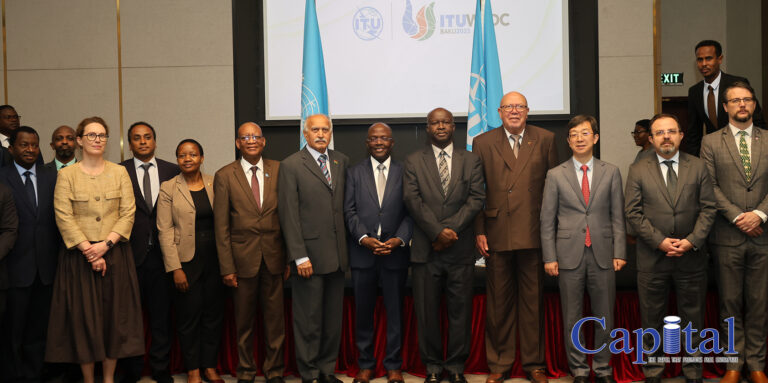
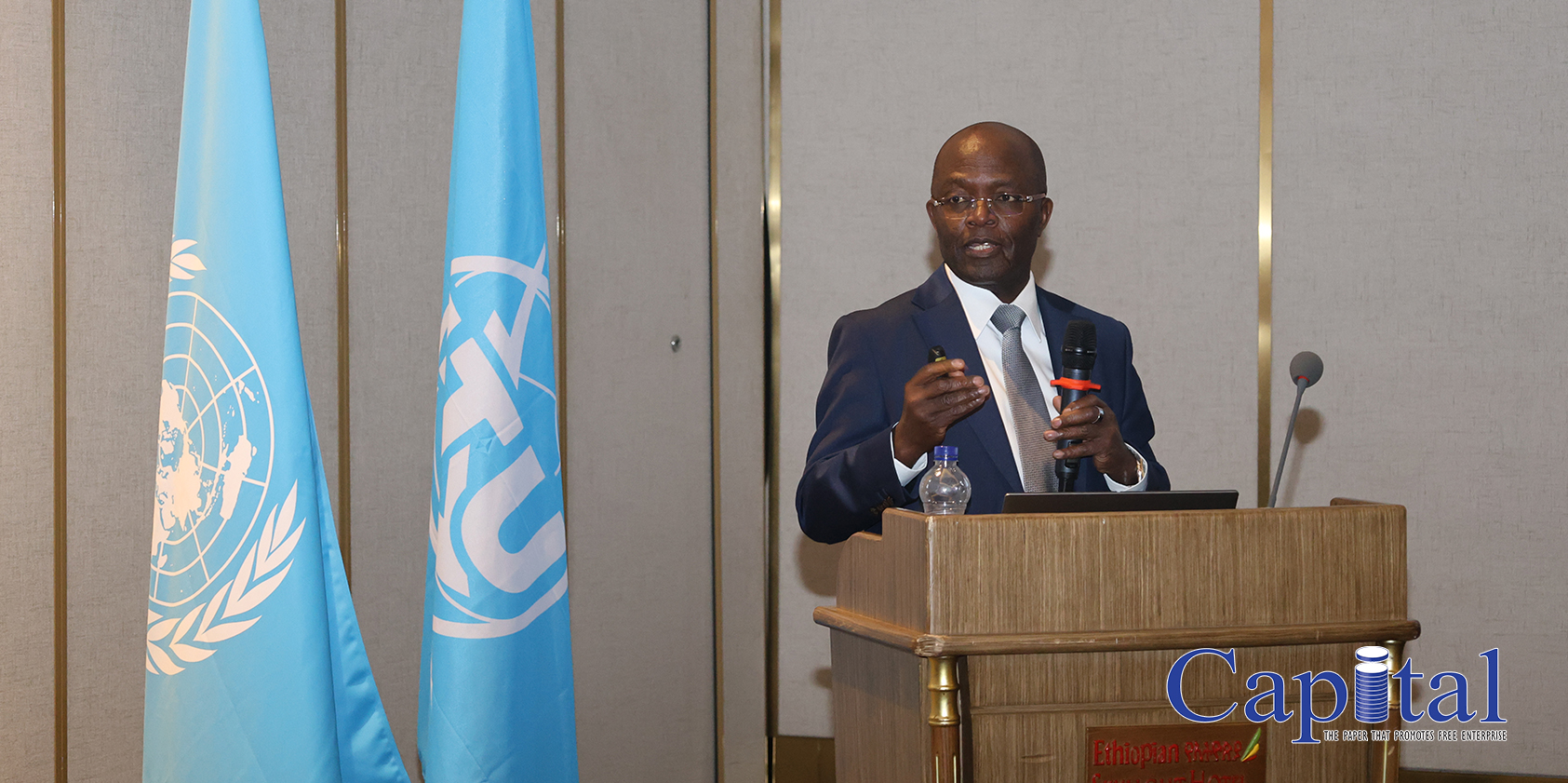
The announcement followed discussions held during a recent visit to Ethiopia by Cosmas Luckyson, Director of the ITU’s Telecommunication Development Bureau (BDT).

During the visit, high-level talks took place between Ethiopian regulatory bodies and ITU representatives. The international organization expressed its strong support for the rapid progress Ethiopia is making in the technology and Artificial Intelligence (AI) sectors.

Cosmas stated that Ethiopia was chosen for this technical assistance to enable the government and regulatory authorities to accurately pinpoint areas with infrastructure deficits. By utilizing advanced mapping tools, the ITU plans to provide the statistical data necessary to ensure internet access reaches communities that have previously been digitally excluded.

The representative noted that the project has already commenced, stating, “Together, we can fill these gaps and help people in remote areas access the right technology to benefit their lives.”

The organization praised the Ethiopian Artificial Intelligence Institute, describing it as one of the most impressive institutions of its kind in the world.

 Cosmas specifically lauded the institute’s “homegrown” approach to technology—particularly the practice of training robots in local languages—noting that this ensures the benefits of AI are culturally aligned and accessible to the masses.

Following the establishment of the ITU Regional Office in Addis Ababa, the organization plans to work closely with the African Union to implement Africa’s AI strategy and utilize technology as an accelerator for the African Continental Free Trade Area (AfCFTA).

To address rural development challenges, the ITU has provided a comprehensive “toolbox” to help Ethiopia implement “Smart Villages.” This method focuses on delivering digital tools and literacy to areas where private investors might otherwise hesitate to enter due to perceived low profitability.

This strategy includes utilizing a “Universal Service Fund” involving all telecom operators. This fund will be used to support private companies expanding into rural areas, ensuring that digital services are viewed as a basic necessity rather than a luxury.

As technology access expands, the ITU and Ethiopian authorities have made consumer protection a top priority. Plans are in place to conduct “cyber drills” to test the country’s cyber-attack defense capabilities and to establish a robust data privacy protection framework.

“Privacy protection also relies on skill development,” he stated. “When we train people, they become more cautious. They follow guidelines established for the safe use of information and communication technologies.”

This collaborative effort between the ITU, the Ethiopian government, and private operators like Safaricom Ethiopia is expected to transition the country’s telecommunications sector into a new chapter.