

On its Home Grown Economic Reform Agenda (HGERA) progress report, the Ministry of Finance (MoF) average parallel market has shown reduction in the 2019/20 budget year; while it reveals that under medium-term debt management strategy (MTDS) it will introduce a cost-risk trade-off for composition of the government debt portfolio.
The report that evaluates the first year of HGERA that is during the 2019/20 budget year indicates that the country has got USD 2.5 billion worth of debt restructure. It further added that the government is looking for more debt restructuring that is worth over USD 1 billion.
The report that was issued mid this week stated that MTDS is currently under preparation and aims to revise the composition of the government debt portfolio through a cost-risk trade-off.
“The new MTDS will also incorporate a mechanism to manage the debt of SOEs, which provides a broader picture of the public sector’s debt portfolio and debt sustainability strategy. This is expected to be launched by the end of the 2020/21 fiscal year,” it added. The 2020/21 fiscal year ends on Wednesday July 7.
According to the report, the existing debt directives are under review to employ a more rules-based mechanism for contracting and guaranteeing public debt, and the consolidation of oversight over public debt.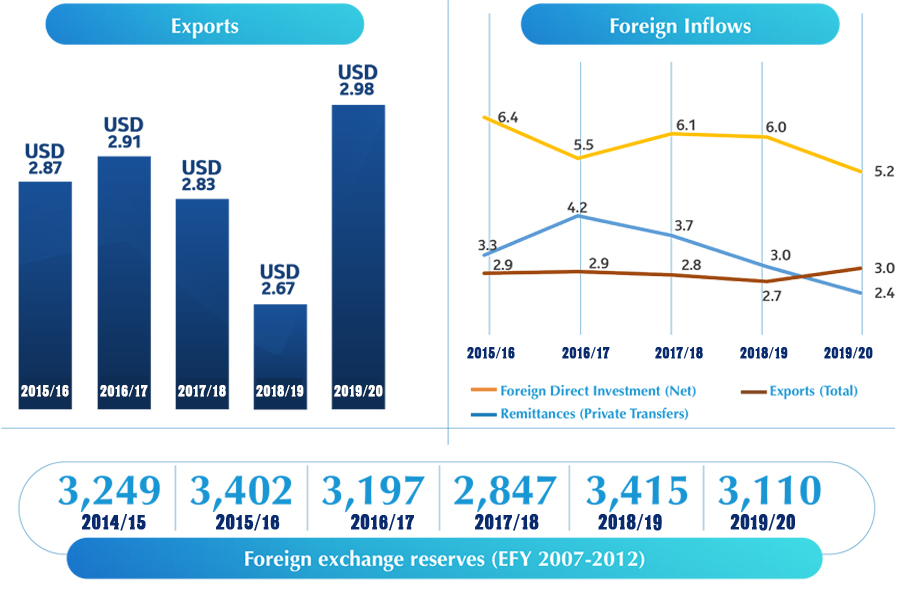
Since the coming of Abiy Ahmed as a premier his major task in related with the country debt burden was that lobbying foreign partners to ease the repayment of the country that was due.
Regarding the debt restructure, MoF said that USD 2.5bn in principal and interest payment has been postponed for five years by commercial creditors under the first external debt restructuring scheme.
“Negotiations are underway with creditors for the second external debt restructuring or re-profiling scheme, with an expected restructuring of more than a billion USD. The restructuring is expected to provide up to a six years grace period and ten years of maturity extension,” it added.
Besides the debt restructure aligned with direct negotiation, the country has been one of the eligible countries that got some official debt restructuring in connection with the presser of COVID 19 on the economy.
Under the G20’s Debt Service Suspension Initiative (DSSI) Ethiopia has benefited debt service suspension of close to USD 125 million.
MoF evaluation report indicated that measures to improve the country’s risk of debt distress from ‘high’ to ‘moderate’ were successfully implemented, “concessional loans were limited to ongoing projects, where the share of non-concessional loans to total loans decreased from 46 percent to 13 of total loans disbursed.”
At the end of the 2019/20 fiscal year total external debt stock decreased to 25 percent, from 28.1 in the preceding year. Similarly, domestic debt stock decreased to 24 percent of GDP, from 29 percent.
The restructuring has also included the domestic loans, “domestic central government debts have also been restructured by converting short-term bills to long-term notes and bonds.”
It explained that 192 billion birr NBE direct advance amount was restructured by converting the 15-year bond/ repayment period with a 10 year grace period, “149.3 billion birr old treasury bills were converted into long-term treasury notes. This arrangement improves the lending terms for the domestic creditors as well as lessens the immediate debt service burden on the government.”
Regarding direct advance it said it was notably minimized. The NBE net direct advance to the budget was maintained at 15.6 billion birr, showing a 61 percent decrease from the previous fiscal year.
The volume of disbursement from non-concessional sources decreased to USD 760 million in the reported period. The total share of non-concessional loans to total loans decreased by 18 percentage points – from 46 in 2018/19 fiscal year to 28 percent of total disbursements.
It added that the economy showed strong resilience during the past fiscal year in the face of the global economic downturn due to the COVID-19 pandemic. Growth was kept at 6 percent. The agricultural sector especially showed remarkable growth as it grew at 4.3%, while manufacturing and service sectors showed a slight negative trend after the second half of the fiscal year, when COVID 19 occurred. In the reported year exports showed a 12 percent increase after close to a decade of stagnant performance, while the foreign exchange reserves improved to USD 3.1 billion covering 2.5 months of imports.
As another success, MoF show that financing of the budget was managed through improved tax revenue mobilization, concessionary external finances, and raising funds from local markets, “tax mobilization increased by 16 percent, the budget deficit was maintained at 2.8 percent,” the report underlined.
It indicated that judicious monetary policy was pursued with contractions in broad money growth (maintained at 17 percent), along with notable improvement in the financial sector. A savings growth of 16 percent was achieved, while credits were expanded by 14 percent.
“Gradual measures are underway towards a market-based exchange rate regime, along with measures to improve and diversify sources of forex,” it said by adding that the average parallel market premium was reduced by 8 percentage points from June 2019.
The evaluation report of HGERA argued that private sector access to finance showed a positive trend, with fundamental changes undertaken to remove financial repression including the removal of the 27 percent bill and improvements in the financing of SOEs.
The private sector’s access to new credit increased by 20 percent – accounting for 64 percent of total credits in the fiscal year. The institutional frameworks for the establishment of capital markets are being finalized, which is expected to further boost the availability of finance in the economy.
Demystifying HGERA’s progress report
eGP, the new face of public procurement
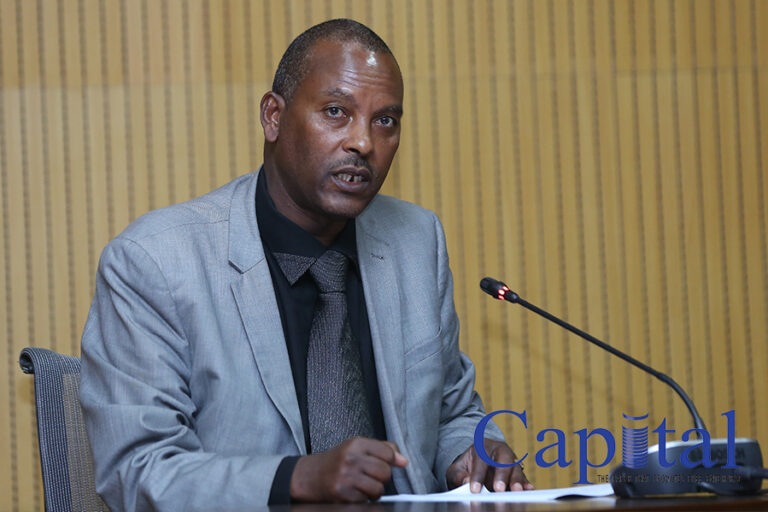
Under the digitalization process in the country, the implantation of electronic government procurement (eGP) has become effective on the first day of current budget year with selected 9 public institutions.
Public Procurement Property Administration Agency (PPPAA), one of the first selected offices, reveals that the office has officially started its operation on eGP.
The agency, which is responsible to regulate the central government procurement and the administration of public property, has briefed some of the private sector partners about the operation of the new scheme.
Haji Ibsa, Director General of PPPAA, said that as of July 8, 2021 his office has made operation the eGP for its operation.
He told Capital that they commenced the scheme after several tests like other selected public bodies. “The private sector has a strong arm to catch the new system, while different type of trainings have already been facilitated to work under the new technology,” Haji explained.
He added that the new system will allow carrying out local and international procurements through an online manner, “It is also crucial and easy. Moreover, it is transparent to administer the public properties and disposal,” Haji explained.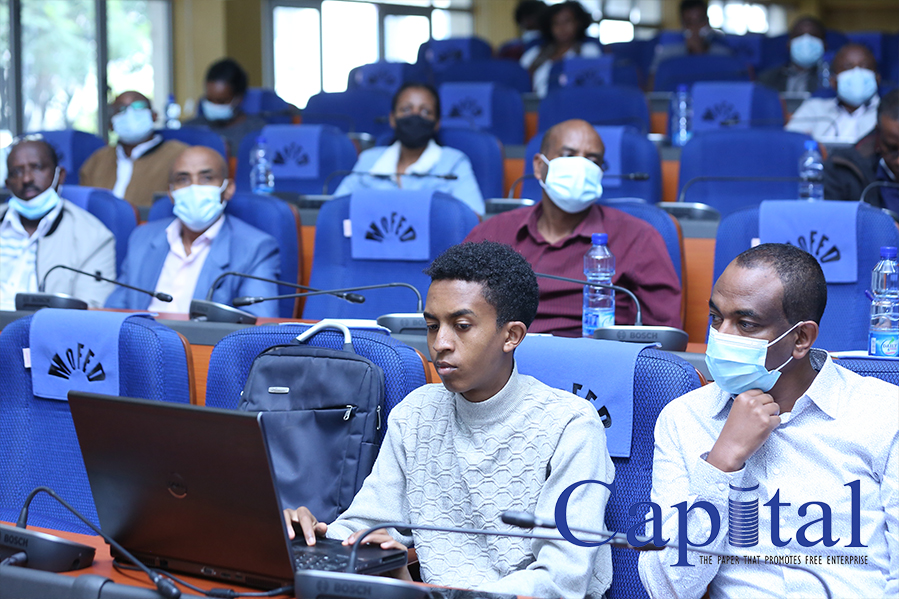
On the information kit of PPPAA, the new system will bring benefits like access to public procurement information, ability to monitor public expenditure information, increase participation, boost accountability, and redistribution of fiscal expenditure.
Up to 70 percent or around USD 9 billion of the total amount of budget for social and economic sectors is related with procurement.
Different studies indicate that countries that are implanting electronic procurement shall save from five to 25 percent of their budget. Insuring good governance that is observed in different African countries is also the other benefit on the implantation of modern procurement system.
“Due to that, putting in place such modern schemes on the government procurement is crucial for the country,” Haji underlined.
“The new system that becomes implemented in nine public offices is intended to reduce wastage and will enhance efficiency, transparency and accountability in the procurement process. The system will also improve good governance, achieve better value for money in the public procurement sector and support the socio-economic development of the country,” he said.
The government targets to expand the electronic service from the current 176 to 2,500 and increase the electronic based service coverage from the current 2 percent to 85 percent. Institutions that will use electronic trading are to increase to 3,500.
In the coming six months’ time, additional 50 public offices will implement the e-GP and others will join gradually.
The nine offices are: Ministry of Finance, Ministry of Innovation and Technology, Ministry of Revenue, Ethiopian Roads Authority, Ethiopian Pharmaceuticals Supply Agency, PPPAA, Public Procurement and Property Disposal Service, Addis Ababa University, and Addis Ababa Science and Technology University.
Awash nets billions in profit

Awash Bank reported an Annual Gross Profit of Birr 5.58 billion, in the 2020/21 fiscal year.
The bank has also collected over 107 billion birr billion in deposits. The number has showed 33.8 billion birr or 46 percent increasing in the fiscal year. In the reporting year, the bank has opened new 100 branches across the country.
Furthermore, the bank has registered more than 100 billion birr in deposits in the last fiscal year. In 2020/21, the bank has generated over two million new deposits and has reached a total of more than 5 million customers.
Awash bank’s lending to various sectors of the economy has also grown by birr 30 billion (53 percent) by the end of the fiscal year 2020/21 to birr 87.1 billion.
In terms of generating foreign currency, the bank has generated 906 million dollar, which is an increase of 37 million dollars.
The bank has stated that the total income of the bank has increased to 13.7 billion birr in the current fiscal year from 10.2 billion birr of last year.
The bank has now reached a paid up capital of 8.2 billion birr, with 566 branches across the country.
The plight of Raya
By Metasebia Teshome
Raya Rayuma party, one of the national based parties in the country, which has submitted a petition, insists that the government should approve the establishment of ‘Raya Rayuma Region’ and is expecting good response from the government.
The party said Raya Rayuma is the land of Rayans. It doesn’t belong to Tigrians and Amharas either. Fanatic nationalists from both sides want to oppress the people and snatch the land, the party claim.
“The party was established by the committee formed by the people of the Raya to fight for the independence of Raya,” said Eyasu Berhe, one of the members of the central committee of the party. As he said, the committee has submitted its petition to the House of Federation and is expecting to hold a referendum.
Raya Rayuma Party asked the government to accept the petition submitted to the house of federation to become a state. The party argues making Raya an independent region that could play a big role.
The party also accuses the TPLF and the Amhara Special Forces, “The atrocities at Raya these days are immense,” said Eyasu adding, “former, dictator leaders made Raya stateless and an unidentified ethnic group.”
As he explains, during the war, atrocities were committed on the Raya people had been and are suppressed by the Amhara special forces and after the unilateral ceasefire declared around two weeks ago, the territory has been classified in to two in which towns of both sides are controlled by the TPLF and the Amhara special force.
“It is high time that the Government should protect the people, following the recent withdrawal of our Defense Forces from Raya Azebo, the TPLF is causing serious humanitarian and economic hardship to our people. To describe some of the crimes committed,” Eyasu points out.
On the other hand, the Amhara Regional State Security Forces, which entered Raya Woredas under the command of the TPLF, have been patrolling Alamata town’s shops, malls and boutiques from 23/10/2013 E.C to date. If this illegal activity continues, the issue of the rule of law will be set aside and there will be more serious human rights violations among the people of Raya and the concern will not be ignored.
“We urge the federal government to save our people from destruction, given that the people of Raya are being attacked in a way that is worse than ever. In this regard, we would like to express our sincere appreciation to Radepa and its members for their support to the government and our defense forces. To return to the town of Mahoni and Raya Azebo Woreda, where our Defense Forces left, to trust the government and fulfill its responsibility to protect the people who are on the side of the defense has led us to a dilemma,” said the committee member.
It is clear that the Federal forces should enter Raya Chercher Woreda and Alamata town to stabilize the situation. In addition, the government should arm the Raya to protect the area in order to protect the terrorists and militia.
While reacting to queries raised by parliamentarians, Prime Minister Abiy Ahmed on Monday July 5 explained about the backdrop of the law enforcement measured took place in Tigray region.
The Premier said that the terrorist TPLF mobilized the people of Tigray for war despite the numerous livelihood challenges of the people and attacked the Northern Command of the National Defense Force and these threats pulled the Federal Government into a conflict.
“The federal government have had no aspirations to engage in conflict yet TPLF posed a threat on four fronts,” Abiy told parliament.
“TPLF mobilized irregular forces siphoning national institutions and resources and mobilizing paid elements across the country given the mission to destabilize and multiply instability. Sacrifices being made in the Tigray region to restore services and repair basic infrastructure have cost us the lives of personnel in the line of duty as the criminal clique attacked these individuals,” adds the PM.
The Premier underlined that gains have been made in addressing the TPLF threat as the federal government has taken back weaponry seized illegally from the Northern Command, decreased the effects of the attempts to divide the Ethiopian society and apprehended key leadership of the criminal clique.
“In my view, those interested in seeing the conclusion of the conflict in the Tigray region are very few. It seems there are interests that seek to see the weakening of the Ethiopian state through a protracted conflict” he added.
“As a sovereign nation, we have tolerated a lot. Without government recognition armed forces were being organized, conflict entrepreneurs and propagandists were deployed throughout the country. The people of Tigray were told that they were at risk of war. Elders, investors, politicians, locals and investors were sent to mediate. Ultimately, the Northern Command was attacked. We were forced to set out to defend the country and return looted national resources and weapons.”
In a related development the Emergency Fact Check announced that the terrorist TPLF is perpetrating continuous attacks against civilians in several towns of Tigray.
“The terrorist group is killing civilians whom it profiled as supporters of the interim administration of Tigray federal government,” the national Emergency Fact Check platform states.
“Continuous atrocities by the terrorist group are aid operations posing risk of serious humanitarian crisis in the region,” emergency fact check says.
