

The 2020 Ibrahim Index of African Governance (IIAG) launched by the Mo Ibrahim Foundation, highlights a decline in African governance performance for the first time since 2010.
The 2019 African average score for Overall Governance falls by -0.2 points below that of 2018, registering the first year-on-year score deterioration since 2010. This recent decline is triggered by worsening performance in three of the four IIAG categories: Participation, Rights & Inclusion, Security & Rule of Law and Human Development.
In fact, progress had already been slowing down since 2015. Over 2015-2019, performance slackened in both Human Development and Foundations for Economic Opportunity, while deterioration continued in both Security & Rule of Law and Participation, Rights & Inclusion, even worsening for the latter.
However, over the decade, overall governance performance has slightly progressed, and in 2019, 61.2% of Africa’s population lives in a country where Overall Governance is better than in 2010.
The 2020 IIAG is the most comprehensive assessment of governance performance in 54 African countries. It tracks Africa’s trajectory across four main categories: Security & Rule of Law; Participation, Rights & Inclusion; Foundations for Economic Opportunity; and Human Development. The new IIAG incorporates three significant upgrades: an expanded governance scope, including new areas such as environment and equality; strengthened indicators, thanks to better data availability; and a new section fully dedicated to Africa’s Citizens’ Voices.
Progress achieved over the last decade has mainly been driven by improvements in economic opportunities and human development. Foundations for Economic Opportunity (+4.1) and Human Development (+3.0) have made good progress, primarily led by improvements in the sub-categories Infrastructure and Health, complemented by advances in Sustainable Environment.
This is threatened, however, by an increasingly precarious security situation and concerning erosion in rights as well as civic and democratic space. Over the last decade, both Participation, Rights & Inclusion (-1.4) and Security & Rule of Law (-0.7) have registered worrying declines.
Over the past decade, 20 countries, home to 41.9% of Africa’s population, while achieving progress in Human Development and Foundations for Economic Opportunity, have at the same time declined in both Security & Rule of Law and Participation, Rights & Inclusion.
Only eight countries manage to improve in all four categories over the decade: Angola, Chad, Côte d’Ivoire, Ethiopia, Madagascar, Seychelles, Sudan and Togo.
The 2020 IIAG provides a picture of the continent before it was hit by COVID-19. In terms of Participation, Rights & Inclusion, progress was slowing long before the pandemic, which only worsens the existing negative trajectory. Conversely, economic opportunity was set on a positive course of sustained progress, and the impact of COVID-19 is now threatening this hard-won achievement.
In 2019, new analysis of the Citizens’ Voices section in the IIAG reveals that Public Perception of Overall Governance registers the lowest score over the decade, with the pace of deterioration nearly doubling within the last five years.
The strongest correlations of Overall Governance performances are found with the sub-categories Rule of Law & Justice and Inclusion & Equality. The indicators showing the strongest relationships with high overall governance scores span all four IIAG categories, underlining the importance of a balanced approach to governance. The growing imbalance between the various governance dimensions outlined above is likely to threaten overall governance performance.
Africa’s governance performance declines for the first time in a decade: 2020 Ibrahim Index
Revenue targets surpassed in the first quarter fiscal year
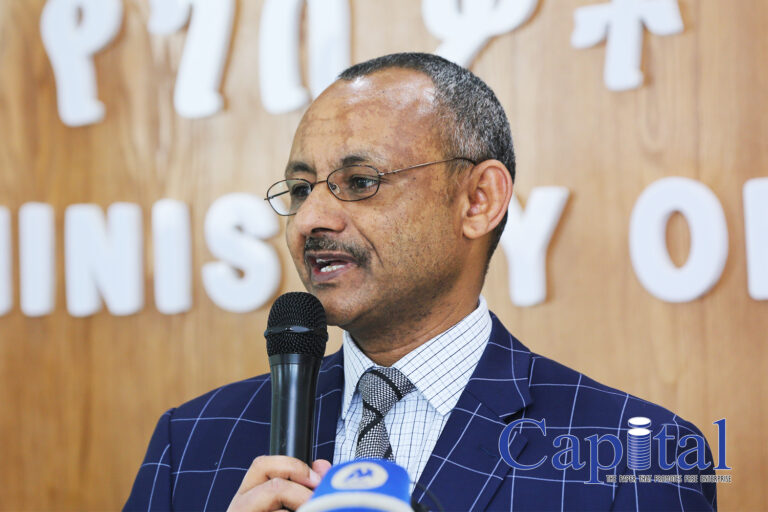
The Ministry of Revenue announced it has collected more than 107 billion birr in the first four months of the current fiscal year 2020/21.
From domestic tax, foreign trade tax and lottery sales in the first four month collected amounts totaling, 75 billion, 36.4 billion and 83.7 million birr respectively bringing the subtotal to about 107.6 billion birr. Overall, the performance is 103 percent of the initial projected plan and an increase of 19 percent or 17 billion birr in comparison to the same period last year.
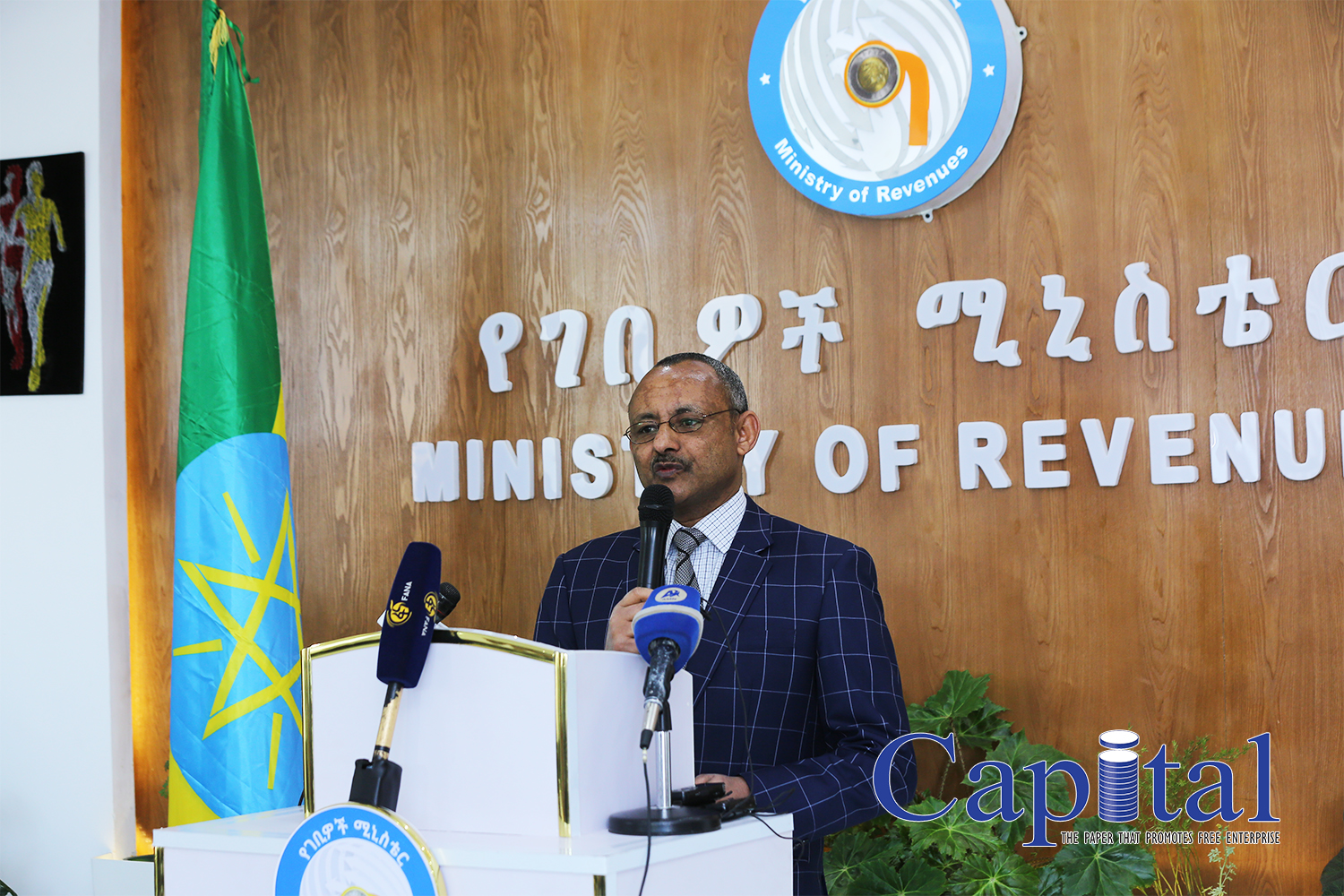
The Ministry attributed the improved performance in securing revenues to the high caliber of workers at the Ministry, a positive relationship between the leadership and employees, as well as an improved culture among taxpayers on willingness to come forward to pay their taxes.
Smuggling and contraband control are one of the activities carried out to enforce the law. Revenue as a result of controlling smuggling is one of the main sources of revenue that in this fiscal quarter year amounted to 1.08 billion birr from federal and state security forces. This registered 121.8 percent of the initial projected plan and resulted to a 252.8 million Birr increase as compared to the same period last year. Moreover, the Customs Commission was able to attain 11.7 billon birr, through other revenue outlets.
On briefing the performance to journalist on Wednesday, Laqe Ayalew the Minister of Revenue, he said that more than 3.9 billion birr has been transferred to the states in the past four months, according to the House of Federation.
“Goodwill of tax payers, committed leadership, improved tax collecting system, strong follow up and support, and enhanced rule of law upholding capacity have contributed to the achievement,” he added.
“During the first four months of the program, additional branches were opened not only in terms of the amount of money paid by the taxpayers, but also in terms of additional requirements and there has been taxpayers’ recognition as well,” he expounded.
Recognizing trustworthy tax payers and taking strict measures against fraudsters have played a significant role in obtaining the result, Laqe noted. The Ministry said around 2625 new businesses started to pay taxes during this period.
However, much is left to be done in the remaining 8 months to secure the planned 290 billion Birr and hopefully surpass it.
The Minister lauded the selfless commitment of the employees in the 124 branches across the country and members of the Ethiopian National Defense Force, Federal Police, and regional security forces in combating contraband.
The overall performance shows that the ministry is on target to achieve its plan to garner 290 billion birr revenue in the current 2020/2021 fiscal year.
Scholarships for leadership development program
The EveryonesWorld Leadership Foundation (ELF) for young women has announced that it has 25 scholarships available for the first intake in January 2021.
“We are delighted with this news,” said ELF Program founder and director Dr. Yene Assegid. “It means that 25 applicants, who have no means to pay the course fees, now have the possibility of being included in the program.”
Two other developments are that the fee of 30 Euro per application has been waived for anyone applying to join in January and the program is now open to young women aged up to 25.
To apply to the program you can complete the online process by going to the website of EFL.
The closing date for applications is 30 November 2020.
The online process must be fully completed before you can regard yourself as having applied. All required documentation must be provided. Only once you have received a confirmation email can you regard your application as finished.
The EveryonesWorld Leadership Foundation (ELF) is a three-month online leadership development programme designed to give you a head start on your life’s journey. It is open to young women aged between 16 and 25 years old who can communicate in English, have a smart device or a laptop, access to WIFI and are passionate about making a difference in the world.
Media for Peace highlights the role of media in bringing peace
The Peace & Development Centre International (PDCI) and Ethiopian Media Council (EMC) hosted the first part of a four-part virtual symposium on the “Ethiopian Media for Peace” to increase awareness on issues, challenges, and solutions related to hate speech, disinformation, and peacebuilding.
The webinar that brought together media organizations, journalists, social media influencers and news makers discussed the effects of hate speech and disinformation on Intergroup conflict in the presence of high profile speakers who shared their views on the role that the media can play in minimizing intolerance and conflict while promoting respect, understanding, peace, and co-existence amongst the Ethiopian society.
The keynote speaker, Mark Thompson, President and CEO of New York Times, brought to the paned a wider international perspective on the damage of political and media hate rhetoric.
“I hope our media people will be focusing on love and peace,” said Professor Ephraim Isaac, Chair of Peace and Development Centre International while expressing the shock and sadness by the conflict that has erupted in Ethiopia.
Amare Aregawi, veteran media personality and Executive Chair of the Ethiopian Media Council for his part highlighted the importance of ethical journalism. “The media needs freedom of expression, no compromise with that. But, freedom of expression should be combined with ethical journalism.”
The symposium will continue for the next 3 weeks taking place every Saturday with the participation of reputable and key figures from the media sector as well as scholars which will deliberate on the importance of the media in bringing about and safeguarding a lasting peace while going over the effects of disinformation during conflicts.
