

Despite the COVID-19 pandemic, the world is witnessing a re-globalization of sorts, with cross-border flows of goods and capital on the up. The COVID-19 pandemic certainly led to some setbacks. In fact, as it was widely reported, cross-border trade declined more during March and April 2020 than it did during the Great Depression of 1929. However, the recovery has been faster than expected. This is particularly the case with trade and capital movements between developed economies. China is included in this latter category.
As far as human travel is concerned – whether for business or pleasure – the recovery is slower. According to the DHL’s Global Connectedness Index 2020, travel has suffered an unprecedented drop resulting from the restrictions of the pandemic. And the reopening of borders is taking considerable time. Thus, the re-globalization we are seeing is fragile and the cracks in it are not easy to repair.
Moreover, it may involve profound changes in the workings of some supply chains. In the era of globalization 101, the dominant model was the one of “just-in-time” manufacturing. But in the new, post-pandemic phase, the winning formula is closer to a “just-in-case” model. This will therefore be a different type of globalization. And whoever fails to engage with it will be condemned to watching from the sidelines.
Andres Ortega, senior research fellow at the Elcano Royal Institute, Spain stated that we are witnessing a process that involves the abrupt and intermittent expulsion of air. This is the definition of a “hiccup.” The ongoing re-globalization we are witnessing is accompanied by hiccups.
To begin with, there is an ongoing scarcity of containers even as their cost is increasing. The problems this is causing to global trade recovery were highlighted by the Suez Canal incident. For several days in March, the canal was blocked by a ship, halting billions of dollars in maritime commerce.
Moreover, some key raw materials are running short and are therefore becoming more expensive, if available. There is a shortage of wood as well as of some petroleum-based products like plastics, PVC resins and colorings. At the same time, there has been a rise in oil prices and other raw materials such as copper. The bottlenecks slowing down re-globalization are being laid bare.
According to Andres Ortega, in the first phase of the pandemic, the main shortages faced by countries had to do with medical equipment like masks, gloves, respirators and so on. These were ironed out relatively quickly, although there is still a high degree of dependence on Asia, especially China and India, for supply.
But now, other shortages have arisen involving, for example, the lipids used in the COVID-19 vaccines based on messenger RNA. Plastic tubes and bags are also in short supply. According to the International Federation of Pharmaceutical Manufacturers, the United States Defense Production Act, designed to protect United States supplies, has aggravated the situation.
Branko Milanovic, Professor at the City University of New York stressed that shortages are also plaguing the digital realm. A lack of semiconductors has slowed down the assembly lines of various vehicle manufacturers worldwide. This matters greatly, not least because cars today are computers on wheels. The pandemic has further highlighted the excessive dependence – one that China shares – on Taiwanese chip manufacturers. Taiwan Semiconductor Manufacturing Company (TSMC) is particularly dominant. This is a geopolitically sensitive dependency. Trying to diversify away from it will require major investments.
Branko Milanovic noted that an advanced chip-making plant, known as a foundry, costs around $20 billion. The new globalization will involve shortening strategic supply chains, including for semiconductors.
But this process will take years to materialize. China, which imports more microchips than oil in value, has made establishing foundries a top priority. The greatest challenge is for Europe. Once a serious player in the field of advanced chips, it has let its lead slip.
Bernard Wasow, former professor of economics at New York University stated that another crucial bottleneck is related to the severe shortages of talent, in terms of human skills. According to Deloitte, 40% of businesses in Europe struggle to fill their vacancies due to the lack of people with the necessary training or experience.
Meanwhile, 30% of graduates are working in jobs and roles where the skills they acquired at university are not relevant. At the global level, there is a large mismatch between demand and the supply of talent. Re-globalization thus urgently requires national public-private investment in cultivating these in-demand talents.
To conclude, it is true that the world is heading towards a more protectionist, more nationalist and more regionalized form of re-globalization. While the exact contours of this new globalization remain unclear, what is certain is that it will not be a simple return to the status quo. Rather, it will involve transformations requiring new ways of thinking and new policies to better soothe the hiccups.
Re-Globalization

NBE sets benchmark with new directive

National Bank of Ethiopia (NBE) has issued the first in its kind directive, ‘open market operations and standing facilities directive no. MFAD/OMO and SFs/001/2021’ that will formalize the money market. The directive will be in effect as of August 2, 2021.
On its preamble, the directive explained that the issuance of the directive has become necessary to establish open market operations and standing facilities as instrument for effective management of liquidity in the financial system for purposes of conducting monetary policy.
It is to be recalled that Capital had reported that NBE had drafted the first directive ever to formalize and involve the existed trust based money market between banks with a modern scheme.
On the directive, NBE says that it has the powers and duties to make short term and long term refinancing facilities available to banks and other financial institutions; and issue its own debt and payment instruments for this purpose.
The directive shall be applicable to financial transactions between the NBE and banks operating in the country that maintains reserve requirements with NBE for the purpose of OMO and SFs.
Banks shall be able to access SFs from NBE and participate in OMO.
The effectiveness of the directive is stated as one that would be the bench marks for the up coming capital market.
The directive article 7.1 stated that if the government securities or NBE securities are trading in the market, the valuation of eligible collateral will be determined by the prevailing market value.
Article 7.2 added that in the absence of market value, the valuation of eligible collateral will be determined by the present value of the future cash flows of the asset, whereby the discount factors will be determined by the central bank and published on its website.
Under sub article 3 of the same article it stated that eligible assets to be pledged as collateral must be registered in the accounts of the respective participant banks opened at the National Bank and maintained in the Book Entry System.
According to the directive under OMO, NBE may conduct main or standard operations, fine tuning or non-standard operations, which is a quick auction when it is deemed desirable to have a rapid impact on the liquidity situation in the money market, or structural operations.
NBE may use five different kinds of instruments including outright transactions, granting collateralized loans, repo or reverse repo transactions, and issuing NBE certificates for its open market operations.
Article 9 of the directive indicates that NBE may issue debt securities (NBE Certificates) for its monetary policy operations or liquidity management. The NBE Certificates shall be issued at a nominal value of one million birr and in multiplies thereof. The NBE Certificates shall be issued at a discount from a per value of 100,000 birr.
The NBE Certificates can be traded on the secondary market, which includes all selling and buying operations, while the certificates trading at secondary market it is limited to only among banks.
The SF has lending and deposit facilities.
The auction has three types of auction formats; fixed price auction, variable price auction, and single or uniform price auction.
The fixed price auction is that NBE sets the rates and the participant banks bid on the quantity. The variable price auction is that NBE sets the overall quantity, and the participating banks bid on the price and successful bids are allotted at individual submitted auction price.
Single or uniform price auction is that NBE sets the overall quantity, and the participating banks bids on the price and one single price (cut-off or stop rate) derived from the auction is awarded to all successful bidders, while the price will be determined by the resulting marginal price from the auction.
MoR’s tax transformation to hinge on demand

Ministry of Revenue (MoR) announces that under the transformation of tax administration it has targeted to execute demand driven technology usage than the experience of supply driven.
The government had tabled that by 2030 the public expenditure will be covered by tax generation.
To attain the stated goal, the government is undertaking modernizing the tax administration that includes the change on technology use.
Zemede Teferra, State Minister of MoR, told Capital that to improve the technology MoR has designed an IT strategy at the inception to know the way on how to go.
“Through the IT strategy we have conducted business process to redefine the whole process and now we identified the core functions that will be finalized very soon,” he said.
The business process function may have structure, law revision, and implantation process, and of course technology that shall look to improve or automate the current technology that MoR is using, SIG Tax Database, which is considered as outdated technology that MoR has been using for over a decade.
“Overall, technology change will happen but to know for which one will be in use shall be answered by the business process functional requirements that is currently being undertaken,” Zemede, who directly leads the process, elaborated.
Zemede said that the IT strategy has been designed. “Following the business process, reengineering is expected to finalize in the coming Ethiopian New Year followed by automation which will have better work with regards to business functional requirement, specification and others.”
“After the definition of business process functional requirement that leads to know the technology specification is what we need,” he explained.
In the past, mostly technology implementation was driven by technology suppliers’ which was described as a challenge. “But on the IT strategy, we have identified that it is supposed to be demand driven by the tax authority. It enables us to know what we need and what we have to know on the given technology implementation process and the possible improvements and changes in the future,” the State Minister explained.
The process was part of the tax transformation starting in 2018/19 budget year. After the development of the business process the final decision will be given by the government.
The government’s ten year prosperity plans projected that the tax revenue would be expanded to 3.5 trillion birr with 18.2 GDP share by 2020, while over all government revenue is also expected to reach at 3.9 trillion birr.
The shift to digital scale
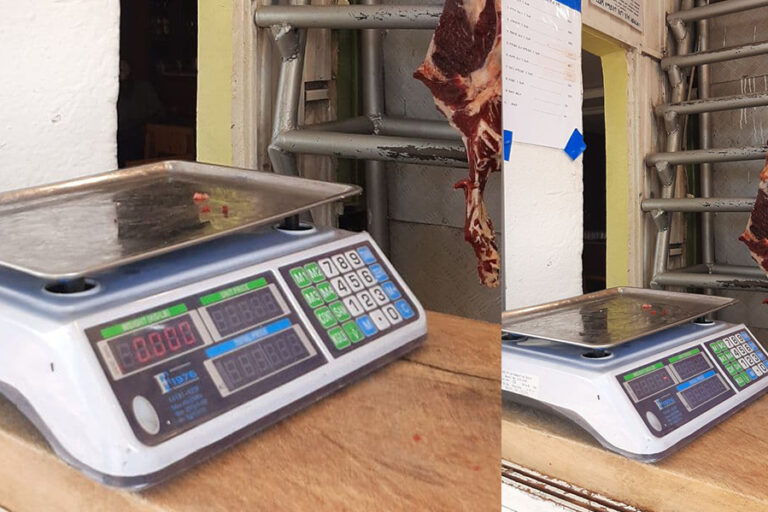
Aimed to decrease frauds and malfunctions in the market Addis Ababa Trade Bureau orders traders to change their weighing scale to digital from the mechanical or analog one.
“Based on the standard, the Bureau has stated that shops should start to change their scale to the digital one,” said official from the trade bureau, adding that, “Beside the price-hike, frauds and malfunctions in the market is stressing the consumer. Thus, the trade bureau has been working to change the scaling system in the market to protect the consumer. Moreover, the system can minimize frauds and underweight selling in the market.”
As stated by the bureau this task mainly focuses on six main sectors in the market, including Butchers, supermarkets and vegetable and fruit shops, consumer unions and other grocery items.
As the bureau explained, with in the last few months more than 4500 shops have changed their analog scale to digital, and the bureau will continue working to change scales all over the city.
Digital scale is the most accurate and precise instrument that uses force sensor to measure the load of and object which is an important part of many processing facilities because it performs the much needed quality control. Digital scales works with the use of a strain gauge load cell whereas analog scale uses spring to indicate the weight of an object digital scales convert the force of a weight to an electric signal.Thus, mechanical scales are much more prone to user error. It is often difficult to read the weight from a sliding arm and thus it is easy to make a mistake when viewing a dial scale. Mechanical platform scales have no onboard intelligence and have relatively crude load measurement schemes.
Digital weighing machine is highly reliable, and it will not give inaccurate reading. It is automatically calibrated every time when you turn on.
In addition it is easy to use with automatic turn on option, and it will turn off automatically after the use.
The major advantage of the digital scale is that it provides high accuracy and has a good durability. Failure is not a common feature and it’s often accompanied by a warranty from the company.
