Monday, October 5, 2026
Home Blog Page 3295

Global partnership for Ethiopia signs the historical telecom licensing agreement

0

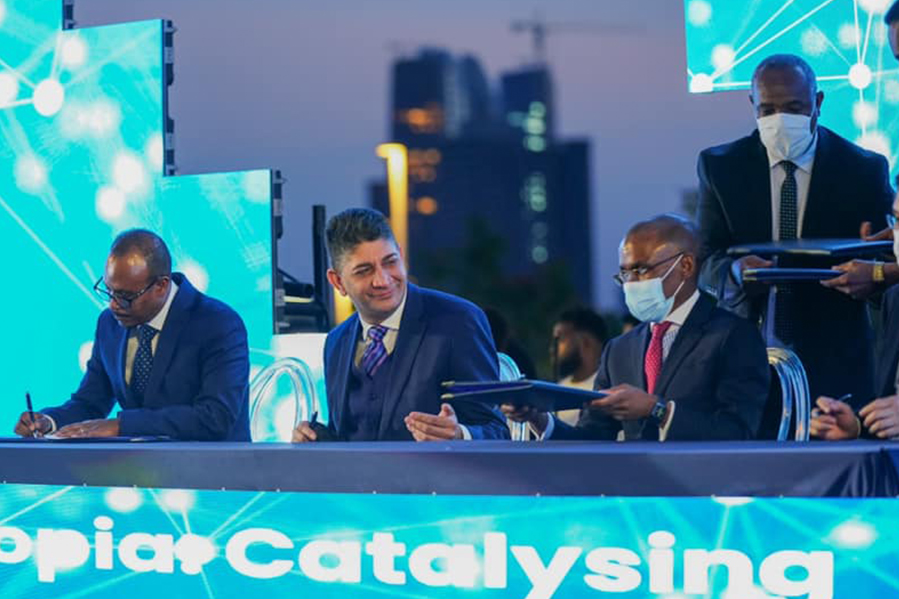
Global partnership for Ethiopia signs the historical telecom licensing agreement with the government of Ethiopia on Tuesday June 8, 2021 to start its operation in Ethiopia.

The consortium, which includes Vodafone, Vodacom, Safaricom, Sumitomo Corporation, and the CDC Group, won one of the two telecom operator licenses bid by offering $850 million. The move will create jobs for 1.5 million citizens and activate over $8 billion in domestic investment.

Officially the Global Partnership for Ethiopia, backed by US and UK government finance said it will start operations within six months.

Ethiopian Prime Minister Abiy Ahmed presented the license at a ceremony in Addis Ababa, attended by Uhuru Kenyatta, President of Kenya, as well as Safaricom CEO Peter Ndegwa and Vodacom CEO Shameel Joosub.

NBE board approves primary market directive

0
  • Securities exchange to begin in 2022

On its meeting on Thursday June 10, the Board of Directors of National Bank of Ethiopia (NBE) issued a monetary policy operation directive to formalize and modernize the primary market under Open Market Operations (OMO) and Standing Facilities (SF).
The Ethiopian Capital Market Authority (ECMA) is also expected to become operational before the end of 2021 to pave the way for the highly anticipated securities exchange that will be realized in 2022.
Following the endorsement of the ‘capital market proclamation no. 1248/2021’ at the parliament 14th session on Thursday June 10, the formal establishing process of the ECMA is on the way.
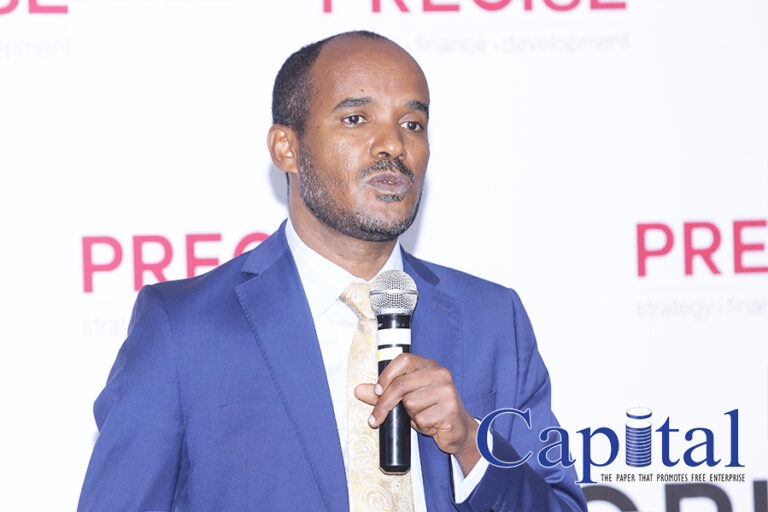
“We had been under preparation informally but since the ratification of the proclamation happened our work is now officially on the process for the formation of required facility,” Melese Minale, Senior Macroeconomic Advisor at NBE and one of the major players on the process for the development of the capital market proclamation and related operations, said.
Melese told Capital that the implementation process has already commenced and project team is in the formation, while partners have also supported the process for the establishment of ECMA.
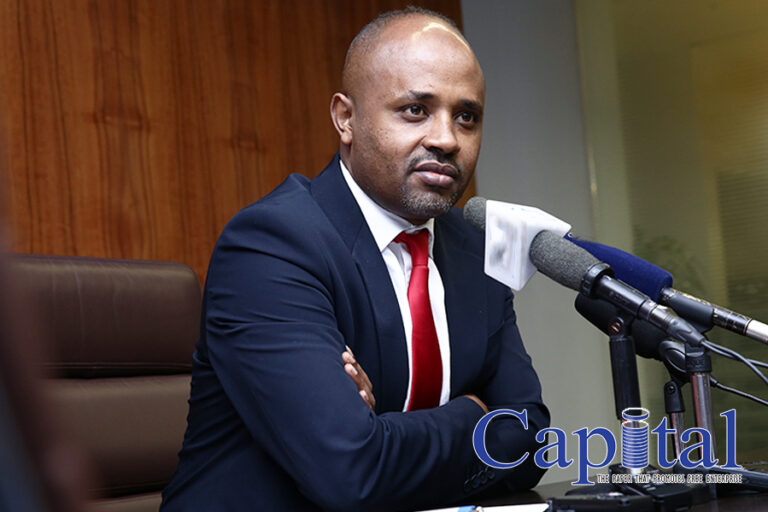
Eyob Tekalgn, State Minister of Finance and one of the leaders on the formation of the new market, told Capital that it is looking for required technologies to see the authority in the coming Ethiopian year.
Meanwhile, there is guidance on the designing of the exchange market which is mainly expected to make the private sector a major actor in the upcoming work.
“On the operational process of the market, currently, we have started engagement with experienced consulting firms that is fired up with the support of IFC,” he explained.
NBE is also calling experts on the formation of project team for the establishment of the first in kind authority.
“The government has shown its intention for the formation of the authority due to that we are tirelessly working to establish ECMA,” Melese says and added that the authority is expected to be real in the next six months time.
According to the proclamation, the Director General of the upcoming authority will be assigned by the Prime Minister. It is part of the formation process. The ECMA shall be accountable to the Prime Minister too.
“Definitely the Ethiopian Securities Exchange (ESE) will not happen by the end of this year. Starting from designing of the market there are several technical and practical processes that may involve different stakeholders. Several entities like listing companies and others should be also operational to embark the secondary market,” Senior Macroeconomic Advisor says, “due to that it would be challenging to see the ESE in the coming up to one year time but it may have life by the end of 2022.”
So far with the support of Financial Sector Deepening Africa (FSD Africa), a UK government organization, local experts have taken training for the capital market and the second round would be undertaken soon.
The ECMA may have a board that comprised seven members, consisting of ECMA Director General, Governor of NBE, and the Director of Accounting and Audit Board of Ethiopia as permanent ex-officio members of the board and four others by qualification.
In related with financial market strategy, which introduced about three years ago for modernizing the sector market up to the establishment of capital market, the Board of Directors of NBE has ratified a directive for monetary policy operation on its meeting on Thursday, which was the same day of the enactment of the capital market proclamation.
“Meanwhile, NBE’s directive, it is not for the stock market but they are related,” Melese explains, adding, “usually for the liquidity inception of securities exchange the banking system is crucial. So that developing the money market is very important to mush-rooming the securities exchange.”
Eyob also said that the directive for the primary market corroborates to see feasible capital market. He told Capital that the NBE board that he is also a member and chaired by Girma Birru, is issuing the directive to expand the primary market on modern arraignment.
The financial market strategy has classified the money market, which is short term financing and, a capital market will be introduced in the next step as per the economic reform agenda.
Under the Home Grown Economic Reform Agenda, the first stage is developing the money market that is introduced by making competitive the treasury bills (T bills) on market based and now it will introduce the modern inter-bank money market, and use instruments of OMO to foster the sector.
Currently, banks are engaged on interbank money market. But experts said that is informal deposit placement between banks is not really efficient.
According to the Senior Macroeconomic Advisor, the major objective of the directive is to make the money market structural and solve problems that it currently faces.
To develop the interbank money market NBE has hired a consultancy firm based in the Netherlands, working on the area of capacity building including for banks, legal framework for secure financial transaction, market infrastructure such as Central Security Depository (CSD) and trading platforms and others.
The new directive for the OMO and SF, shall avail instruments to provide and absorb overnight liquidity at banks, and is under development and will be launched in the near future.
Introducing these instruments means NBE is trading with banks and when banks have marketable security instruments they shall trade it as using collateral with each-others.
As part of modernizing the money market NBE is also emplacing infrastructures and technologies.
The market infrastructure such as CSD will enable to register securities electronically at a central platform that allows interested trader to use it electronically.
“So far, currently, a bank that demands to borrow from NBE is required to come physically with collaterals like T bills or other physical certificates, which is inefficient. But if it is deposited at CSD any bank need not to come physically, while using the trading platform at the core banking system,” Melese recently told Capital.

T-Bills register highs in quick succession

0

The fund collected through the Treasury bills (T bills) market, one of the primary money market instruments, registered the second highest ever amount within less than two months.
On the auction held in June 2 under the platform of National Bank of Ethiopia (NBE), 15 billion birr has been collected from interested participants. It is the second highest fund mobilization in a single auction since the T bills was liberalized in December 2019 in to the competitive auction and free for interested players.
The first highest fund mobilization had happened in the auction held April 21. In the bi-monthly auction, participants sold bills worth of 15.746 billion birr in total with different maturity time and interest rates for the first time.
On the second auction, since April 21 which was on June 2, the second highest mobilization that is 15 billion birr has been collected from participants.
Since the auction re-launched late 2019 for competition, the market and resource mobilization has skyrocketed unlike the experience in the past and the interest rates have also become attractive. The number of investors including the private sector who show interest to participate on the auction has also increased, which has mainly involved public institutions and enterprises in the past.
The maturity has four different periods that is from 28 to 264 days. Since the T bill was introduced in new forms, the lowest amount resource collected was 100 million that was secured on the auction held June 17, 2020.
Eyob Tekalegn, State Minister of Finance, explained that the newly established auction has become promising from time to time to mobilize funds for the support of budget gap rather than using direct advance from NBE.
He told Capital that for the supplementary budget which was endorsed by parliament on Thursday, June 10, the line share will be covered by the bond secured from T bills rather than direct advance. “We are confident that the resource secured from T bills will cover for the gap on the supplementary budget,” he added.
He hoped that the budget deficit for the coming year budget will be mainly covered by the T bills, “we are suppose to reduce the direct advance.”
Economists argued that the direct advance, which is money printing pump to the market, from NBE, is very dangerous for the economy since it is one of the major reasons to ignite the inflation. They reminded that the country had incurred high inflation for over 15 years up to now since the government policy preferred to fill the budget deficit through direct advance with huge amount.
On the parliament session, the House of Representatives has approved 26.4 billion birr form supplementary budget for the 2020/21 budget year. Of which 14 billion birr is expected to be covered by the fund collected from T bills rather than direct advance, while 11.8 billion birr is covered by international partners.
Similarly, on the day, parliament has approved a proposal of 12.04 billion birr under financing restructuring for the required resource that was expected to be covered by international partners for the 2020/21 budget year but was not channeled as per the expectation.
The 12.04 billion birr will also be covered by the resource secured from the bond collected via the T bills market.
Funds collected through such tools, T bills, are typically used to meet short term financing for government expenditure and or sacking the excess money from the market to control the inflation.
According to NBE second quarter bulletin for the 2020/21 budget year, the share of direct advance dropped by 74.8 percent compared with last year due to its conversion to government bond, thereby increasing the share of bonds.

DENYING REALITY

0

Whether we accept it or not, ecological even geological change, primarily induced by Homo sapiens has become an accelerating phenomenon, according to science, real science, not the fake one actively promoted by entrenched interests of the global order! The current geologic era that is being shaped by humans has been given the name Anthropocene. The various so-called ‘conferences on climate change’, besides being half-hearted, are also unrealistic in their desired outcomes. For example, establishment knowledge predicts global temperature rise will remain below 2 degrees by the end of the century. Temperature has already gone up by more than 1 degree so far. Unless we drastically change our ways, global temperature should rise by not less than 5 degrees at the end of this century. This is the prediction of science based on realistic assumptions, not hallucination!
All the noise from the global establishment about containing temperature rise under 2 degrees is a pipedream. Even if we stop using fossil fuel today and immediately restrain from all our major activities that produce ‘green house gases’, the prognosis still doesn’t look good! Moreover, with issues like climate change or ocean acidification or accelerated extinction of species, etc., etc. predictions cannot be based on simple linear extrapolation. If anything, the whole dynamics of nature is and will remain non-linear, making it difficult, if not impossible, to precisely predict the future, even the very near future. Therefore, all forecasting is inherently rife with protracted complexities! Looking at the last five years alone, we see that each succeeding year managed to break the previous high (of global temperature), still global establishment is not worried! Amongst other things, rise in global temperature is probably the single most contributor to creating powerful hurricanes and typhoons over the oceans of the planet! Since Hurricane Katrina the world has witnessed frequent devastations caused by hurricanes and typhoons, to say nothing about tsunamis.
It is mostly human avarice that is behind all of the major problems the planet is facing today. For instance, the single worst industrial disaster in the history of the world is the Fukushima nuclear accident. When a tsunami created by a powerful earthquake hit the Japanese islands, the flawed nuclear power plant was not up to the task. To this day, the world doesn’t know how to control, let alone stop, the radiation (from the accident) that is still spreading across the oceans/air. Instead, hiding problems behind phony narratives is the preferred choice of global dominant interests. The Japanese government has made it a crime to talk about Fukushima in an honest manner. The whole global nuclear cabal is behind this strategy. When the accident occurred all the nuclear regulatory commissions/agencies of the world classified it below level 7! We said baloney, and took the initiative by immediately declaring it to be the worse nuclear power accident ever, (now vindicated) much worse than Chernobyl, which was conveniently assigned level 7! To be honest, Fukushima is a league on its own. It packed six nuclear reactors with plenty of spent fuel stored in the same reactor buildings, needing non-stop water flaw to keep the whole process cool. Unfortunately and most likely, there will be many more nuclear accidents that will take place in the near future, for the simple reason (amongst many others) that many nuclear power plants are built nearby lakes, rivers, sea, oceans, etc. to take advantage of available water, critical to maintain low temperatures across the plant; mainly in the reactor, piping system, and in the pools that contain the unprocessed spent fuel, conveniently but dangerously stored within the actively operating reactor halls! As global water levels rise, for various reasons, the chance of nuclear power plants being inundated becomes higher by the day! Again there is no serious discussion about such grave life and death matters in our global institutions! Sadly, denying reality has become the modus operandi of our collapsing world system.
“I fear the day that technology will surpass our human interaction. The world will have a generation of idiots.” Albert Einstein. Good Day!