Friday, November 27, 2026
Home Blog Page 330

ESP calls for banks to increase agricultural lending to 10%

0

Resilience Ethiopia, a partner of the Ethiopian Seed Partnership (ESP), has issued a call to the country’s financial institutions to address the severe financing shortage in the agricultural sector. The organization made this appeal highlighting the significant funding gap that is currently hindering Ethiopia’s food security system.

Joep van den Broek, General Manager of Resilience Ethiopia, told Capital that banks are currently required by a directive to allocate about 5% of their loan portfolio to agriculture, but the banks are failing to achieve this. He emphasized that 5% is very low and should instead be 10%.. He noted that private banks hesitate to lend to agribusinesses because the sector is perceived as “high risk,” rather than basing decisions on actual loan repayment data. This information gap prevents Ethiopia’s seed sector from reaching its full potential.

Agriculture remains the backbone of the Ethiopian economy, contributing significantly to the GDP, providing a livelihood for the majority of the population, and serving as the primary source of foreign exchange. 

Despite this, the sector faces a massive credit supply problem. Most private banks prefer sectors like real estate, manufacturing, and urban trade because they offer easily verifiable collateral, such as buildings and vehicles.

“We understand that interest in the agricultural sector is limited among all banks,” van den Broek said. “Banks are particularly hesitant to lend to the seed sector. Through our initiative, we hope to demonstrate that there are many reliable agricultural companies with lower risks than the industry perceives.” Because the seed production process requires significant upfront capital for inputs and farmer payments before harvest, companies often face acute cash shortages.
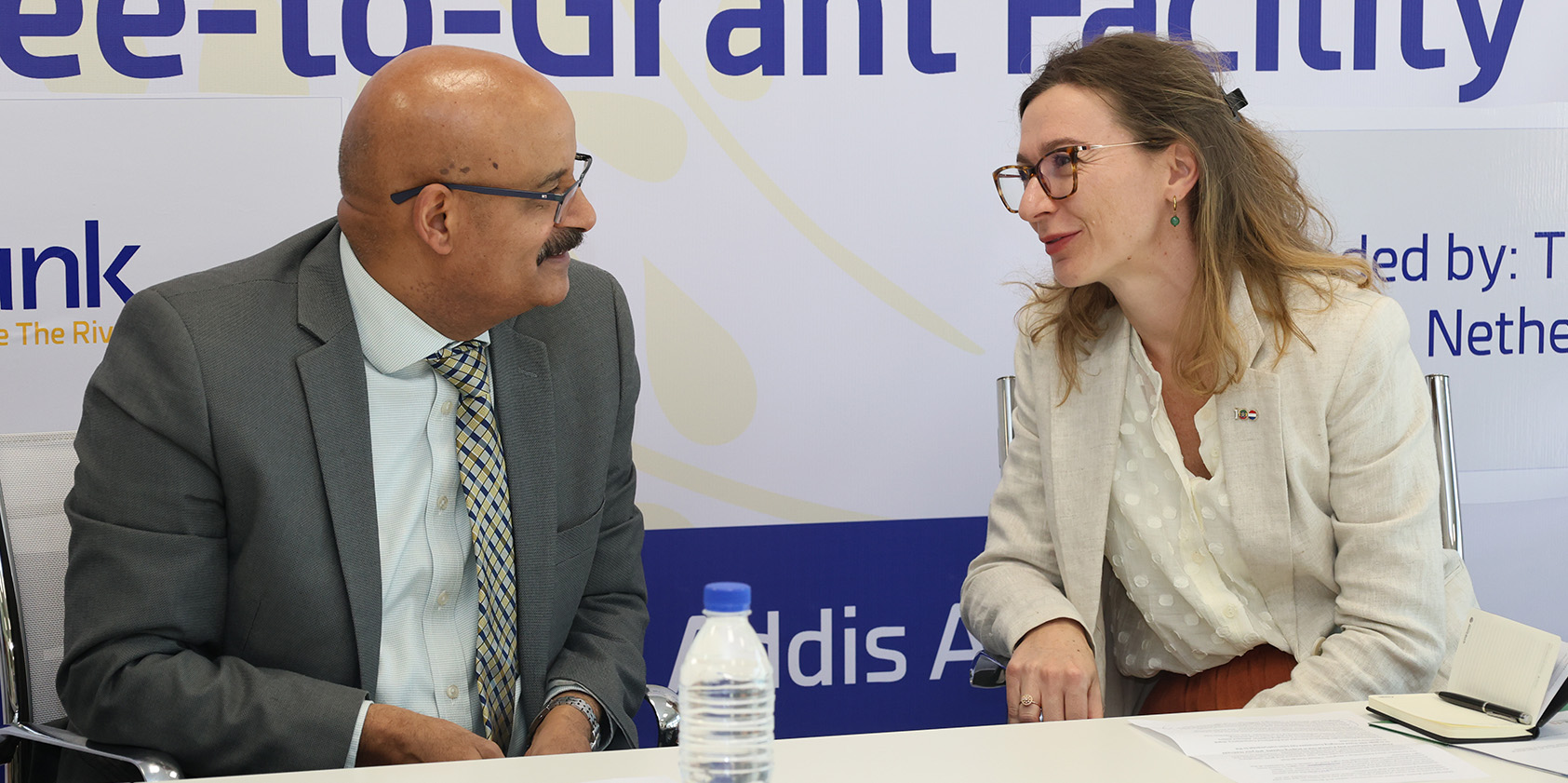
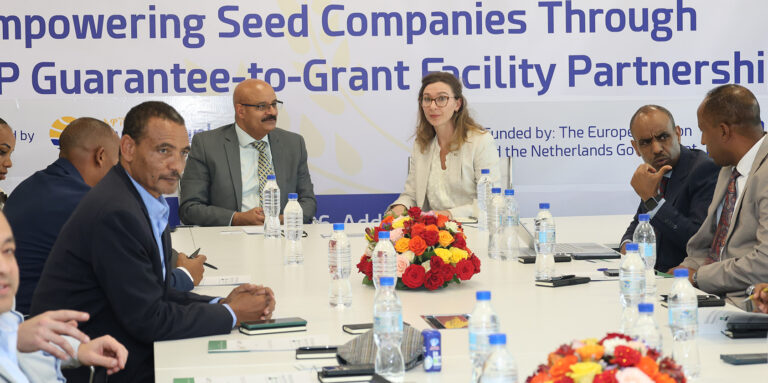
To solve this, the Ethiopia Seed Partnership (ESP) project—a collaborative program funded by the Embassy of the Kingdom of the Netherlands and the European Union—developed in partnership with Stichting Wageningen Research (SWR), Awash Bank, and Resilience Ethiopia, introduced an innovative financing product called “Guarantee to Grant” (G2G). This model strengthens the limited collateral of seed companies with a cash guarantee from the ESP, allowing companies to access loans double their own capacity. The first round was successful, with 400,000 Euros in cash guarantees allocated to 12 companies. 

Yohannes Merga, Senior chief marketing officer at Awash Bank, stated that under this framework, the bank provided loans ranging from 6 million to 18 million ETB based on the borrower’s capacity and repayment performance. 

This financing enabled seed companies to purchase over 830 tons of certified seeds from contract growers and invest in vital inputs and irrigation. As of April 2026, funds have also been used for fertilizer purchases, land rentals, and the construction of 200 hectares of irrigation infrastructure.
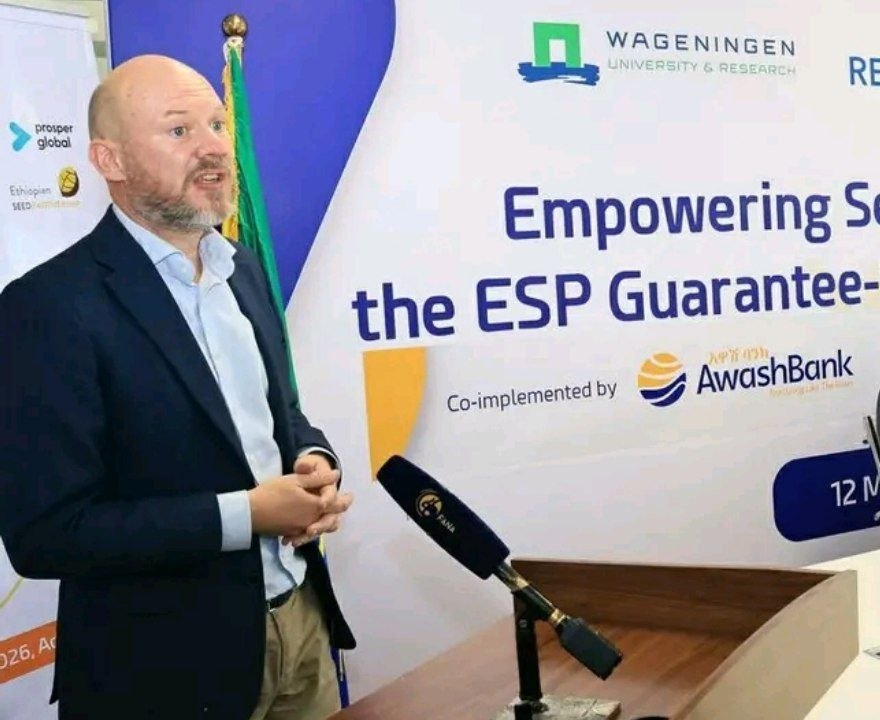
One of the key successes of this partnership is the extremely low loan default rate, achieved through a rigorous three-stage screening process. Companies are selected based on a four-year history of growth and quality control, followed by Awash Bank’s strict business viability audit. Furthermore, when a company repays its loan in full, a portion of the guarantee fund is returned to them as a grant to reinvest in fixed assets. This ensures the relationship between the bank and the agribusiness remains professional, sustainable, and purely commercial.

While production is increasing, experts believe the Ethiopian market still has vast unmet demand. “Demand still far exceeds supply,” van den Broek explained to Capital. “If you go to rural areas, farmers are always looking for quality seeds and fertilizer. There is always a shortage.”

The ESP project aims to double the private sector’s seed production capacity, a goal now expected to be reached by early 2027—well ahead of the project’s December 2027 deadline. This model is now being eyed as a blueprint for other sectors within Ethiopia’s agricultural finance system.


South Sudan Embassy staff in Addis endure years of unpaid wages

0

Local employees at the South Sudanese Embassy in Addis Ababa say they have gone years without consistent pay, leaving dozens of workers and their families in severe financial distress despite longstanding diplomatic ties between Ethiopia and South Sudan.

At least 20 staff members, including cleaners, security guards, gardeners, and administrative workers, report prolonged salary suspensions that have worsened significantly over the past two to three years. Many say the issue stretches back nearly a decade, but has now reached a critical point.

“The last salary we received was a single month’s payment in early February after waiting nine months,” one employee told Capital. “Since then, nothing has changed.”

Workers say the irregular payments have left them struggling to survive amid rising living costs and inflation in Ethiopia. Several report being forced to sell household belongings to cover basic expenses, while others face eviction due to unpaid rent.

“We are selling our furniture just to feed our families,” one employee said. “Our children have been pulled out of school because we cannot pay tuition.”

Previously, staff relied on small tips from visiting delegations to supplement their income, but they say even that coping mechanism has recently been prohibited. Fear of dismissal has also prevented collective action.

“If we protest or strike, we will be treated as if we resigned and lose our jobs,” another employee explained.

According to staff, embassy officials have repeatedly cited budget shortages or delayed fund disbursements as reasons for non-payment. However, the issue has escalated beyond the embassy level, drawing the attention of both countries’ foreign ministries.

Documents seen by Capital indicate that as early as 2023, employees had gone 10 to 11 months without pay. Correspondence from late 2024 confirms arrears had reached a full year.

The Ethiopian Ministry of Foreign Affairs (MFA) formally raised the issue in a letter dated August 1, 2024, urging the embassy to resolve the grievances of 19 affected employees. When no resolution followed by the requested August 27 deadline, embassy representatives were summoned for discussions with the MFA’s Directorate of Conciliation Affairs.

Internal embassy communications suggest the problem has long been known. In May 2021, South Sudan’s ambassador to Ethiopia, Natalina Edward Mou, wrote to her government requesting emergency payments and salary adjustments for staff.

In mid-August 2024, the embassy informed Ethiopian authorities it had paid four months of arrears. However, significant debts remained. By December 2024, the Ethiopian MFA issued another reminder, prompting the embassy to state it was issuing one month’s payment while promising to clear the remaining balance gradually.

Despite these intermittent payments, workers say the accumulated arrears—and the uncertainty—continue to take a heavy psychological toll.

Employees are now calling for immediate settlement of outstanding salaries, regular and timely payments going forward, and wage adjustments that reflect current exchange rates and the cost of living.

Efforts by Capital to obtain official responses from both the South Sudanese Embassy and the Ethiopian Ministry of Foreign Affairs were unsuccessful. The publication states it will update the story should either party provide clarification.

Hybrid varieties, Ag-Tech are steering Africa toward food self-sufficiency

0

Rwanda, Kigali 

For decades, international discourse has largely focused on Africa’s “potential”—a distant hope of what the continent could become. However, looking at regional hubs like Ethiopia and Kenya, the conversation has shifted from future promises to current results.

Experts urge this transformation is being spearheaded by hybrid seed technologies and integrated digital platforms, which are the primary engines driving the continent toward total food self-sufficiency. Africa’s agricultural growth was long stifled by “Western arrogance”—the tendency of European and North American institutions to impose rigid development models that were ill-suited for the African context.

Max Müller, Senior Vice President and Head of Global Public Affairs of Bayer AG told Capital at the sidelines of Africa CEO Forum, the era of giving directives to African farmers is coming to an end.

“For a long time, we Europeans—perhaps with good intentions—believed that economic development had to be done our way,” the official stated. “This is not a path to success because there is no ‘single’ Africa. What works in Kenya may not work in Côte d’Ivoire; what is effective in South Africa may not succeed in Morocco or South Sudan.”

Now, the primary role of international partners is to respect the continent’s diversity in soil, climate, and culture. Ag-tech companies are pivoting their focus toward localized solutions, training, and advisory services.

The argument for hybrid technology centers on its value proposition. As climate change and market volatility impact the prices of commodities like cocoa and maize, a farmer’s only defense is a reliable yield. High-quality fertilizers and crop protection tools are now viewed as essential investments rather than luxuries.

A major hurdle for African smallholder farmers has been accessing the credit needed to purchase modern inputs. Historically, banks viewed small-scale farming as a high-risk venture. However, the “digital revolution” in ag-tech is changing this perception.

Müller emphasized that anyone not currently active in Africa is missing out on the next great success story, noting that global food products—such as German chocolate—rely heavily on West African productivity. Addressing concerns that high-tech seeds and fertilizers are too expensive compared to traditional ones, he argued that the focus should be on quality rather than price.

High-quality inputs yield higher harvests, reduce waste, and improve a farmer’s creditworthiness. Consequently, digitally-supported agriculture is transforming the livelihoods of smallholder farmers.

Guided by the motto “Health for All, Hunger for None,” Bayer aims to benefit 100 million smallholder farmers globally by 2030, with a specific target of reaching 21.3 million farmers in Africa.

Why Africa must rewire infrastructure financing

0

For too long, Africa’s infrastructure debate has been framed as a simple shortage story: not enough concessional finance, not enough foreign aid, not enough sovereign borrowing space. That narrative is incomplete. The real issue is that Africa already sits on substantial pools of domestic savings and institutional capital, but much of it remains trapped in low-yield government paper, underdeveloped markets, and cautious investment mandates. The result is a continent with abundant capital on one side and a crippling infrastructure deficit on the other.

This gap matters because infrastructure is not a decorative extra; it is the backbone of productivity, trade, and competitiveness. Without reliable transport corridors, ports, electricity grids, storage systems, and broadband, African economies remain fragmented and expensive to do business in. Farmers cannot move produce efficiently, manufacturers cannot scale, and regional trade under the African Continental Free Trade Area cannot mature at the speed policymakers promise. In that sense, infrastructure spending is not merely a fiscal choice. It is an economic strategy.

Yet Africa must also be honest about why financing has been so difficult. Investors do not just price projects on facts; they price them on perception, transaction costs, and confidence in execution. African project-finance default rates are shown as comparable to, or lower than, global averages, while the cost of capital is inflated by a “packaging gap” and a perception premium. That means many projects fail not because they are inherently unbankable, but because they are badly structured, poorly prepared, or not de-risked in ways private capital understands.

This is where the blame game must end. Governments cannot continue to design projects casually and expect pension funds, insurers, and development finance institutions to absorb the risk. At the same time, investors cannot demand returns as though every African project were a speculative venture in an unstable market. Both sides need a new bargain. Governments must improve project preparation, procurement, regulation, and rule of law. Investors must stop treating the continent as a monolith of risk and start distinguishing between jurisdictions, sectors, and project quality.

If Africa’s domestic non-bank pools are larger than cumulative external flows, then the continent’s infrastructure future cannot depend mainly on foreign lenders and donors. That external money will remain important, but it should be catalytic rather than dominant. The purpose of development finance institutions should not be to sit in the center of every deal, but to absorb early-stage risk, crowd in local institutions, and help create investable assets. Africa does not need perpetual dependence on external capital; it needs smarter leverage of its own balance sheets.

Pension funds and insurers will be central to that shift. These institutions manage long-duration liabilities, which makes infrastructure an obvious match in principle. Yet the allocation data suggest that African pension funds still commit only a tiny share of assets to infrastructure, far below peers in advanced markets. That is not just a market failure; it is a policy failure. Regulators should modernize investment rules, strengthen credit enhancement tools, and create standardized vehicles that allow local institutions to invest without being forced to build expertise from scratch on every deal.

But the answer is not to pour money into infrastructure blindly. Africa has seen too many white-elephant projects, politically motivated contracts, inflated costs, and debt burdens that outlived their usefulness. Spending more is not the same as spending better. Every shilling, rand, naira, cedi, or birr directed toward infrastructure must be tied to clear economic returns, maintenance planning, and transparent public reporting. The continent cannot afford monuments to ambition that collapse under the weight of poor governance.

The deeper lesson is that infrastructure spending should be judged by its capacity to unlock growth, not by the size of the headline commitment. Africa needs fewer ceremonial announcements and more bankable pipelines. It needs project preparation facilities, regional power pools, transport corridors, and financing models that match local capital with local needs. Most of all, it needs leaders who understand that the infrastructure gap is not only about roads and bridges; it is about whether the continent can convert its savings, institutions, and entrepreneurial energy into lasting productive assets.

If Africa gets this right, infrastructure will stop being the symbol of what is missing and become the engine of what is possible.
