A great performance from hat trick hero Abubakar Nasser that go along a penalty miss set BetKing Ethiopian premier league new season biggest derby match between city rivals Ethiopia Bunna and St George which ended in a spectacular 3-2 victory to the Brown Shirts.
The win was not just a matter of three points, rather a huge moral boosting victory for popular Coach Kassaye Arage and the upcoming young talents that are under heavy pressure from club supporters. It was a heyday to goal hunter Abubakar who bagged a hat trick to take his goal tally to eight. “I don’t think the players are to feel easy from now onwards for the trophy hungry supporters are no more to listen to lame excuses after Tuesday’s huge victory,” suggested a former Bunna player.
A foreign Coach, three foreign players and five of the country’s best strikers in the squad, St George had had every fire power to return home with all three points. But amazing Bunna not only won the game 3-1 and missed from the penalty spot. But in full domination of the show once Matasi left the field with red card just 15 minutes into the game. South African Makeshift Coach Maahier Davids appeared to have short of any insight to save the day for The Horse Riders that still are title favorites despite losing two of their five matches. A strike force spearheads by leading scorer Getaneh Kebede and flanked by Abel Mulugeta and Gadisa Mebrate, Giorgis appeared fearsome against blunder prone Bunna defenders. Of course St George’s second equalizer was the result of silly defensive mistake.
While a draw appeared eminent, long rusted goalie Lealem Berhanu’s 90th minute blunder helped Abubakar to grab the winning goal. The hat trick hero Abubakar gave a historic Christmas gift to Ethiopia Bunna supporters that returned home dancing all over the street. “It is the most precious day of my life,” Abubakar remarked after the match.
Abubakar gave away historic Christmas gift to Ethiopia Bunna

Nightmare is looming around EPL Coaches

Just half way into the first round, three Coaches namely St George’s Maahier Davids, Fasil Ketema’s Seyoum Kebede and Sebeta’s Abraham Mebratu are currently under pressure from club supporters for poor results. Thus the speculation started flying around one of the three Coaches soon to be axed.
Two defeats and three wins and St George sitting 4th with nine points from five matches stop gap Coach Davids’ is the hot favorite to get axed sooner. Though the opening 1-0 defeat to Fasil past unnoticed, Tuesday’s 3-2 defeat to rival Ethiopia Bunna is considered the cardinal sin thus a huge roar from supporters for his neck to roll.
Three consecutive matches without a win, newly appointed Sebeta Ketema Coach Abraham Mebratu is also under pressure for his team dwelling down the table. Supporters went aflame at the two defeats; 4-2 to St George followed by 3-2 loss to Ethiopia Bunna, but the draw with bottom of the table Jimma AbaJifar appeared too much to tolerate for club supporters. Abraham’s Sebesta sits ninth in the table with five points from five matches.
Despite rubbing shoulders along with table tops, Seyoum Kebede of Fasil Ketema is under heavy pressures since that shaming defeat at the hands of nine men Ethiopia Bunna. Though it appears surprising for demanding the head of Seyoum one of the leading teams, supporters have big expectation of dominating the table top. Ten points from five matches Fasil sits third in the table with ten points.
Use sports to deepen Kenya, Ethiopia ties
Meles Alem Ethiopian ambassador to Kenya
As Athletics Kenya celebrates its 70th anniversary this month, it gives me pleasure to reaffirm that our global share of athletics glory will forever be engraved in the history of sports. The exploits of our iconic athletes are a true hallmark of success, and they offer us a basis to further sports diplomacy as an avenue to increase our linkages.
Since Ethiopia’s Abebe Bikila won the first Olympic medal in 1960 in Rome to the bursting of the sub-two-hour barrier by Eliud Kipchoge in 2019, Ethiopian and Kenyan athletes have demonstrated eminence in medium and long distance races to the extent that some track events are renowned as a preserve of the two East African nations.
Clearly this is, on the whole, an affirmation of tested and constant success.
For example, the phrase ‘Kenya’s event’ is used to refer to the 3,000 metres steeplechase which Kenya has dominated since the 1968 Olympics in Mexico when Amos Biwott won the gold medal with compatriot Benjamin Kogo winning the silver medal. In fact, when Biwott won, he did so by leaping over the water jump without putting his foot on top of the barrier!
If Kenya has the magic wand on athletics, then Ethiopia has the golden touch. In 2019, I visited athletics camps in Iten and Eldoret towns; I noted a number of similarities with Bikoji region of Ethiopia.
Hard to ignore
For Ethiopia and Kenya, the statistics are hard to ignore, 70 to 80 per cent of long distance races have been won by a Kenyan or Ethiopian. The annual Standard Charted International Marathon in Kenya and the Great Ethiopian Run have largely dominated as spectator and participation events in the region. If this is pursued as a component of our diplomatic tradecraft, we can make great strides and deepen the people-to-people connection.
The hard-earned reputation of our athletes at the international level of competition have generated substantial business and income to our countries. To date, a number of towns in Ethiopia are donned with skyscrapers belonging to elite athletics icons.
Athletics provides a natural point where our countries twin. It transcends cultural, linguistic and national boundaries. It provides a unique medium of communication upon which countries in the region and beyond can build their economy, especially along the border areas. Kenyan athletes are household names in Ethiopia much as Ethiopian athletes are in Kenya.
The trajectory of athletic performance is on an upward trend, the time is nigh to further cultivate trade and investment opportunities between Nairobi and Addis Ababa so as to achieve sporting success. Given the expansive experience of Athletics Kenya and the Ethiopian Athletics Federation, perhaps, both should exchange experiences on how to take onboard events which were scrapped from the Golden league series. It would be a delight to see our Olympic committees actualize this and hosting athletic events across the borders.
Tellingly, in sports diplomacy, soft power is king. Its impact is two-fold; it can help to build and strengthen influence in our region, and it provides us with unique opportunities to engage our neighbors and advance our national interests.
Building linkages
This can be done in two main ways; by building linkages with our neighbouring countries, leveraging our athletic brand to enhance reputation and building stronger relations at the regional and global levels and enhancing tourism and trade opportunities to showcase our capability in athletics.
The success of athletics has on many occasions been subject to academic research. There are various contending theories which have attempted to explain our running success. One school of thought argued that Ethiopia and Kenya bested the long distance running because pupils run several kilometers to and from school. Another argued that running barefoot helps to develop good running habits. Yet, other researchers have contended that because most of the great runners hail from pastoral communities, they practice running as they chase their sheep and cows.
Our athletes practice hard for success. However, there are times when doping has cast a dark image on some athletes. There is need to shun irresponsible practices which endear emerging talent to engage in such activities. There is need to support policies and practices to help build systems to offset doping.
Transporting parcels under AfCFTA
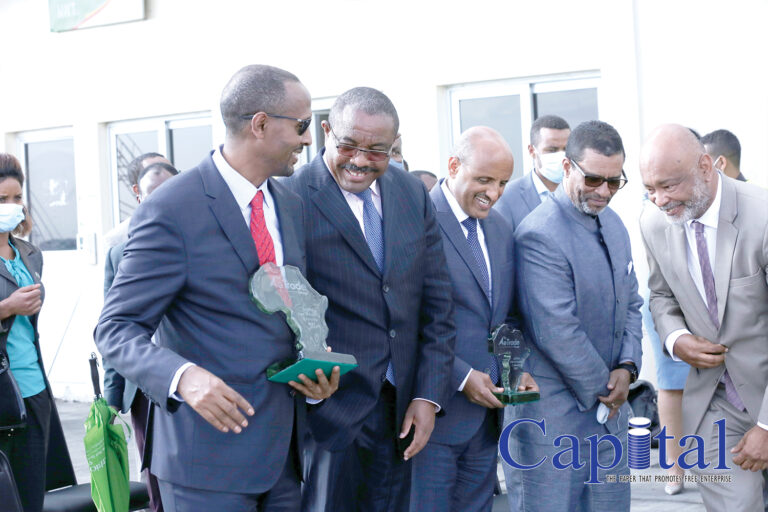
Ethiopian Airlines-DHL and African Electronic Trade Group partnered to transport parcels in the African Continental Free Trade Area (AfCFTA). The partnership is meant to invoke the start of trading of the African Continental Free Trade Area market and the operations of the African E-Commerce Platform in the continent.
The first batch of the goods arrived at Addis Ababa Bole International Airport on 1 January 2021 at a ceremony graced by high-level officials from the public and private sectors, African Union, DHL and Ethiopian Airlines Group.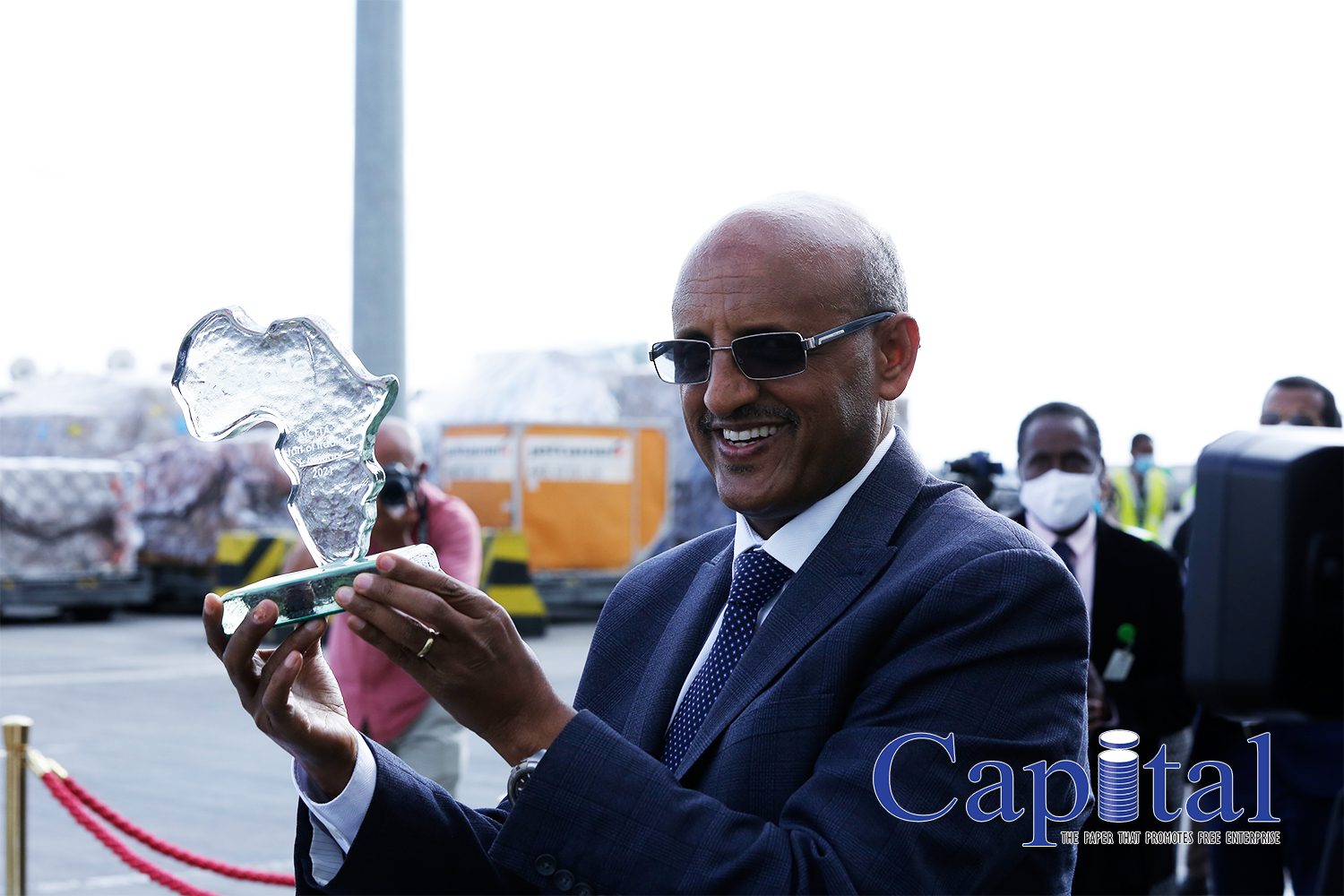
Working in collaboration with African Union Commission and the African business community with a vision to enhance intra-and inter-African trade, the African Electronic Trade Group transports fragile trophies to various African countries as AfCFTA commences.
This partnership joins the pre-existing continental partnership between Ethiopian Airlines and DHL that has strengthened the multimodal logistics systems established by Ethiopian at its hub in Addis Ababa.
So far, the fragile goods have passed through Eswatini, South Africa and Ethiopia – the three countries have signed and ratified the AfCFTA Agreement.
Tewolde GebreMariam, Group CEO of Ethiopian airlines said “the link between an integrated African marketplace, free movement of persons and the single air market in Africa cannot be underestimated as it serves as a catalyst for unlocking immense opportunities in Africa for the benefit of Africans and all stakeholders.”
“While fighting the COVID-19 pandemic, we need to work to boost intra African trade to pave the way for a brighter future,” Tewolde added.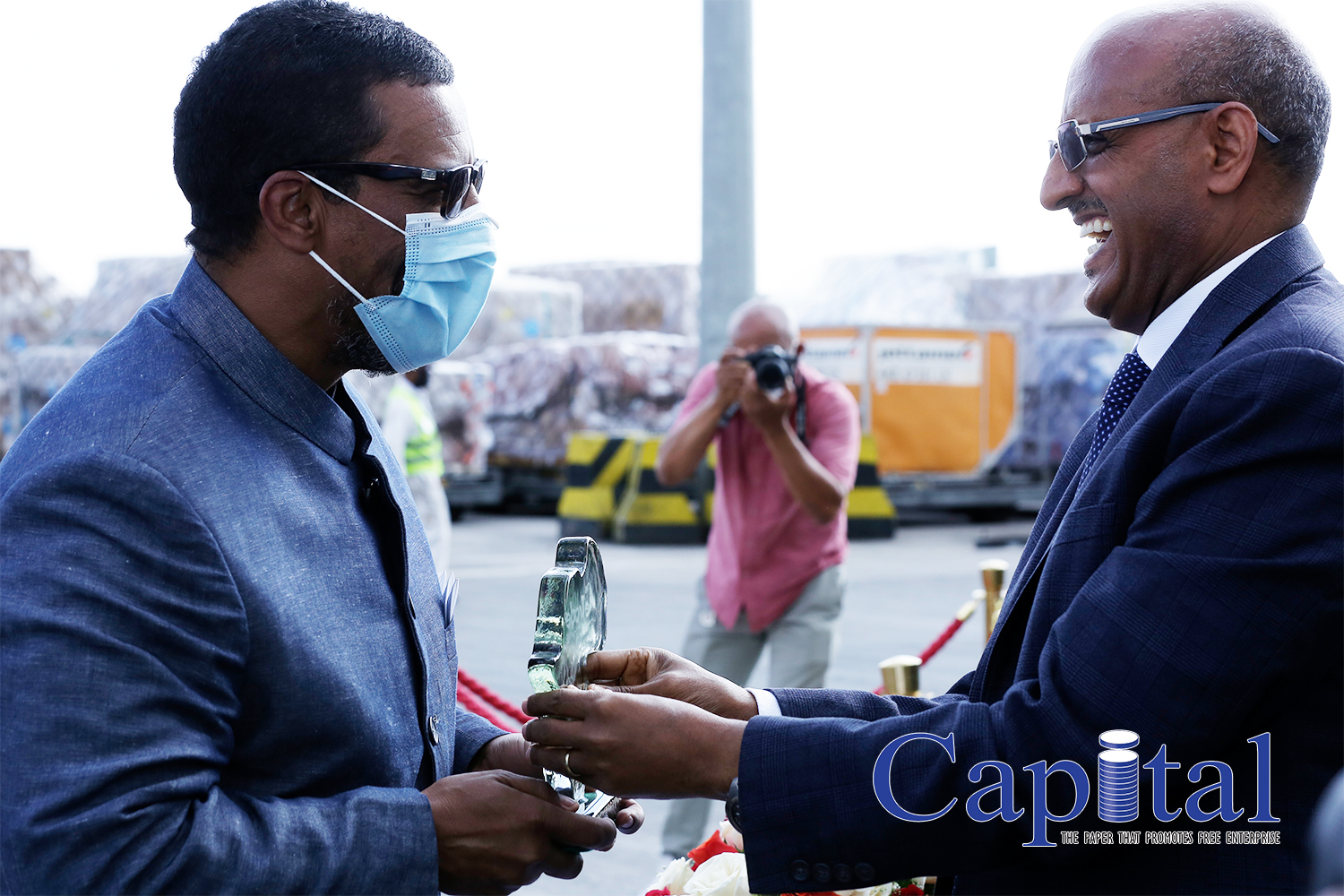
The event is held to mark the start of trading of the African Continental Free Trade Area and the operation of the African E-Commerce Platform named “Sokokuu’’ which means big market, central market and unity in Kiswahili.
The items are produced in Eswatini and transported to various destinations across the continent to symbolize that Africa is ready to exchange goods originating in this marketplace from the first day of trading.