

Enat Bank becomes a pioneer to secure a plot at the heart of Addis Ababa under the new initiative of the City Administration.
The city administration and Ethiopian Bankers Association (EBA) agreed to be provided with plots for the financial institutions under the aim for the later to construct high rise buildings.
After the agreement banks had tabled their proposal to the administration to receive the plots. Currently, Enat Bank has become the first who secured the land under the initiative.
Wondwossen Teshome, President of Enat Bank, stated that they secured a plot that is almost half hectare, located around the National Bank of Ethiopia where other banks are constructing their headquarters.
“If you want to get a plot from private owners at the stated area it might be very expensive and that forced us to hold our plan to secure and construct head office in the past,” Wondwossen told Capital.
He said that the bank has received 4,800 square meters in front of Yobek Building around NBE that he stated as a very big plot.
“Since the initiative was introduced we have gone all the way to get a plot and by chance we have secured a vacant plot at the area,” the President explained. According to Wondwossen, the bank has already settled all required lease payments and other appropriate fees and secured the land.
“In the past we have been looking for opportunities to get a plot for the construction of our headquarters,” he stated.
According to the plan, the bank has targeted to construction a 35-storey building, while detailed procedures will be done in the future.
“As a theory the building will include special facilities like kindergarten, women training center and a facility for Enat Foundation,” Wondwossen says adding “as Enat we have different special initiatives like women empowerment and other features dealing with women.”
The bank have already estimates that the new upcoming building will consume two billion birr, “in the past we allocated one billion birr but now the construction cost has skyrocketed and due to that our budget increased to two billion,” the President explained.
In relation with COVID 19 effect Enat, which is one of the youngest bank in the financial industry, cancelled the interest rate for hotel and tourism sectors for three months starting from June besides delaying loan settlement for the stated period.
“Meanwhile we did not disclosed for media the bank is under study to see the effect of COVID 19 for other sectors to take possible relief measures for customers,” Wondwossen said.
Under the initiative of the City Administration other banks are also expected to secure plots at the place. Recently the City Administration has given a green light for Dashen Bank to secure 900 square meter plot around the area. Dashen has targeted to construct 30+-storey building on the stated area.
In November 2017, Dashen inaugurated its 21-storey building headquarters. The current headquarters is built up on an area of 2,700 square meters, while the total area is 4,200 square meters. The remaining plot in the back will be included under the additional 900 square meters that the city administration transferred for further development, according to the plan of Dashen.
The City Administration and EBA have also agreed with the administration to work with the private banks on its municipality operations.
Enat Bank secures plot for its future headquarter

UN to explore role of science and technology policies in covid-19 recovery
Science, technology and innovation (STI) policies will play a key role not only in post-COVID-19 recovery plans, but also in the decade of action to deliver on the 2030 Agenda for Sustainable Development.
Shaping these future policies is a key focus of the UN’s Commission on Science and Technology for Development (CSTD) virtual meeting from 10 to 12 June.
The online meeting is a condensed edition of the annual session of the CSTD, which acts as the UN’s focal point for the analysis of science, technology and innovation for sustainable development.
“Science, technology and innovation provide a shining light to help us navigate and recover from the COVID-19 pandemic,” said Shamika N. Sirimanne, head of the CSTD Secretariat.
“We’ll use this meeting to discuss how we can foster international collaboration in science and technology, not only to tackle and recover from the virus, but also to address other pressing sustainable development concerns, which range from climate change to inequality,” she added.
Sirimanne said STI-related activities should be incorporated in recovery packages. Not only can this spur economic activity, but it can also enhance the resilience of countries to cope with future crises.
The CSTD has consistently emphasized that technological change is essential to achieving all the Sustainable Development Goals (SDGs).
The ongoing response to the COVID-19 pandemic provides daily examples of how harnessing frontier technologies can make the difference between life and death.
However, despite the well-documented advantages that frontier technologies offer in solving a vast range of problems, for many people around the world, their benefits remain a distant prospect.
Scaling technologies so that everyone, including the most vulnerable in our global community, can benefit from affordable and unrestricted access, requires a coordinated approach to initiating global cooperation for scientific advancement and resource mobilization.
International collaboration in STI is urgently needed in three areas: research cooperation, capacity building and official development assistance (ODA), to ensure that emerging technologies are developed with inclusiveness and sustainability in mind.
STI-related ODA to developing countries has stagnated over the last decade. In 2010, it was $4.7 billion, compared with $4.8 billion in 2017. Less than 4% of the ODA commitments to developing countries were reported under sectors associated with STI in 2017.
The levels of ODA dedicated to these sectors must increase for developing countries and particularly least developed countries to build the STI capacities for achieving the SDGs.
The meeting will also tackle the topical issue of space technologies and the question of international collaboration to address STI capacity constraints.
Emerging space programmes in many developing countries require long-term policy thinking to deliver their full potential development impact.
For example, the tide of raw data that flows from satellites requires filtration, refinement and modeling to translate it into usable information.
Forecasting models require huge computing capacities and appropriate skills in machine learning and artificial intelligence.
Polio eradication expertise backs Africa’s COVID-19 response

Expertise in polio eradication that has put Africa on the verge of being certified free of wild poliovirus has been brought to the frontlines of COVID-19 fight. A network of responders from the World Health Organization (WHO) Polio Eradication Programme and partner organizations is providing critical resources and skills to tackle the COVID-19 pandemic.
While testing is the core of any strategy to contain the virus, the region has had a relatively low number of tests performed. Since the outbreak started, nearly two million tests have been carried out in the WHO African Region, with an average test rate of 15.3 per 10 000 population. To boost diagnosis, the WHO-coordinated polio laboratory network comprising 16 laboratories in 15 countries is now dedicating 50% of its capacity to COVID-19 testing. Hundreds of tests are carried out every day using polio testing machines in Algeria, Cameroon, Cote d’Ivoire, Ethiopia, Madagascar, Nigeria, Senegal and South Africa.
“In Africa, no one has the footprint of the polio programme nor the expertise for mounting effective response campaigns. So with COVID-19 threatening to overwhelm health systems, the extensive polio response network is once again lending crucial support as countries build up systems to contain COVID-19,” said Dr Matshidiso Moeti, the WHO Regional Director for Africa.
Contact tracing has been a central pillar of the WHO polio programme’s support to the COVID-19 response. Mobile phone applications originally developed for health workers to use in polio outbreak response and disease surveillance have been adapted by WHO to be used against COVID-19. In Zimbabwe, for example, over 100 disease surveillance officers are using these tools for case investigations and contact tracing in many provinces where COVID-19 has been confirmed.
In addition, WHO Geographic Information System (GIS) centre in Brazzaville – which was opened in 2017 to support the polio programme with adapted technologies and data management – is using its huge experience in outbreak response and disease surveillance to support countries with a range of GIS and software technology and manual solutions to respond to COVID-19. The GIS team is now working around the clock supporting countries to take up the technology for COVID-19 response.
More than 2000 polio response experts from WHO, UNICEF, Rotary, as well as STOP consultants from the United States Centers for Disease Control and Prevention are supporting the COVID-19 response in the African Region.
Alongside the support to the COVID-19 response, WHO polio staff are also maintaining critical functions and planning to resume mass polio immunization campaigns once the situation permits.
“It is important that the support to COVID-19 response does not jeopardize the progress made in stopping all forms of polio transmission in the region. The fight against the pandemic should not come at the detriment of other health emergencies,” said Dr Moeti.
Across the continent, COVID-19 has disrupted mass polio vaccination campaigns in line with the global physical distancing recommendations that limit COVID-19 transmission. The suspension of high-quality immunization rounds may risk new polio outbreaks due to low coverage.
Pandemic significantly shrinks leather export earning
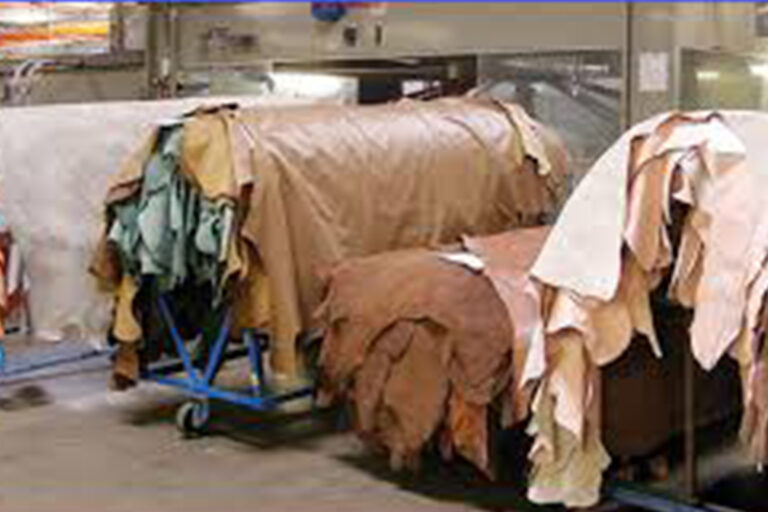
The coronavirus pandemic significantly shrinks the leather export, one of the major hard currency earners for the country; meanwhile the Leather Industry Development Institute (LIDI) appreciates the performance compared with the challenge of the virus.
The sector has achieved 42 percent of the export target 0r USD 65.5 million in ten months of the budget year which the institute projected to generate USD 157 million in the stated period.
Berhanu Serjabo, Corporate Communication Head at LIDI, said that the global outbreak has significantly damaged the sector. “In the budget year, which is 2019/20 we expected to register a significant growth from the leather sector after the government take massive measures to improve it,” the Corporate Communication Head told Capital.
“Before COVID19 becomes a challenge at the global stage the leather export was held in good manner, but since February, a month that the virus expanding its root all over the world the sector performance is seriously affected,” he added.
So far until May 8 the leather sector has generated USD 65.5 million that is 42 percent of the target, according to Berhanu.
“We highly anticipated to register good performance for the year, meanwhile this sudden pandemic has changed the overall condition,” he added.
Even though the leather sector was one of the major hard currency source for the country, it could not continue as its previous strength. Currently newly introduced sectors like horticulture have surpassed the leather sector.
Experts and pioneer leather sector actors, most of them are local investors, criticized the government for weak performance on the sector.
Tanneries argued that the proclamation introduced about 12 years ago significantly damaged the sector and even bankrupt some investors.
The raw and semi-processed hides and skins export tax proclamation No. 567/2008 imposed a discouraging tax of up to 150 percent for unprocessed or semi processed leather products, which local investors argued is untimely and affect the sector.
However lately in the current budget year the government lifted the proclamation and is working with actors to provide support like finance and lifting customs constrains, according to Berhanu, “due to the government’s attention given to the sector we have expected a marvelous achievement.”
“Most of the tanneries were returning to their previous condition and were finalizing to commence their export when the virus becomes a pandemic,” he added.
In the 2019/20 budget year the government targeted to earn USD 201 million. A year ago the sector generated USD 120.3 million.
Meanwhile COVID 19 seriously affects the export of leather and leather goods, according to LIDI to some extent products mainly leather goods like bags and glove are being exported.
“Now we have given priority for tackling the virus and keep the safety of employees and at the same time industries to continue their production with precautions,” he says adding “in the stated manner industries continue producing their products meanwhile their products at the current stage could not be exported as they used to be.”
Currently, there are 27 tanneries, 24 footwear manufacturers, four glove producers and 19 leather product exporting industries in the country that LIDI, which is under Ministry of Trade and Industry, follows.
In the 2008 financial crisis the leather sector faces similar problems, while Berhanu hopes that the current problem will be easy when the global lockdown starts opening up.
