
Thursday, November 26, 2026
Home Blog Page 3708

BAL Inaugural Season Postponed

0

The launch of the Basketball Africa League, the new partnership between the International Basketball Federation (FIBA) and the NBA, has been put on hold after delays to its plans to put together a season caused by the COVID-19 pandemic.

Originally, prior to the outbreak of the global pandemic, March 13, 2020 had been set to be the opening night, with games slated for Dakar, Senegal. Those plans were unavoidably altered.

“Following the recommendation of the Senegalese government regarding the escalating health concerns related to the coronavirus, the BAL’s inaugural season will be postponed,” BAL President Amadou Gallo Fall said in a statement. “I am disappointed we are not able to tip off this historic league as scheduled but look forward to the highly-anticipated launch of the BAL at a later date.”

An NBA First

“Unveiling of the Basketball Africa League Logo | Kigali, 20 December 2019” by Paul Kagame is licensed under CC BY-NC-ND 2.0

The league, which will have 12 teams spread across the African continent, marks the first time the NBA will operate a league outside North America.

“The Basketball Africa League is an important next step in our continued development of the game of basketball in Africa,” NBA Commissioner Adam Silver told Bleacher Report. “Combined with our other programs on the continent, we are committed to using basketball as an economic engine to create new opportunities in sports, media and technology across Africa.”

Ogoh Odaudu, head coach of the Port Harcourt Rivers Hoopers Basketball Club in Nigeria, thinks that the additional time could work to the league’s advantage and should also benefit each individual team’s preparations.

“For us as a team, it is a blessing in disguise because now we will get more time to actually prepare more and let our foreign players blend more with the team,” Odaudu said during an appearance on VOA’s Sonny Side of Sports.

The initial BAL season will see games played in Egypt (Cairo), Senegal (Dakar), Lagos Nigeria (Lagos), Angola (Luanda), Morocco (Rabat) and Tunisia (Monastir), with Rwanda (Kigali) playing host to the inaugural BAL Finals.

The following teams have qualified for the inaugural season of the BAL:

  • Algeria – GS Pétroliers
  • Angola – Petro de Luanda
  • Cameroon – FAP
  • Egypt- Zamalek
  • Madagascar – GNBC
  • Mali – AS Police
  • Morocco – AS Salé
  • Moçambique – Ferroviário de Maputo
  • Nigeria – Port Harcourt Rivers Hoopers BC
  • Rwanda – Patriots
  • Senegal – As Douanes
  • Tunisia – US Monastir

Each BAL club’s roster will include 16 players. Of those, 12 will be active for games. Each team must include at least eight players who will be citizens in their respective teams’ home country. A maximum of four players can be from other countries but no more than two players per team can be from outside of Africa.

You can bet on the African League in the same way you bet on the NBA online. But it isn’t just the NBA that is betting on the success of the BAL as they look to continue to grow the game of basketball in emerging markets. NIKE and Jordan Brand are the exclusive on-court outfitter of the new professional league.  Fans can follow the BAL @theBAL on Twitter, Instagram and Facebook and register their interest in receiving more information at www.theBAL.com.

Africa A Basketball Hotbed

This season, there were 22 players from Africa active on NBA rosters. The roster of the 2018-19 NBA champion Toronto Raptors included two key players from Africa – Pascal Siakam of Cameroon and Serge Ibaka of Congo. Raptors GM Masai Ujiri hails from Nigeria.

During the 2019-20 campaign, Siakam posted career highs in points (22.9), total rebounds (7.3), assists (3.5), steals (1.0) blocks (0.9) and minutes played (35.2) per game. He also hit a career-high 79.2 percent of his free throws.

Ibaka scored a career-best 15.4 ppg this season.

“For so long we knew the continent of Africa was a continent full of treasure,” retired Congolese NBA star Dikembe Mutombo said in a video posted on the BAL’s Twitter feed. “It was a question of time for those who want to go and find it.”

There are still four players from Africa who are in with a chance to earn the Larry O’Brien Trophy as NBA champions.

In the Eastern Conference final the Miami Heat include shooting guard Chris Silva from Gabon and point guard Gabe Vincent from Nigeria. Towering 7-foot-7 center Tacko Fall of Senegal features for the Boston Celtics, Miami’s opponent.

The Denver Nuggets suit up 7-foot-2 rookie center Bol Bol of Sudan in the Western Conference final. He is the son of former NBA player and African basketball legend Manute Bol.



Africa could gain $89 billion annually by curbing illicit financial flows

0

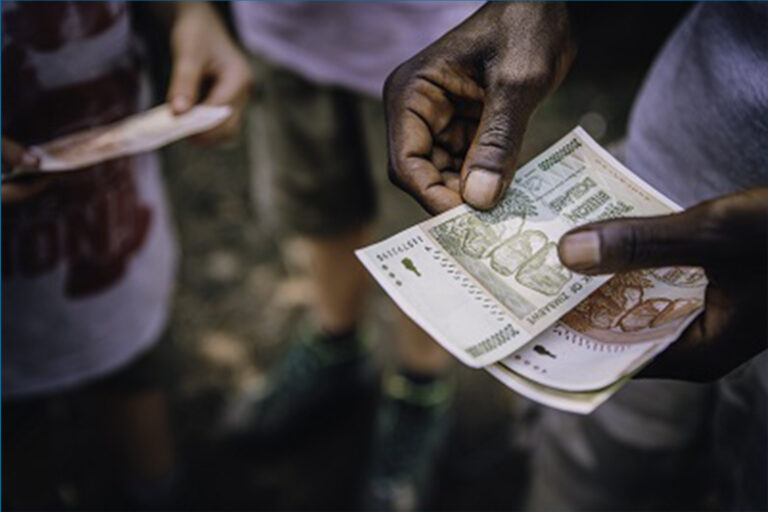
Every year, an estimated $88.6 billion, equivalent to 3.7% of Africa’s GDP, leaves the continent as illicit capital flight, according to UNCTAD’s Economic Development in Africa Report 2020.

Illicit financial flows (IFFs) are movements of money and assets across borders which are illegal in source, transfer or use, according to the report entitled “Tackling illicit financial flows for sustainable development in Africa.”

It shows that these outflows are nearly as much as the combined total annual inflows of official development assistance, valued at $48 billion, and yearly foreign direct investment, pegged at $54 billion, received by African countries – the average for 2013 to 2015.

“Illicit financial flows rob Africa and its people of their prospects, undermining transparency and accountability and eroding trust in African institutions,” said UNCTAD Secretary-General Mukhisa Kituyi.

These outflows include illicit capital flight, tax and commercial practices like mis-invoicing of trade shipments and criminal activities such as illegal markets, corruption or theft.

From 2000 to 2015, the total illicit capital flight from Africa amounted to $836 billion. Compared to Africa’s total external debt stock of $770 billion in 2018, this makes Africa a “net creditor to the world”, the report says.

IFFs related to the export of extractive commodities ($40 billion in 2015) are the largest component of illicit capital flight from Africa. Although estimates of IFFs are large, they likely understate the problem and its impact.

IFFs undermine Africa’s potential to achieve the SDGs

IFFs represent a major drain on capital and revenues in Africa, undermining productive capacity and Africa’s prospects for achieving the Sustainable Development Goals (SDGs).

For example, the report finds that, in African countries with high IFFs, governments spend 25% less than countries with low IFFs on health and 58% less on education. Since women and girls often have less access to health and education, they suffer most from the negative fiscal effects of IFFs.

Africa will not be able to bridge the large financing gap to achieve the SDGs, estimated at $200 billion per year, with existing government revenues and development assistance.

The report finds that tackling capital flight and IFFs represents a large potential source of capital to finance much-needed investments in, for example, infrastructure, education, health, and productive capacity.

For example, in Sierra Leone, which has one of the highest under-five mortality rates on the continent (105 per 1,000 live births in 2018), curbing capital flight and investing a constant share of revenues in public health could save an additional 2,322 of the 258,000 children born in the country annually.

In Africa, IFFs originate mainly from extractive industries and are therefore associated with poor environmental outcomes.

The report shows that curbing illicit capital flight could generate enough capital by 2030 to finance almost 50% of the $2.4 trillion needed by sub-Saharan African countries for climate change adaptation and mitigation.


Why Bitcoin Should Go From Strength to Strength in Ethiopia and Other African Markets

0

Africa has long been considered a fertile market for cryptocurrencies, with many commentators anticipating a massive bitcoin boom in the continent in the coming years. There have already been several signs that bitcoin payments will become increasingly normalized in both Ethiopia and the wider continent. This is because bitcoin is perceived as a comparatively stable store of money, particularly in countries where the fiat currency often succumbs to volatility. This is true in the case of the Ethiopian birr.

The state of play for bitcoin in Ethiopia and wider Africa

Many have spoken about the potential for cryptocurrencies to challenge the world’s existing financial systems, and recent trends indicate that the growth of bitcoin in Africa is accelerating to do just that. Analysis of monthly cryptocurrency transfers under the value of $10,000, both coming in and out of Africa, reveals that the number of transactions increased by 56% in June 2020 compared to the same period from the previous year. 2020 saw June transactions soar to a volume of $316 million. Some of Africa’s biggest economies, including Nigeria, South Africa, and Kenya, were among the biggest contributors to this volume of bitcoin transfers.

However, Ethiopia is undeniably playing its part in the spread of bitcoin. One of the most appealing qualities of bitcoin is its decentralized nature; this means that the completion of crypto transactions are not controlled by the government, so the value of bitcoin is uncorrelated to the performance of a national economy. This has been one of the biggest draws for the use of bitcoin in Ethiopia, where the Ethiopian birr has a reputation for volatility.

Ethiopia today unveils new Birr notes for 10, 50 & 100 denominations, with introduction of a new Birr 200 note. The new notes will curb financing of illegal activities; corruption & contraband. Enhanced security features on the new notes will also cease counterfeit production.

That much can be seen with the unveiling of new birr notes for the 10, 50, and 100 denominations, in addition to a new 200 note. The Ethiopian government has undertaken this measure to combat a 20% rise in inflation and concerns over liquidity. The cashless nature of bitcoin is therefore even more attractive to consumers and businesses based in the country. The birr may continue to fluctuate, but bitcoin will take its own trajectory. This makes it a viable alternative to relying on the fiat currency of Ethiopia.

African industries successfully integrating bitcoin payments

Sad to be leaving the continent…for now. Africa will define the future (especially the bitcoin one!). Not sure where yet, but I’ll be living here for 3-6 months mid 2020. Grateful I was able to experience a small part.

One of the biggest advocates of Africa’s positive bitcoin future is Jack Dorsey, the co-founder CEO of Twitter. Dorsey is a renowned fan of cryptocurrencies and blockchain technology, so his name could crop up prominently in future attempts to establish bitcoin in Africa. However, African businesses have already been integrating cryptocurrencies for several years without any intervention from rich overseas investors like Dorsey.

There are many examples in Ethiopia, the Yirgacheffe Coffee Producers Union are one notable collective to embrace blockchain tech. It is hoped that the incorporation of blockchain into the coffee-growing business will make salaries and trade fairer, while the Union has also begun to export coffee and receive payments in bitcoin. Individuals have likewise enjoyed the benefit of bitcoin. Hanna Teklie is an Ethiopian entrepreneur who has since moved to South Africa, where she has established a marketing network that spans the continent. Teklie acts as an intermediary for bitcoin investors, with traders based in Ethiopia able to acquire bitcoin mining machines through her service.

While that sort of business benefits traders with a prior interest in cryptos, it is the practical application of bitcoin that will champion its use to the average African consumer. There are many examples of bitcoin payments becoming commonplace throughout Africa. A very clear example of this is set by the best South African online casinos, as the likes of Punt Casino and African Grand permit users to transfer funds in and out of their account via bitcoin. Having bitcoin feature alongside traditional payment methods like Visa and Mastercard goes a long way to standardizing the use of cryptocurrencies.

That becomes even more tangible with the use of bitcoin ATMs, which have popped up throughout Africa. These machines stand on the street, usually in cities, so that they can allow users to buy and sell bitcoin. There are ATMs that can be found in Ghana, Uganda, and Nigeria, and it is surely only a matter of time before Ethiopia receives its first. In 2018, it was estimated that around 1,000 Ethiopians had invested in bitcoin. That number should skyrocket in the coming years as more and more African industries explore the potential of cryptocurrencies.

With the Ethiopian birr looking primed to continue along its traditionally volatile path, despite the measures of the government to introduce new denominations of its fiat currency, the appeal of bitcoin payments should continue to rise in Ethiopia. This trend will be matched by several other African economies, with the likes of South Africa, Nigeria, and Ghana expected to remain receptive to cryptocurrency technology.

Todd Ashton, Vice President and Head of Ericsson South and East Africa discusses Ericsson’s legacy and plans for Ethiopia

0

Q. How long has Ericsson been operating in Africa and Ethiopia?
We have been present in Africa for more than 120 years, with our first entry onto the continent in Ethiopia in 1894 followed quickly by the first fixed-line exchanges installed in South Africa and Kenya in 1896. As a company that remained invested in Africa for generations, we have seen the growth in fixed-line communications, early mobile communication, GSM, 3G and 4G.

Ericsson has done business in Ethiopia for a long time and our next big breakthrough occurred during the 1950s when Ericsson started to supply 500-point switching systems. Ethiopia ordered its first crossbar switching exchange in 1961, and Ericsson continued to supply equipment for the large-scale installation of automatic exchanges.

Five years later a relatively large exchange with 10,000 subscriber lines went into service in Addis Ababa, the capital city. Ericsson opened a technical office in Addis Ababa in the following year. Ericsson established a representative office in Ethiopia in 1997, in conjunction with the installation of a 280,000-line AXE system. This was part of a major project partly financed by SIDA, the Swedish International Development Authority.

In 2014,  we signed a framework agreement on 2G/3G mobile communication equipment and related services – such as design, planning, deployment, tuning, and optimization – with Ethio Telecom and continue to support our customer and the people of Ethiopia in the development of mobile broadband.

Q. What opportunities and challenges does the ICT sector present for Ethiopia?

Bridging the digital divide in Ethiopia can be achieved by investing and developing internet access at mobile broadband speeds for consumers in remote areas. Beyond the coverage-related challenges, rural communities face penetration-related challenges. Closing or reducing the digital divide requires both coverage and penetration-related initiatives – especially in a world where demand has changed because of the pandemic.

Ethiopia has come a long way in its digitisation journey – from mobile telephony to broadband, and from connecting to digitising key economic sectors, jobs, education, healthcare, government and society in general.

The development of ICT infrastructure is an integral part of Ethiopia’s growing economy and has proved to be an essential driver of an inclusive information society that integrates digitization in all critical aspects of life, such as education, transport, health, energy and many more.

According to our Ericsson Mobility Report, by 2025, in Sub-Saharan Africa mobile broadband subscriptions will increase to reach around 70 percent of mobile subscriptions, with increased 4G coverage and uptake being the main engine. Driving factors behind this shift include a young and growing population and availability of lower priced smart and feature phones.

Q. What is Ericsson’s promise to Africa and Ethiopia?

 Tackling the digital divide, continuing to build a robust ICT infrastructure, promoting sustainability, innovation, education and entrepreneurship will be critical for maximizing the role of technology in boosting resilience and inclusive growth in Africa. By achieving that, Africa will experience a paradigm shift on all levels with new game-changers such as e-health, e-government and e-education; the African society will accelerate into a much economically advanced nation. However, collaboration between the different stakeholders in the ecosystem becomes even more important than ever to achieve this vision.

Our promise and commitment towards Africa and Ethiopia are to always support a world where digitalization is transforming the eco-system; enabling sustainable growth, economic development and opening up opportunities for all.

To accelerate our promise to Ethiopia and achieve a true impact, we are looking forward to supporting our customers in their quest, bringing our latest innovations, leveraging our global and African skill and scale to the benefit of Ethiopia’s digital development.

#AfricaInMotion
