Thursday, November 26, 2026
Home Blog Page 3709

Ericsson and UNICEF launch global partnership to map school internet connectivity

0

Three-year initiative to identify connectivity gaps in 35 countries is a critical first step in connecting every school to the internet.

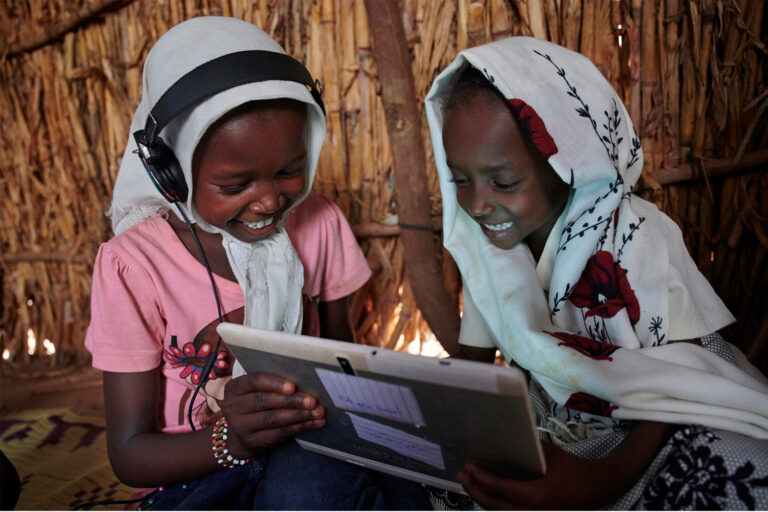
Ericsson (NASDAQ: ERIC) and UNICEF announced today a global partnership to help map school connectivity in 35 countries by the end of 2023. Mapping the internet connectivity landscape for schools and their surrounding communities is a critical first step towards providing every child with access to digital learning opportunities.

This joint effort is part of the Giga initiative. Launched last year and led by UNICEF and the International Telecommunication Union (ITU), Giga aims to connect every school to the internet. Ericsson is the first private sector partner to make a multimillion-dollar commitment to the initiative and does so as a Global UNICEF Partner for School Connectivity Mapping.

According to the ITU, 360 million young people currently do not have access to the internet. This results in exclusion, fewer resources to learn, and limited opportunities for the most vulnerable children and youth to fulfill their potential. Improved connectivity will increase access to information, opportunity, and choice, enabling generations of school children to take part in shaping their own futures.

“The deepening digital divide is one of the many inequalities that the COVID-19 pandemic has underscored,” said Charlotte Petri Gornitzka, Deputy Executive Director, Partnerships, UNICEF. “School closures, coupled with limited or non-existent opportunities for remote learning, have upended children’s education worldwide. Our partnership with Ericsson will bring us closer to giving every child and young person access to digital learning opportunities.”

In addition to funding, Ericsson will commit resources for data engineering and data science capacity to accelerate school connectivity mapping. Specifically, Ericsson will assist with the collection, validation, analysis, monitoring and visual representation of real-time school connectivity data. The data generated through the mapping will enable governments and the private sector to design and deploy digital solutions that enable learning for children and young people. Ericsson will also engage its extensive customer base to further advance the goals of the Giga initiative.

“Ericsson is uniquely positioned to be a key partner in helping address this important issue due to our technology expertise, global scale, decades of experience in public/private partnerships, and proven results connecting students and educators,” said Heather Johnson, Vice President of Sustainability and Corporate Responsibility, Ericsson. “Working together with partners, like UNICEF and the ITU, amplifies the potential impact of school connectivity and is a concrete first step in helping bridge the digital divide globally.”

“ITU brings a history of technology policy advocacy and regulatory expertise to the vital mission of connecting every school in the world,” said Doreen Bogdan-Martin, Director, ITU Telecommunication Development Bureau. “We are thrilled that Ericsson will join Giga and help build the mapping tools necessary to make connecting every school a reality.”

The UNICEF-Ericsson partnership also contributes to the Generation Unlimited Global Breakthrough on Digital Connectivity that aims to give young people digital skills so they can fully and meaningfully participate in the digital economy. Generation Unlimited is a global multi-sector partnership to meet the urgent need for expanded education, training and employment opportunities for young people. Additionally, the partnership supports UNICEF’s recent COVID-19 Agenda for Action in which the organization called for global action to keep children learning, thereby requiring the prioritization of internet connectivity in rural and remote areas.

Follow our progress and see current school mapping efforts at www.projectconnect.world. Or, for more information on this important initiative and how to get involved, please visit www.gigaconnect.org.

 

Ethiopian Loza named Maltese League Player of the Year

0

All time Ethiopian Women football greatest player Loza Aberra won Malta’s most prestigious Women Player of The Year award on Wednesday.
Arguably the most decorated Ethiopian Women player who boasts four local women’s league championship title, three time top scorer of a year and once Best Player of the Year award winner Loza Aberra crowned Women Best Player of 2020 in her very first season in Maltese League.
The first Ethiopian women footballer to sign a professional foreign deal, the 22 year-old striker turned an overnight Maltese Football starlet leading the Maltese giant Birkirkara to Women’s League championship scoring 30 goals in just fourteen matches. An average of 2.11 goals in every match she even once performed a miracle bagging seven goals in her team’s 17-0 demolition of Hibernians to record their biggest victory ever in the Malese Women’s League.
It was a rapid rise from Women’s League football to international arena for the young dreamer from South of Ethiopia Durame town. Two seasons with her first team Hawasa Ketema followed by a giant leap to strong side Dedebit where she won three championship titles in four seasons, Losa travelled to Turkey then to Sweden for trial matches before returning home to help Adama Ketema lift the championship title for the first time.
Six and a half seasons and more than 200 goals in her name at club level and another 25 goals to the national team “Lucy”, Loza reached Malta to perform a miracle at Birkirkara.
“A move to England would be a dream come true. I recently started to follow the Women’s Super League closely. I am shaping myself to the standard of the league and I believe I can perform well there” Loza who idolized five times world Women Player of the Year Brazilian Marta told reporters.

“I believe I can beat Eluid Kipchoge” Kenenisa on World Marathon Record

0

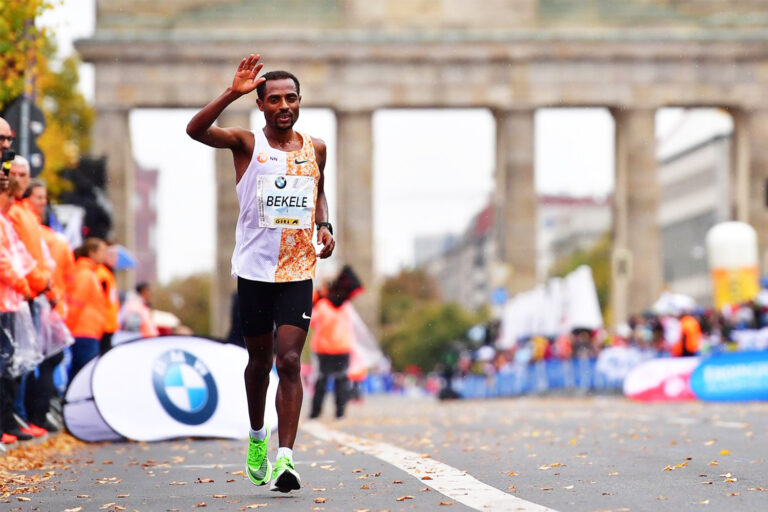
Ethiopia’s three-time Olympic and five-time world champion Kenenisa Bekele is one of the African continent’s finest athletes but he still wants to seal his golden legacy by becoming the fastest marathon runner of all time. The much anticipated race takes place in St James Park on October 4th.
He holds world records in the 5,000 and 10,000 meters and came within a whisker of posting another one last September at the Berlin marathon in one of the sport’s greatest comebacks.
In a gutsy race, Bekele came from behind to win but fell two seconds short of his rival Kenyan Eliud Kipchoge’s world record of two hours, one minute and 39 seconds.
“I still can do this (world record). I don’t give up. It is encouraging for the future,” Bekele said at the time.
The mouth-watering prospect of another crack at the world mark could have come last April at the London marathon, where he would have competed against Kipchoge.
However, that race fell victim to the novel coronavirus pandemic and has been rescheduled to Oct. 4. It is far from certain if it will take place, in what form and whether the two superstars will be on the start line if it does.
The 38-year old Bekele is one of the most dominant distance runners in the sport. He boasts three Olympic and five world championship golds over 10,000 and 5,000 meters not to mention a stunning 11 cross-country world championship golds.
His switch to road races in 2014 began with a bang as he won in Paris on his marathon debut, breaking the course record.
But he was then hit by injuries and it seemed like his best days were over before his marathon success in Berlin last year.
The second of six children, Bekele was born in Bekoji, in the central Ethiopian province of Arsi Province, a part of the country famous for producing great runners.
However, his life has not been without tragedy.
In 2005, while running with his 18-year-old fiancée Alem Techale on the outskirts of Ethiopia’s capital Addis Ababa, she fell ill and died soon after. “It’s a loss that will always stay with me,” Bekele told Reuters that year.
Two years later, he married Ethiopian actress Danawit Gebregziabher and they have three children.
While the coronavirus pandemic blocked the race that may have settled the debate over who is the best between him and Kipchoge, fans still hope to discover who will come out on top.
Bekele believes he can beat his great rival.
“He (Kipchoge) is human. If someone is well prepared and strong enough, why not? It’s a race,” he told the Olympic channel.

The hunting down Ethiopia’s long distance records

0

In less than a month, three different athletic world records which were previously held by Ethiopian athletes have been broken.
It all started in Monaco, France, during the diamond league meeting on August 14 when Uganda’s Joshua Cheptegei smashed Ethiopian legend Kenenisa Bekele’s 500m world record that stood for 16 years.
It was a sensational run by the 23-year-old Ugandan who has been making all the headlines on the track in the recent past. Cheptegei registered a new world record by clocking 12:35:36 which is two seconds clear from the 16 years old Bekele’s record of 12:35:36.
Farah destroyed yet another record previously held by Ethiopian athletic legend Geberselasie by running 21:330km in an hour, breaking the previous 21.285km which the Ethiopian registered More than a decade ago. The 37-year-old Somalia born British athlete completed over 53 laps at an average pace of 67 seconds per lap.
If that was not enough, another Ethiopian athlete record was successfully hunted down on the same night in Brussels when Holland’s Sifan Hassan smashed the women’s one-hour run record by covering a total of 18 kilometers and 930 meters in an hour.
The previous world record for the one-hour run was held by Ethiopia’s Dire Tune who covered 18.517m which stood for 12 years. This result should raise eyebrows not only in Ethiopia but across the East African region signaling that things are not the same any more. The athletics long distance podium is no longer the sole preserve of athletes from the two East African athletics powerhouse nations of Kenya and Ethiopia.