

Smart Management Service has come up with a response to expand the urban agriculture expansion program that the Addis Ababa City Administration announced.
in his tweet on April 21, Takele Uma, Deputy Mayor of Addis Ababa, stated that the city will expanded urban farming, which is considered as one of the alternatives for feeding the city’s population, and called interested body to be involved in the training and sharing experience.
“If you have a passion and any formal education in agriculture we need you! We will assign designated land for building the urban agriculture capacity in the city to address the growing demand. Let’s feed this city through modern agriculture,” the mayor tweeted.
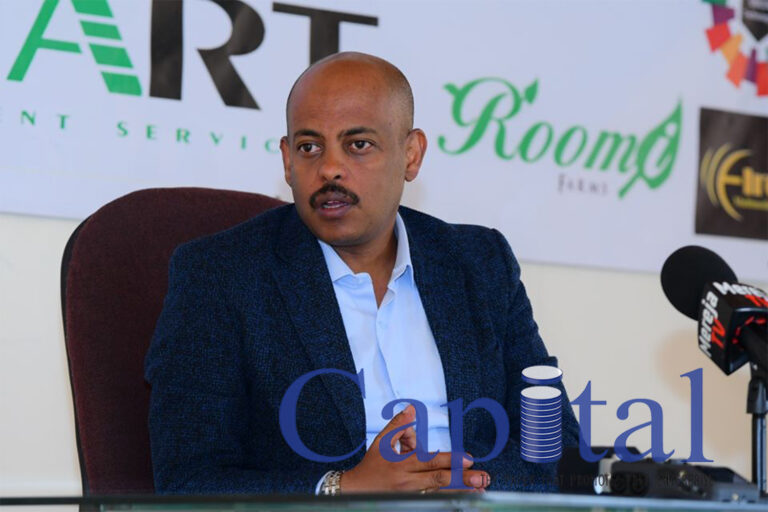
Adil Abdela (PHD), CEO of Smart Management Service, said that his company has already finalized its preparation to respond for the call of the city administration.
He said that on the way to fill the required corporate social responsibility his company has concluded the readiness to give training on urban agriculture scheme that shall mitigate the effect of Covid 19 on the economy and that will generate income of urban dwellers.
“At the first stage we will provide training for about 100 households on urban farming besides providing hand tools that will let them engage on cultivation,” Adil said. “We will also provide other necessary inputs like seeds.”
“With our expertise at our companies we are highly interested to involve in the expansion of urban farming that is common in other countries including the developed nations, but infant in Ethiopia’s cities,” he added.
Takele also disclosed that he has been undertaken virtual discussion with urban agriculture experts and those that are already engaged and become successful in urban farming.
He said that the discussion was raised the urban agriculture that shall be conducted on residential compound and small houses.
“We also understood this include residents at the rivers banks in the city,” the Deputy Mayor said in his tweet on April 21.
Adil said that the city administration has a plan to expand the urban agriculture by including the river banks in the city, while the training that will be given by Smart Management Service, which is a company that manages several business including Roomi Agro Processing and Ethopis College, mainly focus on the skill development to conduct farming on small residential area besides the river banks development.
“We believe that very successful results will be gained in small areas,” the CEO added.
Due to coronavirus the training will be conducted on the technology base and open areas with different very small groups, according to Adil.
He said that the training will commence in the coming few days meanwhile it depend on the city administration schedule.
Adil reminded that Smart Management Service is engaged in several corporate social responsibilities in the past decade. “Under our initiative Music Mayday Ethiopia we have provided training on art and music for those who do not have opportunity and created job opportunity for 1,700 youths,” he said.
For the new initiative the company has allocated one million birr for the training and another one million birr to support residents to be engaged on the activity.
Smart Management Services wants to involve in urban agriculture
New IFAD fund launched to help prevent rural food crisis in wake of COVID-19
With the COVID-19 pandemic and economic slowdown threatening the lives and livelihoods of the world’s most vulnerable people, the UN’s International Fund for Agricultural Development (IFAD) today committed US$40 million, and launched an urgent appeal for additional funds, to support farmers and rural communities to continue growing and selling food.
IFAD’s new multi-donor fund, the COVID-19 Rural Poor Stimulus Facility, will mitigate the effects of the pandemic on food production, market access and rural employment. As part of the broader UN socio-economic response framework, the Facility will ensure that farmers in the most vulnerable countries have timely access to inputs, information, markets and liquidity. On top of its own contribution, IFAD aims to raise at least $200 million more from Member States, foundations and the private sector.
“We need to act now to stop this health crisis transforming into a food crisis,” said Gilbert F. Houngbo, President of IFAD. “The fallout from COVID-19 may push rural families even deeper into poverty, hunger and desperation, which is a real threat to global prosperity and stability. With immediate action, we can provide rural people with the tools to adapt and ensure a quicker recovery, averting an even bigger humanitarian crisis.”
COVID-19 crisis requires bold response to build back better
The 193 UN Member States of the United Nations called for coordinated and decisive global action to arrest the fallout from the COVID-19 pandemic and rebuild strengthened and resilient economies. The Member States joined together in a consensus outcome document at an informal meeting of the Financing for Development (FfD) Forum of the United Nations Economic and Social Council (ECOSOC) today.
“Developing countries need massive and urgent support,” said UN Secretary-General António Guterres. “Now is the time to stand by our commitment to leave no one behind. COVID-19 has highlighted global inequalities and injustices that cannot continue, including gender inequality. Returning to our previous path is simply not an option.”
The FfD Forum is convened by ECOSOC and usually sees scores of ministers of finance, foreign affairs and development Cooperation from around the world, along with the heads of UN agencies, the World Bank and the IMF. This year, the outcome document was the first by UN member states to collectively address the financing challenges posed by COVID-19.
Local leaders mobilised to fight against COVID-19 in Ethiopia
In the wake of the COVID-19 induced state of emergency in Ethiopia, the International Organization for Migration (IOM) is mobilizing its network of local community leaders to help with awareness and prevention activities designed to stop the spread of the disease.
The so-called ‘community conversation facilitators’ – who have reached more than five million people across Ethiopia with other, non-COVID-19 related crisis awareness raising and prevention activities – and grassroots activists are working to reduce the risk of exposure to COVID-19 for migrants, and other vulnerable communities.
With the support of IOM, local leaders in rural areas where many migrants or those likely to want to migrate reside, are disseminating information on the heightened dangers of contracting the infection. IOM Ethiopia is providing training on effectively communicating the dangers of COVID-19 and working to promote alternative livelihoods at home that might deter migrants from wanting to make journeys that might expose them to the disease.
“Our community programmes focus on raising awareness on natural and man-made problems and challenges,” said Girma Mulugeta, one of the members for the community conversation groups in the Southern Nations and Nationalities and Peoples Region (SNNPR).
