The COVID-19 pandemic is likely to impose heavy human, financial, economic, and social costs on Africa. But the crisis also creates an opportunity to re-examine the continent’s fiscal and economic-policy priorities, build stronger health and social sectors, and establish a global fund to support productive investment.
By Célestin Monga
The coronavirus pandemic could not have come at a worse time for Africa. Despite improved macroeconomic management over the last decade, the continent still lacks the resources to tackle high levels of poverty and inequality, create formal-sector jobs, and foster the structural transformations needed to absorb 12 million young people into the labor market every year. And now COVID-19 threatens to break Africa’s back economically.
Africa’s low average annual growth of 3.3% in 2014-19 was mainly the result of erroneous development strategies that focused on unviable capital-intensive industries (often in commodity sectors), instead of promoting competitive labor-intensive sectors. Insufficient growth has in turn constrained public finances, leading to underfunded health systems, weak governance, rapid increases in public debt, and large infrastructure deficits.
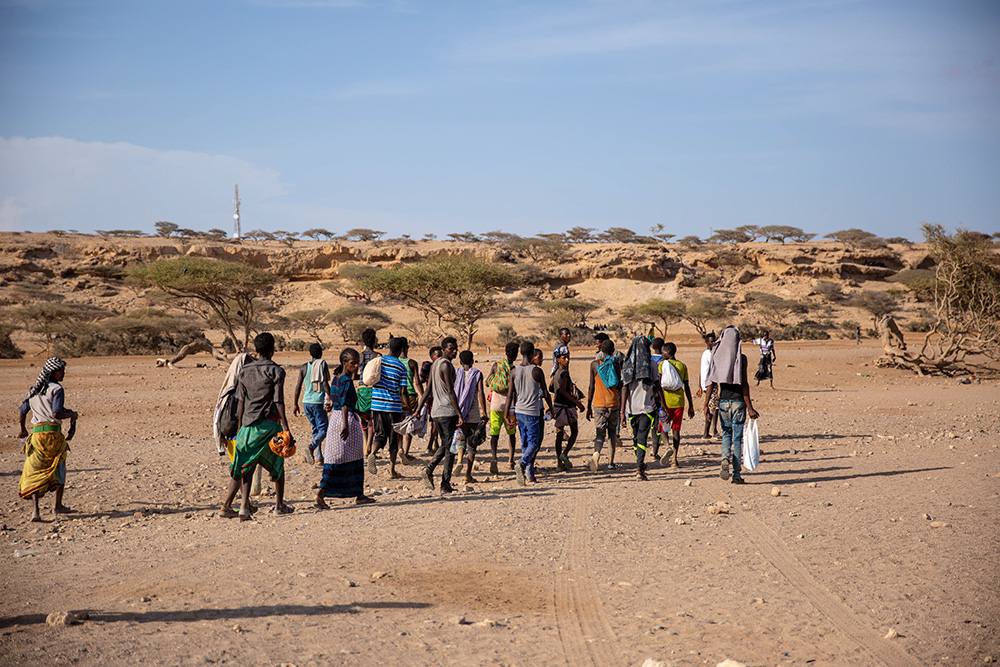
Given Africa’s precarious health institutions, and its shortage of doctors, health workers, medicine, and medical supplies, COVID-19 infections are likely to soar, sparking a humanitarian crisis that most likely will go unreported. The virus could spread widely in poorer areas with no water or sewage hook-ups, and in communities where low education levels, prevailing social habits, and skepticism toward government complicate containment efforts. If a cure for COVID-19 is not made widely available soon, the pandemic could devastate Africa.
Moreover, the prolonged halt to economic activity in the G20 countries (some of which are facing deep recessions) will cause global growth to decelerate sharply. That will hit African exports, the main engine of the continent’s growth, and worsen countries’ trade and current-account balances. Worker remittances and foreign direct investment will decline, too, as the pandemic throttles advanced economies.
In addition, lower prices for oil, natural gas, metals, and minerals will significantly undermine the fiscal position of many large African economies, especially Nigeria, South Africa, Algeria, Cameroon, Angola, the Democratic Republic of the Congo, Equatorial Guinea, Chad, the Congo, and Tanzania. That will force governments to make painful macroeconomic adjustments at the most challenging time.
Worse, Africa’s ability to use monetary and fiscal policies to mitigate the pandemic’s economic impact is limited. Whereas governments and central banks around the world have adopted robust and often unprecedented short-run stimulus measures, most African countries lack the policy space and capacity to do so, or are constrained by monetary arrangements that prevent them from implementing national strategies.
True, a few countries such as Morocco, Ghana, Mauritius, and Kenya have initiated national stimulus programs while also launching structural reforms to improve their medium-term fiscal outlook. But such policies would be more effective if they were designed and implemented at the continental level.
In the short term, Africa needs greater fiscal space to boost health expenditures, contain the spread of COVID-19, help the hardest-hit sectors, and stimulate domestic consumption, while the continent’s central banks should cut interest rates and channel liquidity to firms and households. But all spending measures should be implemented transparently, monitored by independent fiscal councils, and complemented by credible reform agendas that strengthen medium-term expenditure frameworks. To achieve these goals, African Union heads of state and government should hold an emergency virtual meeting to mobilize about 10% of the continent’s gross domestic product ($250 billion), including from central banks and development banks, and coordinate spending across borders.
Continent-wide measures should also be adopted to improve coordination of national tax policies, increase collection, and boost economic growth so that all countries can strengthen their national health systems. In particular, speeding up implementation of the African Continental Free Trade Area would provide additional fiscal space. A recent study has shown that a few easily implementable trade-policy actions – such as eliminating current bilateral tariffs and all non-tariff barriers on goods and services within the continent, and reducing the time it takes to cross borders – would generate $134 billion per year, or 4.5% of Africa’s GDP.
Second, Africa needs a special international financing facility aimed at enhancing its future productivity growth. Such an initiative would support emergency spending on health systems in budget-constrained countries while also boosting domestic demand. In addition, it would help to finance the construction of profitable infrastructure in competitive sectors, thus laying the foundations for future industrialization and growth.
This facility could initially be funded with an endowment of $1 trillion from institutional investors, regional development banks, the private sector, and G20 governments. It would allocate global savings to high-return projects that have a significant impact on economic development and employment. Such a facility would eventually generate self-sustaining public financing for Africa’s health and social sectors, reduce the widening gap between rich and poor, and make the continent an important contributor to global demand.
Third, existing monetary arrangements and financial-sector regulations that hamper external competitiveness – especially that of the 14 CFA franc zone countries whose currency is pegged to a strong euro – should be reformed to enable exchange-rate flexibility. Likewise, initiatives such as the US African Growth and Opportunity Act and the European Union’s Everything but Arms, under which imports from Africa are duty- and quota-free, should be open to all African countries without political conditionality.
Finally, a comprehensive new debt-relief scheme should be considered for African countries with good governance. The continent currently has a total external and domestic debt stock of $500 billion, and the median debt-to-GDP ratio has risen from 38% in 2008 to 54% in 2018. By causing a collapse in exports and terms of trade, the COVID-19 pandemic is pushing African countries into negative per capita growth. Given the continent’s financing needs and demographic growth, debt levels will quickly become unsustainable without debt forgiveness and policies to make Africa’s debt more transparent and better managed.
The COVID-19 pandemic is likely to impose heavy human, financial, economic, and social costs on Africa. But the crisis also creates an opportunity to re-examine the continent’s fiscal and economic-policy priorities, build stronger health and social sectors, and establish a global fund to support productive investment.
Célestin Monga, former Vice President and Chief Economist of the African Development Bank Group and former Managing Director at the United Nations Industrial Development Organization, is Senior Economic Adviser at the World Bank.