

The pandemic virus is continuing to change the country’s directions and made the government to make new decisions, policies and directives each and every day.
Starting from March 6, 2020 when the first case of coronavirus was announced, the country has been taking different kinds of measures to control the spread of the virus. In addition to the threat to public health, the economic and social disruption threatens the long-term livelihoods and wellbeing of millions.
As of Saturday March 28, 2020 the victims in Ethiopia stands at 16, after four new cases were announced on Friday of which two of the victims has no record of traveling abroad. Considering the increasing number of positive cases, Prime Minister Abiy Ahmed has held a virtual meeting with the COVID-19 Ministerial Committee and provide additional direction and measures in the prevention and containment of COVID-19 so that these numbers do not increase exponentially.
The government is working to take enough preventative measures especially by working on adherence to social distancing protocols.
Strict adherence to social distancing protocols is expected within market areas and religious establishments. However, health experts are raising concern, as some religious leaders continue to host large gatherings despite government orders not to do so in the wake of the outbreak.
Earlier this week, the government ordered security forces to enforce a ban on large gatherings aimed at preventing the spread of COVID-19.
But enforcing the orders has proven difficult as religious groups continue to meet and, according to religious leaders, fail to treat the risks seriously.
Seen in the above picture, which was taken on Friday, March 27, 2020, in front of the Addis Ababa City Government office people are seen trading second hand clothes as usual, paying no attention to the warning of government and global health leaders as to the dangers of congestion and not respecting social distancing rules such as keeping a minimum of a two-meter space with others and avoiding touching one another including handshakes. Days ago, President Sahle-work Zewde has expressed her concern about the sheer disregard for social distancing rules in many parts of the city.
However, this problem appears to be a global one at best. According to reports, many countries including worst-hit Italy and Spain are said to have been paying the price for disregarding social distancing rules and largely circumventing stay-home protocols by holding mini in-house gatherings which appear to have speeded up the spread of the virus more quickly.
When the outbreak in Italy began, authorities began by locking down affected “red zone” areas in the north. As cases continued to spread, the entire country was put on lockdown on March 9, with those who break the rules threatened with USD 232 fines and six months’ prison time.
But hundreds of thousands of Italians have since been given police citations for flouting the ban, and a Chinese Red Cross official last week said Italy’s measures — among the strictest in Europe — weren’t strict enough. The military was called in to help enforce the rules as deaths spiked and hospitals buckled under the strain.
“Imagine, this is a first world country and they could not contain the virus until now,” said one observer. “And now imagine the virus spreading here in the country at that rate with our current health infrastructure, it will be a nightmare, and I think the government should take the harshest measure right now before it is too late,” this observer stated.
Prime Minister Abiy has also ordered public buses and government services to give transport services for the public since the major problem in the city is that of transportation and to increase the amount of money individuals can transfer through mobile banking so that to limit cash transactions.
The city administration is also trying to control the khat market in the city. Most of the gates and shops of khat in the capital were closed by the city officials but still you can get khat anywhere all over the city.
As the virus continues spreading in the country the government is also preparing isolation centers, not only the government but also individuals are participating in the preparation by answering the call of the government to support the effort of the national resource mobilization committee which is in the process of finding materials like beds, mattresses, bed sheets, ventilators and other medical and non-medical supplies in case the worst comes.
On March 27, 2020 the city administration announced that they have collected 10 million birr in donations. More than 134 facilities have been identified for quarantine, isolation and treatment. The state also calls upon all retired and in-training medical professionals to prepare for national duty if the situation warrants such extra support.
Starting from the first day the victim was confirmed, the market seems to go up on consumer goods such as health care equipments food and beverages. The Prime Minister has ordered the Ministry of Trade and Industry to continue strengthening the measures it is undertaking to control price increments and hoarding of consumer goods. Export and import has decreased dramatically, since the virus is spreading fast that countries are closing borders, restricting mobility, instituting strict surveillance measures but also the demand to the other industrial and other goods seems to decrease day by day.
People ignore social distancing

Neglected diseases

Visceral leishmaniasis (VL), also known as kala-azar, is the most severe form of leishmaniasis and, without proper diagnosis and treatment, is associated with high fatality. Leishmaniasis is a disease caused by protozoan parasites of the genus Leishmania.
The parasite migrates to the internal organs such as the liver, spleen (hence “visceral”), and bone marrow, and, if left untreated, will almost always result in the death of the host. Signs and symptoms include fever, weight loss, fatigue, anemia, and substantial swelling of the liver and spleen. Of particular concern, according to the World Health Organization (WHO), is the emerging problem of HIV/VL co-infection. This disease is the second-largest parasitic killer in the world (after malaria), responsible for an estimated 20,000 to 30,000 deaths each year worldwide. Dr Lutz Hegemann, Chief Operating Officer for Global Health at Novartis talked to Capital about the disease and the fight to overcome the disease. Novartis is a global healthcare company based in Switzerland that provides solutions to address the evolving needs of patients worldwide. Excerpts;
Capital: Tell us about visceral leishmaniasis, and the most affected areas.
Lutz Hegemann: Leishmaniasis is a neglected tropical disease caused by protozoan Leishmania parasites transmitted by the bite of infected female phlebotomine sandflies. Cutaneous leishmaniasis is the most common form of the disease. It usually produces ulcers on the exposed parts of the body, such as the face, arms and legs. Visceral leishmaniasis (VL), also known as kala-azar, is the most serious form of the disease. It is characterized by irregular bouts of fever, substantial weight loss, swelling of the spleen and liver, and anemia. If the disease is not treated, it is fatal for over 95% of the cases. Most cases of VL occur in East Africa, South-East Asia (mainly India) and Brazil. An estimated 50 000 to 90 000 new cases of VL occur worldwide each year.
Capital: The highest burden of the disease takes place in East Africa, why is that? What does a study show?
Lutz Hegemann: Leishmaniasis is highly endemic in East Africa. Additional risk factors include: poverty, malnutrition, population displacement, poor housing, a weak immune system and lack of financial resources. Leishmaniasis is also linked to environmental changes such as deforestation, building of dams, irrigation schemes, and urbanization.
Capital: Do you think the global community is aware of the disease?
Lutz Hegemann: Leishmaniasis is among the most neglected tropical diseases and affects some of the poorest populations.
Capital: What can we say about the existing treatments, in terms of affordability, effectiveness etc?
Lutz Hegemann: As with other NTDs, the drugs we have for leishmaniasis are outdated and lacking. People suffering with the disease are often subjected to a prolonged and painful regimens of toxic drugs that vary according to the species of parasite. For example, a treatment can require 17 days of painful double injections, and can be cardiotoxic. DNDi and Novartis are co-developing LXE408, a first-in-class oral compound with a novel mechanism of action that has shown efficacy in preclinical models of the disease.
Capital: Tell us the collaboration between Novartis and DNDI and the tasks done so far?
Lutz Hegemann: Novartis and the Drugs for Neglected Diseases initiative (DNDi), a not-for-profit research and development (R&D) organization, have signed collaboration and license agreement to jointly develop LXE408, as a potential new oral treatment for visceral leishmaniasis, one of the world’s leading parasitic killers. Novartis is responsible for completing Phase I clinical trials, currently in progress, and completing the regulatory submission for LXE408. Upon approval, Novartis has also committed to maximizing access in endemic countries. DNDi will lead Phase II and III clinical development, starting in India with additional trials planned in East Africa.
Capital: What can we say about the new development of LXE408 and when will the trial expected to be launched in East Africa? How far that new development transform the treatment in terms of effectiveness, affordability etc?
Lutz Hegemann: It is still early to specify the completion date for the full clinical development of LXE408 and registration in the countries. DNDi and partners will need to carry out Phase II and Phase III clinical trials with representation from the different endemic countries in Eastern Africa. The studies are set to begin in 2021, and the process may take at least 5-7 years. It is important to undertake both phases of the study to help ensure that the treatment is safe and effective for leishmaniasis patients. Strategies will thereafter be developed together with other stakeholders to help ensure that patients affected by leishmaniasis access the treatment.
If Covid-19 is not beaten in Africa it will return to haunt us all
Only a global victory can end this pandemic, not a temporary rich countries’ win
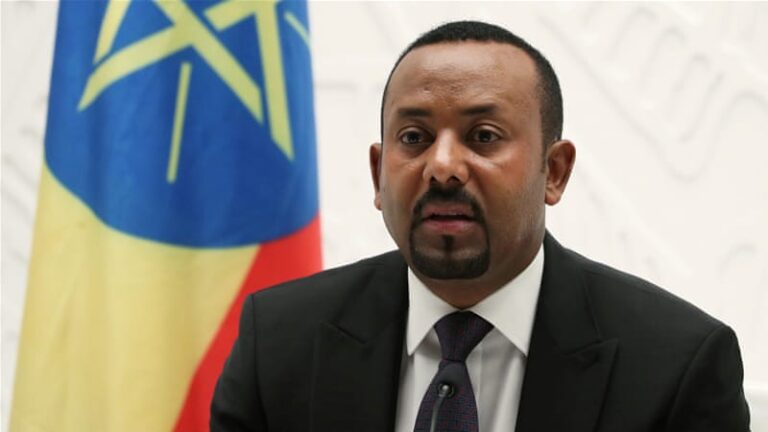
By Abiy Ahmed
There is a major flaw in the strategy to deal with the coronavirus pandemic. Advanced economies are unveiling unprecedented economic stimulus packages. African countries, by contrast, lack the wherewithal to make similarly meaningful interventions. Yet if the virus is not defeated in Africa, it will only bounce back to the rest of the world. That is why the current strategy of unco-ordinated country-specific measures, while understandable, is myopic, unsustainable and potentially counter-productive. A virus that ignores borders cannot be tackled successfully like this. We can defeat this invisible and vicious adversary – but only with global leadership. Without that, Africa may suffer the worst, yet it will not be the last. We are all in this together, and we must work together to the end. Fragile and vulnerable at the best of times, African economies are staring at an abyss. Let me illustrate this with the situation in my own country. Ethiopia has made steady progress in the provision of health services over the past two decades. But nothing has prepared us for threats posed by Covid-19. Access to basic health services remains the exception rather than the norm. Even taking such common-sense precautions as washing hands is often an unaffordable luxury to the half of the population who lack access to clean water. Even seemingly costless social distancing is hard to implement. Our lifestyle is deeply communal, with extended families traditionally sharing the burdens and bounties of life together, eating meals from the same plate. Our traditional and rain-dependent agriculture is dictated by the fixed timeframes of weather cycles in which planting, weeding and harvesting must happen. The slightest disruption to that chain, even for a brief period, can spell disaster, further jeopardising already tenuous food supply and food security. Take Ethiopian Airlines, the country’s largest company, which accounts for 3 per cent of national output and is a major source of hard currency. It will be pushed to the brink as its business is upended by the pandemic. Shortage of hard currency will then make it all but impossible to source essential medical supplies and equipment from abroad. The cost of servicing our debts is already often more than our annual health budgets. The list continues. This grim reality is not unique to Ethiopia. It is shared by most African countries. But if they do not take appropriate measures to tackle the pandemic, no country in the world is safe. Momentary victory by a rich country in controlling the virus at a national level, coupled with travel bans and border closures, may give a semblance of accomplishment. But we all know this is a stopgap. Only global victory can bring this pandemic to an end. Covid-19 teaches us that we are all global citizens connected by a single virus that recognises none of our natural or man-made diversity: not the colour of our skin, nor our passports, or the gods we worship. For the virus, what matters is the fact of our common humanity.
That is why the strategy to tackle the human and economic cost of this global scourge must be global in design and application. Health is a worldwide public good. It requires global action guided by a sense of global solidarity. But Covid-19 has also exposed our dark underbelly. The world community desperately needs global-level leadership to tackle swiftly pandemics such as this, and in a way that is institutionalised rather than ad hoc. A good place to start is with the World Health Organization. As countries with the necessary resources focus on fighting the pandemic through their national institutions, the WHO must be empowered and resourced sufficiently to co-ordinate responses globally and directly to assist governments in developing countries. In the meantime, the G20 must provide collective leadership for a co-ordinated global response. There is no time to waste: millions of lives are at risk. Building on what has been announced by international financial institutions, the G20 must launch a global fund to prevent the collapse of health systems in Africa. The institutions need to establish a facility to provide budgetary support to African countries. The issue of resolving Africa’s debt burden also needs to be put back on the table as a matter of urgency. Finally, all of Africa’s development partners must ensure that their development aid budgets remain ringfenced and are not diverted to domestic priorities. This is where true humanity and solidarity must be demonstrated. If such aid were ever necessary in Africa, it is now more than ever before.
The writer is prime minister of Ethiopia and the 2019 Nobel Peace prize laureate (Financial Times)
Gov’t outlines new coronavirus support measures for businesses
Floriculture actors asks the government for expedite measure to keep the sector from damage due to the outbreak of coronavirus epidemic. Government officials and exporters discussed the latest situation and the way-out.
Mid this week in the meeting co-chaired by Girma Birru, Advisor at the Prime Minister Office, and Omer Hussein, Minister of Agriculture, exporters including the coffee, leather, textile, livestock and meat, and sesame expressed their concern and challenges that might occur and already happening in their business.
According to those who attended the meeting that include few individuals due to the fear of the pandemic, the private sector expressed its fears related with the virus, while most of the export challenge related with corona is mainly affecting the horticulture sector than other major export businesses.
Tewodros Zewdie, Executive Director at Ethiopian Horticulture Producer Exporters Association (EHPEA), who attended the meeting, told Capital that the concerns have grabbed the attention of government officials. “We are looking swift measure by today or Saturday,” he told Capital on Friday via telephone conversation.
“The concern of others looks like they keep working in the export, while we are now almost inactive on the business,” he explained.
According to the information from EHPEA the export of flower has dropped by 80 percent from the normal time. Most of the product is transported to the Netherlands market.
Friday afternoon Prime Minister Abiy Ahmed announced some macro-economic measures besides several other mitigation strategies.
He announced that the government decided National Bank of Ethiopia to avail Birr 15 billion liquidity for private banks to enable them to provide debt relief and additional loans to their customers in need.
Abiy’s measure also included the removal of the minimum price set by the National Bank of Ethiopia on the horticulture sector for flower exports, and the Ministry of Revenue to expedite VAT returns to support companies with cash flows.
The association asked the government to reschedule ongoing loans and provide working capital for the farms to keep running the operation, which have over 150,000 employees.
The VAT refund is also the other area that the government is expected to extradite to support the growers cash flow. Besides the VAT refund suspension the association wants a protection from labor laws in case of downsizing the labor force.
Ease the hard currency repatriation threshold, which is USD 3.86 per kilogram of flower, is also the other area the association needs from government to be considered.
Making sure that airfreight cargo services are accessible even with less frequencies and with reduced rates is also the other area that the growers needs to be soft.
After the PM disclosed some measures the association appreciated the government decision.
