Wednesday, November 25, 2026
Home Blog Page 3779

SMLH-Ethiopia handovers traditional helmets to War Veterans

0

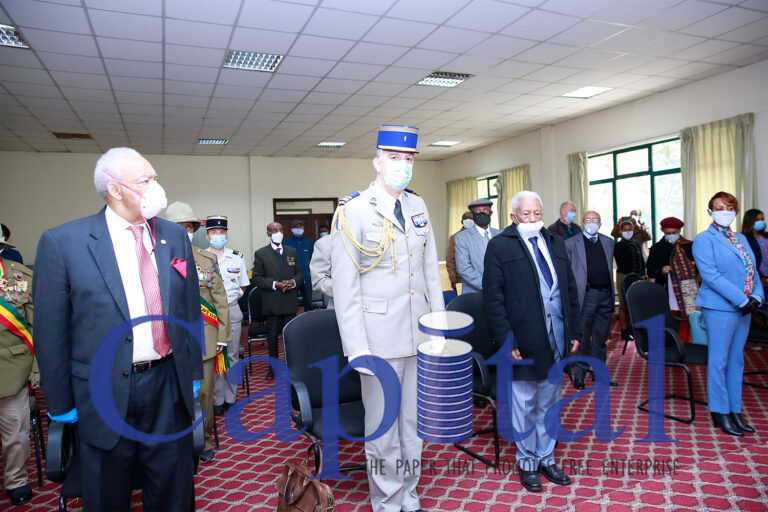
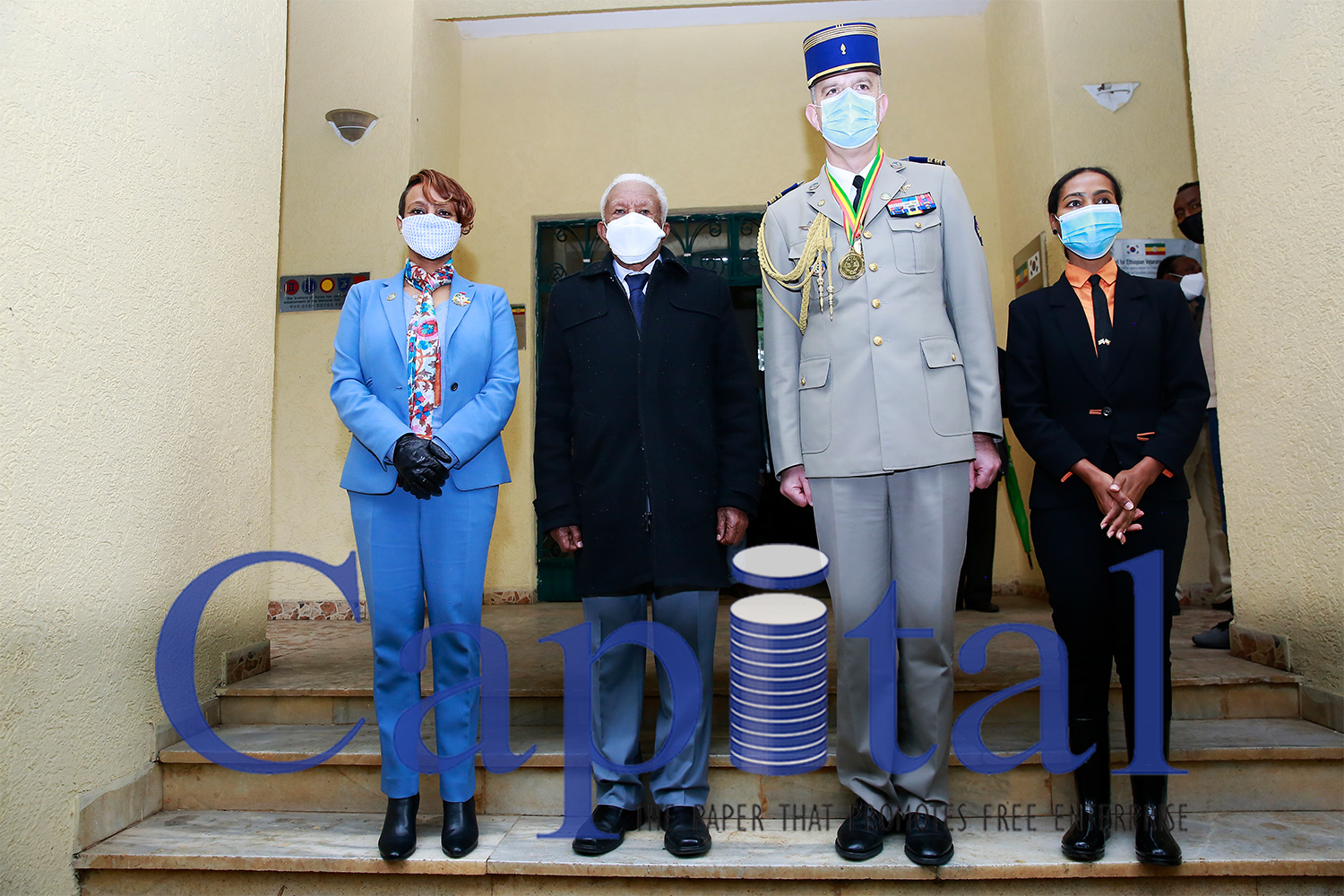
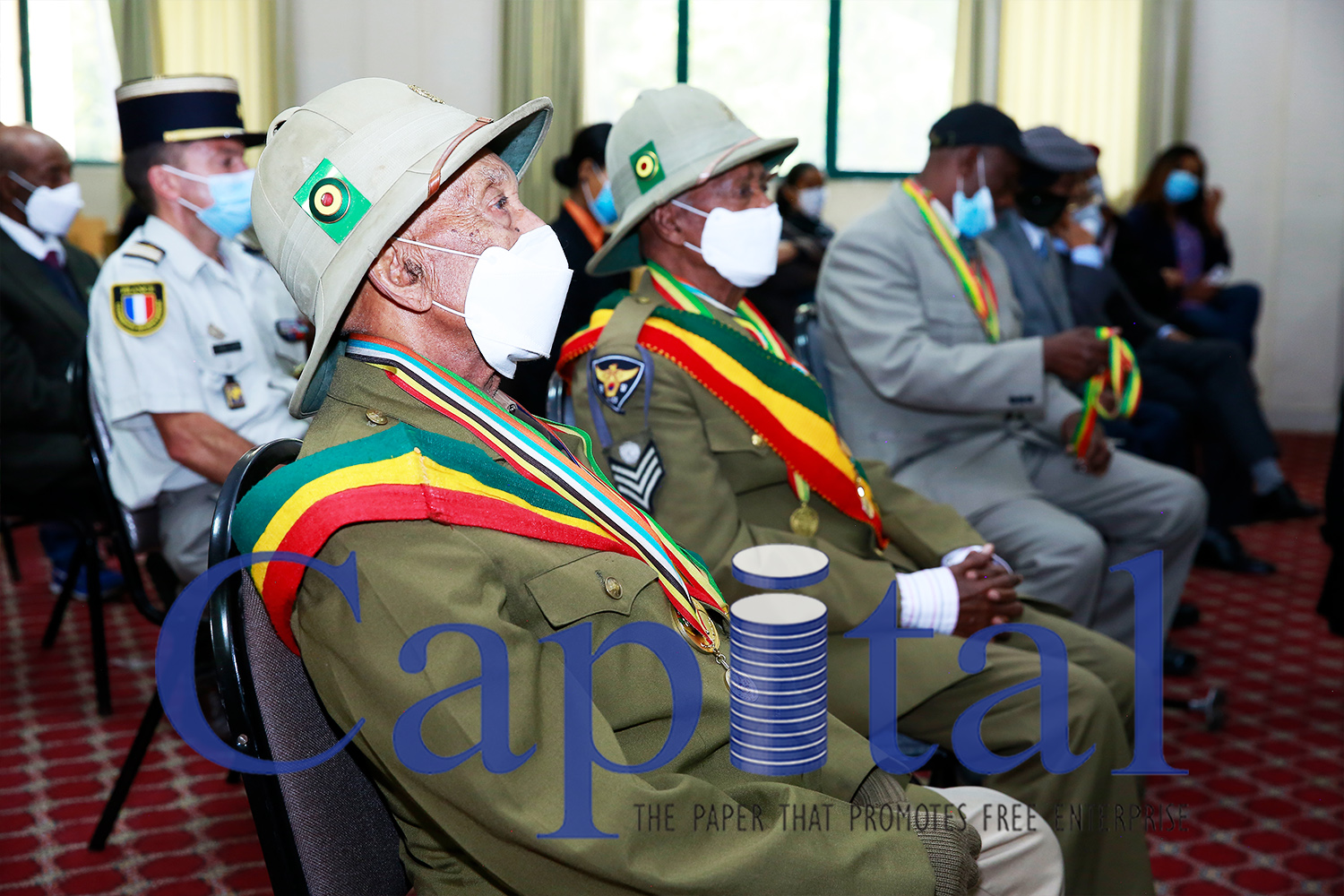
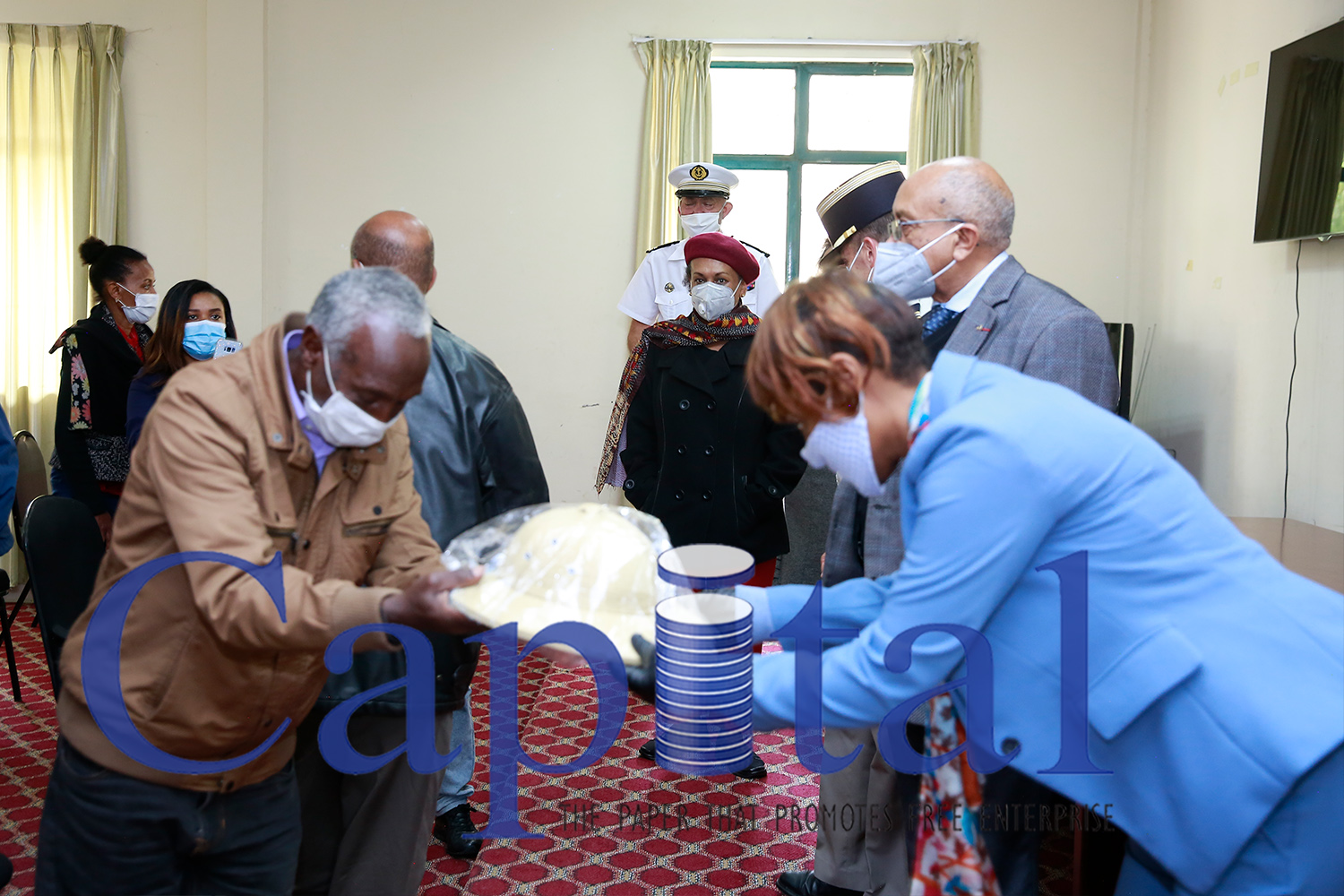
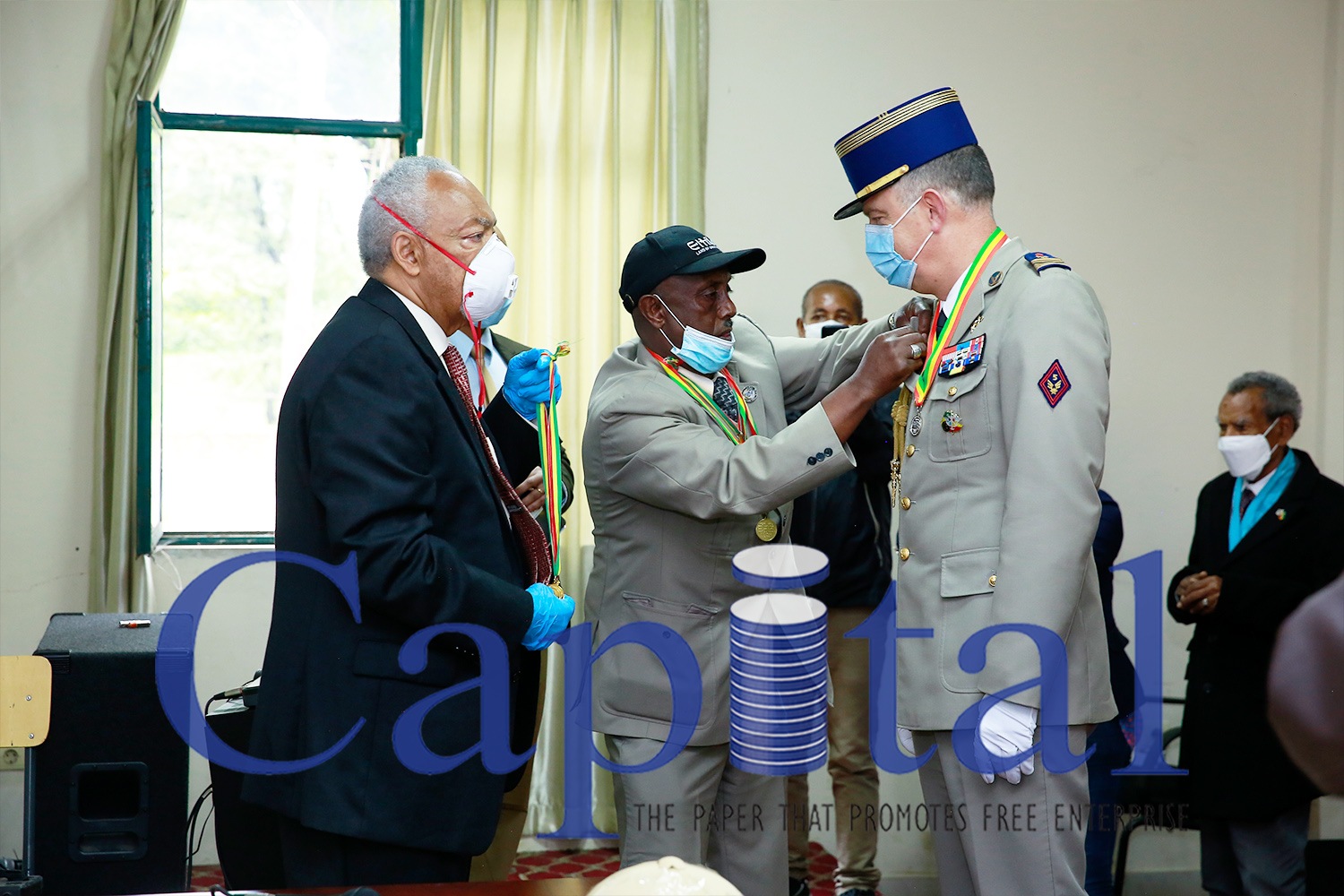
The Ethiopian Section of the Legion d’Honneur and Ordre National of Merit (SMLH-ONM) presented traditional helmets to the Association of the Ethiopian Korean War Veterans at a handover ceremony held on July 23 at the veterans’ association premises.
Ethiopian veterans of the Korean War, the legendary Kagnew Battalion, the President of the Association of the Ethiopian Korean War Veterans, Colonel Melese Tessema; President of the Ethiopian Patriots Association, Daniel Mesfin; Defense Attaché of the French Embassy, Colonel Stephane Richou; President of the SMLH-ONM, Teguest Yilma and members of the Section, friends and invited guests attended the handing over ceremony.
The ceremony was organized in collaboration with the Association of the Korean War Veterans to honor and celebrate the illustrious Kagnew Shaleka battalion, sent in 1951 by Emperor Hailé Sellassié and the French battalion who fought side by side and mixed their blood in the mud of the Korean Peninsula and thus sealed an unwavering brotherhood.
In this 70th year of the Armistice of the Korean War, SMLH -Ethiopia paid tribute to them to the memory of the legendary Kagnew battalion and to their French brothers who gave their lives to restore peace in Korea through the humble gesture of presenting them with traditional helmets made upon their request.
Kagnew Shaleka Battalion was among the first in the multinational force that was deployed with a United Nations Security Council mandate to provide assistance to the Republic of Korea to repel the armed attack and restore international peace and security to the area. A symbol of an Africa engaged in peacekeeping operations from the very beginning.
The association of SMLH – ONM Ethiopia was formed in 2013 by the recipients of the French government’s award of the Legion of Honor in recognition of eminent services rendered to their country and the strengthening of franco-ethiopian bilateral relations.

ECX opens local window for soybean

0

The Ethiopian Commodity Exchange (ECX), an electronic commodity trading floor, opened a special trading window for local processers, who use soybean as an input, and will add two more commodities under its exclusive trading scheme.
The special window is targeting to ban local producers to access the product from primary market.
Since January 2019 soybean, which is considered an industrial product, is trading at ECX exclusively. However, local processors, who use the product as raw material for their industrial production, have been allowed to access the bean from primary market or directly.
Misganu Arega (Amb), State Minister of Trade and Industry (MoTI), said that processor can now only buy the product at the special window at ECX. He said that the new initiative introduced as part of the way to harmonize the soybean trading and cut challenges in the sector.
“To improve the supply, and harmonize the bean local price to the international market that help to get more revenue from export the market mismatch should be corrected,” Misganu said.
Netsanet Tesfaye, Public Relations Head at ECX, told Capital that the commodity exchange is working to introduce the special trading. “ECX is finalizing preconditions in collaboration with MoTI to commence the trading and we hope it will commence soon,” he added.
He said that on the break that allowed local processors to access the product from primary market some of them abused the opportunity. “Some processors sold the bean for exporters illegally,” he added. “It has created a gap for contraband.”
“The new initiative that creates regulated price will solve such kind of mischiefs,” the State Minister said.
The ministry has also given grace period for soybean hoarders to come up with the product in a given period.
The State Minister called those, who illegally stored the bean to supply the product at the ECX warehouse via suppliers until September 5, before legal action is taken by the government.
In related development MoTI has announced that exporters of sesame seeds, white pea bean, mung bean and red kidney bean should come at the ministry between August 10 to 28 for stock balance.
New products
The exchange has also stated that that it will add red speckled beans/pinto beans and white pigeon pea, which are mostly export oriented products.
Netsanet told Capital that the new products trading will be introduced as of the coming Ethiopian New Year, which is September 11. The coming of the two products will increase the commodity exclusively traded at ECX to seven.
According to Netsanet under red speckled bean also known as pinto bean, there are six varieties, red white, white red, white gray, creamy red, un-speckled creamy and un-speckled yellow.
A survey conducted by ECX indicated that the production of the beans is over 435,600 quintal per annum out of which 30 percent is consumed locally.
“Based on the 2017/18 year data the products were mainly exported to India, Kenya, Pakistan, Tanzania, German, Russia and Czech Republic,” Netsanet said. He added that the beans expert has sharply spiked in the past year. He referred the performance of the 2017/18 and 2018/19 that was 2,984 metric ton two years ago that boosted to 7,801 metric tons in 2018/19 budget year that generated USD 468,066.
The local market average price is 1,336 birr per quintal and average fob price is 1,950 birr.
Red speckled beans/pinto beans is mainly produced in Sidama region and Gurage, Gedio, Burji areas in SNNP region.
Netsanet said that the product will be expanding in different regions since there is a potential in suitable areas for the harvest that preferred low land areas.
White pigeon pea is the other pulse that will be exclusively traded at the electronic trading floor as of September.
The public relation head at ECX indicated that the pulse is widely harvested in the country in more than four regions. The country agro ecology is very suitable for the production, while the local consumption is very small that is estimated about ten percent from total production and the balance for export, according the Netsanet.
“White pigeon pea major production area are South and North Gonder and South Wello at the north the product is produced in, at Welayta, Gamo, Gofa, Segen, Dawro, and South Omo in the south, in Qelem Welega, West Welega, East Welega, Horo Guduro, Iluababora and Jima in the west; in Bulen, Pawe, Dibate, Dangua, Manduara, Guba, Werkmeda, Wenbera, Jawi and Fendiqa areas in north west, and East Shoa, Arisi, Harar, West Arsi, and North Shoa at the central part of Ethiopia,” the Public Relation Head said.
India, Kenya, Italy, Portugal, and Belgium are major export destinations.
Netsanet indicated that the annual production of white pigeon pea is 396,000 quintal that has 20 percent annual growth in the past few years.
“Since the trading commence at ECX the production is expected to hike because farmers and suppliers will get the market information,” he said.
“In 2016 the country has earned USD 1.2 million from export of 15,656 quintal, which has high value, due to that the production is expected to increase,” he added.
Minister of Trade and Industry stated that the two products have a potential to earn significant amount of hard currency. It is stated that it has given three months grace period for suppliers and exporters to conclude their contracts and stocks until October 11.
The ECX has finalized to receive the products in its branches located throughout the country.

Novartis reveals plans for a zero-profit COVID-19 drugs portfolio

0

Novartis, a global pharmaceutical company, includes Ethiopia in the new zero profit initiative for medicines to treat major symptoms of COVID-19.
The Switzerland based company which is well known in its pro poor initiatives, on July 16 has announced that countries that are low income and lower middle income will access the medicines with zero profit to treat those who are affected by COVID 19, a global pandemic that killed over half million people including about 180 in Ethiopia.
In its statement the company sent to Capital indicated that the new initiative aims to help patients in low-income and lower-middle-income countries access affordable medicines to treat the major symptoms of COVID-19, a critical need in the absence of a vaccine or curative treatment.
The Novartis COVID-19 portfolio includes 15 medicines from its Sandoz division for gastro-intestinal illness, acute respiratory symptoms, pneumonia as well as septic shock. The medicines were chosen based on clinical relevance and availability to ensure demand can be met globally.
According to the statement, the medicines will be made available to governments, Non-Governmental Organizations (NGOs) and other institutional customers in up to 79 eligible countries at zero-profit to support financially-strained healthcare systems.
“Countries will have the flexibility to select the medicines in the portfolio that meet their healthcare needs,” it said.
Experts said that the initiative may help low income countries to access relevant treatment medicines with lower price to combat the pandemic effect.
“Access to medicine can be a challenge for patients in low- and lower-middle-income countries and the situation has worsened during COVID-19. With our COVID-19 portfolio, we wish to help address the additional healthcare demands of the pandemic in the countries we are targeting,” said Dr Lutz Hegemann, Chief Operating Officer for Global Health at Novartis.
“This initiative builds on our earlier global commitment to keep prices stable for a basket of essential drugs used to treating COVID-19 patients,” says Sandoz CEO Richard Saynor. “The COVID-19 Response Portfolio for low-income and lower-middle-income countries is designed to support governments in treating COVID-19 symptoms before they lead to complications in patients.”
The medicines included in the Novartis COVID-19 response portfolio are Amoxicillin, Ceftriaxone, Clarithromycin, Colchicine, Dexamethasone, Dobutamine, Fluconazole, Heparin, Levofloxacin, Loperamide, Pantoprazole, Prednisone, Prednisolone, Salbutamol, Vancomycin.
The portfolio will be offered in addition to the Novartis Access portfolio (on- and off-patent medicines against key non-communicable diseases) via the local Novartis or Sandoz affiliate.
This global pandemic has placed extreme pressure on healthcare systems in low- and lower-income countries. The pandemic response portfolio complements the previously launched Novartis COVID-19 Response Fund to support healthcare workers and communities in over 50 projects around the world.
The COVID-19 medicines portfolio is Novartis latest contribution to the global effort to combat the pandemic and support the stability of global healthcare systems. The company has committed to donating USD 40 million to support communities around the world impacted by the pandemic.

ODE TO THE KING WHO LOVED CULTURE

“We consider it a matter of great importance to revise and develop the fine arts in Our country in a manner which will enable Our artists to combine the historical and traditional art of Ethiopia with the advantages of modern technical developments in the field.”
H.I.M. Haile Selassie I

On July 23rd, 1958 the premier art school in Ethiopia, Addis Ababa University Ale School of Fine Art and Design (ASFAD) was inaugurated by the art loving monarch, H.I.M. Emperor Haile Selassie I. The day was extra special as it was also the 66th b-earthday of the Emperor whose vision for Ethiopian art was summed up in His speech inaugural speech. “We have established this institution because We consider it a matter of great importance to revise and develop the fine arts in Our country in a manner which will enable Our artists to combine the historical and traditional art of Ethiopia with the advantages of modern technical developments in the field.” His Majesty’s words and wishes for the arts have seen a revitalization through the efforts of Prime Minister, Dr. Abiy Ahmed. The young PM, who also has a passion for art, exhibits this personally and professionally through his well curated office of Ethiopian art and photography; his refurbishment of the Art School’s sculpture filled compound; and most obvious, the establishment of Unity Park which utilized dozens ASFAD educated Ethiopian artists.
ASFAD was the first university level art school on the continent established by Africans for Africans, recalling that in 1958 there were a mere eight independent African countries. The Emperor personally continued to visit and support the budding Ethiopian art students, a story which many senior artists are always ready to share during those wonderful tizita moments. One such artist is the School’s namesake and frankly the inspiration for the Majesty’s backing of the Art School, founder Artist Alle Felege Selam, who lived to see generations of Art School graduates. Consistent with the Majesty’s vision for the development of fine art, Ethiopia has produced some of the most outstanding artists on the continent participating in international exhibitions, residencies and receiving prestigious international awards. Many may be familiar with Ethiopian Artists Gebre Kristos Desta, H.E. Laureate Afework Tekle and Laureate Desta Hagos however several Ethiopian artists have emerged over the past two decades, shaping the 21st century with a new energy, perspective and visual language. Artists like Elias Sime, Tasfaye Urgessa and Selome Tadesse present fresh, new and exciting works demanding international attention still connected to a fine art historic pedigree. Indeed, the King who loved culture, desired the development of Ethiopia to be one of continuity stating further in the Art School opening speech, “The ancient paintings that are still to be seen in the great monasteries and churches of Ethiopia, and the carvings in wood and stone which have come down to us in the ruins of the ancient palaces, bear witness to the fact that the fine arts had attained a comparatively high degree of development even in very early times.” Continuity. This is an important notion for development as often times we believe in tearing down to build new is the only way to progress. Following His Majesty’s philosophy, as applied to the arts, we have a duty to preserve as we progress, and the two work best in tandem.
So as we try to get through 2020, the year when the world was shaken by covid19, politics, social injustice, and the subsequent economic damages, forcing us to re-think EVERYTHING; let us also re-think our reactions when our talented children tell us they would like to be artists and not engineers. Encourage their aspirations and affirm their God given gifts to create memorable and meaningful art works that will be historical markers of Ethiopia’s contributions to the world. And as we mark 128th anniversary of H.I.M Emperor Haile Selassie I birth and the 62nd anniversary of the Art School let us be inspired by His Majesty’s words on the arts, “Music, drama and the other arts are rooted in the ancient history of our empire and their development to an even higher peak of perfection will be possible in the atmosphere of a university.” HIM closes his opening speech at the Art School stating, “As we have stated, time and time again, it is easy to begin but hard to finish, and We express on this occasion both our happiness at what we see here today, as well as Our strong hope to see this work which is now begun bearing fruit in the near future.”
Abridged from July 20, 2018

Dr. Desta Meghoo is a Jamaican born
Creative Consultant, Curator and cultural promoter based in Ethiopia since 2005. She also serves as Liaison to the AU for the Ghana based, Diaspora African Forum.