

The Private Sector Advisory Council (PAC) that is expected to involve in government policy formation as well as in the business engagement is formed by the initiative of Planning and Development Commission (PDC).
The tabled documents for the formation of the new council indicated that it would have aims to review and enrich long term and reform plans and programs with a suggestions of the alternatives, propose alternative ways that will enable the flow of information from the private sector to policymakers and vice versa, propose areas to strengthen private sector participation in areas like streamlining public private partnership and other areas.
The council would have monthly meeting co-chaired by chairperson of the council and commissioner of PDC.
Experts argued that even though the country’s economy achieved significant growth in the past decade and half the role of the private sector was very limited, which is considered as a challenge to proof the continuity of the growth.
“The role of the private sector in the economy was stated in a manner in the past but now it has to be classified by investment, access to finance, job creation and others that would enable to create the growth path properly,” experts said.
Endalkachew Sime, Senior Advisor at the Commission said that within a couple of decades the economy boosted significantly and has become the biggest economy in the region but it is now in challenge that should get immediate solution.
“Now it should focus on transferring from equity based growth pattern to efficiency and competitiveness, mainly fill the demand of the market from local source than import dependent economy,” the Senior Advisor, who has been severing in the private sector consultation for many years, told Capital.
Fitsum Assefa, Commissioner of PDC, said at her opening speech that structural transformation is crucial to realize the shift so that the private sector should involve as key player, due to that the commission as its responsibility is working on planning and coordinate stakeholders for execution of the economic transformation.
“Now it is looking in detail how the private sector will support the target with new approach. For instance the second Growth and Transformation Plan stated that the private sector is the engine for the country’s economic growth but when it comes in reality it was not. So now the commission is working how to handle and engage with the private sector for the departure of the economy on the expected path,” Endalkachew explained.
“The initiative is to encourage, enable, empower, create and effective private sector actors in diverse sectors of the economy to participate and contribute to the planning process by providing their respective perspectives, comments, and advises on pragmatic issues that potentially help the formation of a realistic plan with higher chances of implementation through ownership,” the term of reference (ToR) for the formation of PAC stated.
At its introduction part it indicated that one of the strategic platforms of PDC is formulating to strengthen strategic partnership of the private sector.
“Engaging the private sector in the policy formulation process will be guided by principles with multitudes of engagements to be worked out in the future,” it stated.
It added that PAC will serve as a partnership platform between PDC and the private sector for the common goal of having an all rounded and pragmatic planning and implementation follow up process that PDC envisages.
The ToR indicated that unlike the past, the future drivers of the economic growth are expected to be the private investment particularly in the real sector and efficiency in economic management.
Members of the council would be local private sector players, while at the founding meeting 12 private sector representatives including three members from the federal and Addis Ababa Chamber of Commerce and Sectoral Associations, Asfaw Alemu, President of Dashen Bank, Zafu Eyesuswork, insurance sector guru, Seyoum Bereded, President of ICT Association, Tsedeke Yihune, Founder and CEO of Flintstone Engineering, Bethlehem Tilahun, Founder and Executive Director of soleRebels, and others have been called.
According to the organizers, some of the initial founders were unable to appear at the meeting, due to different reasons.
Endalkachew predicted that the members of the council will be increased and would be determined in the coming few weeks but further meeting will be held in the coming weeks.
The ToR has also stated that the council would ensure the participation of research entities and private media houses.
Endalkachew explained that the selection of the private media is it is closer for the private sector understands them.
Commission initiates to set up Private Sector Advisory Council

Private sector scheduled to meet PM
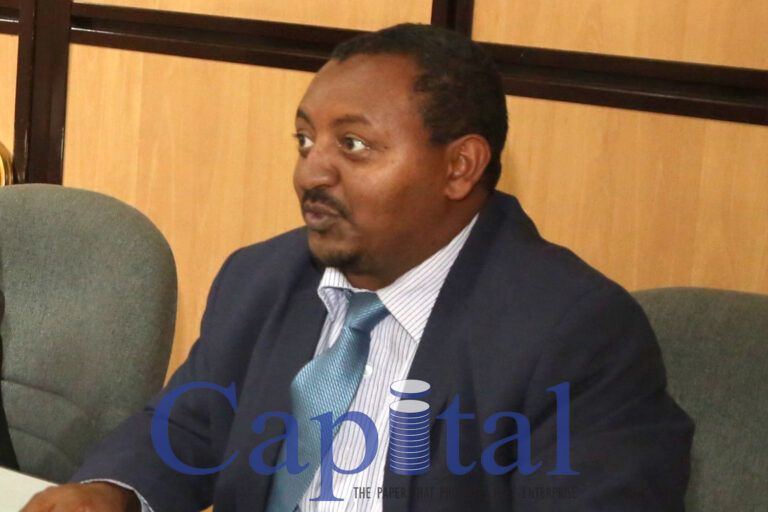
The private sector representatives are expected to meet Prime Minister Abiy Ahmed under the Ethiopian Public Private Consultative Forum (EPPCF) for the second time.
The PM once met with the private sector representatives in the same months of his assignment as premier.
However since then the private sector that comprised from different sector does not meet with the PM for the last two years, while he discussed with different sector in separate meetings.
In previous trends the PM met with the private sector every year under the EPPCF.
Melaku Ezezew, President of Ethiopian Chamber of Commerce and Sectoral Association, which is the umbrella for the private sector under EPPCF, expressed his hope that the PM will meet with the private sector in this two months.
“We have been trying to meet him in different occasion but due to different current affairs and national situation that makes the PM busy it could not be realized,” he told Capital.
“I have been writing about six letters for the Ministry of Trade and Industry, which is a bridge to connect the private sector with the PM under EPPCF,” Melaku said.
He said that he has got a promise to meet PM Abiy in a couple of months.
The forum is one of the major events for the private sector to express its concern regarding the economic condition of the country and tabled digested points that needs solution from the government side.
At the meeting that was held mid April 2018 at Sheraton Addis the private sector raised several issues including access to finance, foreign currency and good governance issues.
One of the challenges to facilitate such meeting with the PM is the frequent reshuffling of ministers at Ministry of Trade and Industry.
CBE cruises past the liquidity crunch

The financial giant, Commercial Bank of Ethiopia (CBE), announced that the liquidity problem that was severe few weeks ago has now been solved.
In the past few months customers has been claiming that the liquidity problems at banks have become a challenge, while banks also confirmed the problem they face.
At the same time within few weeks’ difference the government has pumped nine billion and 5.5 billion birr for banks to easy the liquidity crunch.
In the press conference that was held on Friday February 14, Bacha Gina, President of CBE, said that “few weeks ago the liquidity problem was chronic but now it is solved.”
“The problem is not only with us but it is a country wide challenge, meanwhile it is temporary,” he said.
Recently Abe Sano, President of Oromia International Bank and head of Bankers Association, said that even though the government accrued finance that it collected in terms of tax and other means, it was reserved to disburse it back.
He said that if the government disburses the money the financial sector would be beneficiary. He said that he believed the problem is short term.
In related development CBE announced that it received the ‘Best Commercial Bank Award’ for 2019 from Global Business Outlook. CBe has 23.5 million customers and 1,560 branches.
Bacha said that the bank is also studying to open branches in foreign cities where Ethiopian mainly resides. “The desk review on some of the upcoming foreign branches has been finalized and we will make site visit shortly,” he said.
Currently CBE has branches in Juba, South Sudan and Djibouti. Middle East and the gulf, South Africa and North America are the potential destination for the bank.
Bacha has also added that regarding to access to finance to the private sector the rate has grown in the first half of the budget year compared with the same period of last year.
“We support ongoing public projects including energy, housing and sugar projects,” he added.
For the 2018/19 year CBE, which is also the major finance provider for government owned projects, has provided 129 billion birr in loans and advances. Of which the private sector secured 22.2 billion birr, which is almost one sixth or 17.2 percent of the total loan disbursement.
Deposit mobilization of the bank also reduced compared with the preceding year same period.
“Our deposit mobilization is in good position. It is good even compared with the target and a six month performance of the past year,” he added.
According to the latest report of the bank, CBE’s deposit mobilization for the 2019/20 finance year stood at 24.6 billion birr which is 71 percent of its target. However the performance in the first half of the past financial year, 2018/19, stood at 29.8 billion birr.
RETHINKING DEMOCRACY
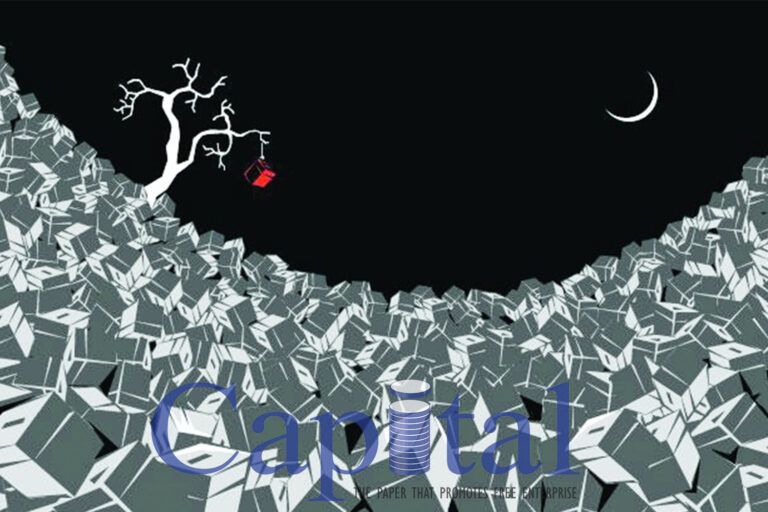
The old Greek words ‘demos’ and ‘cracy’ mean ‘people’ and ‘rule’, respectively. Even though the whole idea behind ‘democracy’ was to have a ‘rule of the people’ in practice substantive democracy has been eluding the world ever since the ancient Greeks coined the word itself! Electoral democracy, as a substitute or a proxy to the ‘rule of the people’, has fallen short of delivering the intended ideal of democracy. Recently, electoral democracy became a legitimate cover to those special interests whose interests are diametrically opposed to the wishes of the people. In late modernity, however, electoral democracy is facing new challenges due to increased awareness of the sheeple (human mass) as well as from advances in the ‘technics’, to use the preferred word of Jacques Ellul, probably the first serious critique of the steamrolling ‘techno-sphere’!
The delegation of real power to elected individuals via ‘electoral democracy’ has proved problematic, particularly after the industrial revolution. Special interests and their parochial pursuits, facilitated by the system of capital accumulation, have been posing protracted problems to the very kernel of democracy. Principles that have been operating outside the sphere of ‘political democracy’ continue to undermine the spirit of democratic rule. For instance, any objection against the dogma of ‘accumulation by any means necessary’ is not subjected to democratic rule, no matter where. For example, whoever gets elected cannot touch the ‘money system’ or can hardly stop the deep state’s operations, etc., etc. Such activities have now superseded the authority of democratic governance itself. Therefore, the question becomes why ‘electoral democracy’, when it obviously cannot deliver what the majority of the people want?
The ongoing French rebellion or what is called the ‘Yellow Vests’ movement is trying to deal with this problematic. In fact, they have gone as far as proposing that certain critical issues must only be decided by the people, not by proxies (elected officials). In other words, ‘direct democracy’ should replace ‘electoral democracy’! For example, why should officials, some of whom are not even elected by the people, decide on wars the can potentially seal the fate of humanity? It is obvious that many of the warmongering politicos do not have loyalty to the people and are, by and large, at the service of the military-industrial complex. Or more comprehensively, one can say many of the politicians in the powerful states of the world system are under the thumb of the deep state (deep state = military-intelligence-industrial-banking-media-complex). In the same vein, one can logically argue that those politicians who vote for wars should be the first ones to enlist!
Another crime of the globally established order involves the finance sector, which by extension means, all economic sectors and activities thereof. This monster is ‘Fractional Reserve Banking’! FRB keeps on destroying, both the world of humans as well as nature. This criminal act of immense proportion is not amenable to modification by democratic choices. Global polarization is fuelled, primarily, by FRB. It is the root cause of massive global disenchantment that is destroying the prevailing globalization and ushering new movements like ‘populism’, extremism, etc. As FRB prints money out of thin air and distributes it to connected cronies in the private sector and to governments, the working stiff gravely and silently suffers from the inflation this printing causes. This economic crime prevails all over the world, from the very poor countries like that of Ethiopia to the very powerful ones of the EU and the USA. Late modernity has transformed the global economic system from productive capitalism to financialism or parasitic capitalism. Financialization is the main mechanism by which wealth is transferred from the working stiff to the criminal oligarchs and their accomplices. Today, no functioning ‘democracy’ in the world can or is trying to stop such blatant abuses. As we never tire of repeating: FRB is the (non-violent) worst organized crime of the millennium! See the articles next column, on pages 36 & 37.
It is now clear that election theatrics is undermining the ethos of democracy in our world system. These recurrent parodies have become quite the entertainment, not only in our parts of the world where caricature is the way of life, but also in advanced industrial countries like that of the USA. It is hoped the 2020 US election will clearly bring out the critical shortcomings of electoral democracy. The capture of the whole electioneering project by powerful interests, though obvious to the initiated, might start to sink in the psyche of the uninitiated. ‘Democracy is the system by which an organized minority governs an unorganized majority,’ Vasily Rozanov (a Russian Philosopher). Here is another one from a Russian-American-Russian philosopher who was exiled back to her ancestral home (Russia) from her adopted country of the US. “Politicians promise you haven before election and give you hell after. If voting change anything, they’d make it illegal.” Emma Goldman. Good Day!
