Sunday, September 27, 2026
Home Blog Page 3827

Ethiopian Diaspora Trust Fund backs five development projects

0

By Ruth Brook

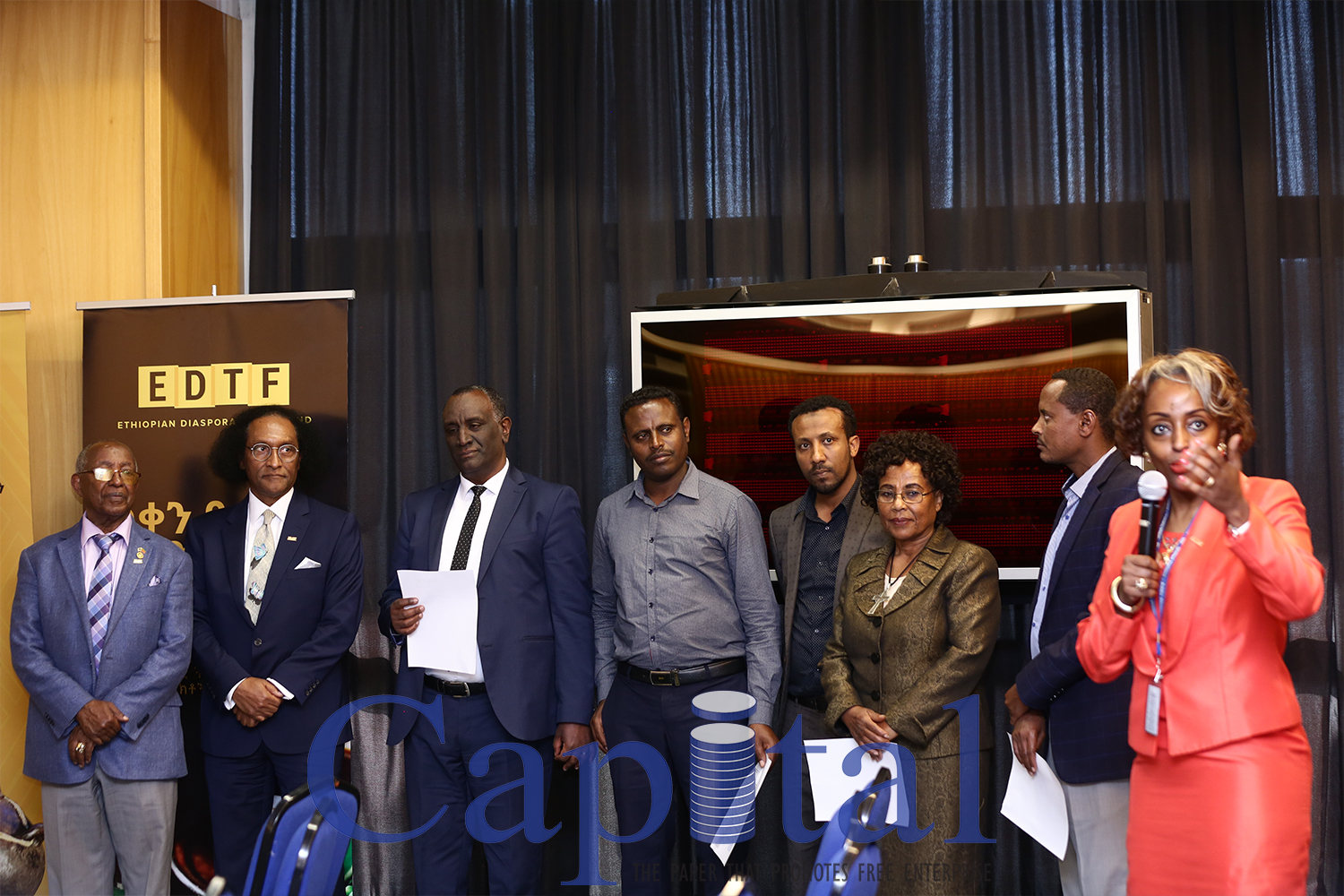
The Ethiopian Diaspora Trust Fund (EDTF) has chosen to fund five development projects that aim to improve social and economic wellbeing of Ethiopians in need; this comes after a rigorous selection process carried out by the organization over the last few months.
The announcement was made at the EDTF Inaugural Grant Award Ceremony on Thursday, February 6th 2020 at UN ECA, Addis Ababa.
EDTF launched in August 2018 and is a tax-exempt nonprofit organization in the United States that is designed to provide funding for entrepreneurial projects geared towards the betterment of Ethiopia. The funds are raised in the form of donations by members of the diaspora around the world, following Prime Minister Abiy Ahmed’s call for diaspora to donate a-dollar-a-day, contributing to initiatives deemed critical projects. The organization raised USD$ 5.848 million from 25,735 donors living in 93 countries, all donations raised by EDTF are dedicated to funding the projects.
Three of the five selected projects are related to enhancing childhood education. The remaining two cover areas of hygiene, sanitation and water supply.
The five projects were narrowed down from an initial submission of 410. They were further tapered down to the final 22 project proposals that met the formal requirements by EDTF’s panel of experts, before the final selection.
The chosen projects are as follows:
Early childhood care and education services for orphans and vulnerable children by Hiwot Integrated Development Organization (HIDO). The project costs 10,491,742 birr.
Hygiene and sanitation promotion by Korah Great Hope Charity Organization (KGHCO). The project costs 10,314,255 birr.
Promotion of safe water supply, hygiene and sanitation for hard to reach communities using renewable energy by Pro Development Network. The project costs 8,924,780 birr.
Enhancing educational provision through improving children learning environment by Gurmuu Development Association. The project costs 10,628,885 birr
Build the capacity of special needs education to integrate children with disabilities in the school system by Help for Persons with Disabilities Organization (HPD-O). The project costs 15,651,374 birr.

New delivery app starts operation

0

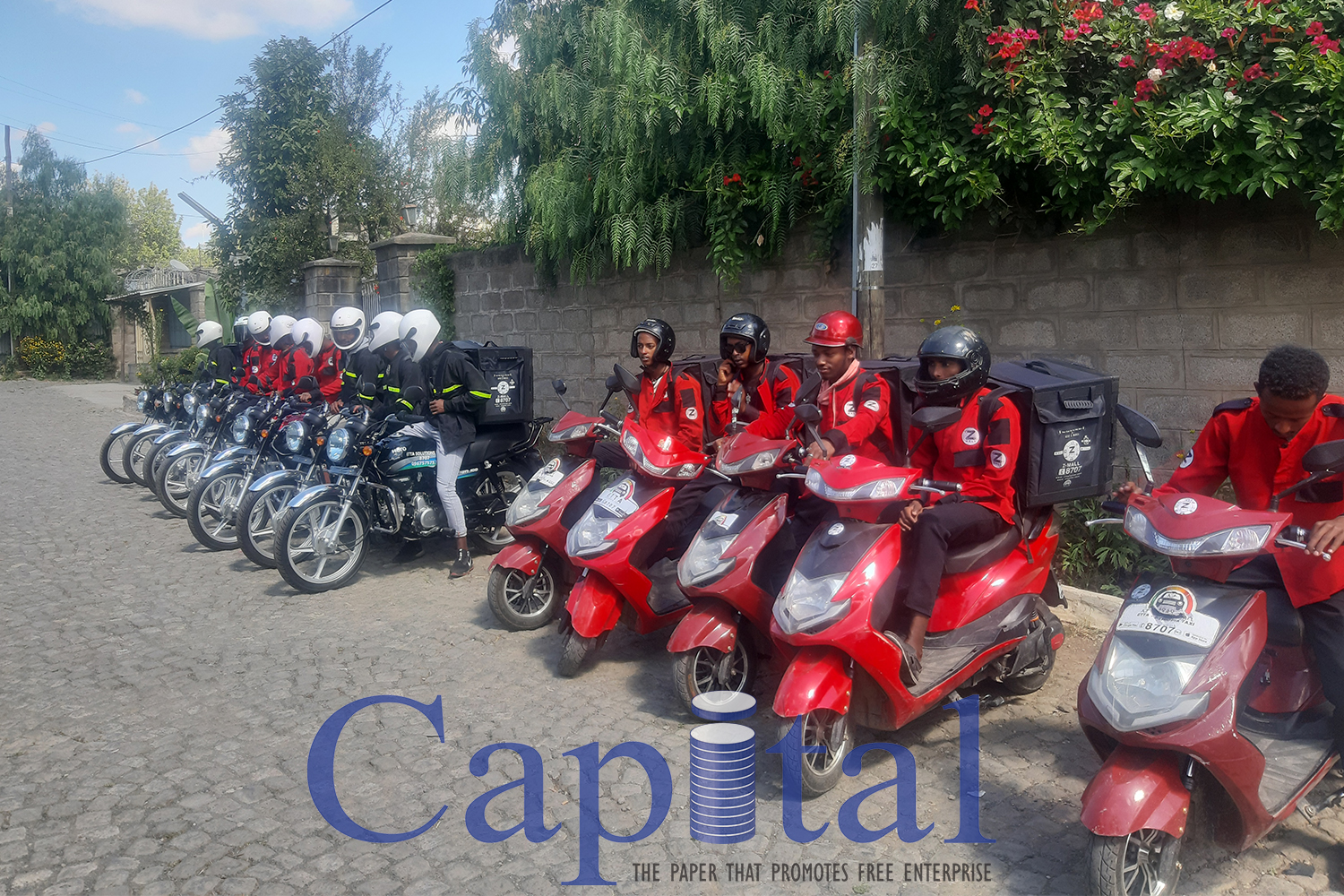
ETTA Solutions PLC (ETTA) announced that it is set to assign 7,800 motor bikes to expand its Z Mall delivery service.
The platform called Z Mall was introduced about five months ago and facilitates a modern app to connect customers with service or product suppliers.
Currently the platform formed under ETTA connects some food chains and supermarkets like Pizza Hut and Shoa and Abadir Supermarkets with their customers.
On the app customers can order any service from the providers and the delivery will be settled by motor bikes that is included under the scheme.
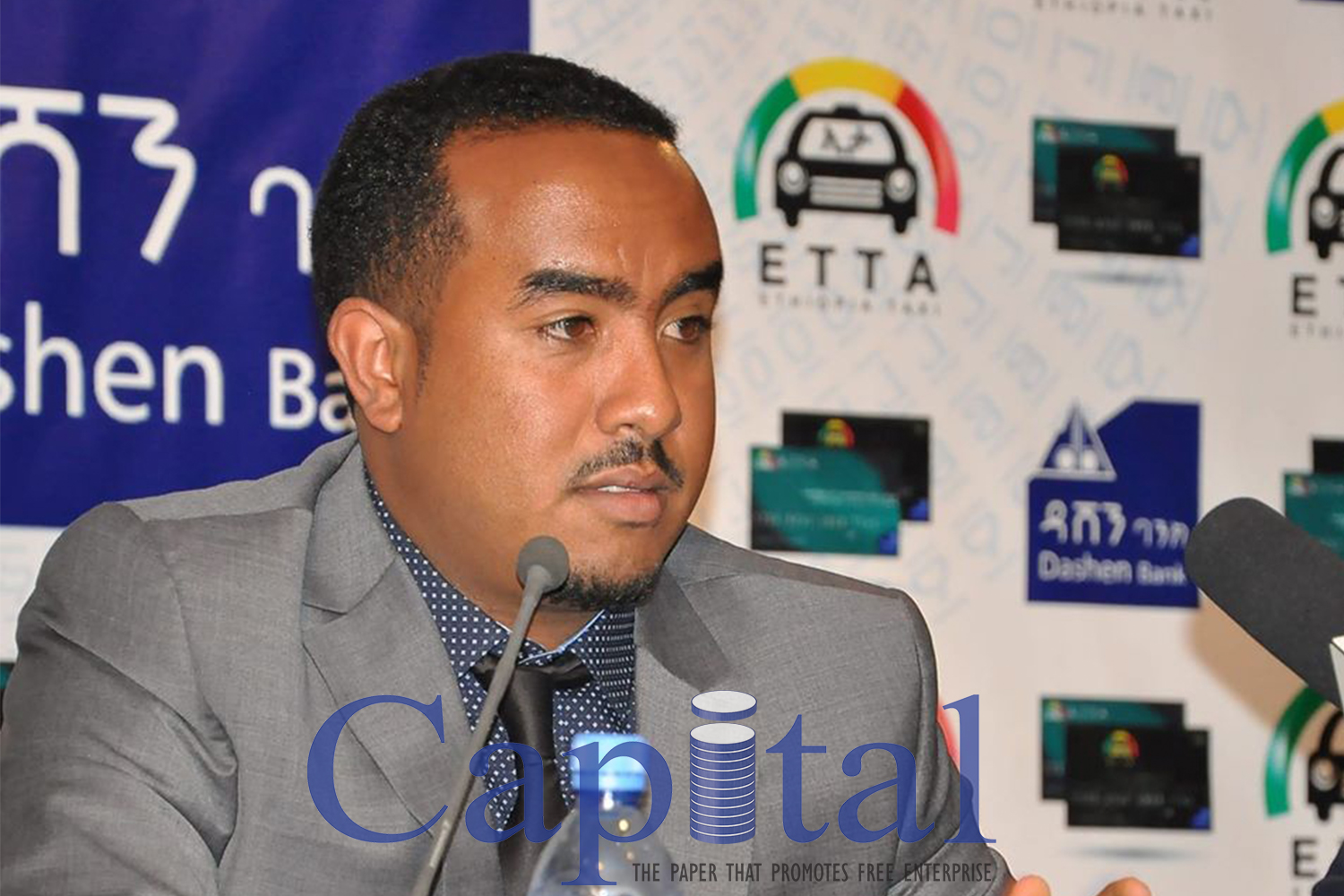
Temesgen Geberehiwot, Managing Director and Founder of ETTA, told Capital that currently under Z Mall 11 companies have registered and provides service for their customers electronically.
Eventhough the platform is launched recently it is expanding and big service providers are showing their interest to enter the platform, according to Temesgen.
He said that there are several companies on the pipeline to serve their customers under the Z Mall app that makes it simple for delivery service.
“Under the plan businesses including small shops and service providers like cozy restaurants will be available in the app. Unemployed women will also be part of the platform,” the Managing Director explained.
The only precondition for service providers is registration under the platform, while to keep their market standard is up to them.
As per the projection by the end of 2020 the number of service providers using the app will be 750.
The company has already entered 60 motor bikes into service including 20 electric motor bikes.
“In this opportunity we want to play our part to create jobs for youths due to that we don’t want to dispatch our motor bikes. But at the initial stage we assigned some motors but in the future it will be fully controlled by the motorbike owners,” the he said.
“At the current stage we gave the bikes for unemployed youths around our head office area on the framework of long installment and in the future the bike will be their own property,” he said.
According to the Temesgen, the company preferred to use motor bikes since it is cheaper than vehicles for youths who want to start business from the scratch, “it is easy for youths as investment and to settle their credit whether it is secured from microfinance or banks.”
According to the target by the end of 2020 the total number of motor bikes operated under Z Mall will reach 7,800. “It means the stated number of youth employment will be created,” he explained.
ETTA is a company that initially started a meter taxi platform in collaboration with taxi owners and currently it provided several platforms for customers.
One of the new platforms for the country that ETTA introduced is Shekla Store app, which sells music under an agreement with singers. So far popular singers like Aster Awoke and recently released Dawit Tsige albums have been sold via Shekla as alternative besides other single and album songs.
“It is a new platform and so far we have sold more than 35,000 songs and within few days over 800 albums of Dawit in Ethiopian market has been sold via Shekla,” Temesgen said.
He said that currently the company is negotiating with several singers to release their upcoming albums via Shekla Store. “We use our own inscription technology that shall protect the music from duplication or copy,” he added.
Currently, the company is working with Dashen Bank as financial partner with its Amole payment scheme.
Besides that ETTA has also applied a platform for online sale for concert and football game tickets, which makes it easy than previous trends.

Ethio-Telecom launches LTE Advanced Mobile Service

0

By Ruth Brook

Ethio-telecom announced an upgrade in their mobile services with the launch of state-of-the-art Long Term Evolution (LTE) advanced mobile services, on February 3rd 2020. The evolved mobile technology will be available at 50 sites in Addis Ababa.
LTE Advanced, an enhancement of the LTE communication standard, is expected to act as a solution to high mobile data demands. It is one of the latest advancements in mobile technology that is said to provide an enriched communications experience for customers through better coverage as well as overall faster performance.
What separates LTE Advanced from its predecessors is a key feature known as Carrier Aggregation which allows users to download data from multiple networks bands simultaneously. According to a press release by the telecommunications provider, the upgrade will provide customers with heightened speed to download or upload large-sized data, high definition multimedia as well as live streaming and video conferencing in real-time.
The LTE advanced network will be availed certain areas of the city, based on a high level of internet usage seen in those areas. The selected zones include Bole airport, Bole Friendship, Bole Medhanialem, Bole Atlas, Meskel Square, Stadium, Ethio telecom headquarters, Kazanchis, 4 kilo (Unity park), 6 kilo, Lideta (ECX), African Union and Old Airport.
In addition to the new feature in cellular services, Ethiopia’s sole communications provider announced an expansion of the existing 4G LTE network due to limitations in previous coverage; 4G LTE is now available everywhere in Addis Ababa.
The monumental endeavor towards the betterment of mobile services for Ethiopians cost 173 million birr and was undertaken by global communications provider Huawei. Customers wishing to adopt LTE Advanced Services on existing devices or SIM cards can obtain further information by visiting nearby Ethio-telecom shops or on its website.

Ethiopia’s health and education sectors deemed prosperous

0

By Ruth Brook

Ethiopia is one of Africa’s strongest improvers in the health and education sectors, according to the Africa Prosperity Report 2019/20 by London-based think-tank, The Legatum Institute. The report, published Monday, listed Ethiopia as one of the fastest growing economies not only in Africa, but in the world.
Sitting at 41st among 54 African countries, Ethiopia has moved up one place over the last decade, according to the prosperity report.
“A nation is prosperous when it has an inclusive society with strong institutions, an open economy, and empowered people who are healthy, educated and safe,” said Dr. Stephen Brien, Director of Policy, Legatum Institute. For societies to flourish and people to prosper we need economic and social wellbeing working together, he explained.
The Legatum Institute is a London-based think-tank with a global vision “to see people lifted out of poverty”. It was founded in 2007 by the Legatum Foundation. The Africa Prosperity Report is based on the Legatum Institute Prosperity Index and measures the prosperity of countries by applying a combination of material wealth and life satisfaction factors.
Prosperity is determined based on an analysis of each country’s performance in 12 categories, known as ‘pillars’ – safety and security, personal freedom, governance, social capital, investment environment, enterprise conditions, market access and infrastructure, economic quality, living conditions, health, education and natural environment.
The biggest challenge for Ethiopia is seen in the personal freedom pillar, where the country received a low score of 48. Analysts determine personal freedom based on “country-wide progress towards basic legal rights, individual liberties and social tolerance.”
Ethiopia’s success story is found in its education sector (29). According to the report, Ethiopia has witnessed a significant improvement in the sector. This comes as a result of efforts made to improve rural access to education for children at the earliest stage through to the latest stages of the educational system. Secondary enrolment in Addis Ababa is almost at 100%, the report stated.
The health pillar is another comforting prospect for Ethiopia. The report described Ethiopia as a country that has taken measures to ensure that care is provided across the population. The country’s flagship health extension programme was listed as an example of these measures. The programme, which launched in 2003, paid and trained female community health workers to meet the needs of those in their local areas.
Improving health and education are indicators of better governance and stronger institutions, the report stated.
“After a long and successful transition from civil war, the next phase of Ethiopia’s development will benefit from an inclusive and accountable style of leadership and an opening of the economy,” commented Dr. Stephen Brien, Director of Policy, Legatum Institute.
The report divides the continent into six regions; North Africa, West Africa, Central Africa, East Africa, South Africa and the Horn. Ethiopia is found in the Horn.
The highest performing country in the Horn is Djibouti (19) taking the lead by a large margin. At the tail end is South Sudan with a score of 54, South Sudan is also the overall lowest ranked country in the Africa Prosperity Index. The report ranked the six countries in the region: Djibouti (19), Ethiopia (41), Sudan (47), Eritrea (49), Somalia (50) and South Sudan (54).
The prosperity report highlighted the region’s strengths and weaknesses, the primary concerns of the latter are related to safety and security in the region, with the Horn ranking fifth among the six regions for that pillar. However the recent close of the Ethiopia-Eritrea conflict has paved the way to more stabilized security in the region.
Ethiopia is at the forefront of the region’s economic growth; however the country’s geographical position as a landlocked nation continues to disadvantage its trade potential, the majority of which is facilitated through Djibouti. A lack of international investment and foreign exchange shortages also continue to act as restrictions for Ethiopia and neighboring country Sudan.
Much like in Ethiopia, the break in the clouds for the region is seen in the Horn’s education and health pillars; the region ranks third in Africa for secondary education. In a dramatic turn of events, completion rates have increased from 22% to 70%; this is in large part due to the education reforms in Ethiopia.
The 166 page report found that prosperity in Africa is currently at its peak, 43 African nations have increased in their overall prosperity with the most prosperous country in the continent being Mauritius. Each region in the continent has seen improvements; the region that has witnessed the most improvement is East Africa, according to the report.
The International Monetary Fund (IMF), World Health Organization (WHO) and United Nations High Commissioner for Refugees (UNCHR) were among the 80 data sources Legatum consulted when putting together this report. Over 100 experts and academics with knowledge on each pillars of prosperity were also consulted.