

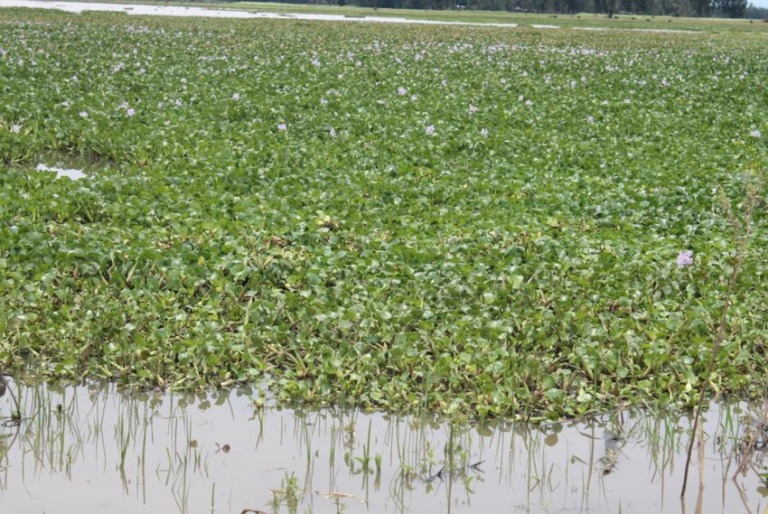
The COVID-19 pandemic has worsened the infestation of Water Hyacinth or commonly known as ‘Emboch’ on Lake Tana, the largest lake in the country and source of the Blue Nile River.
Starting from 2011 the lake has been affected by the infestation which is the most dangerous weed affecting lakes around the world. At the time of the infestation the weed has been covering around 20,000 hectares of the lake shores, though the government and the society were doing different things to control the spread of the weed to no avail.
On September 2019 the government has formed an agency for protection and development of water resources to control the spread of the weed.
Ayalew Wonde, head of the agency told Capital that there are three methods being used to control the spread of the weed.
“The first is using chemicals which is not advisable because the lake is home to different habitants and most of the surrounding community use it as a drinking water, the second one is biological which can also affect the habitants of Lake Tana that holds 50 percent of Ethiopia’s fresh water. It also shelters around 28 species of fish, of which 21 are endemic, and the last choice is removing it physically by using both machines and human resource. The previous year’s efforts so far were using human resource and the community managed to dispose 50 percent of the weed from the lake.”
“We have been planning to minimize the coverage until the end of June before the rainy season and replace it by local plants using the human resource however because of the pandemic we were not able to do so,” Ayalew told Capital.
Despite these efforts, the infestation persisted and even got worse. In the current Ethiopian year, the infestation expanded to the water part of the lake, covering 1,000 hectares of it.
“My fear is that the rainy season is convenient for the spread of the weed besides we are not able to do anything because of the pandemic,” said Ayalew adding that, the infestation still poses a serious threat to the lake, the surrounding community, and the Nile basin. The matter also touches, among other things, the Grand Ethiopian Renaissance Dam (GERD).
Ayalew said it is possible that it might reach the GERD. Thus, as much attention and urgency must be attached to controlling the infestation as is being attached to the GERD.
One of the problems in previous activities is that there is no consistent effort made by the government or by other stake holders.
Tana which is 60 percent of source of the Blue Nile is approximately 84 kilometers long and 66 kilometers wide.
Enboch directly threatens both the lake and its inhabitants. It deprives aquatic plants and animals of sunlight and oxygen. It also restricts water flow and is an obstacle to all kinds of economic activities including fishing, navigation, power generation and irrigation.
COVID-19 makes it almost impossible to fight weed on Lake Tana
Hotels failing to abide rules and regulations on employees: Association
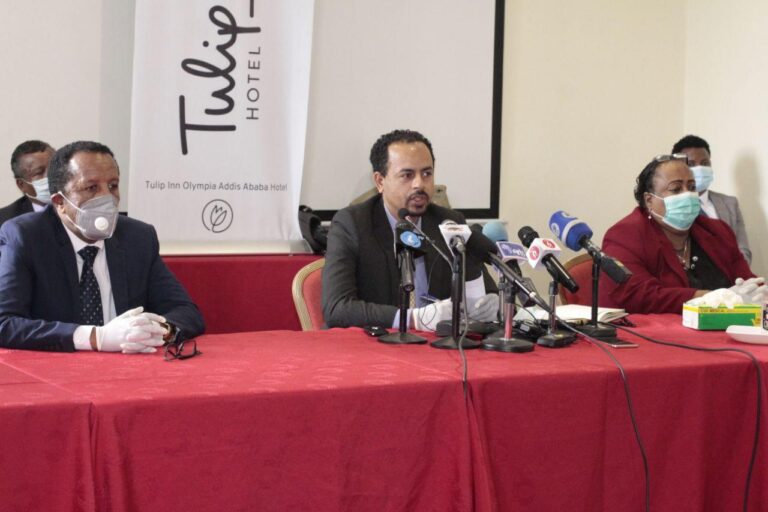
Ethiopian Hotel Professionals Associations asked the government to control over the implementation of directives and regulations imposed on employment, layoff and termination.
As stated by the board members of the association on May 29, 2020, there are hotels which are laying off employees, cutting off their salary and not protecting their employees from getting affected by the virus.
“We have heard 14 hotels with different cases related with employment lay off and salary cut, we are trying to solve them,” Leulseged Mesele president of the association said.
According to the association there is a huge mess on implementing the national directives and lacks follow up from the government side.
We have been calling the hotels to come and talk on the issue, but we don’t get any response. Also we are communicating with the Culture and Tourism Ministry, Ministry of Labor and Social Affairs there is no solution.
As the spread of the virus continue the government prohibits companies from laying off workers and terminating employments in a measure introduced as part to protect citizens from economic crises.
And to mitigate the damages of the pandemic and alleviate economic crisis on industries that have fallen such as tourism, hospitality and the horticulture the government has been aggressively implementing different measurements including financial injection.
According to the government, these sectors can borrow from commercial banks with low interest rates mainly to pay their employees salary and survive the crises together.
Banks are rescheduling, annulling or reducing interest rate and reschedule loan for sectors like hospitality, tourism and horticulture for three months and above to mitigate the effect on their clients mainly for those who are highly affected.
According to the board members of the association even if such kind of efforts has been made by the government to support the sector and protect employees, there are hotels who are not abiding by the rules.
According to Leulseged, most of the hotels took the loan from banks but still there are problems on the implementation.
“Most of the employees are low paid workers, we do not have to expect them to pay back the loan rather we need to stand together and pass this time,” said Sendu Getachew Vice President of the association.
Beside the state of emergency, recently the country has launched work place respond protocol agreement between the government, employers and employees, of work force protocol to encompasses measures taken to fight against the pandemic virus Covid 19.
Guideline for response to crisis management which was signed between three parties’ Ministry of Labor and Social Affairs, the Confederation of Labor and Confederation of Trade Unions, urge basic workplace protection strategies to be implemented by employers, employees and safety committee that includes precautions to be taken.
Following the spread of COVID -19 and the subsequent travel restrictions impacting the international travel-tour industry, hotels are partially or fully closed due to low occupancy rate. Currently 98 percent of the market in the industry is dead and the rest two percent is on hotels used as quarantine according to the association.
Following this most of the hotels are about to change their faces to serve as quarantine centers.
Agency introduces QR codes for document authentication

The Document Registration and Authentication Agency (DARA) introduced a strong document verification system that is used in its daily operation.
The agency that introduced technology based schemes in its operation about nine years ago by using online registration process, now applied a Quick Response code (QR code) in its document authentication and registration operation.
Muluken Amare, Director General of DARA, said that the new scheme is the beginning of the ongoing new technologically advanced operation that the agency will apply in the near future.
He said that the new system will play a big role to tackle forgery and safeguard citizens from illegal actors.
The new QR code that is printed at the original authenticated document will be readable by QR code reader.
Muluken, who was the first IT director that led the technological automation at DARA and develop the online infrastructure, told Capital that the new scheme will cut back forgery allegation.
“In the past anyone who have a fake ID will try to get for instance power of attorney and may use forged document and abuse and right and property of others without their knowledge, but the current QR code for instance will help organizations like banks to re-verify the document by their own,” he added, “in the past banks assigned their staff and send them at DARA to authenticate the documents, which takes time and money, but the new system will cut this.”
The agency has also started capturing a photo of those who give power of attorney that will also make the authentication process more strong.
“Meanwhile if a photo is not available or not printed with the documents the QR code will show the picture of the individual that give the power of attorney,” he said.
The new security features are additional proof of the way to maximize the recording of documents besides the traditional authentication scheme that is mainly based on stamps.
Digitizing all documents at DARA was launched since the beginning of this budget year and almost all of the documents of the year are recorded on soft copy, according to the head the public institution.
The Director General further said that additional security features that are based on technology are under development.
“In the past we have developed several software to improve our operations that might be for in-house purpose and also for others,” Muluken said.
One of the upcoming applications that DARA will introduce is its own QR code reader. “Currently we are using an application that is available at open sources but in the near future we will introduce our own application,” the Director General said.
He said that his agency is focusing on the advancement of technology than expanding branches aggressively which they used to do in the past. “We focus for technology that might significantly improve our operation, while expanding branches have its own costs than using technologies,” he added.
“We are under a routine change regarding technology use,” he said.
With the way the country is expanding the electronic transaction, Muluken said that his agency is ready to go with it, while reminding that some of legal frameworks of the agency need to be improved to go with the new government scheme.
For instance customers should visit a branch of DARA to sign on the documents for final authentication process but if the law changed and allowed us to approve electronic signature the scheme will be very easy, according to the Director General.
“Despite to move on this step the country should have a clear ID system. National ID will make clear the issue and alleviate the forgery on the ID system,” he added.
Currently the federal government is working to introduce National ID.
Currently the agency has 14 branches and manages 6,100 customers a day, which is tripled compared with five years ago. “The awareness of the public is expanding, the society is coming at DARA to seal business deals legally than the traditional scheme,” he explained why the number of users at the agency increased.
Africa Regional Integration Index underlines integration as key to building more resilient economies
The second Africa Regional Integration Index (ARII 2019) was launched on May 22 by the Economic Commission for Africa (ECA), the African Development Bank and the African Union Commission (AUC), with a call to action to African economies to deepen their integration.
The 2019 Index, which builds on the first edition published in 2016, provides up-to-date data on the status and progress of regional integration in Africa. It also helps to assess the level of integration for every Regional Economic Community (REC) and their member countries.
The report observed that although 20 countries score above average, no African country can be considered well integrated in its region. Even the most integrated country, South Africa, scores 0.625 less than two-thirds of its potential on the scale.
The report found that much more needs to be done to integrate regional economies to make them more resilient to shocks such as the current COVID-19 pandemic. Overall, the Index shows that levels of integration on the continent are relatively low with an average score of 0.327 out of 1.
“Whereas the Index edition we are releasing today has data cut off points in 2019, the present COVID-19 pandemic has reopened the question of whether enough is being done in advancing regional integration as a means to help Africa withstand systematic shocks such as the one being experienced today,” said Stephen Karingi, Regional Integration Division Director at the ECA.
“This index is both a measurement exercise and a call to action; to build resilient economies through integration,” he added. “It will identify the solutions needed to truly build an integrated Africa.”
Jean-Denis Gabikini, Acting Director of the AUC’s Economic Affairs Department, welcomed the collaboration in producing the Index. He noted that the Index covers issues of intellectual property, competition policy, investment and digital trade which are critical to the successful negotiations of Phase II and III of AfCFTA.
“To achieve an “integrated, prosperous and peaceful Africa, representing a dynamic force in the concert of nations”, this ARII report will support AU Member States and RECs to address industrialisation and value addition priorities for the development of the continent,” Gabikini said.
With the establishment of RECs and the creation of AfCFTA, Africa has reinforced regional integration as a major development priority for the continent under the 2012 Boosting Intra-African Trade (BIAT) Action Plan.
The Index ranks the level of integration of African countries within their respective RECs and also with the rest of the continent. It scores across five key dimensions: trade, productive capacity, macroeconomic policy, infrastructure, and free movement of people.
Among the eight RECs recognised by the AU, the East African Community (EAC) scored highest for overall integration, with the Southern African Development Community (SADC) coming last.
The African Development Bank’s Director for Regional Development and Regional Integration, Moono Mupotola, said the Index was a useful tool for tracking progress on the regional integration front and would help countries identify priorities to improve integration.
“The crippling effects of COVID-19 illustrate the need for enhanced production of African finished goods and services that can readily be traded across the continent,” Mupotola said.
David Luke, coordinator of the African Trade Policy Centre (ATPC) at the ECA pointed out that the productive and infrastructure dimensions of regional integration are intricately linked. Tackling these two dimensions along with implementing the AfCFTA would be a massive boost for trade, he said.
