Thursday, November 26, 2026
Home Blog Page 446

Ethiopia Retains Heavy Export Taxes on Raw Hides as Legal Reform Looms

0

The Ministry of Industry has decided against imposing a total ban on the export of raw hides and skins, opting instead to sustain strict financial measures designed to discourage the practice while promoting domestic value addition.

Senior officials say the government will maintain a 150% export tax on raw hides and raise minimum export floor prices to make the trade commercially unattractive. The move is part of a broader strategy to boost foreign currency earnings and expand job creation through finished leather products rather than rely on limited returns from unprocessed exports.

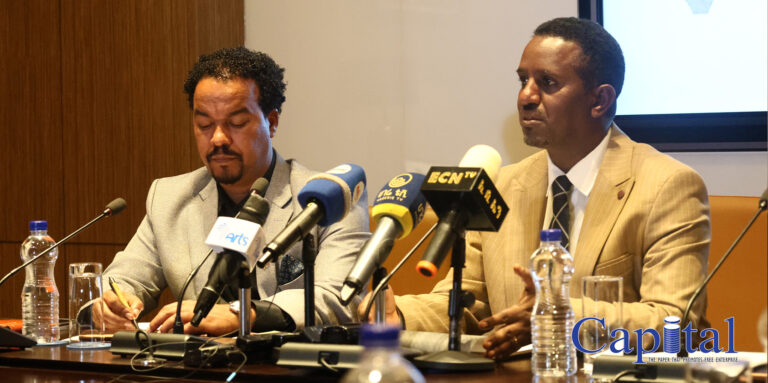
Zerihun Abebe, Chief Executive for Export Products Competitiveness at the Ministry, told Capital that while the government is advancing market liberalisation reforms, a complete export ban would be counterproductive. He noted that ox hides, in particular, are in high demand for consumption in West African markets, a trade driven largely by food demand rather than industrial use.

“We have kept a 150% export tax on raw hides,” Zerihun said, describing the rate as intentionally high. In collaboration with the Ministry of Trade and Regional Integration, the Ministry is also working to increase the minimum export price per hide from $7 to $10.

“These measures make it economically difficult to export raw materials without adding value,” he said. “We haven’t shut it down completely—nor would that be practical—but we are making it unsustainable.”

At the same time, the Ministry is preparing amendments to the Raw Hides and Skins Marketing Proclamation, first enacted in 2013 and revised in 2018. Officials acknowledge that the current legal framework does not clearly define the marketing chain and has created structural barriers for businesses.

According to Zerihun, existing rules prevent manufacturers from sourcing hides directly from downstream suppliers, forcing them to rely heavily on intermediaries. This fragmentation has inflated costs, reduced quality control, and weakened the competitiveness of local tanneries. Consultations are now underway with the Ministry of Agriculture and industry associations to introduce a more flexible and transparent system.

Environmental compliance has also emerged as a significant hurdle. Officials argue that regulatory and ecological pressures, rather than lack of financing, have played a larger role in slowing the sector. To address this, the government is fast-tracking the development of “Modjo Leather City,” an integrated industrial hub that will feature a centralised waste treatment plant. The project is expected to help tanneries meet increasingly stringent international “Green Leather” standards demanded by global buyers.

For more than two decades, Ethiopia’s hides and skins industry has been a cornerstone of the country’s agriculture-led industrialisation strategy. Despite possessing one of Africa’s largest livestock populations, the sector continues to struggle with low off-take rates, poor animal husbandry practices, and persistent quality defects.
Zelalem Merawi, President of the Ethiopian Leather Industries Association (ELIA), highlighted what he described as a troubling contradiction: significant quantities of raw hides are wasted even as factories face material shortages.

“The leather industry was once the country’s second-largest source of foreign currency after coffee,” he said. Today, annual export earnings range between $30 million and $40 million. However, the sector plays a much larger role in import substitution, producing goods valued at up to $3 billion domestically, including footwear for the military and police.

Zelalem pointed to emerging success stories in value addition. Over the past five years, Ethiopia has earned around $180 million from gelatin exports made from leather scraps previously considered waste. “Even rejected hides are being transformed,” he said. “Gelatin for food and industrial use shows that value can be added at every stage.”

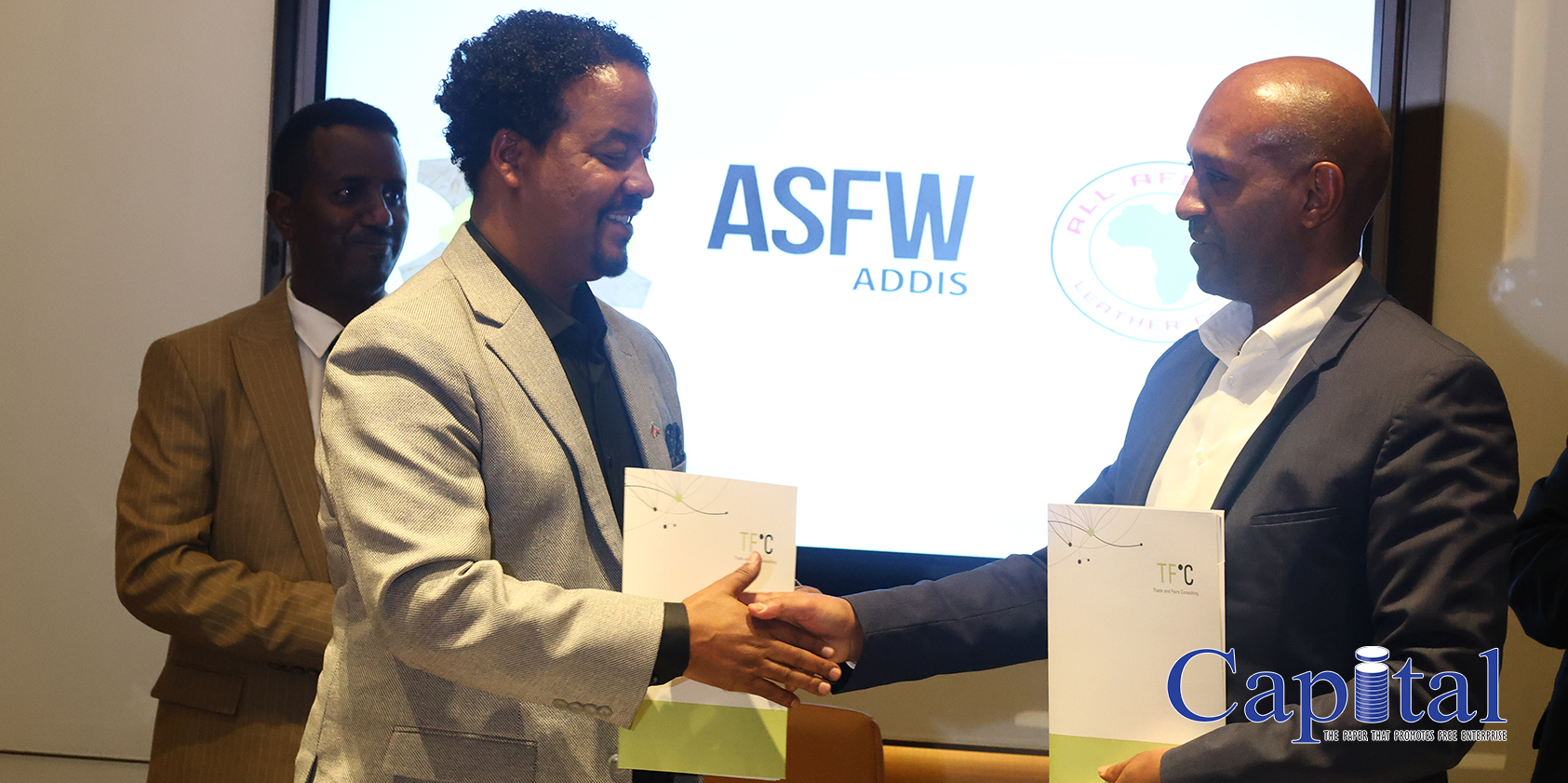
He made the remarks during a signing ceremony in which ELIA partnered with Messe Frankfurt (ASFAW) to host the All Africa Leather Fair, an initiative aimed at positioning Ethiopia as a continental hub for leather fashion by attracting international buyers and showcasing its shift toward finished products.

Despite ongoing reforms, industry stakeholders caution that major challenges remain. Access to credit is limited, raw material shortages persist—partly driven by continued exports—and quality control mechanisms once overseen by the Ministry of Agriculture have weakened.

They stress that while environmental standards and urban development reforms are important, fully serviced industrial parks must be prioritised to relocate factories, improve sustainability, and safeguard the hundreds of thousands of jobs supported by the leather value chain.
Ethiopia and Djibouti Seal Deal to Link Strategic Ports to Railway by 2026

0

Ethiopia and Djibouti have agreed to connect key strategic ports to the Ethio-Djibouti Railway (EDR) line by the end of 2026, marking a significant step toward strengthening the corridor that underpins Ethiopia’s external trade.

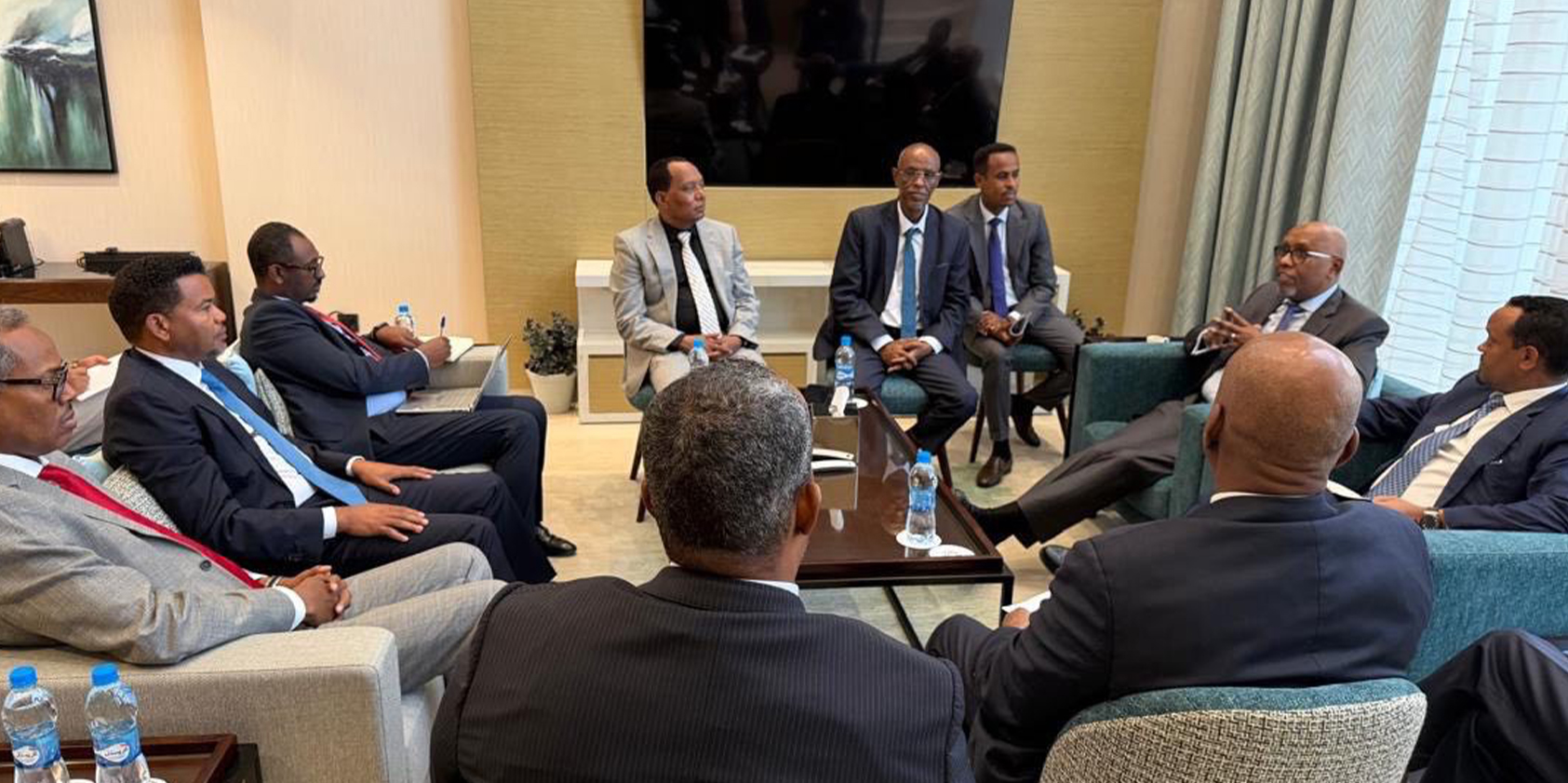
The decision was endorsed this week by the Ethio-Djibouti Joint Railway Commission (JRC), a ministerial platform established under the 2016 bilateral railway agreement. The commission met in Djibouti on February 17, 2026, co-chaired by Alemu Sime, Ethiopia’s Minister of Transport and Logistics, and Hassan Houmed Ibrahim, Djibouti’s Minister of Infrastructure and Equipment.

According to sources familiar with the discussions, the commission agreed to expedite rail connectivity to the Doraleh Multipurpose Port (DMP) and the oil terminal operated by Horizon Djibouti Terminals Limited (HDTL), with completion targeted by November 2026. Currently, only the SGTD container terminal at Doraleh is directly linked to the railway.

The move follows Prime Minister Abiy Ahmed’s recent visit to Djibouti, where he emphasized the cost-effectiveness of rail transport and pushed for greater cargo volumes to shift from road to rail. During his mid-January talks with President Ismail Omar Guelleh, discussions reportedly centered on positioning the railway as the backbone of bilateral trade. The JRC is now expected to translate that political commitment into operational results.

Government officials say the administration is prioritizing rail-based transport to handle a larger share of petroleum and fertilizer shipments. Swift connectivity to DMP is considered critical, particularly for fertilizer imports, which are strategic for Ethiopia’s agricultural productivity.

Sources said the commission also agreed to conduct joint technical studies and facilitate the smooth cross-border movement of EDR personnel, equipment, and machinery to ensure efficient implementation of the port linkages. In addition to finalizing the railway connection to HDTL, the two sides pledged to fast-track the necessary technical and operational work to integrate DMP into the main rail line.

The discussions extended to the Djibouti Damerjog Industrial Development (DDID) project, a major port and industrial complex located about 16 kilometers south of Djibouti City near the Somaliland border. As part of the development, Djibouti is finalizing construction of the Damerjog Liquid Bulk Port (DLBP), which Ethiopian officials view as vital to meeting the country’s growing fuel demand.

During a site visit on Monday, Alemu conveyed Ethiopia’s interest in utilizing DLBP to expand storage and handling capacity. Currently, the Ethiopian Petroleum Supply Enterprise relies on the Horizon depot at Doraleh, from which roughly 350 trucks transport fuel daily to Ethiopia. Rising consumption, fully utilized storage capacity, and mounting demurrage costs have driven Ethiopia to seek alternative facilities capable of handling larger volumes.

According to the Djibouti Ports and Free Zones Authority, DLBP’s oil jetty will have an annual capacity of 25 million tonnes and support up to 12 vessel rotations. The port will serve multiple storage terminals with a combined static storage capacity of around two million cubic meters, offering the scale required to support Ethiopia’s expanding energy logistics.

As part of the rail expansion, EDR plans to construct a 17-kilometer line linking the Damerjog oil terminal to Nagad Railway Station in Djibouti, enabling direct fuel transport to Ethiopia. A feasibility study conducted by Great Horn Investment Holding, a subsidiary of the Djibouti Ports and Free Zones Authority, estimates the project’s capital expenditure at USD 90 million, or roughly USD 5 million per kilometer.

EDR has also expressed interest in acquiring a 49 percent stake in the Damerjog fuel storage project, including infrastructure for jet fuel handling, signaling its ambition to deepen its role beyond rail operations.

Following the JRC meeting, EDR CEO Takele Uma described the outcome as the beginning of a new chapter in bilateral railway cooperation. He said the commission had endorsed a strategic roadmap aimed at ensuring seamless railway operations while positioning EDR as the central artery of trade between the two countries. He also highlighted ongoing logistics reforms along the Djibouti Corridor and efforts to increase capacity and streamline supply chains.

Earlier in January, Prime Minister Abiy toured both HDTL and DMP during his visit to Djibouti. Although DMP handles a substantial portion of Ethiopia’s imports, including fertilizer, it currently relies on a 1.9-kilometer trucking link to connect with the railway—an arrangement estimated to cost about USD 10 million annually. Establishing a direct rail connection is therefore seen as a priority to reduce costs and improve efficiency.

The HDTL terminal, operated by the UAE’s ENOC Group, is also slated for rail integration. Under the proposed arrangement, EDR would construct the approximately three-kilometer extension, while the terminal operator would develop the necessary loading infrastructure.

EDR is concurrently expanding its domestic project portfolio. The company is rehabilitating sections of the existing railway and completing a three-kilometer spur line linking the AMG Industrial Park to Gelan Station. It has also signaled interest in a future 40-kilometer dual-track line connecting Bole International Airport to a planned airport city in Bishoftu, supported by technical cooperation with China Civil Engineering Construction Corporation.

Industry sources indicate that EDR is expected to lead both the DMP and HDTL rail connection projects. If delivered on schedule, the new links are anticipated to significantly lower transport costs, ease congestion along the corridor, and reinforce the railway’s role as the backbone of Ethiopia’s trade through Djibouti.

Eni Expands African Exploration Footprint with Major Discoveries in Ivory Coast, Angola

0

Energy major Eni continues to deliver on its exploration drive in Africa, announcing two major hydrocarbon discoveries in February 2026. In Ivory Coast, the company successfully drilled the Murene South-1X well in Block CI-501, confirming the Calao South discovery within the prolific Calao channel complex. Through its Angolan joint venture Azule Energy, the company also announced the Algaita-01 well in Block 15/06 – situated in the prolific Lower Congo Basin. Together, these milestones reflect a deliberate dual-track strategy for the company: opening new hydrocarbon frontiers while strengthening production capacity across Africa’s established markets. 

As the voice of the African energy sector, the African Energy Chamber (AEC) commends Eni for its sustained commitment to African exploration. Large-scale discoveries in Ivory Coast and Angola are not only commercial wins – they are strategic victories for the continent. For emerging producers such as Ivory Coast, discoveries of this scale fast-track energy independence and domestic gas-to-power expansion. For mature producers such as Angola, they underpin production stability and fiscal resilience at a time when global capital is increasingly selective. As the company advances appraisal, testing and development planning, these discoveries have the potential to catalyze a new wave of upstream momentum across Africa’s hydrocarbon market.

Africa’s path to health sovereignty: ECA chief calls for fiscal transformation to finance health

0

At a high-level side event during the 2026 African Union Summit, Executive Secretary of the United Nations Economic Commission for Africa, Claver Gatete, called on African leaders to anchor health financing within broader fiscal and economic reforms, describing health as central to the continent’s sovereignty.

Speaking under the theme “From Commitment to Action: Accelerating Health Financing, Partnerships and Delivery at Scale,” Gatete said the global system is shifting from hyper-globalisation to “strategic resilience,” where countries prioritise critical sectors such as food, energy and health.

He noted that development assistance for health has dropped sharply from about US$80 billion in 2021 to US$39 billion in 2025, exposing Africa’s dependence on external funding and imported medical supplies. Although the continent spends an estimated US$145 billion annually on health, less than half comes from public budgets, leaving households to shoulder high out-of-pocket costs.

Gatete outlined four priorities: integrating health into medium-term fiscal frameworks, boosting domestic resource mobilisation, expanding pharmaceutical manufacturing through the African Continental Free Trade Area, and strengthening health systems. He stressed that achieving health sovereignty is key to securing Africa’s economic future.   (ECA)