


Ethiopia has taken a major leap forward in its clean energy ambitions as the Assela Wind Farm, a 100-megawatt (MW) facility, delivered its first power to the national grid this week. Located 150 kilometers south of Addis Ababa in the Oromia region, the wind farm is set to generate over 300 gigawatt-hours (GWh) of renewable electricity annually once all 29 turbines are fully operational by the end of 2025. This output will be enough to meet the electricity needs of more than 140,000 Ethiopian households.The Assela Wind Farm is owned by Ethiopian Electric Power (EEP) and stands as a flagship project for international cooperation. The project is fully financed by Denmark through a grant from Danida Sustainable Infrastructure Finance (DSIF) and a loan from Danske Bank. Siemens Gamesa, a Spanish-German company and global leader in wind energy, was responsible for construction.The project exemplifies Denmark’s commitment to building equal partnerships with Ethiopia and Africa, and it aligns with the European Union’s Global Gateway strategy, which mobilizes public and private investment for smart, clean, and secure energy connections worldwide.Ethiopia aims to achieve middle-income status by 2030 through a climate-resilient and low-carbon development path. Large-scale renewable energy projects like Assela are critical to reducing the country’s reliance on fossil fuels and traditional biomass, especially in rural areas. Wind energy also helps diversify Ethiopia’s electricity mix, which currently depends heavily on hydropower, thereby strengthening the nation’s climate resilience.With the addition of Assela’s clean power, Ethiopia is moving closer to universal access to modern, affordable energy and solidifying its role as a regional power hub in Eastern Africa.The launch was marked by a ceremony attended by high-level representatives from Ethiopia, Denmark, and the European Union. Semereta Sewasew, State Minister of Finance for Economic Cooperation said “the Assela Wind Farm represents a major step in Ethiopia’s shift toward a resilient and diversified energy system. Our collaboration with Denmark has been instrumental in integrating clean energy into the national grid and advancing our economic and climate objectives.” Sune Krogstrup, Ambassador of Denmark to Ethiopia said “drawing on Denmark’s extensive experience in wind energy and sustainable practices, we are proud to contribute to enhancing Ethiopia’s energy system. This collaboration not only advances Ethiopia’s renewable energy capacity but also strengthens the bonds between our nations.”
New US tariffs threaten exports and development prospects of world’s most vulnerable economies
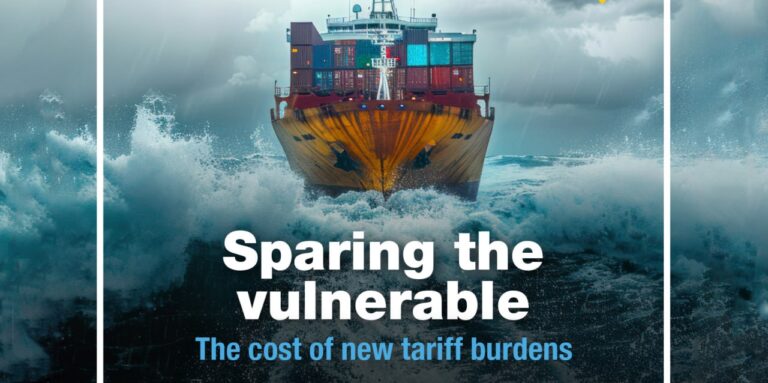
The world’s most vulnerable economies—least developed countries (LDCs), small island developing States (SIDS), and landlocked developing countries (LLDCs)—face mounting risks to their fragile export sectors as the United States prepares to implement sweeping new tariffs, according to a recent United Nations Conference on Trade and Development (UNCTAD) analysis.Despite accounting for 16.7% of the global population, these vulnerable economies contribute less than 2.7% of global exports, a share that has barely improved over the past decade. Their participation in world trade remains stubbornly low, even with longstanding provisions for special and differential treatment under international trade rules.The United States is a vital export market for many of these countries, yet their combined exports make up less than 0.5% of US imports and contribute just 0.3% to the US trade deficit. Still, under the new US tariff regime announced between January and May 2025, these economies could face some of the highest country-specific tariff rates—up to 50% for certain African and Asian LDCs.The new tariffs, currently on a 90-day pause until July 2025, would hit countries such as Lesotho (50%), Cambodia (49%), Madagascar (47%), and Mauritius (40%) especially hard. For many, these tariffs cover the bulk of their exports to the US, with only a small fraction—about 7% for LDCs—exempted from the new duties.Most exemptions focus on primary goods, such as minerals, textiles, and foodstuffs, but the majority of value-added products remain exposed. According to UNCTAD, only 1% of US imports exempted from tariffs in 2023 came from vulnerable economies.UNCTAD warns that higher tariffs could lead to a sharp decline in vital exports from these countries, undermining their economic growth and progress toward the UN Sustainable Development Goals (SDGs). The SDG target to double the share of LDCs’ global exports by 2020 has already been missed, and new trade barriers threaten to reverse even the modest gains made.The analysis highlights that the average US tariff on exports from LDCs could rise to nearly 44%, compared to just 7% on US exports to these countries. This imbalance could erode the competitiveness of dozens of vulnerable economies in key sectors such as textiles, machinery, and food products.
National unique ID codes now mandatory for all urban land parcels
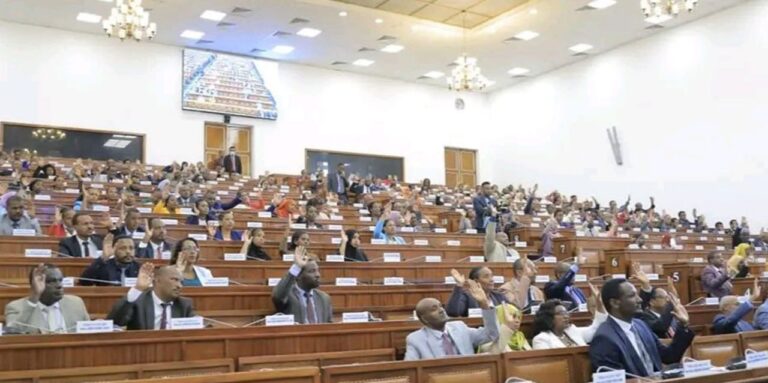
Ethiopia has enacted a new law requiring every urban landholding and immovable property to be assigned a unique, non-replicable national identification code. The Urban Landholding Registration Proclamation No. 1381/2017, recently approved by the House of Representatives, aims to modernize the country’s land management system and enhance the accuracy and legitimacy of land-related transactions.The proclamation, passed with a majority vote amid two opposing votes and three abstentions, establishes a single-account system designed to ensure correct registration of landholdings, confirm ownership rights, and reduce disputes. It mandates that no identification code other than the special land tenure identification code created under this law can be used for land registration purposes.A key feature of the law is its updated definition of “cadaster,” now described as a comprehensive system that collects and organizes detailed information on land tenure and immovable property. This includes physical attributes such as land dimensions, bordering boundaries, topography, and cadastral maps. The clarification addresses previous ambiguities between “cadaster” and “registration” processes.The proclamation requires that up-to-date information on land rights, restrictions, and responsibilities be maintained both on paper and through digital registration systems. This dual approach leverages technology to improve accessibility and efficiency in managing land tenure data.To ensure compliance, the law imposes strict penalties on officials or practitioners who deliberately obstruct or delay registration processes. Violators face imprisonment from six months to two years and fines ranging from 5,000 to 20,000 birr. This provision underscores the government’s commitment to enforcing accurate and timely land registration.Under the new law, once the possession verification authority confirms that submitted documents meet the necessary criteria, the registration institution’s records serve as legal proof of ownership unless contrary evidence emerges. Applications for certificates of tenure rights can be submitted in person or online, accompanied by supporting documents.The proclamation is expected to facilitate clearer land boundaries, reduce conflicts, and provide a reliable foundation for land administration, urban planning, and economic development.
Draft proclamation on foreign property ownership sparks concerns over rising house prices
A newly proposed draft proclamation aimed at regulating foreign ownership and occupation of real estate has ignited concerns that housing prices could soar further, worsening an already strained housing market and making homeownership increasingly difficult for local residents.The draft law, titled “Proclamation to Regulate the Ownership and Holding of Immovable Property by Foreign Nationals,” seeks to establish a legal framework allowing foreigners to own housing or acquire land for construction in the country. The government argues that the measure is necessary to meet growing housing demand and attract foreign investment to revitalize the real estate sector.Ethiopia has experienced rapid urbanization, population growth, and increased foreign investment in recent years. These trends, coupled with rural-to-urban migration and changing lifestyles, have fueled a surge in housing demand. Studies estimate that between 2015 and 2025, approximately 471,000 new homes are needed annually to bridge the housing gap.Currently, up to 64% of urban residents live in informal settlements due to the mismatch between housing supply and demand. The real estate market is expanding rapidly, with the total value projected to reach 47.4 billion birr by 2024 and expected to grow at an annual rate of 9.85% through 2028, reaching nearly 70 billion birr. Residential real estate transactions alone are forecasted to account for 36.89 billion birr in 2024.Globally, countries vary widely in how they regulate foreign ownership of land and property—some have liberalized policies, while others maintain strict controls. Ethiopia’s draft proclamation aims to strike a balance: encouraging foreign capital inflows without compromising the land ownership rights of its citizens.Under the proposed law, foreign investors—defined as individuals or entities owning at least $150,000 in paid-up capital of an investment—would be eligible to purchase real estate after obtaining permits from the Ministry of Urban Development and Construction. The minimum investment for purchasing or lease-to-own property is set at $150,000, with limits on the number of properties a foreigner can own to be determined by subsequent guidelines.Proponents view the draft proclamation as a vital step toward stimulating economic growth, expanding modern housing developments, and improving infrastructure such as electricity, water, security, health, and education. The Ethiopian Investment Board supports the initiative as a means to build investor confidence and maintain a positive investment climate.However, critics warn that allowing increased foreign ownership could drive up housing prices, further limiting affordability for Ethiopian citizens. Housing advocates urge the government to carefully monitor market dynamics and implement safeguards to prevent negative impacts on local residents’ cost of living.The draft proclamation is currently under review, with stakeholders calling for broad consultations to address public concerns and ensure that the law balances investment attraction with social equity.
