Thursday, October 15, 2026
Home Blog Page 45

​Ethiopia opens capital markets to everyday investors with CIS directive

0

The Ethiopian Capital Market Authority (ECMA) has announced that the Collective Investment Schemes (CIS) Directive has been officially registered and approved by the Ministry of Justice. Regulatory authorities describe this milestone as a pivotal shift that transitions the capital market from establishing foundational institutions to directly engaging everyday citizens through collective investment tools.

The Collective Investment Schemes Operations Directive No. 1150/2026 completes the legal framework governing mutual funds, money market funds, real estate investment funds (REITs), exchange-traded funds (ETFs), and other collective investment structures within the country.

The directive is issued pursuant to the Capital Market Proclamation No. 1248/2021, which established the ECMA as the sole regulatory body for the Ethiopian securities market.

In a statement announcing the registration of the directive, ECMA Director General Hana Tehelku noted, “This directive is a major step toward channeling Ethiopian savings into productive investments through professional management and robust investor protection.” She added, “It not only broadens accessibility to the capital market but also opens up opportunities for the general public to participate in the nation’s economic growth.”

As previously reported by Capital, when the framework was undergoing final legal review by the Ministry of Justice, Hana pointed out that the mechanism would allow “teachers, farmers, or small business owners to entrust their savings to licensed professional managers.”

The directive focuses on six types of collective investment schemes: money market funds, mutual funds, real estate investment funds, exchange-traded funds (ETFs), alternative investment funds, and special-purpose funds.

Key structural safeguards include provisions mandating that scheme assets be held by an independent custodian separate from the manager, alongside rules requiring continuous reporting to investors.

The governance requirements within the directive reflect international best practices tailored to Ethiopia’s local context. Board members of scheme managers must possess core competencies in fund management, financial services, law, auditing, risk management, and regulatory compliance. Furthermore, independence requirements prohibit close affiliations with entities that could pose conflicts of interest.

Authorities expect the collective investment framework to bridge existing gaps by creating accessible investment instruments that do not require individuals to directly navigate the securities market. The inclusion of real estate investment funds—similar to REIT structures found in other markets—will enable investors to participate in large-scale property developments while providing developers with expanded sources of capital. Money market funds will likewise offer savers flexible alternatives beyond traditional bank deposits.

The Authority stated that it will regulate registered schemes and their service providers, affirming its readiness to collaborate with managers, custodians, investors, and other stakeholders to build a trusted collective investment market.
New Djibouti fuel terminal plans to move Ethiopia’s fuel by train

0

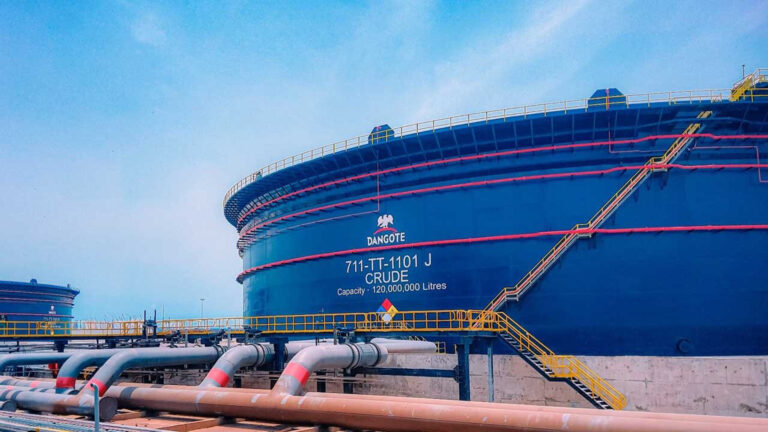
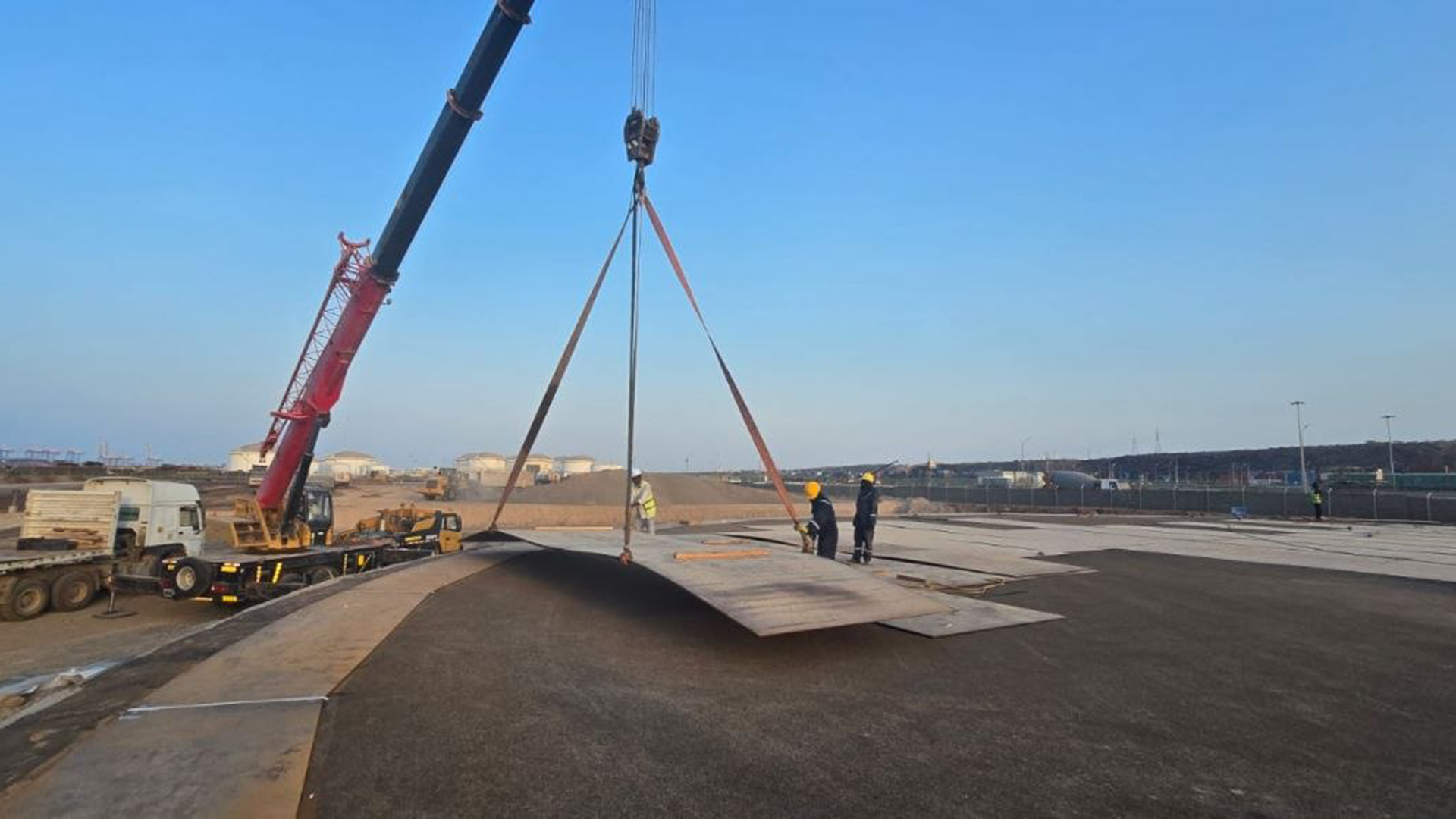
Steel tanks are rising at Djibouti’s Doraleh Multipurpose Port. If ATLS’s plan succeeds, the terminal will do more than store fuel: it will load it directly onto trains bound for Ethiopia. That would mark a first for fuel imports into Ethiopia and give the heavily road-dependent fuel corridor a new way to move large volumes inland. The prospect is fewer tanker journeys on suitable routes and a closer link between ships, storage and rail. Whether it delivers those gains will depend on the railway connection and the way the system is run.

The African Terminal & Logistics Services (ATLS) project is designed as a petroleum storage and distribution hub connecting maritime imports with Ethiopia’s road and railway networks. Its first phase is expected to provide 288,000 cubic metres of storage and be commissioned by June 2027. Longer term, planned capacity could reach about 750,000 cubic metres.

Ethiopia imports much of its petroleum through Djibouti, and fuel has to be stored, loaded and moved inland before it reaches businesses and households. The route remains heavily dependent on tanker trucks. Roughly 350 trucks reportedly carry fuel from the Horizon Djibouti Terminal to Ethiopia each day, while congestion, border procedures, truck availability and shipping delays can all affect supply.

More storage can help ease that pressure. Operators can receive fuel from vessels, hold it near the port and dispatch it when demand or transport capacity allows. That separates ship arrivals from the immediate availability of trucks or rail wagons, giving the supply chain more room to respond to disruption and changing demand.

The added tank capacity could also give Ethiopia more room to build and maintain fuel safety stocks close to its main maritime gateway. These reserves would provide a buffer against shipping delays or short-term supply disruptions, strengthening national energy security while allowing imports to be stored before dispatch inland.

ATLS’s planned train-loading arms are the project’s most distinctive feature. They are intended to speed loading and handle more railway wagons, allowing fuel to move from the terminal onto the Ethio-Djibouti Railway. Direct rail loading would be new for ATLS and could open a practical route for carrying petroleum inland in bulk.

For long-distance movements, rail can carry volumes that would otherwise require many tanker truck journeys. Shifting some suitable traffic to trains could reduce pressure on the road corridor and make fuel dispatch more efficient. It would also give Ethiopia another way to move fuel when truck capacity is tight. The scale of any benefit will depend on reliable service, wagon availability and coordination across the route.

That connection is not automatic. The railway was built to provide a faster link between Djibouti’s ports and Ethiopia’s inland markets, but port access and loading infrastructure have limited its role in moving fuel. In February 2026, the Ethio-Djibouti Joint Railway Commission agreed to accelerate links to Doraleh and the Horizon terminal.

Trains will not replace trucks. Ethiopia’s markets are spread across a large territory, and many destinations are beyond the railway network. ATLS is therefore also installing several truck-loading stations so tankers can be loaded in parallel. Rail can serve high-volume destinations while trucks continue to reach places the railway cannot.

The two modes could give operators more flexibility when one route is disrupted or demand changes. But the terminal’s performance will depend on how well it coordinates vessel arrivals, storage, loading bays, train wagons, tanker trucks and border procedures. Storage capacity only becomes useful when fuel can move through each of those steps without avoidable delays.

For Djibouti, ATLS could bring more port activity and demand for logistics services. For Ethiopia, it could add storage and a rail option to a fuel-import route that is now dominated by road transport. Together, those links could strengthen the corridor’s ability to handle large volumes and respond to supply pressure.

The project will not by itself resolve every challenge in the fuel chain. Procurement, foreign-exchange availability, road conditions, railway performance and coordination between agencies will continue to influence the cost and reliability of deliveries.

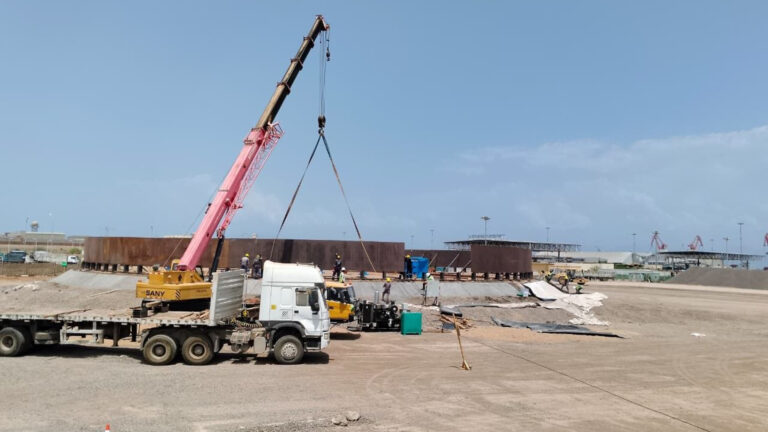
Construction has moved the project from plans to physical work. If the first phase is commissioned as scheduled in June 2027, ATLS will be tested on whether it can turn new storage and rail-loading capacity into dependable fuel movement. The first trains will matter for more than the terminal: they will show whether Djibouti’s port and Ethiopia’s inland supply chain can work as one system.

Gadaa Bank deposit portfolio expands 68% to surpass birr 11.89 billion

0

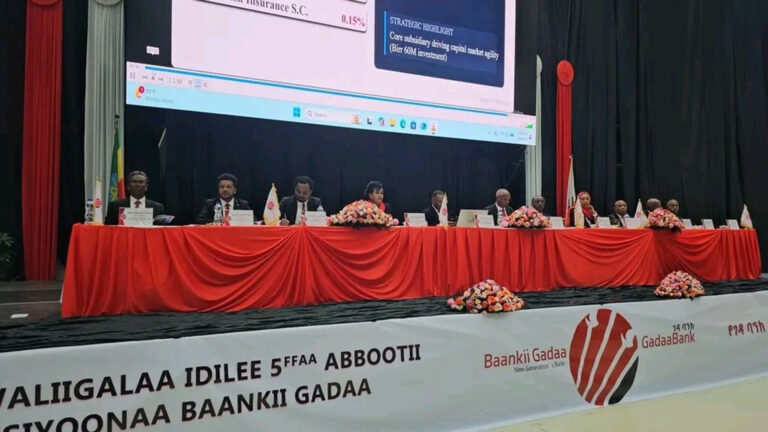
Gadaa Bank S.C., one of the youngest financial institutions, has announced that its total deposit portfolio grew by 68% compared to the previous year, reaching Birr 11.89 billion for the 2025/26 fiscal year.

Alongside this surging deposit accumulation, Gadaa Bank’s total assets expanded by 66% to reach Birr 16.79 billion as of June 30, 2026, up significantly from Birr 10.14 billion in the prior period. Gross revenue likewise climbed by 77% to reach Birr 2.96 billion.

According to the bank’s official report, pre-tax profit surged by over 135% to hit Birr 1.05 billion, up from Birr 444.8 million the previous year. Net profit after tax subsequently reached Birr 759.23 million.

Board Chairman Hassan Hussen noted that this stellar growth was driven by diversified revenue streams, effective foreign exchange management—generating USD 85.1 million—and high transaction volumes across various digital banking channels.

The Board Chairman added that the bank’s loans, advances, and interest-free financing portfolios advanced to Birr 6.11 billion, while the Non-Performing Loan (NPL) ratio remained exceptionally tight and well below regulatory ceilings at just 0.7%.

This liquidity and financial growth has been accelerated by Gadaa Bank’s rapid customer acquisition and branch network expansion. The institution officially crossed the milestone of one million customers, bringing its total account holder base to over 1 million.

During the fiscal year, the bank’s total capital reached Birr 2.77 billion, with paid-up capital standing at Birr 1.65 billion, maintaining a healthy capital adequacy ratio of 12.3%.

East Africa’s $16 billion oil refinery to break ground in Lamu next week

0

Construction of the landmark East Africa Refinery in Lamu is set to begin next Wednesday, Deputy President Kithure Kindiki has announced. Backed by Nigerian billionaire Aliko Dangote, the Sh2.2 trillion ($15.5–$16 billion) project is poised to become the region’s largest oil refinery and one of the most significant private-sector investments in Kenya’s history.

President William Ruto is expected to lead the official groundbreaking ceremony, joined by invited heads of state and government from across East Africa.

Following a final preparation meeting in Karen, Kindiki emphasized that the refinery will accelerate industrialization, generate up to 60,000 direct and indirect jobs, and invigorate the coastal economy.

“The strategic prize for Kenya is shifting the country from being predominantly a fuel importer to becoming a regional processing and distribution hub,” Kindiki stated.

Lamu was chosen for its strategic logistics network, leveraging the deep-water berths of Lamu Port and the LAPSSET corridor. This infrastructure grants the facility vital access to landlocked markets across East Africa.

Dangote has offered regional states a combined 30% equity stake, with Kenya weighing a 10% stake worth about $500 million. Ethiopia and Rwanda have also expressed interest in the venture, which utilizes a 30% equity and 70% debt financing model.

Project costs were recently revised downward due to efficiencies gained from Dangote’s mega-refinery project in Lagos, streamlined construction timelines, and favorable financing structures.

Upon completion, the facility will supply refined petroleum products to Kenya, Uganda, Tanzania, South Sudan, and Ethiopia, helping alleviate Kenya’s massive petroleum import expenditure.

Despite its immense economic promise, the project faces hurdles. Kenya lacks commercial-scale crude production, and critical regional infrastructure—including oil storage terminals along the LAPSSET corridor—remains largely undeveloped.