Thursday, November 26, 2026
Home Blog Page 459

Addis Ababa Emerges as the Frontier for Africa’s New Digital Trade Era

0

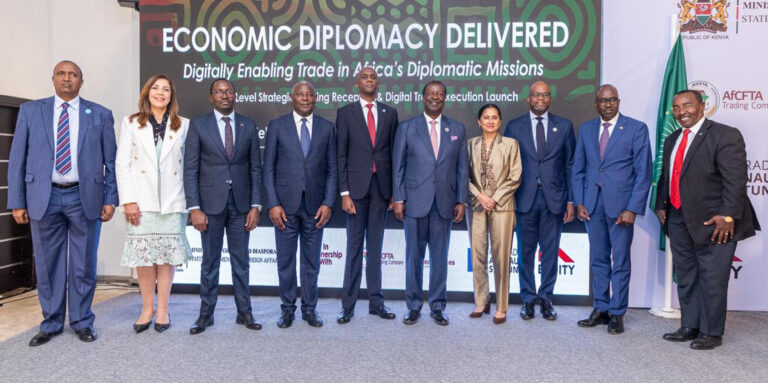
On the eve of the 39th African Union (AU) Summit, Kenya officially launched two innovative digital trade platforms—BiasharaLink and Deal House—in Addis Ababa. These platforms are designed to transform the continent’s vast network of diplomatic missions into active engines for economic growth. The launch, held during a high-level reception in Addis Ababa, marks a significant milestone that reinforces Ethiopia’s central role in African integration and its growing leadership within the African Continental Free Trade Area (AfCFTA).

For decades, embassies have primarily served as hubs for political and consular affairs. However, the introduction of BiasharaLink and Deal House aims to fundamentally shift this traditional role. Developed by Real Sources Africa, these interconnected platforms are designed to turn more than 1,000 diplomatic missions across the continent into “trade facilitation hubs,” according to reports obtained by Capital Newspaper.

Musalia Mudavadi (PhD), Kenya’s Prime Cabinet Secretary and Cabinet Secretary for Foreign and Diaspora Affairs, stated “BiasharaLink and Deal House represent a new, results-oriented model of economic diplomacy. They create a common platform to capture and organize opportunities, turning diplomacy into action.”

For Ethiopia, hosting this launch carries profound meaning beyond symbolism. As the headquarters of the African Union and the UN Economic Commission for Africa (UNECA), Addis Ababa is the natural stage for initiatives translating the ambitious goals of “Agenda 2063: The Africa We Want” into tangible commercial growth.

The primary challenge facing the AfCFTA is not a lack of demand, but a persistent “execution gap.” While diplomatic missions receive thousands of trade inquiries monthly—estimated at 3,500 for Kenyan missions alone—the historical rate of closing actual deals has remained below 1%.

At a time of global supply chain disruptions and rising protectionism, the message from the Addis Ababa launch was one of self-reliance. Wamkele Mene, Secretary-General of the AfCFTA, noted that Africa has no choice but to build a robust internal market.

Echoing this sentiment, Mathias Kamp of the Konrad-Adenauer-Stiftung remarked that five years after its inception, much of the AfCFTA’s potential remains untapped, calling the launch of these digital platforms “a major step toward unlocking trade.”

James Mwangi, CEO of Equity Group Holdings (which maintains a representative office in Ethiopia), described the initiative as a “Trade Superhighway.” By converting inquiries into “bankable and tractable deals,” these platforms provide the daily tools needed to move beyond policy frameworks toward real job creation and market integration.

The synergy between Kenya’s digital platforms and Ethiopia’s economic reforms is clear. As Ethiopia moves toward WTO accession – targeted for completion in 2026, initiatives like BiasharaLink provide the technological support needed to integrate Ethiopian Small and Medium Enterprises (SMEs) into the broader African value chain.

The new platforms place a special focus on empowering SMEs and women-led businesses, groups that have historically faced significant barriers to cross-border trade. By digitizing trade processes and creating direct links to verified demand, Real Sources Africa and its partners are reducing the hurdles Ethiopian producers face in reaching neighbors in Kenya, Djibouti, and beyond.
Ethiopia Identified as Primary Beneficiary of New Africa-India Strategic Partnership

0

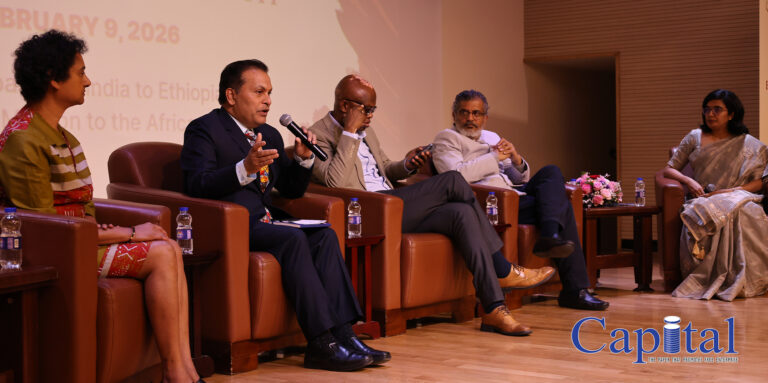
It has been announced that Ethiopia is set to play a pivotal role within the new South-South cooperation framework. A new report titled “The Africa-India Blueprint for Growth,” released in early February 2026, has charted a visionary path for collaboration centered on economic and human capital development.

The report highlights that Ethiopia’s historical and growing influence underscores its global strategic importance within this partnership. Ethiopia’s active participation in Regional Economic Communities (RECs) was a focal point of the report.

Specifically, its leadership within the IGAD and its efforts toward regional connectivity are seen as vital for aligning Indian infrastructure investments with the African Continental Free Trade Area (AfCFTA).

The report was jointly prepared by the Embassy of India in Ethiopia, the Centre for Social and Economic Progress (CSEP), and the African Union Development Agency (AUDA-NEPAD), and was recently inaugurated.

While Indian investment in Ethiopia has traditionally focused on transport, logistics, and digital infrastructure, the priority has now shifted toward “FDI Leadership.”

This transition aims to move beyond merely building projects toward creating sustainable partnerships focused on indigenous knowledge and technology transfer. This approach will allow Ethiopia to leverage India’s extensive infrastructure experience and “Frugal Innovation” to meet its own developmental needs.

One of the most promising areas of cooperation is the green energy transition. The report indicates that Ethiopia’s power goals can be supported by India’s renewable energy expertise and integrated energy planning. Notably, India possesses technical modeling capabilities specifically suited to the realities of East Africa.

Furthermore, Ethiopia has the opportunity to participate in joint mineral processing and battery manufacturing. The document recommends creating “Regional Value Chains” where minerals produced in one country can be processed in another, such as Ethiopia, and supplied to the continental market duty-free. This strategy enables Ethiopia to add value to its resources rather than exporting raw minerals.

The digital sector marks a new chapter in Ethiopia-India relations. Ethiopia’s large youth population and its digital transformation journey align perfectly with India’s Digital Public Infrastructure (DPI) experience.

Successful Indian models such as UPI (Unified Payments Interface) and Digital ID were presented as financial inclusion frameworks that Ethiopia could adapt to its context. Additionally, the report explained that the experience of Indian telecom giants like Bharti Airtel in Africa could pave the way for Ethiopia to encourage its own tech entrepreneurs and reduce the cost of service delivery for citizens.

As Ethiopia is projected to become one of the world’s largest contributors to the global workforce by 2040, the report emphasized a focus on Education and Technical and Vocational Education and Training (TVET).

The activities of Indian higher education institutions, such as IIT Madras, in East Africa serve as a model for Ethiopia. The report recommends that India increase its Technical and Economic Cooperation (ITEC) training slots for Africa to 10,000, with a specific focus on women and STEM (Science, Technology, Engineering, and Mathematics) fields.

CSO Authority Targets Corporate Social Responsibility as New Funding Frontier

0

The Authority for Civil Society Organizations (ACSO) has announced a strategic shift toward Corporate Social Responsibility (CSR) and domestic resource mobilization as primary funding sources for Ethiopia’s civil society sector.

The move comes at a pivotal time, as Civil Society Organizations (CSOs) seek to transition from heavy reliance on foreign aid toward a more sustainable, self-reliant model grounded in domestic support — particularly from Ethiopia’s expanding private sector and local communities.

For decades, CSOs in Ethiopia have depended largely on international donors. However, evolving global dynamics and domestic economic changes have exposed the vulnerability of that model.

According to Fassikaw Molla, Deputy Director General of ACSO, foreign assistance remains important but can no longer serve as the sole pillar of the sector’s survival.

“We do not believe the civil society sector can shoulder its significant national responsibilities through foreign donations alone,” Fassikaw told Capital. “The global context is changing. True sustainability comes from looking inward — leveraging local capacity, mobilizing domestic resources, and engaging our business community strategically.”

To that end, the Authority is collaborating with the Ethiopian Policy Studies Institute on a comprehensive study to assess the country’s CSR potential. The research will examine how major corporations in sectors such as telecommunications, banking, mining, and manufacturing can systematically allocate a portion of their profits to social development initiatives through CSOs.

Currently, many Ethiopian companies engage in charitable activities, but these efforts are often fragmented and uncoordinated. ACSO aims to establish a structured legal and policy framework that formalizes relationships between businesses and civil society organizations. Under the proposed approach, companies investing in community projects through CSOs could benefit from tax incentives or public recognition.

Terefe Degeti, Executive Director of the Council of Ethiopian Civil Society Organizations, emphasized that Ethiopia’s growing private sector has the capacity to assume greater social responsibility.

“We have profitable banks, expanding factories, and mining companies extracting high-value resources,” he said. “As these entities operate within communities, they must also demonstrate commitment to those communities.”

He noted that even a small fraction — as little as 0.01 percent of profits from large companies — could generate substantial funding for organizations supporting the elderly, children, and other vulnerable groups.

A central pillar of the Authority’s new financial strategy is “localization.” ACSO is advocating for decision-making, leadership, and fund management to be decentralized to the community level. In line with this vision, the government is reviewing amendments to the existing Civil Society Organizations Proclamation to remove regulatory barriers that limit CSOs’ ability to generate their own income.

Under the proposed reforms, CSOs would be encouraged to operate as social enterprises — generating revenue through the sale of goods and services to fund their missions while maintaining their social objectives.

The Authority stressed that this shift toward self-reliance does not signal a rejection of international partnerships. Rather, financial independence would enable CSOs to engage foreign donors as strategic partners instead of dependent recipients.

“We must practice what we preach,” Terefe said. “To earn the trust of Ethiopian investors and local philanthropists, we must demonstrate full transparency and accountability. We are strengthening our internal codes of conduct and oversight systems to ensure that every birr raised domestically makes a tangible impact.”

The new initiatives were announced during a press conference ahead of the 5th National Civil Society Organizations Week, scheduled to take place from March 5–7, 2026.

Held under the theme “Self-Sufficiency for Sustainable Peace and Inclusive Development,” the event will serve as a platform to advance the localization and CSR agenda. It will feature panel discussions on the role of CSOs in the upcoming national elections, as well as exhibitions highlighting successful domestic fundraising models.

More than 100 organizations are expected to participate. In a departure from previous years, the event will also welcome representatives from various regional networks and the National Federation of Public Benefit Organizations of Kenya, who will share experiences with their Ethiopian counterparts.

As Ethiopia’s civil society sector redefines its financial foundation, the coming years may determine whether domestic resource mobilization can indeed become a durable pillar of sustainable development.

ESL Reissues Tender for Six Vessels, Turns to Brokers and Seeks CBE Financing

0

Ethiopian Shipping and Logistics (ESL) has re-launched its tender to acquire six vessels, introducing notable changes to both its procurement model and financing structure as it accelerates fleet expansion plans.

The state-owned logistics operator revised its acquisition strategy after encountering delays in securing medium-sized vessels, including container ships. Under the new approach, ESL will procure second-hand vessels through international shipbrokers, while new-build vessels will be sourced through a separate competitive tender with shipyards.

ESL Chief Executive Officer Abdulber Shemsu told Capital that the company’s board approved the revised strategy to expedite the process.

“We have floated a bid to secure brokerage services,” Abdulber said. “The board recognizes that second-hand vessel procurement is best handled through professional shipbrokers, so we have invited qualified brokers to identify suitable ships. For brand-new vessels, we will proceed through a distinct tender process directly with shipbuilders.”

Alongside the procurement adjustment, ESL is restructuring its financing plan. The company is in discussions with the state-owned Commercial Bank of Ethiopia (CBE) to finance half of the total acquisition cost.

“We are under discussion with CBE to secure 50 percent of the financing,” Abdulber confirmed, adding that earlier talks with two private banks have been deprioritized. The remaining portion is expected to be covered through internal resources and credit arrangements.

Previously, ESL had planned to finance 30 percent of the cost of five vessels through bank loans, with the balance funded internally. The revised plan signals a broader recalibration of the company’s financial strategy.

ESL currently operates ten international vessels, including the Ultramax carrier Abay II. Under its five-year strategic plan, the company aims to expand its fleet to 16 vessels. The new acquisition package includes two new heavy-lift Ultramax multipurpose (MPP) vessels, one medium-sized second-hand container vessel, and three second-hand Ultramax bulk carriers.

In its Expression of Interest for brokerage services, ESL specified that the container vessel should have a capacity of 3,000 to 5,000 TEU and be no more than ten years old.

The company also adjusted its earlier plan to acquire two container ships, opting instead to increase the number of second-hand Ultramax MPP vessels to three. The bulk carriers sought must have a deadweight tonnage of 60,000 to 65,000 and be no older than eight years.

For the construction of the two new heavy-lift MPP Ultramax vessels — each with a capacity of 60,000 to 65,000 metric tons — ESL has introduced a two-stage bidding process.

Shipbuilders will first submit detailed technical proposals and specifications. ESL will then shortlist candidates and proceed with final selection. Construction of the new vessels is expected to take at least two years following contract award.

Delivery of the four second-hand vessels, however, is anticipated in the near term once brokers identify ships meeting ESL’s criteria.

Payment structures will also differ: new-build vessels will be financed through milestone-based installment payments, while second-hand acquisitions will be settled upon completion of each transaction.

The revised procurement and financing framework reflects ESL’s effort to modernize its fleet more efficiently while navigating capital constraints and market conditions. If executed as planned, the strategy will significantly enhance the national carrier’s capacity and competitiveness in international shipping.