Thursday, November 26, 2026
Home Blog Page 517

Beyond Connectivity: Why Ethiopia’s Digital Future Demands Reform, Investment, and Inclusion?

0

Addis Ababa, 2025, December- Ethiopia has gone through several phases in its pursuit of a digital economy, which started as a far-off dream, and has become the main focus of its national development agenda. This pivotal point was the center of the recent ARDA TALK Series, held by the Institute of Foreign Affairs (IFA), where government representatives, diplomats, regulators, and the heads of the private sector were gathered. However, the discussion, led by the Safaricom Telecommunications Ethiopia PLC CEO Mr. Wim Vanhelleputte, did not stop at discussing infrastructure but deconstructed the politics economy of digital transformation, highlighting that only by including policies, predictable regulation and long-term partnerships, can one truly move forward.

A Foundational Shift: From Luxury to Lifeline.

The discussion was put within the context of the ambitious Digital Ethiopia 2030 strategy, which proposes that technology can be used to drive inclusive development and better governance. There was an agreement that digital connectivity should be considered as a basic national infrastructure- just like roads, electricity and water. Respondents held that until there is fair access, the process of modernizing the economy and improving services to the people will still be held at the basic level, which will leave millions behind.

Liberalization: Not Just a Market Reform.

The core of this change is the historic liberalization of the telecommunications industry that has ended a state monopoly. This action is a radical change of governance, now the state is no longer the exclusive provider, but the regulator and strategic partner. Mr. Vanhelleputte admitted the favorable regulatory direction, but emphasized that the investor confidence in the long-run is based on predictability and consistency of the policy rather than incentives in the short-term. The argument presented Ethiopia opening telecom as a vital case study on a balance of public interest against the dynamics of the private-sector.

Safaricom Ethiopia: Embedding for the Long Haul

The actual result of this reform is the entry of Safaricom Ethiopia. Its commitment to invest USD 3 billion since October 2022 and intending to invest the same amount is a sign that it believes in the potential of Ethiopia. Its influence is not only on capital: it has created more than 20,000 indirect jobs, and it has focused on local capacity building by means of skills transfer. This makes Safaricom not a short-term player, but a deep, long-term investor in the digital ecosystem of Ethiopia.

Building Out the Network: Geography, Green Power, and Growth

Safaricom is operationally reporting a network cover of approximately half of its intended coverage with a promise of doubling the infrastructure and the availability. It is tremendous to cover a large and rough territory of Ethiopia. Nonetheless, the participants found one distinctive strategic strength, the renewable, green energy grid that is predominant in Ethiopia. This digitalization development and sustainable power fit is a way of ensuring climate-conscious telecom development, transforming an environmental promise into an operational resource.The

Seven Pillars of an Inclusive Digital Ecosystem

A key contribution of the forum was Mr. Vanhelleputte’s outline of seven interdependent building blocks for a resilient digital future:

1.  Infrastructure: Nationwide network expansion is the bedrock, requiring extension beyond major cities to prevent entrenched regional disparities.

2.  Device Access: Connectivity is meaningless without affordable smartphones and tools, necessitating initiatives like local assembly to bridge the access gap.

3.  Reliable Power: The entire digital ecosystem rests on stable electricity; extending Ethiopia’s green energy reliability to underserved areas is crucial.

4.  Digital ID: A secure, functional national identification system is a cornerstone for accessing services, building trust, and enabling scalability.

5.  Platforms & Services: E-government, digital marketplaces, and health/education platforms must translate connectivity into tangible social and economic value.

6.  Digital Finance: Inclusive payment systems are vital to unlock connectivity’s economic potential, enabling e-commerce and access to credit.

7.  Digital Literacy: Ultimately, investment in human capital—from basic skills to advanced expertise—determines whether digital transformation empowers or excludes.

The 30-Year Horizon: Patience for Promise

Reflecting a deep commitment, Safaricom Ethiopia articulated a 30-year investment horizon, with profitability expected only after seven to eight years. This patient-capital model aligns with Ethiopia’s long-term development vision. With a population surpassing 120 million, Ethiopia is consistently viewed as one of Africa’s most promising digital markets, poised for a potential fivefold sector growth—if reforms stay the course.

Conclusion: The Crossroads of Transformation

The ARDA TALK Series underscored that Ethiopia’s digital transformation is less a technological challenge and more a test of policy, institution-building, and governance. Telecommunications sit at the nexus of reform, investment, and social inclusion.

Safaricom’s experience demonstrates how private investment, aligned with national strategy, can drive inclusive connectivity and skills development. Yet, the forum reaffirmed that sustained collaboration between government, private sector, and civil society is non-negotiable.

As Ethiopia stands at this pivotal juncture, today’s choices on regulation, investment, and partnership will determine whether its digital future becomes a powerful engine for inclusive growth or a new axis of inequality. Through such focused dialogue, the path forward is being charted, one reform at a time.

Tesfaye Bezabih, PhD works at the Institute of Foreign Affairs
Ultimatum in Market and Political Negotiations

0

Take it or leave it describes a common expression in negotiations signalling no further concessions. It’s often used to signal a firm stance, like “this is my final offer” or “no compromises.” It can sound a bit stretched, decision and even a little defiant. But it is a phrase that carries a lot of weight because for better or worse it clearly asserts no hesitation, no half-measures, this is a go no go situation either to accept or to walk away free.

Sometimes there is no condition for a plea, nor a compromise. It is a declaration of self or an expression to say ‘I stand by my word’ either you take with this or leave. No further decline. More often than not, this is a term used in market where the seller or the buyer reach the limit in bargain offering their last price depending on their own consideration of adjacent factors.

Come what may, it is asharp, defiant edge for no more limit. It functions like “this is my final offer,” so accept or walk away. This asserts a firm position, often used by negotiator who once reached the limit of bargaining without room for decline.  It strips away further negotiation asserting one’s values or choices without room for undue argument that waste time.

Nonetheless, in bustling markets, sellers often quote a price first, but if you turn away or reject it outright, Sellers often may pivot you by inviting your counteroffer under a “free market” banner, to keep the negotiation alive probing via “What’s your offer?” or “How much in mind?” This shifts onus to you, and it helps them to extract information on your budget, flexibility, and walk-away point without yielding ground. This tactic underscores the “free market” ethos, where bargaining is expected and no single quote is final until agreed upon. So they probe your perceived value and testing your walk-away point without conceding ground.

This tactic extracts key information about your budget ceiling, urgency, and flexibility and through open questions like “What’s your offer?” It reveals asymmetries: if you’re eager to buy, they hold leverage; if not, they recalibrate subtly.

That is the usual scenario in a classic market negotiation dynamic where the sellers use open-ended questions to uncover the buyer’s constraints and priorities to use all the means and triangulate advantageous position to themselves. They’re not just fishing for a number alone but are probing for signals about willingness to compromise, and the buyer’s psychological position.

The general asymmetry open a business game play in the form of negotiation. If the buyer needs the product quickly, the seller gains leverage to push higher prices or stricter terms. If the buyer shows openness to alternatives, the seller can recalibrate and perhaps may offer different bundles, payment terms, or delivery options. But if the sellers reach the maximum limit or once revealed, the maximum stretch point it boils down to take it or leave it.

This dynamic shows why negotiation is often compared to a game theory scenario: each move shifts leverage, and the final equilibrium depends on who blinks first when limits are exposed. Once sellers or buyer hit their maximum stretch point, the game simplifies to “take it or leave it” stripping away further concessions and forcing a binary choice. This resets business, protection on the part of sellers and buyers budget limits where the bottom line of boundary amid revealed limits arrest situations.

Negotiation hinges on information asymmetry, where the both urgency or flexibility tilts the balance towards  the two parties  balanced objectives and advantages.

In any case “Take it or leave it” signal is the end of concessions in negotiations, marking a firm “final offer” with a defiant edge that demands acceptance or departure. This phrase asserts unyielding commitment, no pleas, no compromises, or no further declines but just creating a go/no-go binary rooted for two parties solutions based on existential limits and values.

Negotiation pushes parties to the brink, where compromise or concession yields a peaceful resolution, resetting boundaries to halt wasteful debate ensuring agreements align with core interests without creating endless tension. The core mechanics of negotiation is a dance of asymmetry, shifting leverage, and the eventual crystallization into a binary rooted choice. Generally a final offer signals the end of bargaining.

Strategic Implication of negotiation is a power move that asserts control, which closes the door on further concessions, and tests the two party’s interest for amicable settlement of issues. Generally in business it is between the two parties free will  but in politics it may involve third party as mediator or adjudicators.

There is a sharp distinction between business negotiation and political negotiation. . In business it is between the two parties liberty but a political negotiations often require mediators, adjudicators, or arbitrators often intervene, balancing power amid broader stakes to break stalemates. In political negotiation, there is a need to transform the boundary into a workable compromise. However, in both domains, the “take it and leave it” stance is a test of resilience and priorities.

This shows how negotiation is not just transactional but deeply contextual — shaped by whether it’s a matter of private agreement or public governance. Settlement depends on mutual interest — if both parties see value, they agree; if not, the deal collapses.

The dual lens of negotiation include private bargaining versus public governance — this is  a way to frame and  highlights the contrast between two parties act on free will and negotiations that  often involve mediators, adjudicators, or arbitrators and  deals with  stakes that extend beyond economics to ideology, values, and public interest. Just because negotiation is not a single‑dimension process but contextually shaped in markets in business transaction and in politics it is a matter that go beyond economic system.

Business thrives on bilateral free will where parties negotiate directly through probes and ultimatums like “take it or leave it,” reaching resolutions via mutual autonomy. Politics requires balancing broader stakes—to forge compromises, transforming rigid positions into workable agreements amid public scrutiny and long-term implications.

From this one can easily deduct this contrast which highlights negotiation’s adaptability: in private spheres which favours swift, self-determined binaries whereas a public ones prioritize facilitated equilibrium to sustain fragile peace.

Negotiation’s core theme unfolds across two spheres: private business autonomy versus public political mediation. Both test resilience and mutual value, but private paths prioritize binary speed while public ones layer facilitation for enduring peace.

Yet, for better or worse, through all these negotiation, the subtle but very real dimension of negotiation: may unfold unfulfilled promises which linger like cracks beneath the surface. Theses unfulfilled promises may trigger tension among negotiating parties. Agreements may look solid on paper, but unmet expectations can resurface to cause latent tension. Unfulfilled promises often linger, seeding tension between parties despite apparent resolutions. Broken commitments—whether implied bundles in markets or vague diplomatic assurances—erode trust, as one side perceives exploitation of revealed asymmetries or stretch points.

This may sparks walkaways or disputes over “final offers”; in politics, it escalates to stalemates, demanding renewed mediation to salvage equilibrium. Clear documentation of terms post-ultimatum preserves free will in private deals and accountability in public ones, transforming potential friction into sustained mutual value.

Concerns rise over Ethiopian Orthodox Church’s commitment to Deir es-Sultan Monastery

0

Diplomatic staff in Tel Aviv and members of Israel’s Knesset have voiced concerns about the Ethiopian Orthodox Tewahedo Church (EOTC) and its perceived lack of commitment to addressing the longstanding issues surrounding the Deir es-Sultan Monastery in Jerusalem.

The EOTC oversees several religious sites in the Holy Land, including locations in Jerusalem and surrounding areas under both Israeli and Palestinian administration, many of which are situated in areas of significant religious importance.

However, Deir es-Sultan is particularly noteworthy due to its historical significance. Ethiopia claims ownership of this site in the Old City of Jerusalem, a claim that dates back nearly three millennia to the time of King Solomon.

Monks, monastery leaders, and local tour guides emphasize that the monastery—perched atop the Church of the Holy Sepulchre at Golgotha, the site of Jesus Christ’s crucifixion and near his resurrection—serves as a major destination for pilgrims and tourists.

Scholars highlight that the Ethiopian presence in Jerusalem has faced challenges in the modern era, especially during the “Era of the Princes,” a century characterized by decentralized rule that lasted until Emperor Tewodros II unified power in 1855.

During this period, Ethiopian monks and nuns encountered repeated attempts by Egyptian Copts to gain control of the site, which Ethiopia asserts has been under its stewardship since the time of the biblical Queen of Sheba.

Ethiopia maintains that the location served as the encampment for Makida, the Queen of Sheba’s retinue, during her visit to King Solomon.

It was later recognized as an Ethiopian site and eventually transformed into a monastery of what became the state church—the Ethiopian Orthodox Tewahedo Church.

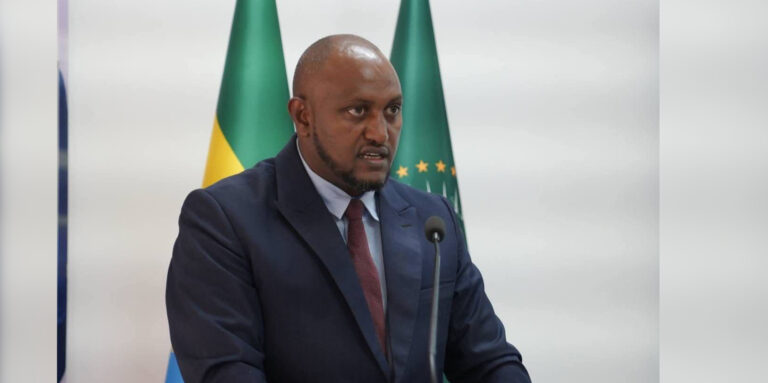
Ethiopian Ambassador to Israel Tesfaye Yetayew explained that despite historical evidence supporting Ethiopia’s claim to the site for 3,000 years, the dispute remains unresolved. He noted that the conflict escalated in the modern era, particularly as Ethiopia’s central government weakened due to internal power struggles.

While the EOTC manages around seven monasteries and churches in Jerusalem, Bethlehem, and near Jericho’s River Jordan, the contested monastery at Golgotha remains the most sensitive issue.

Tesfaye pointed out that Israel enforces a law known as the “Status Quo,” established during the Ottoman period, which regulates relations among religious communities at holy sites.

“Although the monastery is administered by the EOTC, there are competing interests, and the Israeli administration prefers to maintain the Ottoman-era status quo,” he stated. The Ottoman Empire was the last long-standing governing authority in the region before the British Mandate took control after World War I.

“Currently, Ethiopia holds services at two churches within the complex—Holy Saviour and St. Michael—but undertaking renovations or obtaining basic municipal services like water and electricity is challenging under the Status Quo. Ethiopia does not possess a formal title deed due to this arrangement,” Tesfaye told journalists in Tel Aviv.

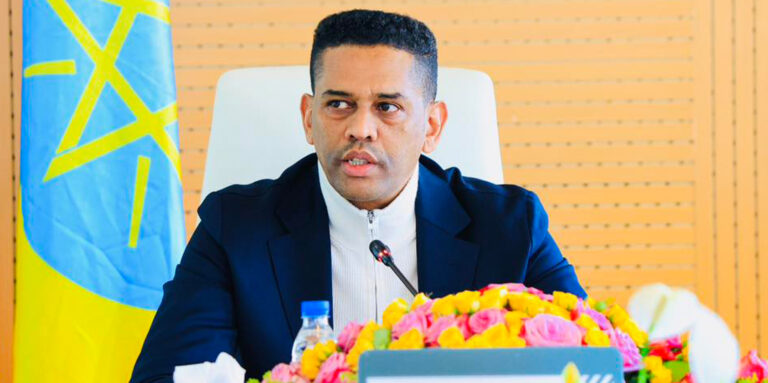
He noted a recent improvement: a house that was damaged by a fallen tree has been repaired. “During his visit to Israel in March, Foreign Minister Gedion Timotheos visited the monastery and spoke with the monks, who described their harsh living conditions. Our Foreign Minister raised the issue with his Israeli counterpart, Gideon Sa’ar, which led to the repair,” the Ambassador added.

“This case has persisted for nearly three centuries, but we remain hopeful for gradual progress,” he added.

He also highlighted the vibrancy and impressiveness of Ethiopian religious ceremonies and holiday events in Jerusalem, which should prompt authorities to offer better support to the monks. However, he expressed disappointment that the leadership of the Ethiopian Orthodox Tewahedo Church (EOTC) is not pursuing the matter with sufficient urgency.

A recent opportunity arose when Israeli Foreign Minister Gideon Sa’ar visited Addis Ababa. “The Israeli Foreign Minister met with the EOTC Synod, but the church leadership did not raise the issue,” Tesfaye stated.

Nonetheless, he assured that the Ethiopian diplomatic mission is actively working to safeguard Ethiopia’s interests regarding the monastery.

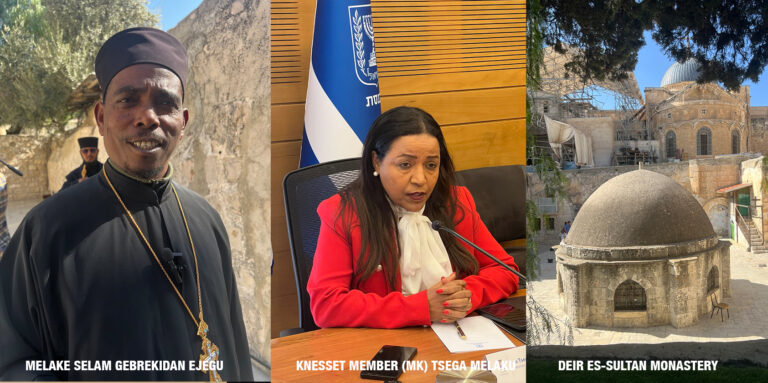
Knesset Member Tsega Melaku emphasized that Ethiopia is the only Sub-Saharan African country with religious property in Israel. “We have done our utmost to support the Ethiopian church in its dispute with the Egyptian Copts over Deir es-Sultan,” she said.

“I remember working with former MK Shlomo Molla to improve the lives of the monks, but they have faced challenges as well,” Tsega, who emigrated from Ethiopia to Israel at age 16, remarked during a press conference with Ethiopian journalists in Jerusalem last month.

“We persuaded the relevant Israeli authorities to assist the Ethiopian monastery, but progress has been slow, partly due to the frequent changes in monastery leadership and the fact that some leaders are abroad for months at a time. We were—and remain—eager to support them,” she explained.

Melake Selam Gebrekidan Ejegu, treasurer of Deir es-Sultan Monastery, told Capital that the prolonged conflict has left the church feeling frustrated.

“From the Patriarch down, the EOTC leadership has repeatedly engaged with the Israeli government, but there has been no improvement for 240 years. It is now clear that this issue cannot be resolved by the Synod alone; it requires direct government-to-government intervention,” he stated.

“When problems arise, the Synod does not seek to involve the Israeli administration directly. Instead, they prefer the Ethiopian government to take the lead in discussions,” Melake Selam added.

Currently, more than twenty monks and nuns reside at the monastery.

“Our urgent request is for the Ethiopian government to negotiate with Israeli authorities to renovate the monastery, which is in a serious state of disrepair,” he appealed.

MK Pnina Tameno, who shares Ethiopian-Jewish heritage with Tsega, emphasized the deep historical ties between Ethiopia and Israel, which should continue to strengthen socially, culturally, and politically.

“We are working on this, and we must continue to do so,” she stated during a press conference at the Knesset on November 19, referring to the Israeli government and lawmakers’ role in fostering bilateral relations.

The Ethiopian Deir es-Sultan Monastery is particularly appealing to tourists interested in early Christian history, Ethiopian Orthodox tradition, and unique cultural heritage sites.

It represents a centuries-old African presence atop one of Christianity’s holiest sites—the Church of the Holy Sepulchre—and embodies Ethiopian historical claims, legends of Solomon and Sheba, and a distinct rooftop community deeply connected to the crucifixion and resurrection of Jesus. Its story provides a unique narrative that is often overlooked by mainstream tourism.

The “Status Quo” regulation, formalized by Ottoman authorities in 1863 concerning Deir es-Sultan, stipulates that no physical or administrative changes may be made to the site without government approval. It was intended to prevent recurring disputes, particularly between the Coptic and Ethiopian Orthodox churches, over possession and rights.

Pulses, Oilseeds sector faces unprecedented uncertainty under new rule

0

Ethiopia’s pulses and oilseeds export sector, the country’s second-largest source of foreign exchange after coffee, is facing “unprecedented uncertainty” due to a new government directive.

Exporters and industry leaders are concerned that the government may require them to re-export products purchased through the Ethiopian Commodity Exchange (ECX), which poses a significant risk to the sector and creates an “obligation to buy twice.”

These industry leaders warn that the government’s sudden decision to revert all transactions to the ECX will reduce liquidity, encourage smuggling, and render Ethiopian products uncompetitive in the international market.

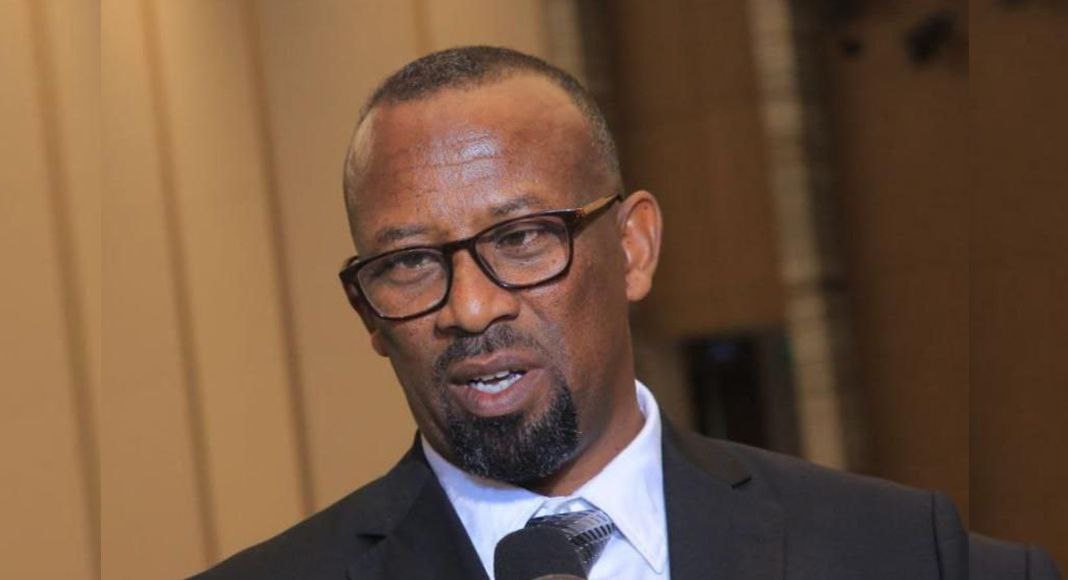
Edao Abdi, President of the Ethiopian Pulses, Oilseeds, and Spices Processors-Exporters Association (EPOSPEA), expressed to Capital Newspaper his fears that the new regulatory environment could lead to a decline in export volumes this year.

For years, exporters have sought alternatives due to the volatile quality and high transaction costs associated with the ECX. In response, the government had previously allowed “vertical integration” and “contract farming,” enabling exporters to trade directly with manufacturers, thereby ensuring product quality and source verification.

However, a recent directive from the Ministry of Trade and Regional Integration (MoTRI) has reversed these advancements. The new directive mandates that all transactions be processed through the payment system of the product market.

“Exporters are being told to return products they purchased from private farms to the commodity market system,” Edao explained to Capital. “How can you buy your own property twice? This reverts traders back to brokers and entangles them in unnecessary bureaucratic chains.”

This announcement comes at a time when there is a severe credit shortage in the Ethiopian banking sector. With banks withholding loans, exporters are struggling to provide the necessary cash for the product market’s T+1 payment system, which requires payments to be made within one day.

Under the previous contract farming model, exporters had the option to trade on credit with suppliers or farmers. However, the current cash-only requirement has excluded many traders from the market.

“If you have 200 million birr, you can only purchase a limited amount of sesame seeds before running out of money,” Edao stated. “Without loans, operations come to a halt. However, a credit system previously allowed for significant production movement.”

The gap left by legal exporters is now being filled by illicit traders. Reports indicate that pulses are being smuggled to neighboring countries via Moyale, even using public transport vehicles. “Because the legal route is expensive and cash-strapped, people are turning to contraband,” he warned.

Directive No. 1115/2025 issued by the MoTRI introduces fundamental changes to the payment system for exporting pulses and oilseeds.

This directive was mandated for implementation two months ago in a letter sent to the ECX on October 31, 2025, and again on December 3, 2025, which stated that the transaction payment process for crops cultivated under contract and investment agriculture must go through the ECX starting December 10, 2025.

The main objective of this directive, issued by MoTRI under Kassahun Gofe, is to enhance transparency in the sector and prevent illegal practices.

The new directive, reported by Capital Newspaper, prohibits direct bank transfers between exporters and suppliers in Ethiopia. Payments must now be made exclusively through a pay-in account managed by the Ethiopian Commodity Exchange (ECX).

Under this new system, exporters are required to deposit the full payment for their products into the product market’s account.

Kassahun stated, “This directive was issued to address the significant gaps identified in the previous direct marketing system.” The aim is to prevent tax evasion, curb smuggling, and eliminate inaccurate trade reports, thereby ensuring the country secures the foreign currency it needs from this sector.

MoTRI remarked that “this makes contract farming easier to monitor in accordance with the National Transaction Control System.”

According to the minister, exporters seeking an export permit must provide proof from the product market to obtain the necessary authorization.

However, the sector faces an additional challenge: a 3 percent withholding tax imposed on ECX trading. While the government asserts that there is no tax for export incentives, the withholding tax at the time of purchase raises product prices.

Edao noted, “You can’t compete globally if product prices are inflated due to taxes that remain within the country.” He pointed out that countries like Argentina, Egypt, and the United States offer their products at lower prices, causing Ethiopia to lose its competitive edge.

Data from the 2024/25 fiscal year indicates a 27% decrease in pulse exports, and experts forecast even poorer performance in 2025/26 if current policies persist.

In response, MoTRI recently met with EPOSPEA leaders and issued an urgent warning to Ethiopian pulse and oilseed exporters, calling for an immediate inspection of the sector’s participants following a previous decline in wheat product exports.

The government has decided to reduce project costs, and the Ministry of Trade and Regional Integration has warned that significant stockpiles in warehouses must be addressed. If exporters do not promptly export their products, the government may resort to measures including confiscating the goods and selling them through the product market.

In light of this strict government directive, the association has urgently warned its members. “On December 26, 2025, the government urged our members to withdraw their products quickly, stating they would confiscate the goods and seize the warehouses,” the association reported.

In a swift message to its members, the association advised them to act quickly to prevent government intervention.

The members’ response to this notice, due by January 8, 2026, was, “We could not produce any product,” as they have already purchased and reported it to the Ministry of Trade and ECX.

EPOSPEA is now calling for urgent dialogue with the government. The association acknowledges the government’s intent to promote transparency and tax collection but argues that the current “one-size-fits-all” approach is detrimental to the sector. Edao emphasized, “We must all recognize that the government cannot succeed without the support of the people.”