Thursday, November 26, 2026
Home Blog Page 520

Breweries face excise tax squeeze

0

Ethiopia’s brewery sector is bracing for heightened regulatory scrutiny under the Excise Tax  Proclamation, with new excise stamp mandates threatening to raise costs and curb illicit trade, according to a prospectus from Habesha Breweries S.C.​

The proclamation imposes excise duties on manufacturers like Habesha, with rates for malt beer at 40% or 11 birr per liter (whichever is higher) and local barley beer at 35% or 9 birr per liter — a steep burden that significantly impacts production costs and retail pricing in an inflationary environment.​

The Ministry of Finance’s Excise Stamp Management Directive No. 1004/2024, issued in June 2024, requires physical or digital stamps on excisable goods like beer (alcoholic content >0.5%) immediately after packaging at production facilities. This aims to enhance tax collection, track goods, and combat counterfeiting, but brewers warn it adds procedural complexity.​

Habesha’s prospectus notes excise taxes cost it ETB 2.5 billion in 2024 alone, compressing margins as high duties raise prices and dampen demand in price-sensitive segments. The firm mitigates this through a diversified portfolio — spanning premium Habesha brands to economy Kidame — but ongoing policy reviews under the Homegrown Economic Reform Agenda heighten uncertainty.​

Ethiopia’s breweries, including Habesha, BGI, Heineken, and Dashen, operate 14 factories with 18.5 million hectoliter capacity, but excise hikes — alongside VAT on utilities and input taxes — squeeze profitability. The sector’s 1.06 million-ton beer market (2020) is projected to hit 1.5 million tons by 2027 at 5% CAGR, driven by urbanization and youth demographics, yet inflation over 30% in recent years strains consumers.​

Habesha reports revenue growth to ETB 7.76 billion in 2024 (up 28.6%), but excise and fuel subsidy removals pushed distribution costs to ETB 838 million (10.8% of revenue). Gross margins held at 61.3%, thanks to pricing and efficiency gains like a company-owned fleet.​

While the directive bolsters transparency, brewers like Habesha advocate industry dialogue to balance revenue goals with affordability. “Excise hikes threaten volume targets, especially for draught and value brands,” the prospectus states, amid forex shortages inflating imported inputs like hops.

Ethiopian Investment Holdings launches whistleblower platform to combat corruption

0

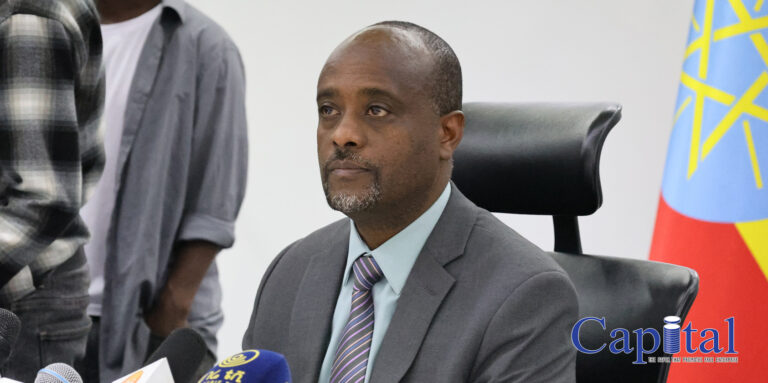
Ethiopian Investment Holdings (EIH), one of Africa’s largest sovereign wealth funds, has reaffirmed its commitment to eliminating corruption and mismanagement within its extensive portfolio of major public enterprises.

To encourage the reporting of illicit activities, the state-owned strategic investor has launched a dedicated whistleblower platform. This system allows individuals to confidentially submit tips related to any of the over 40 companies under EIH’s supervision.

This initiative underscores a growing emphasis on governance and transparency as Ethiopia aims to stabilize and optimize its key public assets. EIH manages a diverse array of national investments in critical sectors such as energy, logistics, telecommunications, and manufacturing.

“This platform is a vital step in fostering accountability and protecting the integrity of our national investments,” stated EIH Deputy CEO Habtamu Hailemichael. “We are dedicated to ensuring that all operations under our purview adhere to the highest standards of legal and ethical conduct.”

The initiative aligns with broader national efforts to combat corruption and enhance the business environment, with the aim of attracting foreign investment and ensuring that state-owned enterprises (SOEs) effectively contribute to Ethiopia’s economic growth.

Habtamu acknowledged that some public enterprises have experienced misdemeanors in the past that need correction. He emphasized that the new platform will help strengthen good governance within SOEs, enabling EIH to take corrective action swiftly—sometimes within days—while recognizing that some cases will require more in-depth investigations, including collaboration with relevant law enforcement agencies.

During a press conference on Thursday, the Deputy CEO noted that EIH has been implementing extensive reforms in the leadership of public enterprises, including their boards of directors, over the past few years.

“We are mandated by EIH Regulation 487/2022 and the Federal Government Owned Enterprises Proclamation No. 1314/2024 to appoint qualified leadership, including an independent board composition, to ensure the highest quality of governance across our portfolios,” he explained.

Article 15.8 of the 2024 proclamation stipulates that at least one-third of board members must be independent, each with a minimum of five years of experience and diverse professional backgrounds.

“We are working to implement the proclamation’s requirements for board composition so that SOEs are led by commercial principles,” Habtamu said.

He also mentioned that EIH is creating a pool of qualified candidates from the private sector, educational institutions, and professional associations, who will be assigned to relevant SOEs based on their expertise.

EIH directly oversees 41 strategic companies, organized into nine clusters, including major national entities such as the Commercial Bank of Ethiopia, Ethiopian Electric Power, Ethio Telecom, and Ethiopian Shipping and Logistics.

The core mandate of the sovereign fund is to transform these enterprises into highly profitable entities and to establish a sustainable financing model for strategic domestic and international investments.

As part of reforms aimed at both compliance with the proclamation and improving underperforming entities, EIH’s restructuring has led to the appointment of 70 new board members, including eight chairpersons. Additionally, 41 board members and eight chairpersons have been removed, along with six chief executives being replaced.

Weeks ago, EIH CEO Brook Taye told Capital that EIH is taking on the role of an “active owner” to enforce governance standards, moving beyond the historically passive oversight typical of public enterprise governance.

“Corporate governance is the pivotal factor that will drive public enterprises toward profitability,” Brook stated.

He emphasized that EIH expects strong financial and operational results from the entities it oversees, ensuring they provide tangible benefits for the public, the government, and their own sustainability.

Enterprises that fail to meet performance benchmarks during evaluations are undergoing significant leadership changes.

“Our objective is to establish dedicated, capable boards and competitive top management to ensure sound governance and profitability,” Brook added.

A key aspect of the reform involves a deliberate shift away from the past practice of senior government officials holding multiple board positions across various state-owned enterprises (SOEs).

Informed sources told Capital that EIH is implementing a new policy limiting senior officials to serving on only one public enterprise board, with appointments based on technical expertise and direct relevance to the company’s sector.

“Unlike in the past, we want to ensure board appointments are based on qualifications that provide companies with skilled guidance,” Brook said.

EIH sources support this approach, noting that while senior officials can offer valuable oversight, their participation must be strategic and focused to avoid conflicts of interest and diluted governance.

Brook cited the exemplary performance and governance of Ethiopian Airlines Group, an EIH subsidiary, as a model for the broader portfolio.

“If we can institutionalize the caliber of leadership seen at Ethiopian Airlines across other SOEs, we can replicate that success,” he said.

Having worked in Western financial sectors before joining public service eight years ago, CEO Brook underscored that professionalism must be the cornerstone of SOE governance.

He directly links this to robust business and commercial decision-making frameworks, which are expected to enhance board effectiveness, increase tax contributions and dividend payouts to the state, and ensure successful project execution.

“As the active owner of these enterprises, we will continue to make necessary corrections to fulfill our mandate,” Brook concluded, positioning EIH as a central force in Ethiopia’s broader economic reform agenda.

Nyala Insurance reports premium collection exceeding three billion birr

0

Nyala Insurance S.C. (NISCO) has achieved a premium collection exceeding 3 billion Birr, marking a remarkable 90.3 percent growth compared to the previous fiscal year.

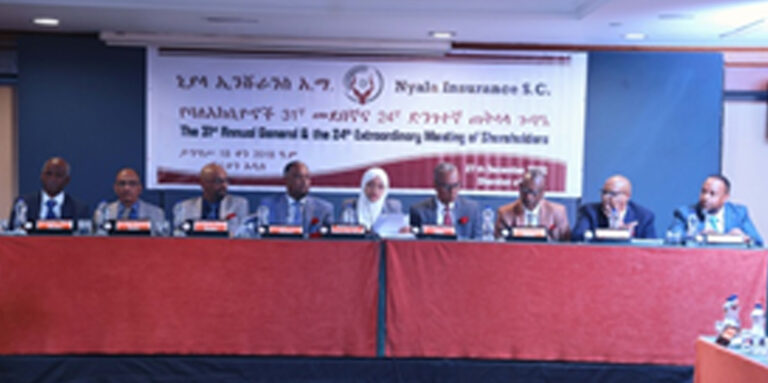
During the 31st General and 24th Extraordinary General Meeting held on December 27, 2025, at the Sheraton Addis, Dr. Sara Surur, Chair of the Board of Directors, presented the company’s annual performance report to shareholders.

Dr. Sara highlighted that NISCO generated over 3 billion Birr from its general, long-term (life), and takaful insurance operations, reflecting a 90.3 percent increase. The general insurance segment contributed approximately 80.7 percent of the total premiums, while long-term and takaful insurance accounted for the remaining 19.3 percent.

She also emphasized the company’s significant achievements in the fiscal year, reporting a gross profit of 782.7 million Birr, an increase from 641 million Birr the previous year.

The chair noted that the company’s total assets have grown to 6.7 billion Birr, representing a 62.2 percent rise from the previous fiscal year. Consequently, shareholders’ total equity at the end of the reviewed fiscal year increased to 2.9 billion Birr, up by 0.7 billion Birr (31.2%) from the prior year.

Additionally, the company’s paid-up capital reached 1.6 billion Birr at the year’s end, an increase from 1.2 billion Birr the previous year, reflecting a growth of 36%, as stated by Dr. Sara.

Yared Mola, CEO of Nyala Insurance S.C. (NISCO), noted that despite intense price-driven competition in the Ethiopian insurance market, NISCO experienced a successful year in 2024/25, underscoring its commitment to quality growth and responsible competition.

“Our balance sheet reflects continued strength and growth, with total assets reaching 6.7 billion Birr, a substantial 47% increase from the previous year. We achieved a total comprehensive income of 806 million Birr, and our gross profit rose to 782.7 million Birr, up 22.2% year-on-year. The Earnings per Share (EPS) stands at 43.41%, while the return on equity (ROE) remains high at 23.3%, and the return on assets (ROA) is at 10.2%, demonstrating effective use of shareholders’ funds and strong business momentum,” he stated.

Yared also expressed pride in NISCO’s role as the insurer for significant national development projects, such as the Koysha Hydropower Dam, showcasing the company’s contribution to Ethiopia’s economic progress.

According to the CEO, NISCO’s strategy, DigLeap, is reshaping customer service. He added, “We are transforming our branches into Customer Experience Hubs (የደንበኞች ቤት), where convenience, responsiveness, and personalized service are at the core of our interactions. This approach places our customers at the center of every engagement and strengthens NISCO’s brand as a trusted partner.”

The CEO emphasized that Nyala Insurance is accelerating its digital transformation, nurturing emerging talent, and enhancing professionalism to build the future workforce of the company.

“Our rebranding initiative will further enhance our market presence, modernizing our identity, improving customer experience, and reinforcing the trust we have built over the years. Our goal is to position NISCO as Ethiopia’s most trusted and customer-centric insurer, a company that not only overcomes market challenges but also grows stronger and extends its influence beyond our borders,” Yared added.

During the 24th extraordinary meeting, shareholders unanimously approved a capital increase from 1.2 billion Birr to 1.6 billion Birr to enhance the company’s competitiveness.

Founded in 1995 with a paid-up and subscribed capital of 7 million Birr and 25 million Birr, respectively, Nyala Insurance S.C. is a robust and innovative financial institution that offers customer-tailored products and services, including microinsurance, mobile insurance, and diaspora insurance.

Nyala Insurance S.C. is currently finalizing a rebranding initiative aimed at modernizing its operations and enhancing customer service.

Ministry of Finance reports surging demand for long-term treasury bills

0

In its latest auction calendar for Treasury bills (T-bills), the Ministry of Finance (MoF) has reported a demand for longer-term instruments that is more than double that of the previous quarter. The overall demand for T-bills in both past and upcoming auctions surpasses the projected budget deficit for the year.

The Ministry’s third-quarter T-bill calendar details plans to issue 288 billion birr worth of bills over the next three months through bi-weekly auctions.

For short-term maturities, the MoF aims to raise 22.8 billion birr from 28-day bills and 77.6 billion birr from 91-day bills, representing a decrease from the previous quarter’s targets of 24 billion and 85 billion birr, respectively.

Conversely, demand for longer-term maturities has surged. The calendar indicates an offering of 109 billion birr in six-month bills, an increase from 97 billion birr in the prior quarter.

For 364-day maturities, the MoF has proposed 78.5 billion birr to be sold over the next six bi-weekly auctions, reflecting a 115 percent increase from the 36 billion birr offered in the last quarter.

Financial experts suggest that this increasing preference for longer-term instruments should prompt the government to expand its issuance of six-month and one-year maturity bills.

This trend has been evident in recent weeks, with auctions drawing significant interest for both short and long-term bills.

CBE Capital, an investment bank, recently highlighted that the previous week’s bi-weekly T-bill auction confirmed trends observed throughout the last quarter of 2025.

In the first three quarters of the current budget year, the government plans to mobilize 531 billion birr through T-bill auctions.

For the 2025/26 budget year, the anticipated fiscal deficit is approximately 417 billion birr, which constitutes about 22% of the total 1.93 trillion birr budget.

This deficit is expected to be financed mainly through domestic borrowing—primarily T-bills—and support from development partners, marking a departure from previous reliance on monetary financing. This strategy is being pursued despite ambitious domestic revenue targets and significant debt-servicing costs.