Thursday, November 26, 2026
Home Blog Page 519

Revenue Ministry to enforce tough measures on Excise Tax violators 

0

The Ministry of Revenue has announced stricter enforcement measures targeting manufacturers of excise-taxed goods who fail to meet their legal obligations. A new Operational and Implementation Manual has been introduced to guide administrative actions against non-compliant enterprises, including temporary closures and license suspensions. 

According to the Ministry, the new directive will be implemented under the authority of Excise Tax Proclamation No. 1186/2012 and Tax Administration Proclamation No. 983/2008. It empowers officials to take decisive actions against manufacturers evading excise tax payments, particularly those producing luxury goods, socially harmful products, and high-demand items ― categories that traditionally contribute significantly to government revenue. 

The manual outlines a progressive enforcement process designed to ensure fairness before sanctions are imposed. Non-compliant companies will receive up to three written warnings to rectify their violations. If corrective action is not taken within seven days after the final notice, the Ministry will have the authority to temporarily seal the production site for 14 days. During this period, operations will remain halted. 

If a manufacturer continues to ignore compliance requirements even after temporary closure, the Ministry may escalate penalties by suspending the business license. The directive also states that manufacturers giving false information, mismanaging accounting records, or using equipment unsuitable for tax monitoring will face stricter sanctions, including possible license revocation. 

Taxpayers affected by suspension orders may lodge a written appeal to the Tax Complaint Investigation Department within 14 days. The department will then review the complaint and decide whether to lift the suspension, adjust penalties, or permanently revoke the license. 

Abere Asfaw, Director of the Legal Services Directorate at the Ministry, emphasized that any order to seal a factory must come directly from the Minister, the Director-General, or an officially delegated authority. “This ensures that every action is both transparent and lawful,” he said. 

The manual also requires manufacturers to notify the Ministry of any change in ownership, factory address, or production machinery within seven days, strengthening oversight of operational shifts that could affect tax compliance. 

Ministry officials explained that excise taxes remain a major source of state revenue, as the consumption of these products generally remains high even when prices rise. The directive is intended to safeguard public income from losses due to underreporting or evasion while rewarding businesses that comply with the law. 

“Empowering branch offices to take swift, lawful action against evasion creates a fair market environment for compliant taxpayers,” the Ministry said in a statement. 

The directive took immediate effect upon issuance. The Ministry of Revenue urged all producers of excise-taxable goods to review their documentation, accounting systems, and payment records to avoid penalties. 

Officials reiterated that the measure forms part of an ongoing national effort to modernize tax administration and ensure consistent application of the law across all sectors. 

Excise taxes, typically applied to items such as alcoholic beverages, tobacco, soft drinks, and luxury goods, have become an increasingly important source of revenue as Ethiopia’s fiscal system modernizes to meet growing developmental needs. 
Nib Insurance headquarters project faces mounting delays and rising costs 

0

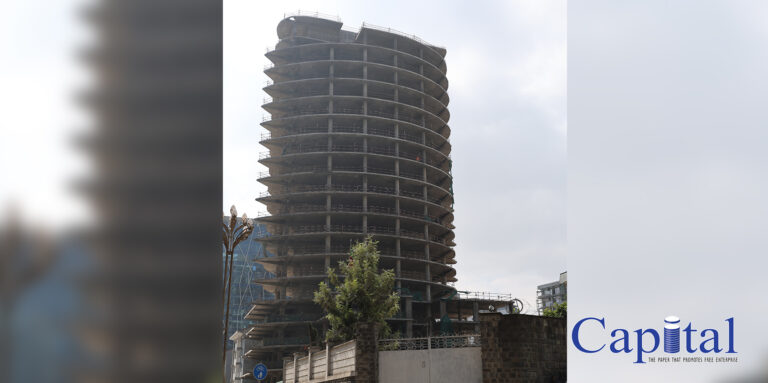
What was once envisioned as a landmark of corporate strength for Nib Insurance S.C. has turned into one of its greatest financial challenges. The insurer’s ambitious headquarters project in Bole, Addis Ababa, remains an unfinished concrete shell, following the company’s decision to terminate its contract with China Communications Construction Corporation (CCCC). 

The termination, finalized in May 2025, marked the end of a turbulent partnership and pushed the project into an uncertain transition period. Initially celebrated as a symbol of confidence within Ethiopia’s insurance industry, the building has now become an example of mounting construction inflation and complex leadership hurdles. 

Nib’s struggle to erect its headquarters dates back nearly a decade. The initial tender for excavation works, launched in May 2016, was suspended by the Federal Ethics and Anti-Corruption Commission due to “irregularities” in the bidding process. Although the commission later allowed the project to proceed, the delay sowed early doubts among shareholders. 

Construction officially began in October 2018 with an estimated budget of 812 million birr, considered reasonable at the time. The contract, covering a 1,435-square-meter plot in central Bole, was awarded to the Chinese firm CCCC. However, by May 2021, work came to a halt when the building reached the ninth floor. 

While the official explanation cited a “dispute over concrete quality,” insiders say financial disagreements were the real cause. CCCC reportedly requested a price adjustment following a sharp increase in global material costs during the COVID-19 period, claiming the 2018 contract had become “non-viable.” 

Negotiations between Nib Insurance and CCCC resumed in 2022/23, but the contractor’s revised price raised the total project cost from 812 million birr to 2.4 billion birr. Subsequent estimates reached nearly 4 billion birr, a fivefold increase that Nib’s management dismissed as unrealistic. 

Economist Dr. Kaleb Asfaw said the escalation reflected both global inflation and local macroeconomic pressures. “With the birr’s declining value and rising import costs, an increase of this scale was almost inevitable,” he told Capital. “But such long delays test the company’s liquidity and investment resilience.” 

Ultimately, both sides signed a Contract Termination Agreement in May 2025, allowing the Chinese contractor to withdraw without litigation. Yet, the departure left Nib Insurance with logistical complications and a half-finished building. 

To salvage the project, the Nib Insurance board, chaired by Siraj Abdella and led by CEO Zufan Abebe, adopted a phased construction strategy. Early in 2024, shareholders were asked to reinvest 50 percent of their 2022/23 dividends into the building fund. The decision drew complaints but enabled work to resume, bringing the structure to its current 18 floors. 

That progress, however, proved short-lived. As finishing works began, disagreements resurfaced. Internal advisers estimated the cost at 1.7 billion birr, but CCCC’s proposal reached 3.08 billion birr, a 55 percent jump rejected by Nib leadership. The termination soon followed. 

According to senior project management consultant Yohannes Gessese, the phased approach has helped Nib manage cash flow but increased the project’s exposure to inflation. “The longer construction stretches on, the higher the costs for imported materials like elevators, electrical systems, and cooling equipment,” he said. 

Nib has since approved a phased procurement model, dubbed Option Two, which divides construction into separate packages rather than relying on a single contractor. 

– Phase I will focus on completing basements—including parking and electric vehicle charging bays—the podium floors up to the 5th level, and exterior aluminum cladding. 

– Phase II will cover interior works and final finishes for upper floors. 

Phase I alone is budgeted at 1.1 billion birr, with 54 percent to be financed from company capital and 46 percent through bank loans. The projected timeline for completion is 540 days once a new contractor is signed, tentatively targeting completion of lower commercial levels by late 2027. 

For Nib Insurance, the prolonged delay represents more than a construction setback. The company currently pays over 15 million birr annually in rent for its offices in Dembel City Center — funds that could otherwise return to shareholders as dividends once the new headquarters is operational. 

Industry observers say completing the tower and leasing its commercial floors could help offset the financial burden. “If Nib moves quickly, the building can still serve as a revenue-generating asset,” one insurance consultant noted. “But if delays persist, it risks becoming a liability rather than a symbol of stability.” 

Adding to the pressure, Nib Insurance is also entangled in an ongoing 144.5 million birr legal dispute with the Ministry of Revenue. The case involves alleged tax arrears related to refinanced dividends and disputed value-added tax (VAT) claims. 

Sources indicate that two separate suits have been filed over capital gains tax for the years 2010 to 2015, with some aspects now under review by the High Court and Court of Cassation. Additionally, a VAT demand of 68 million birr, which Nib argues was imposed retroactively before the relevant proclamation appeared in the Negarit Gazeta, is also being contested. 

Despite these legal and economic headwinds, Nib’s board insists the company remains committed to completing its long-awaited headquarters. The project, once meant to symbolize progress, has instead become a cautionary tale on inflation, corporate governance, and project management in Ethiopia’s volatile construction sector. 

Interest payments consume 60% of Global Bank’s total expenses 

0

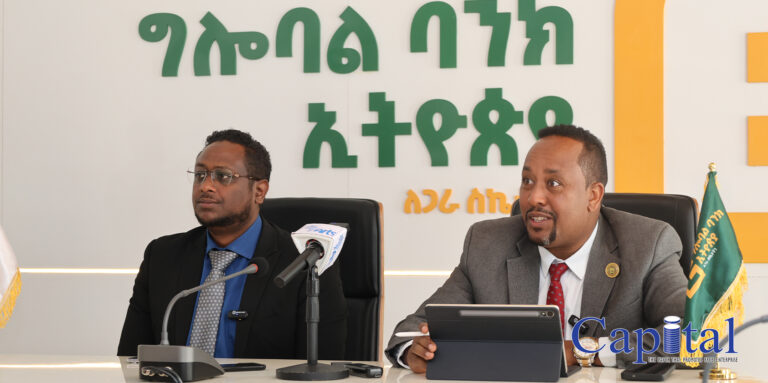
Global Bank Ethiopia (GBE) has reported that interest payments to depositors accounted for 60 percent of its total operating expenses during the 2024/25 fiscal year, signaling rising competition and liquidity pressures in the country’s banking sector. 

According to the bank’s newly released annual performance report, GBE’s total expenditure reached 4.39 billion birr, representing an increase of 1.21 billion birr compared to the previous year. Of this figure, interest on deposits comprised the largest share, followed by employee compensation at 24 percent and general administrative expenses at 16 percent. 

Bank executives explained that the rising interest costs reflect the ongoing struggle among financial institutions to attract and retain deposits in a tightening market. Despite the higher costs, GBE’s management described the expenditure not as a setback but as part of the bank’s commitment to delivering competitive returns to its 1.78 million depositors. 

“The high cost of funds demonstrates our determination to reward our customers and maintain trust at a time of strong market competition,” the report stated. Bank analysts, however, warned that the trend underscores the need for increased operational efficiency, especially as the sector adjusts to Ethiopia’s new market-based foreign exchange system introduced during the same fiscal year. 

Even as expenses surged, GBE recorded notable growth in both revenue and profit. The bank’s total revenue climbed to 5.56 billion birr, up from 4.05 billion birr a year earlier. Gross profit before tax rose by 33 percent to reach 1.17 billion birr, while total assets expanded by 42 percent to 34.4 billion birr. 

The expansion, according to the bank’s report, was largely driven by loan disbursements. Total loans and advances stood at 20.38 billion birr, with the foreign trade sector absorbing the largest portion (38 percent), followed by domestic trade (30 percent) and manufacturing (12 percent). 

Chief Executive Officer Tesfaye Boru highlighted GBE’s ongoing digital transformation as a key strategy to reduce service costs and improve accessibility. “Digital services are not just an innovation—they are a cost-control mechanism,” he said. 

The bank processed transactions worth 4.78 billion birr through its mobile, USSD, and internet banking platforms last year. It also launched its first self-help digital banking center, while cardholders climbed to nearly 75,000, reflecting GBE’s push toward a “cash-lite” financial ecosystem. 

GBE also achieved a major milestone by meeting the National Bank of Ethiopia’s paid-up capital requirement of 5 billion birr—a year ahead of schedule. This was accomplished after the bank successfully raised 2.52 billion birr in fresh equity during the 2024/25 fiscal year. 

Board Chairman Yosef Getachew described the achievement as “a statement of determination and resilience” within a highly competitive industry. He added that the capital buildup has placed the bank in a strong position to pursue its next five-year strategic plan, covering 2025–2030, which focuses on sustainable value creation for shareholders and the wider economy. 

With its previously authorized share volume now fully sold, GBE plans to seek shareholder approval for additional capital issuance to further strengthen its balance sheet. 

Having fulfilled the minimum capital requirement, Global Bank Ethiopia is now shifting its focus toward the country’s emerging capital market, a field that is expected to redefine financial intermediation once operational. The bank has announced its intention to become a “major player” in this new financial space, aiming to diversify revenue sources and introduce new investment products. 

The 2024/25 fiscal year was described by the bank as one of the most challenging yet transformative periods in its history. It coincided with major macroeconomic shifts, including currency reforms and tighter monetary conditions. Despite these headwinds, GBE said it has laid a solid foundation for long-term stability through capital reinforcement and digital innovation. 

As Ethiopia prepares to open its financial sector to global competition, GBE’s strategic focus on efficiency, technology, and market expansion is expected to play a defining role in shaping its next growth chapter. 

Russia-Ethiopia nuclear project moves into “Practical Work” phase 

0

Ethiopia’s long-anticipated nuclear power partnership with Russia has officially entered the “practical work” phase, moving beyond years of diplomatic negotiations and feasibility studies into tangible development activities. 

The nuclear collaboration, which aims to reshape the energy landscape of East Africa, follows comprehensive agreements signed between Ethiopia’s Electric Power (EEP) and Russia’s state-owned nuclear corporation, ROSATOM, in late 2025. According to officials, the project is now progressing from concept to implementation. 

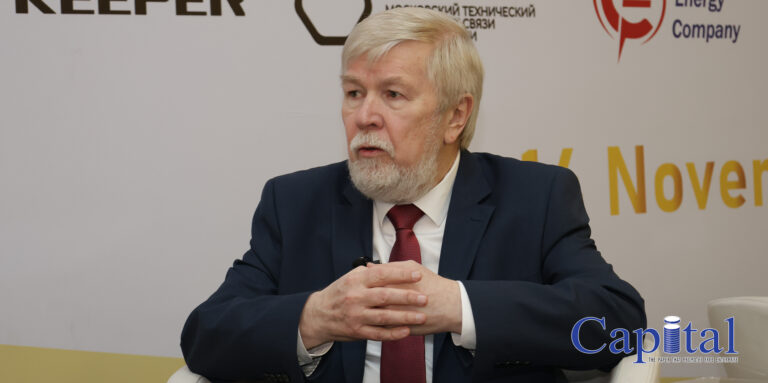
Russian Ambassador to Ethiopia Evgeny Terekin told Capital that the groundwork is firmly in motion. “We are not wasting time,” he said. “The first phase involving legal preparations and preliminary technical work has been completed. What follows now are specialized working groups and detailed site assessments for the construction of a nuclear power plant.” 

The planned facility, expected to generate up to 2,400 megawatts, will house two VVER‑1200 reactors, a standard Russian design currently operating in several countries. The new stage marks what officials described as the most significant milestone since talks began between the two nations. 

Among the latest developments is the introduction of a financial framework designed to ease Ethiopia’s investment burden. Ambassador Terekin explained that the new model departs from traditional state-to-state loan structures. Under the proposed arrangement, Russia will finance between 80% and 90% of the project’s total cost, to be repaid over 25 years at low interest. 

The arrangement, he noted, “ensures Ethiopia can pursue high-tech energy generation without carrying the heavy upfront costs that often accompany such mega-projects.” 

While the power plant remains the centerpiece, the nuclear cooperation agreement includes broader scientific and educational programs. A Nuclear Science and Technology Center, which is currently under feasibility study, is expected to offer social and research benefits in areas such as medicine, agriculture, and materials science. 

Dr. Teklemariam Tessema, coordinator of Ethiopia’s National Nuclear Program, described the center as “a vital bridge between energy production and domestic scientific development.” 

Russia has also expanded its academic support to sustain the technical skills needed for the project. Six years ago, Moscow granted around 30 annual scholarships for Ethiopian students. That number has now increased to over 150 scholarships per year, attracting more than 1,200 applicants for 2025, according to Ambassador Terekin. 

“Russian education remains very popular among Ethiopians,” he said. “Our goal is not only to train engineers for the nuclear sector but also to renew the historic intellectual bonds between Ethiopia and Russia, many of which date back to the Soviet period.” 

The renewed nuclear cooperation comes amid what officials describe as an economic “revival” between the two countries. Bilateral trade volume between Ethiopia and Russia more than doubled in the first half of 2025, reaching USD 191.2 million, official figures show. 

Ethiopia has seen a 60% surge in coffee exports to Russia, while Russian supplies of fertilizers and grain continue to expand. The sectors prioritized for new Russian investment now include agriculture, mining, and the digital economy. 

Both governments view the nuclear partnership as emblematic of a broader geopolitical shift. They describe it as more than just an energy deal—one that aligns with their shared stance against what they call “neo-colonial approaches” and their advocacy for a “polycentric world order.” 

Ambassador Terekin emphasized the strength of the personal rapport between Prime Minister Abiy Ahmed and President Vladimir Putin as a key driver of this engagement. “The dialogue based on personal conviction has been central,” he said. “Choosing Russia’s nuclear path enables Ethiopia to pursue advanced technology under equitable cooperation, free from external pressure.” 

Energy analysts note that the move to nuclear generation represents Ethiopia’s most ambitious step toward diversifying its power sources beyond hydropower, which currently provides more than 90% of its electricity. 

The planned nuclear plant, once operational, will not only relieve pressure on water-dependent energy sources but also enhance the country’s ability to export clean power regionally. Officials involved in the project expect the first tangible construction activities to begin following final site assessments and environmental reviews. 

As Ethiopia transitions into the “practical” phase of this strategic project, observers say the collaboration could redefine both the nation’s energy future and its diplomatic posture in the Global South. 

If implemented as planned, Ethiopia will join a growing list of African nations—such as Egypt, South Africa, and Nigeria—partnering with ROSATOM to develop nuclear capacity, marking a new chapter in the continent’s pursuit of energy independence.