Thursday, November 26, 2026
Home Blog Page 550

Weak enforcement, no wage floor push textile unions to the brink

0

Ethiopia’s trade unions, especially in labour‑intensive sectors such as textiles and garments, are facing an acute risk of dissolution as legal loopholes and weak enforcement leave the constitutional right to organise largely unprotected, experts and union leaders warn.

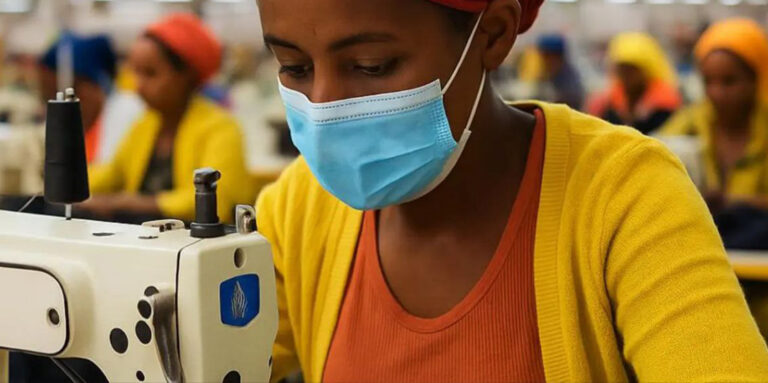
At a recent stakeholder forum convened by the Forum for Social Studies (FSS), industry specialists, union representatives and factory owners highlighted how routine threats, dismissals and intimidation of organisers have eroded union density to below 10 percent of eligible workers. Participants said workers who attempt to form unions are often labelled “troublemakers” and either pressured into resigning or terminated outright, undermining solidarity and collective bargaining.

Although Ethiopia’s Labour Proclamation formally guarantees freedom of association, speakers stressed that there are almost no consequences for employers who block or dismantle unions, allowing anti‑union practices to spread unchecked. In some large firms, they noted, management has resisted unionisation even when a clear majority of workers have expressed interest in organising.

The forum also drew a direct link between weak organising rights, the absence of a national minimum wage and the sector’s deepening labour crisis. Experts warned that extremely low pay in textile and garment factories is driving high turnover and prompting some large plants to shut production lines or cut shifts, with potential for broader social instability.

Labour Proclamation No. 1156/2019 provides for the creation of a tripartite wage board to set and review minimum wages, but the body has yet to be established, despite repeated appeals from the Confederation of Ethiopian Trade Unions (CETU) to the Prime Minister. While the government has raised salaries and tax‑free thresholds for civil servants, panellists said these measures bypass millions of low‑paid industrial workers who remain without any statutory wage floor.

Trade union leaders and policy experts warned that unless enforcement of organising rights improves and a functioning wage board is put in place, Ethiopia risks undermining its own industrialisation agenda in export‑oriented manufacturing. They urged closer coordination between the Ministry of Labour and Skills, the Ministry of Industry and other agencies to improve labour inspections, simplify procedures and integrate reliable labour‑market data into policymaking.

Without such reforms, they cautioned, Ethiopia’s flagship industrial parks could face mounting unrest, skills shortages and declining productivity—problems that stronger unions and a credible minimum‑wage system were originally meant to help prevent.

African Airlines Face Profitability Crisis as Global Aviation Soars

0

Despite Robust Passenger Demand, Structural Barriers Keep Continent’s Carriers Among World’s Least Profitable

African airlines are projected to earn just $1.3 in net profit per passenger in 2025—a pittance compared to their global counterparts—underscoring how fragile the continent’s aviation recovery remains even as worldwide carriers ride a wave of post-pandemic travel demand.

According to the latest outlook from the International Air Transport Association (IATA), African carriers are expected to post a collective profit of approximately $200 million in 2025, translating into a net margin barely above 1 percent. That figure represents just 0.5 percent of the $36 billion in global airline profits projected for the same year, revealing the stark disparity between Africa and the rest of the world’s aviation sector.

“Demand for air travel in Africa is rising faster than in many other parts of the world, but profitability is not keeping pace,” said Kamil Al-Awadhi, IATA’s regional vice president for Africa and the Middle East. “With margins of just 1.3 percent, African airlines are capturing only a fraction of aviation’s economic value.”

The contrast with other regions is striking. Middle Eastern carriers—bolstered by their role as global connecting hubs and favorable regulatory environments—are projected to earn $28.90 in net profit per passenger, more than 22 times what African airlines will make. European carriers will average $10.60 per passenger, while North American airlines are expected to earn $9.50. Even Latin American carriers, despite their own challenges, will outperform African peers at $7.30 per passenger.

The disparity extends to net profit margins. While the global airline industry is expected to achieve a 3.6 percent net margin in 2025, African carriers will operate at 1.1 percent—the lowest of any region—leaving virtually no buffer against unexpected shocks. Middle Eastern airlines, by contrast, are projected to achieve a 9.3 percent margin, nearly nine times higher.

The roots of Africa’s aviation crisis run deep, shaped by persistent operational challenges that no single carrier can overcome alone.

High Operating Costs: African airlines face unit costs that average approximately 140 US cents per available tonne-kilometer (ATK), nearly double the global industry average. This cost burden stems from multiple sources: jet fuel is often significantly more expensive on the continent than at global hubs, while airport taxes, statutory charges, and regulatory fees can consume a substantially larger share of operating budgets than in competing regions.

“The into-wing price of jet fuel in Africa remains among the highest globally, adding to already elevated operating costs,” according to IATA’s analysis of regional cost structures. This reflects limited competition in fuel supply chains, high logistics costs, and low purchasing leverage due to smaller volumes.

Aging Fleets: African carriers operate aircraft that are, on average, five years older than the global norm—a gap that continues to widen. Older planes consume more fuel, require more frequent and costly maintenance, and experience longer downtimes. Compounding the problem is the difficulty in sourcing replacement parts, which are not only more expensive in Africa but also subject to extended lead times due to global supply chain constraints.

Fragmented Markets: The continent’s balkanized market structure limits economies of scale. African carriers often operate in smaller, isolated markets with limited traffic volumes and constrained frequencies, forcing them to spread fixed costs—aircraft ownership, crew salaries, overhead—across a much narrower base than their international counterparts. This structural inefficiency means per-unit costs remain stubbornly high.

Tax Burden: Africa’s average corporate income tax rate of 28 percent—the highest among all regions—further erodes profitability and limits carriers’ ability to reinvest in fleet renewal or operational improvements.

Currency and Financing Challenges: Foreign exchange shortages in several African economies restrict airlines’ ability to access hard currency for aircraft leasing, fuel purchases, and maintenance contracts, while also hampering their capacity to invest in digital systems and other efficiency-enhancing technologies.

Demand Growth Cannot Offset Structural Barriers

Paradoxically, African aviation is among the world’s fastest-growing segments. The continent is expected to see passenger numbers expand 6.0 percent in 2025—faster than the global average—driven by rising middle-class populations, improved visa accessibility, and growing intra-African business travel. Over the next 20 years, Africa’s aviation market is forecast to grow at 4.1 percent annually, reaching 411 million passengers and capturing the third-fastest growth rate globally.

Yet this traffic expansion is not translating into profitability. “Despite above-average demand, the financial outlook remains challenging,” IATA noted in its regional assessment. The problem is that African airlines lack the pricing power to capitalize on growth. Low GDP per capita across much of the continent makes air travel highly price-sensitive, constraining airlines’ ability to raise fares even as costs mount. Visa restrictions, restrictive bilateral agreements, and high passenger charges further dampen demand elasticity.

The result is a vicious cycle: airlines must accept lower yields to fill seats, which, combined with high operating costs, leaves insufficient margin for investment and resilience.

Investment and Modernization at Risk

The profitability crisis threatens the continent’s aviation future. With margins of just 1 percent, African carriers have minimal resources to invest in new aircraft, digital infrastructure, and sustainability measures that are reshaping global aviation.

This poses a structural challenge. Globally, airlines are transitioning to newer, more fuel-efficient aircraft and implementing advanced systems to boost productivity and cut emissions. African carriers, constrained by weak balance sheets and limited access to capital, risk falling further behind, reinforcing dependence on foreign carriers to connect African economies and tourists to international markets.

“Without stronger balance sheets, the continent risks falling further behind,” the IATA assessment warned, highlighting that the gap between African and global airline profitability threatens to widen if structural barriers remain unaddressed.

Policy Solutions on the Table

Industry leaders and policymakers have identified potential remedies, though implementation remains uneven.

Reducing Cost Burdens: IATA and regional aviation bodies are urging African governments to rationalize taxes and charges on airlines and passengers. Streamlining regulatory processes and reducing airport fees could significantly lower operating costs, improving margins without requiring carriers to cut service or accept reduced demand.

Market Liberalization: The Single African Air Transport Market (SAATM)—a flagship initiative of the African Union Agenda 2063—offers a pathway to unlock new routes, stimulate competition, and enable airlines to achieve greater scale. According to IATA, if just 12 key African countries fully opened their markets and increased connectivity, an additional 155,000 jobs and $1.3 billion in annual GDP would be created. Full SAATM implementation could reduce costs and enable carriers to operate more efficiently by connecting fragmented markets into a unified air transport space.

Consolidation and Strategic Partnerships: Industry leaders stress that African carriers need stronger corporate governance, strategic partnerships, and potential consolidation to build resilient, commercially viable networks capable of competing globally.

Infrastructure Investment: Improving airport infrastructure, air traffic control systems, and ground handling services would reduce operational delays, fuel waste, and maintenance issues, helping to lower unit costs.

While the outlook for 2026 shows modest improvement—African carriers are projected to earn $1.3 per passenger (unchanged from 2025 projections) with a 1.0 percent margin—the trajectory underscores that incremental gains are insufficient.

“Demand for air travel in Africa is rising faster than in many other parts of the world, but profitability is not keeping pace,” Al-Awadhi reiterated. “Addressing the barriers that constrain growth is essential to ensure the region’s traffic expansion also delivers financial strength.”

The case is clear: African aviation has enormous potential, with traffic growing faster than many developed regions and populations increasingly eager to travel. But realizing that potential requires urgent action on the structural barriers that keep the continent’s carriers among the world’s least profitable. Without decisive policy reforms—liberalization, cost reduction, infrastructure investment, and strategic consolidation—African airlines will continue to struggle, unable to fund the modernization and resilience their economies desperately need.

SOEs struggle to file audited accounts amid severe shortage of Certified Accountants

0

Ethiopia’s sweeping economic reform agenda is facing a critical bottleneck as a severe shortage of certified accountants hampers the ability of state-owned enterprises (SOEs) to produce audited financial statements on time. The shortage, officials warn, is undermining investor confidence and limiting transparency in both public and private sectors.

State Minister of Revenue Abdurham Eid Tahir said the shortage of qualified financial professionals has become a major national concern, directly affecting economic governance and tax compliance efforts. “Our tax-to-GDP ratio has dropped to just 6.5%, which is less than half the 15% minimum recommended by the World Bank and the IMF for low-income countries,” he noted. By comparison, neighboring Kenya’s ratio stands at 16%.

According to the minister, much of Ethiopia’s tax non-compliance stems from accounting capacity gaps. “In many cases, businesses fail to comply not out of intent, but because their financial reports are not properly prepared due to the shortage of trained accountants,” he said.

Recalling his time at Ethiopian Investment Holdings, Abdurham stated that at one point, there was “only one certified public accountant among the country’s largest state-owned development enterprises.” This lack of qualified professionals, he said, made it nearly impossible for these enterprises to submit timely audited financials—further complicating oversight and policy decisions.

The shortage has forced tax authorities to rely heavily on enforcement measures to collect revenue. “About 20% of Ethiopia’s total tax revenue now comes from enforcement actions,” Abdurham said. “In contrast, countries like Kenya collect the vast majority through voluntary compliance.”

He emphasized that the problem is not only quantitative but also qualitative. “A competent accountant must understand local tax laws, public accounting standards, and compliance expectations. Without that, even well-intentioned taxpayers can fall into non-compliance,” he added.

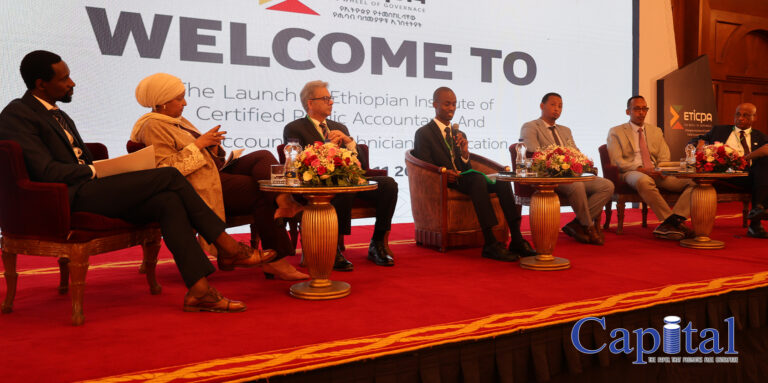
These remarks were made during the official launch of the Ethiopian Institute of Certified Public Accountants (ETiCPA), a long-awaited institution tasked with transforming the country’s accounting and audit profession.

For decades, Ethiopia depended on foreign credentialing systems—such as the ACCA in the UK or the American CPA—to train its accountants. While internationally respected, those programs are often disconnected from Ethiopia’s specific legal, fiscal, and regulatory environment. Dependence on external certifications also led to large foreign exchange outflows and limited accessibility for local professionals.

The government established ETiCPA in April 2025 under Proclamation No. 1372/2025 to address these long-standing challenges. Deputy Auditor General Abera Tadesse described the new institute as a “foundation for professional accounting that will significantly improve the quality of financial information.” He added that enforcing ethical standards will “reduce fraud, corruption, and systemic financial deterioration” while enhancing the reliability of audit reports.

Speaking at the event, Minister of Finance Ahmed Shide said ETiCPA will be central to Ethiopia’s ongoing financial liberalization, capital market development, and private sector expansion. “The institution will supply trained professionals who meet international standards and help create a credible, transparent financial system,” he said, pledging government support for seven years as the institute moves toward full professional autonomy.

Hikmet Abdella, CEO of FSD Ethiopia, stressed that the pace of reform “cannot continue without well-established professional accountants.” Transparent and timely financial statements, he said, will be vital as Ethiopia integrates into global markets and develops its capital and securities sectors.

Solomon Gizaw, Chairman and CEO of HST Consulting, called the creation of ETiCPA a milestone for the profession. “We, as professionals, have long struggled to establish credibility and structure. This institute now gives us a national platform—one that speaks with the unified voice of the profession,” he said.

Despite these advances, the shortage remains acute. As of late 2025, Ethiopia is estimated to have only 500 to 540 internationally recognized accountants, a strikingly low figure for a country with one of Africa’s fastest-growing economies.

Experts warn that unless this gap is urgently addressed, the country’s reform goals—ranging from expanding public enterprise efficiency to attracting global investment—may be delayed by chronic weaknesses in financial reporting and oversight.

UNFPA warns of deepening health funding crisis for Women and Girls

0

Ethiopia has been thrust into the ranks of the world’s most underfunded crises, with the United Nations Population Fund (UNFPA) warning that a severe health-financing gap is putting millions of women and girls at risk and appealing for 42.1 million dollars by 2026 for life‑saving services.

In its 2026 Humanitarian Action Overview, UNFPA lists Ethiopia as the eighth‑largest country appeal globally, seeking 42.1 million dollars for sexual and reproductive health (SRH) and gender‑based violence (GBV) services—a sharp increase of more than 38 million dollars compared with its 2025 country request. The agency links the higher needs to overlapping, protracted conflicts, climate‑driven shocks and weakening protection systems that are hitting women and girls hardest.

UNFPA notes that chronic underfunding has already forced it to scale back or suspend critical SRH and protection programmes, leaving “millions of women and girls” worldwide without access to safe deliveries, emergency obstetric care, contraception and GBV support, with Ethiopia a stark example of this trend. In 2025, its Ethiopia humanitarian plan sought 38.1 million dollars but had received only about 4 million dollars by mid‑year—barely 10 percent of the requirement—underscoring how far resources have fallen short.

UNFPA’s Executive Director, Diene Keita, has warned that cuts translate directly into closed clinics, surgeries without anaesthesia and survivors of rape turned away without support, describing the situation as one where “the world’s most vulnerable have their lifelines hanging by a single thread.” The agency stresses that SRH and GBV services are “non‑negotiable, life‑saving pillars” of humanitarian response and must be in place from day one, alongside food, water and shelter.

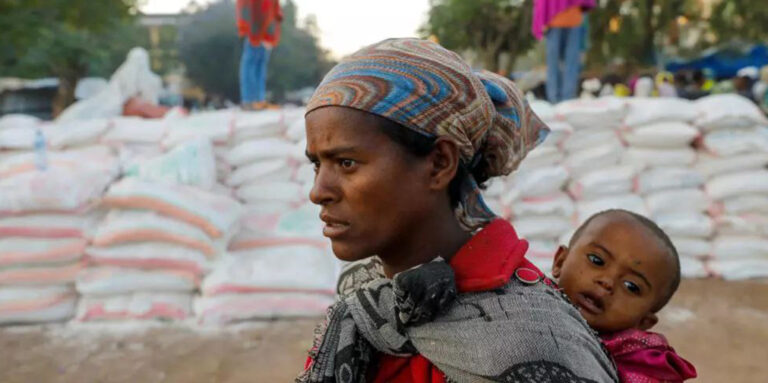
In Ethiopia, UNFPA highlights a convergence of crises—conflict, climate change, displacement and a large, restless youth population—that is driving up demand for services. Recurrent droughts and floods are displacing families, deepening hunger and further degrading already fragile health systems, with each disruption amplifying pre‑existing gender inequalities.

Ethiopia’s plight is compounded by the escalating emergency in neighbouring Sudan, which tops UNFPA’s 2026 appeal list at 116.5 million dollars. Nearly three years of war there have triggered famine risks, disease outbreaks, the collapse of basic services and widespread, often systematic, conflict‑related sexual violence against women and children.

UNFPA estimates that 7.3 million women and girls of reproductive age in Sudan, including 1.1 million pregnant women, require urgent assistance, while up to 80 percent of health facilities in conflict‑affected areas are closed or only partially functioning. Ethiopia, already hosting large refugee populations from Sudan and other neighbours, faces additional pressure on its strained humanitarian and health systems.

The funding crisis is not limited to UNFPA. UNICEF’s 2025 Humanitarian Action for Children appeal for Ethiopia sought 493.3 million dollars but had secured only 77.3 million dollars by mid‑2025, leaving an 84 percent shortfall of more than 415 million dollars. The largest gaps hit water, sanitation and hygiene (WASH), child protection, nutrition and health, where funding deficits of 83–90 percent are putting life‑saving services at risk for children and their caregivers.

Humanitarian partners warn that without rapid, scaled‑up funding across agencies, Ethiopia’s already fragile progress in reducing maternal mortality, preventing GBV and protecting children could unravel, deepening a crisis that is increasingly driven not only by needs on the ground but by shrinking resources to meet them.