Thursday, November 26, 2026
Home Blog Page 549

A Slice of Ethiopia Opens in Delhi’s Heart

0

Delhi just got its first African cultural centre — and it’s Ethiopian. The newly inaugurated Ethiopian Cultural Centre, tucked away in Chanakyapuri, is a vibrant blend of café, museum, and community space that brings East Africa closer than ever to the Indian capital.

The centre is the initiative of Ambassador Fesseha Shawel Gebre and his deputies Molalign Asfaw and Bizunesh Meseret of the Ethiopian Embassy. Designed by Devashish Kishore, the space captures the aesthetics of Ethiopian life, with bamboo, wood, and earthy tones inspired by the rock-hewn churches of Lalibela, a UNESCO World Heritage Site. Bright yellow meskel flowers — symbols of fertility and hope — adorn the interiors, while handcrafted Ethiopian wall art adds texture and storytelling to the ambience.

Visitors can explore a museum section featuring tribal hats, baskets, instruments, and archival photographs — vivid reminders of Ethiopia’s rich heritage and its unexpected cultural echoes with India.

At its heart lies a café that celebrates Ethiopia’s legendary coffee tradition. Guests can join the traditional coffee ceremony, where freshly roasted Arabica beans are brewed in a clay pot called a jebena. Chef Mulunesh Ayele leads the kitchen, serving homestyle Ethiopian dishes built around injera, the signature fermented flatbread. Highlights include Beyaynetu, a platter of stews both vegetarian and meat-based, and Doro Wat, the famed spice-rich chicken stew seasoned with berbere, Ethiopia’s aromatic spice mix.

Membership applications are now open to the public, inviting Delhiites to enjoy a slow lunch under the trees while discovering a taste — and soul — of Ethiopia. For the city, the centre marks not just a culinary addition, but a new cultural bridge between India and Africa. (First Published on the Indian Express)

UNESCO Recognizes Wolaita’s Gifaataa Festival as Intangible Cultural Heritage of Humanity

0

The United Nations Educational, Scientific and Cultural Organization (UNESCO) has officially inscribed Gifaataa, the New Year festival of the Wolaita people in southern Ethiopia, on the Representative List of the Intangible Cultural Heritage of Humanity for 2025. The decision was announced during the 20th session of the Intergovernmental Committee for the Safeguarding of the Intangible Cultural Heritage.

Gifaataa, celebrated between mid-September and early October, marks renewal, reconciliation, and unity among the Wolaita community. The ten-day festival begins with households cleaning their surroundings, mending homes, and making peace with neighbors — creating a spirit of readiness for the New Year. On the main day, families gather to share raw meat and local beer, while elders offer blessings for peace and prosperity. As dusk falls, the community celebrates around bonfires with songs, dances, and rituals symbolizing harmony and continuity.

The festival culminates in Goolo-Igetta, a grand day of collective celebrations featuring horse riding, traditional music, and the final blessings of the elders. Beyond festivity, Gifaataa serves as a space for mediation, cultural transmission, and even matchmaking — offering youth the opportunity to choose partners under community guidance.

Gifaataa holds a vital place in Wolaita’s cultural identity. Knowledge and practices surrounding the celebration are transmitted through family traditions, schools, local cultural associations, and community media. It promotes peace, solidarity, intergenerational dialogue, and respect for ancestral customs — qualities that resonated strongly with UNESCO’s selection criteria for inclusion on the heritage list.

By recognizing Gifaataa as part of the world’s intangible cultural heritage, UNESCO highlights the Wolaita people’s enduring commitment to harmony, environmental stewardship, and community resilience. The inscription not only honors Ethiopia’s rich cultural diversity but also encourages continued safeguarding and documentation of living traditions that bind communities across generations.

One year after float, birr slides and interbank forex market splinters

0

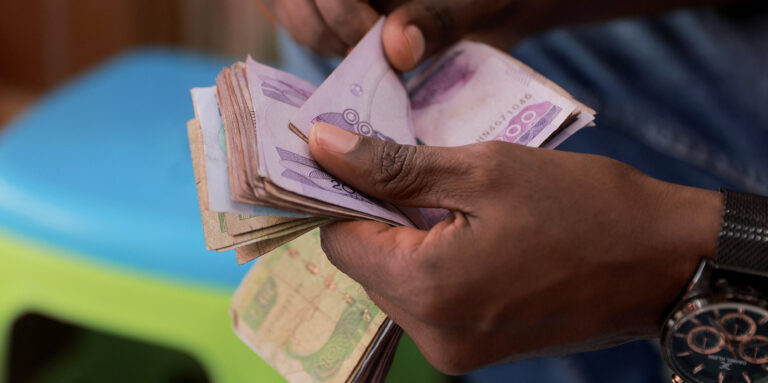
Birr is coming under renewed strain a year after the shift to a market‑based exchange rate, with fresh data pointing to accelerating depreciation, a fragmented interbank market and rising transaction costs despite repeated central bank interventions.

In the first quarter of the 2025/26 fiscal year (July–September 2025), the birr weakened by 8.1 percent against the US dollar, sliding from 135.5 to 146.4 birr per dollar, according to a new macroeconomic update by the Ethiopian Economic Association (EEA). The trend continued into the second quarter, with the rate passing 150 and reaching around 154 birr per dollar by mid‑December 2025—leaving the currency more than three times weaker than its pre‑float level of about 50 birr per dollar in mid‑2024.

The report, titled “Ethiopia’s Exchange Rate Reform After One Year: Assessing Stability, Competitiveness, and External Pressures,” notes that a record 150‑million‑dollar FX auction on 5 August 2025 briefly steadied the market before the birr resumed its slide and broke through the 140 mark later that month. Economists say the episode underlines how strong underlying demand for hard currency—driven by needs for fertiliser, medicines and capital goods—continues to outstrip limited supply, even when the central bank injects sizable amounts.

EEA’s analysis highlights growing fragmentation in the foreign exchange market, with wide differences emerging between banks’ quoted rates. By 30 September 2025, the spread between the lowest and highest interbank dollar buying rates exceeded 14 birr, ranging from about 129.0 to 143.5 birr per dollar, while retail rates showed gaps of nearly 15 birr between institutions.

The average daily bid–ask spread widened sharply—from 3.1 percent in the previous quarter to 6.8 percent—signalling a more imperfect market structure, higher transaction costs and limited arbitrage between banks. Analysts warn that such conditions raise risks for importers and exporters, encourage hoarding behaviour and may reflect capital flight or unrecorded FX flows that are hard to reverse through auctions alone.

One notable bright spot is a gradual narrowing of the gap between official and parallel market rates, a key objective of the July 2024 reforms. EEA estimates that the premium fell from about 25 birr (roughly 18.4 percent) in early July to around 20 birr (13.7 percent) by the end of September, suggesting the new regime and larger auctions are slowly drawing part of FX demand back into formal channels.

The sharp depreciation has also boosted Ethiopia’s measured price competitiveness. The Real Effective Exchange Rate Index fell by about 26.4 percent year‑on‑year, while the Nominal Effective Exchange Rate dropped 25.7 percent, reversing what many economists considered an overvalued currency. In principle, this should support exporters and import‑substituting industries, but the report cautions that gains will depend on how quickly firms can expand supply and on the authorities’ ability to contain inflation driven by more expensive imports.

The EEA paper situates Ethiopia’s experience within a “binary shock” in global commodity markets, where prices for key exports such as gold and coffee have climbed, while energy and grain prices have eased from recent peaks. It notes that gold and coffee export earnings rose by nearly 40 and 37 percent respectively, improving the terms of trade and providing some relief to the external balance.

Purchasing Managers’ Index (PMI) readings above 50 in major partner economies—including the US, India, China, the euro area and a rebounding Kenya—point to resilient external demand that could support Ethiopia’s exports if firms can exploit the weaker birr.

Looking ahead, the Association urges a more comprehensive policy response to stabilise the FX market and make the new regime sustainable. Recommended steps include deepening the interbank FX market to improve price discovery, rebuilding foreign exchange reserves to cushion shocks, and accelerating domestic fertiliser production to reduce pressure from critical imports.

Policymakers are also being advised to strengthen coordination between monetary, fiscal and trade policies, so that the benefits of improved competitiveness are not wiped out by runaway inflation or renewed instability in the parallel market.

High documentation fees put chill on reefer exports

0

Ethiopia’s push to shift fresh-produce exports from air to sea freight is running into serious headwinds, with exporters warning that high documentation charges and cumbersome procedures for importing empty refrigerated containers are undermining the competitiveness of sea-based logistics.

Industry representatives say it has been technically proven that perishable goods such as fine beans and avocados can reach European markets in good condition by sea in reefer containers, but documentation costs of up to 9,000 birr per shipment are blocking large-scale uptake. They argue that these fees, especially on rail corridors, erode already tight margins and weaken the cost advantage sea freight should have over air.

The pivot to sea freight has been driven largely by European retailers’ climate policies, with several major supermarket chains pledging to phase out air-freighted fresh produce to cut carbon emissions. Ethiopian exporters now face pressure to offer “green logistics” solutions or risk losing shelf space as buyers prioritise lower‑emission supply chains.

According to sector experts, Ethiopian exporters face an onerous process when importing empty refrigerated containers from Djibouti for stuffing at farms or inland facilities. The clearance procedures are reportedly treated much like importing a full container, requiring shippers to be listed as consignees and to provide customs guarantees based on a notional container value of around 33,000 euros.

Soji Thomas Korah, general manager at MSC Ethiopia, notes that this structure slows the turnaround of equipment and lengthens transit times for perishable cargo, increasing spoilage risk and costs. He and others describe the current regime as inefficient, expensive and high-risk, arguing that it discourages the repositioning of empties that is essential to scaling sea-freight horticulture.

Exporters also point to gaps in cold-chain infrastructure and the absence of a clear standard operating procedure (SOP) for reefer exports. While many shippers have basic packing space, they say there is no fully equipped hub capable of preparing large volumes to export standard—a gap expected to remain until planned facilities at Mojo dry port come online within about two years.

Because there is no recognised SOP for farm-level container loading comparable to airport protocols, exporters say they struggle to obtain predictable inspection and clearance, which reduces transparency and planning certainty. Weekly sailing schedules from Djibouti add further pressure: missing one vessel can push produce beyond its shelf life, turning logistical glitches into outright losses.

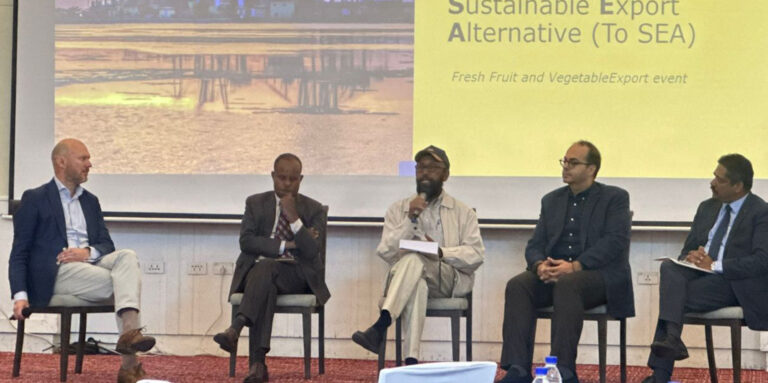
These concerns were aired at a recent discussion convened by Resilience Consultancy PLC, bringing together private operators, government agencies, financiers and development partners involved in fresh fruit and horticulture. Participants stressed that while technical capacity is improving—local reefer technicians are now being trained and certified by international manufacturers—regulatory agencies must move faster if sea freight is to scale.

Experts argue that reform priorities should include simplifying import and export procedures for empty reefer containers, introducing a transparent national SOP for reefers, and accelerating certification of local technicians to reduce dependence on foreign specialists. They also call for policies that encourage more firms to invest in quality and volume so Ethiopia can reliably fill the thousands of containers demanded by large European supermarket buyers.