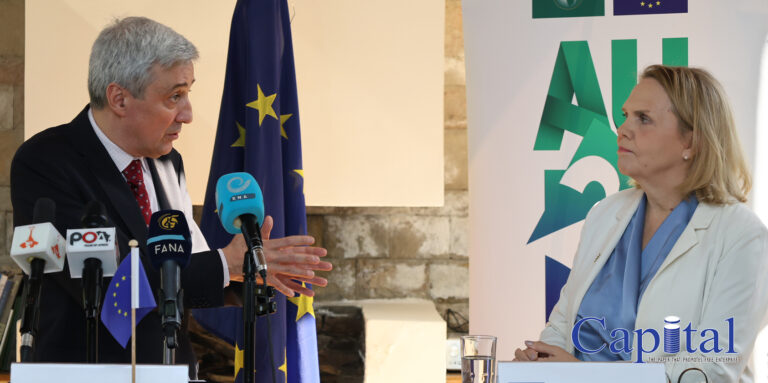
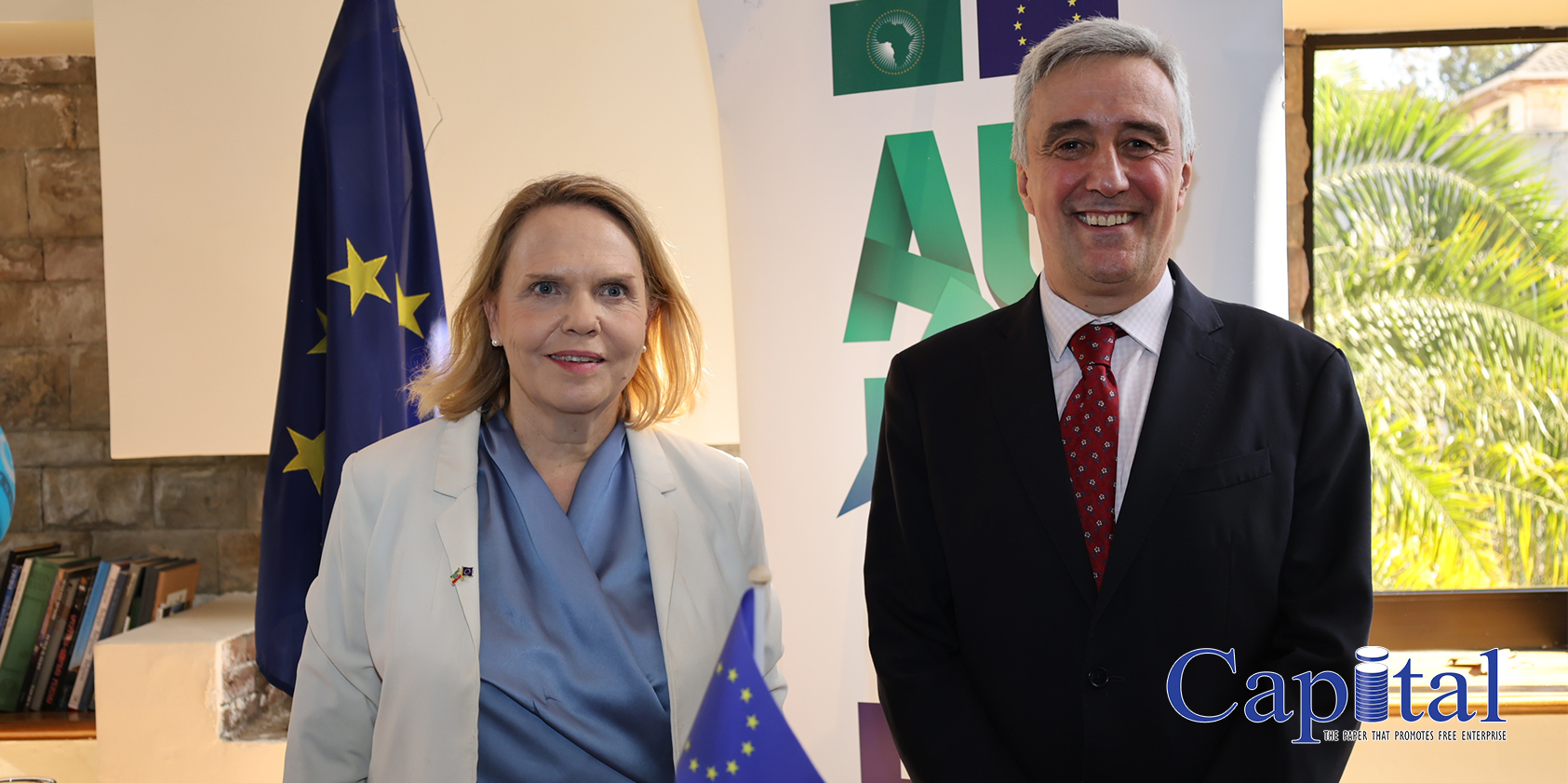
at the upcoming 7th african union and european union summit in luanda, angola scheduled for november 24-25 leaders from 49 africa and 27 european countries will gather to strengthen cooperation on green energy development and digital grid modernization, with a particular focus on ethiopia and the broader african continent
celebrating 25 years of the AU-EU partnership and the EU’s 50-year relationship with Ethiopia, the summit will emphasize effective multilateralism , african integration , and social justice aimed at addressing poverty and climate change. EU ambassador to the african union, javier nino-perez, highlighted the EU’s significant economic role in Africa, underscoring 250 billion euro investment share – six times larger than that of any other international partner.
Africa’s exports to the EU have grown substantially , particularly in finished goods sectors like plastics and automotive, reflecting development progress, cooperation under the EU’s global gateway initiative has enabled large-scale investments in infrastructure, clean energy, and digital transformation, including solar and wind energy projects and electric grid modernization in Ethiopia
Ambassador Sofie from Emmesberger outlined how these collaborations support Ethiopia’s transition to a green economy and digital future. the global gateway projects in Ethiopia feature Danish-backed solar and wind farms alongside efforts to strengthen and digitize the national power grid, install advanced automation, and build a cyber-secure cargo center
The summit theme, “Promoting Peace and Prosperity through Effective Mass Communication” stresses the importance of inclusive dialogue among youth, women, and civil society organizations in shaping joint actions. The EU remains Africa’s largest trading partner, accounting for 32% of African trade, and contributes 70% of the African Union’s peace and security budget, reflecting a mature and egalitarian partnership/
Educational ties are also strong, with Ethiopian students ranking among the top globally in the Erasmus Plus program. the summit is expected to culminate in the Luanda Declaration, which will serve as a benchmark for continued implementation of AU-EU commitments and set the future trajectory of this enduring alliance.
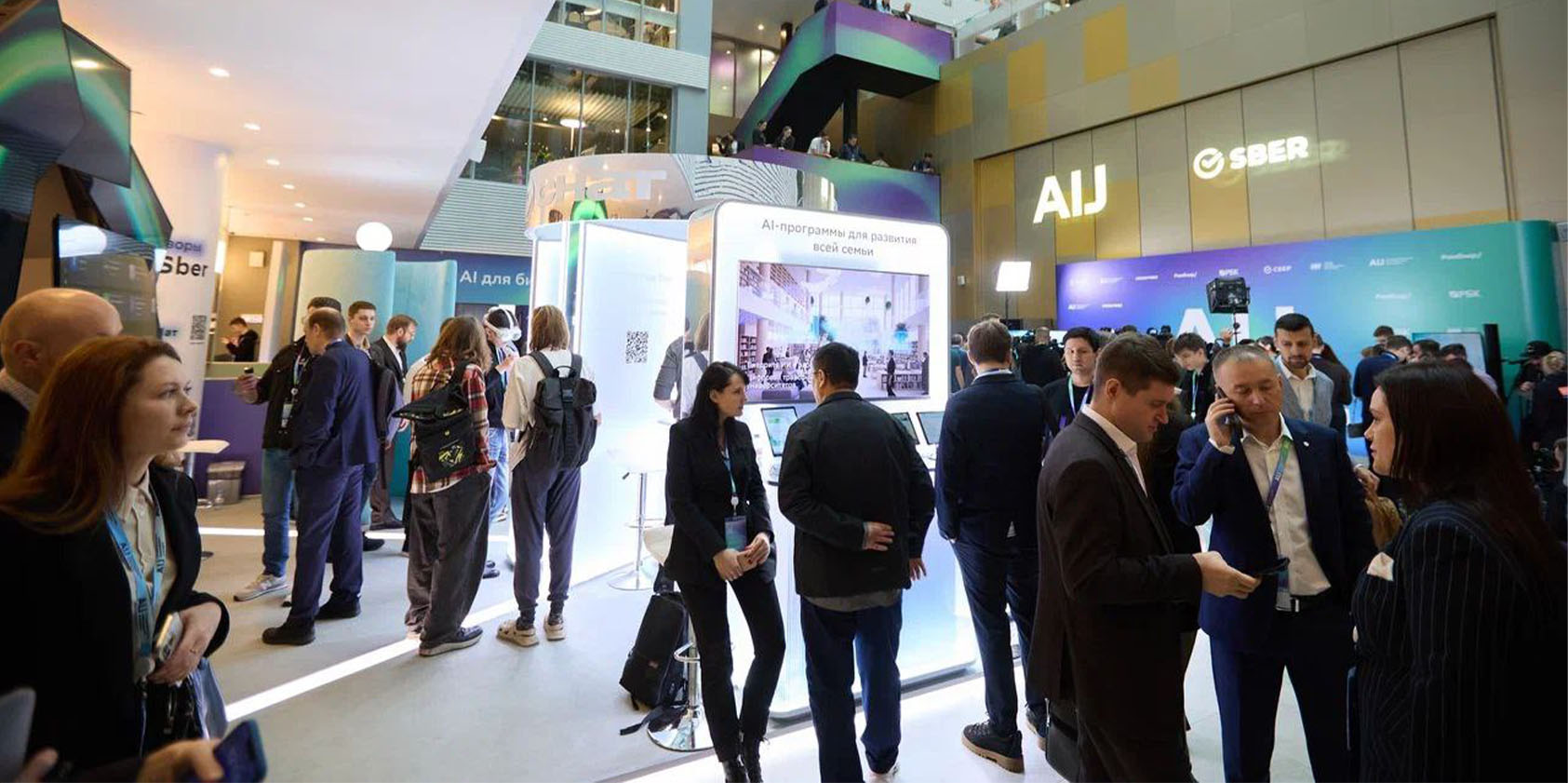
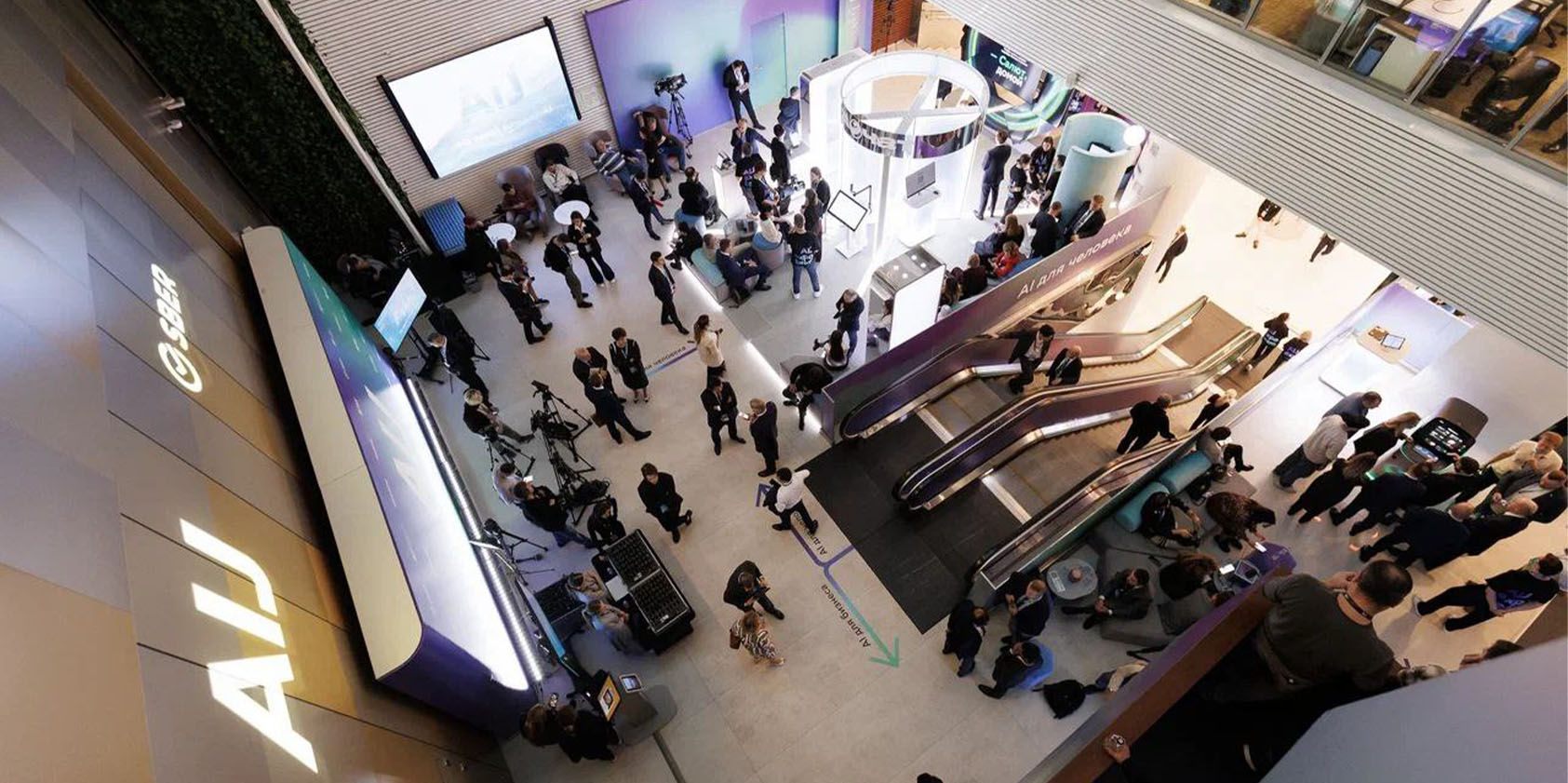
The three-day AI Journey conference has concluded in Moscow. This major global AI-focused event has brought together thousands of professionals from Russia, China, India, Serbia, Brazil, Bahrain, USA, Malaysia, and other countries, along with millions of viewers worldwide following the event online.
Each day of the conference, marking its 10th edition this year, had a distinct theme. Day one focused on the application of generative artificial intelligence (GenAI) in everyday life and its implications for national development.
The highlight of the first day was the Future with AI discussion moderated by Sberbank’s CEO and Chairman of the Executive Board Herman Gref and featuring Russian President Vladimir Putin. Vladimir Putin expressed gratitude to Sberbank and the AI Alliance for their relentless pursuit of the values of progress and efforts to unite the state, business, and academia around technological advancement. He emphasized that AI had made an enormous leap in recent years, acquiring autonomy in decision-making. These technologies have become strategically pivotal, with leading nations competing for ownership of fundamental AI models. The development of AI ranks among the greatest technological endeavors in history.
Herman Gref emphasized that AI will transform every facet of life, from health and science to education, economy, and industry. “We are very rapidly entering a fundamentally new era of human existence. The Industrial Revolution lasted 200 years, while this revolution will be 10 times faster. It is our responsibility to help people smoothly transition into this new era without shocks and stresses. We will do everything to ensure the development of technology and the competitiveness of our country. I thank all members of the AI Alliance Network for their willingness to cooperate in developing the key technology of this century.”
Day two of the conference spotlighted AI applications across various economic sectors and business processes. Andrey Belevtsev, senior vice president and head of Technological Development at Sberbank, discussed market trends and new company developments. He demonstrated the expanded capabilities of Sber’s large language model GigaChat and announced the release of weights for its newer versions, as well as image-generation and video-generation models Kandinsky 5.0—the largest open source project in Europe.
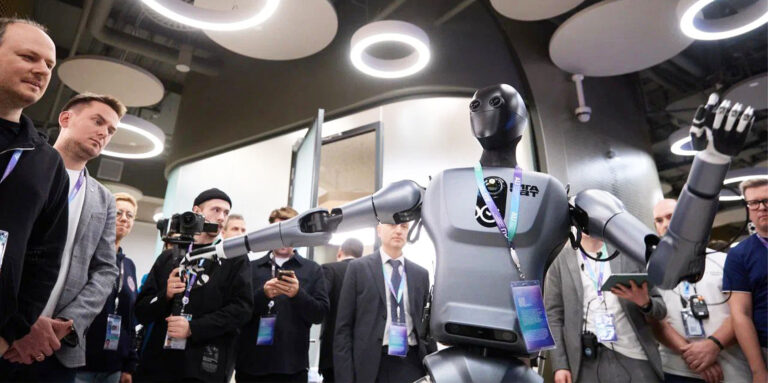
The spotlight of the second day went to the appearance of the first anthropomorphic robot based on GigaChat. This marked a new chapter in domestic robotics and Physical AI, extending beyond electronic gadgets (smart speakers, TVs, mobile apps) to aid humans in performing physical tasks in the real world. Equipped with 10 sensors processing visual input, inertial sensors, and force sensors ensuring balance and precision, the robot can navigate unfamiliar surroundings and even dance. Its voice-interaction capability merits special attention. Sber intends to pilot projects integrating the robot into various business processes to expand its practical utility in the near future.
Chen Qiufan, in his presentation “The Future of AI: From Fiction to Reality,” highlighted the role of science fiction as a powerful tool for contemplating the future and overcoming the limitations of linear thinking. Classic Sci-Fi authors, such as Karel Čapek and Isaac Asimov, accurately predicted modern-day issues, from protests against automation to ethical dilemmas surrounding AI interaction, primarily the discrepancy between human and machine goals. While predicting technological development, we often err in the details but prove correct regarding human reactions. Hence, the main danger arises not from AI itself but from the behavioral models we embed within it. Therefore, the key question is not “how to build the best AI?” but “how can we improve ourselves?” since technologies merely reflect who we are.
Another significant event of the day was the second international business forum on AI for BRICS+ countries, where Alexander Vedyakhin presented AI Success Hub, an international platform for AI use cases in BRICS+ countries and partners. The platform features around 80 AI use cases from nearly 30 countries.
The second day also hosted a session of AI Alliance Russia, followed by an awards ceremony honoring the recipients of the national AI Leaders prize for contributions to the advancement of artificial intelligence.
On the same day, the special in-person track AIJ Deep Dive opened. The track’s program included presentations by leading AI experts from Russia and around the world, talks by research centers sharing groundbreaking scientific articles, pitch sessions by prominent Russian AI startups, and demonstrations of business solutions based on GenAI and multi-agent approaches.
The third day, dedicated to AI in science, began with Deputy Prime Minister Dmitry Chernyshenko and Andrey Belevtsev. Dmitry Chernyshenko emphasized that competition for computational power, energy, and the ability to train fundamental models is intensifying, while Russia advocates for collaborative work among scientists from different countries to advance humanity as a whole. He noted that this year, at the initiative of Sber under the auspices of the International AI Alliance, the international foresight AI Horizons was organized. This work brought together scientists from 36 countries who, over 25 sessions, identified 10 key directions for developing the main technology of the 21st century. The created foundation will enable Russia to achieve breakthroughs, including in the development of artificial general intelligence.
On the third day of the conference, scientists from around the world shared hands-on experience in developing AI solutions for various tasks. Nebojša Bačanin Jakula, vice rector for scientific research at Singidunum University, Serbia, discussed the achievements of bio-inspired metaheuristics. According to him, the convergence of machine learning and metaheuristics opens new horizons for large language and diffusion models. Federated machine learning enables training models on decentralized data. The speaker emphasized that the transparency of bio-inspired algorithms attests to their reliability, while the development of quantum metaheuristics contributes to creating greener computing with a reduced carbon footprint. Metaheuristics can optimize coordination in multi-agent systems for robotics and logistics, reducing costs by up to 30%. By 2030, the advent of self-adaptive algorithms will make AI ecosystems more adaptive, enabling them to address global challenges, the researcher is convinced.
The Science Day at AIJ hosted a unique youth track, AIJ Junior. Russian experts shared practical tips on using AI solutions for studying, creativity, and self-development. Winners of international Olympiads in artificial intelligence and exact sciences gave interviews, inspiring young audiences to explore new opportunities for growth in this field.
The conference concluded with the awarding of prizes to the winners of AI Challenge, a contest for young data researchers, and the AIJ Contest for experienced AI specialists. The results of the open selection of scientific papers for AIJ Science were also announced. The best works will be included in a scientific journal jointly published with the Russian Academy of Sciences, and the best article will be awarded a monetary reward.
The International Air Transport Association (IATA), together with the governments of Japan, Malaysia and leading industry stakeholders, have issued a joint statement at COP30, urging governments and the international community to reaffirm the International Civil Aviation Organization (ICAO)’s leadership and accelerate coordinated climate action for aviation to reach net zero carbon emissions by 2050.
Specifically, the signatories highlight the need for global solutions, emphasizing that ICAO remains the exclusive forum for addressing international aviation emissions. The signatories caution against fragmented or unilateral measures, stressing that only a unified approach can deliver effective climate results for the sector. The signatories also stress the role of robust global carbon markets in scaling up climate finance opportunities, which is high on the COP agenda and central to the Baku to Belem Roadmap.
The United Nations Economic Commission for Africa (ECA), through its African Trade Policy Centre (ATPC) and the African Institute for Economic Development and Planning (IDEP), with the financial support of the Government of Japan, and in collaboration with TradeMark Africa (TMA) and in partnership with Google and other partners, is launching a capacity-building initiative aimed at empowering government stakeholders and private sector actors , including women-led micro, small and medium enterprises (MSMEs), to effectively leverage digital technologies to participate in intra-African trade.
The initiative comes at a pivotal moment in the implementation of the African Continental Free Trade Area (AfCFTA), the largest free trade area in the world in terms of membership, covering a market of over 1.4 billion people and a combined GDP of nearly USD 3 trillion. Despite the transformative potential of digital technologies, the continent continues to face structural challenges that limit the ability of businesses to fully benefit from emerging trade opportunities, including gaps in digital infrastructure, regulatory harmonization, digital skills, and access to finance. These constraints are particularly pronounced among women-led businesses, who face persistent barriers to digital inclusion.