

Rethinking Language-Based Ethnicity in Ethiopia

As Ethiopia’s National Dialogue moves forward, a fundamental but largely unspoken question hangs over the process: Can a conversation organised through state-defined ethnic categories genuinely address the divisions those very categories helped intensify?
The Dialogue is tasked with healing a fractured nation. Yet, it risks reproducing the bureaucratic imagination that fractured Ethiopia in the first place. If the process accepts the current political grammar—where identity is treated as a rigid, exclusive box—it will only reinforce the conflict it seeks to resolve. To be meaningful, the Dialogue must confront the administrative foundations of Ethiopia’s identity politics. We must understand how what began as an effort to modernize governance gradually hardened into a politics of bounded identity—where language, territory, and ethnicity have been fused into a single administrative logic.
The Imperial Roots of Rigid Language
To understand the present, we must look honestly at the past. The relationship between language and authority in Ethiopia was not forged in a vacuum; it has deep roots in imperial centralization. Long before the modern state, Amharic was tied to the expansionist projects of rulers like Tewodros II and Menelik II. Its spread was not merely cultural; it reflected the centralizing ambitions of an empire and the uneven incorporation of diverse regions.
We must admit this history clearly: Amharic was never a neutral medium. It carried the symbolic weight of conquest, literacy, and political power. However, the decisive transformation occurred after 1941. The post-Italian state sought to rebuild itself through a new mode of centralization—one that was linguistic rather than religious or regional.
The state made Amharic the sole language of administration—a deliberate move to define membership in the modern nation. This was not simply a technical decision; it was a shift toward “official nationalism.” In doing so, language became a form of social currency. As Pierre Bourdieu would describe it, Amharic became “symbolic capital”: a prerequisite for jobs, education, and power. This created a durable hierarchy where those outside the linguistic center were structurally disadvantaged.
The Bureaucratic Trap: Freezing Identity
If imperial history laid the foundation, the 1984 census under the Derg regime built the walls. What appeared to be a neutral act of enumeration was, in fact, a political project of classification.
This was the moment of “groupism”—a term sociologist Rogers Brubaker uses to describe the tendency to treat fluid social groups as fixed, bounded entities. The census did not merely record Ethiopia’s peoples; it organized them into officially recognized “nations, nationalities, and peoples.” The most damaging legacy of this era was the administrative fiction of a one-to-one correspondence between ethnicity and language.
In reality, Ethiopians have always been multilingual. A trader might speak Oromiffa at home, Amharic in the market, and Guragigna with neighbors. Yet, the state’s data processing had no room for such fluidity. It classified citizens into singular categories, ignoring their complex linguistic repertoires. The data itself exposed the inconsistency: 91 ethnic groups were recorded alongside only 84 languages. Such gaps revealed that Ethiopia’s diversity could not be neatly measured.
Despite this, the census codified these categories, transforming flexible social borders into hard political lines. Amharic—long a shared lingua franca—was bureaucratically redefined as the exclusive property of the newly demarcated “Amhara” ethnic group.
From Categories to Conflict
The 1995 Constitution took these census-defined categories and mapped them onto the earth. Under ethnic federalism, the “groupism” of the census became the logic of the state. Bureaucracy became destiny. Each region (kilil) was designated for a specific group, transforming identity from a cultural attribute into a prerequisite for territory, resources, and political representation.
This institutional rigidity is a primary driver of our current conflicts. Access to resources, education, and political participation became mediated by ethnic belonging, compelling citizens to compete as members of census-defined blocs rather than as individuals with multiple affiliations. We see this in the violent contests over administrative boundaries and the the demand for new regional states.
Even under the Prosperity Party, which came to power promising to transcend ethnic politics, the logic of administrative ethnic self-determination persists. What endures is not just ethnic mobilization but the bureaucratic form enabling it—the state’s role as a “classifier” that converts social difference into administrative fact. The establishment of new regional states, such as Sidama in 2020, exemplifies this ongoing dynamic: the state’s classificatory imagination continues to shape political realities, demonstrating that Ethiopia’s ethnicized federalism is self-reinforcing, shaping even the terms of its own reform.
The tragedy is that these categories, though historically constructed, have become materially real. We cannot simply wish them away. Like buildings or infrastructures, they can be dismantled only with difficulty and at great cost. However, we must recognize that this rigidity is a practice that actively generates conflict.
The Solution: Embracing Repertoires Over Rivals
How do we move forward? Ethiopia’s linguistic landscape is not a binary of Amharic versus “mother tongue,” but a dynamic repertoire of overlapping languages, each carrying distinct historical, cultural, and functional roles. A repertoire-based approach reframes multilingualism not as a problem to be tolerated, but as a resource to be managed strategically and equitably.
This approach begins by recognizing and validating mother tongues as the primary vehicles of cultural identity, local governance, and everyday life. Simultaneously, it addresses the dual legacy of Amharic: historically linked to imperial administration, it functions both as a practical bridge connecting diverse regions and as a structural source of social hierarchy. Importantly, this duality reflects long-standing institutional patterns, not the communities who speak it. By acknowledging both facets, policymakers and citizens alike can navigate Amharic’s role without framing it as either wholly oppressive or unconditionally neutral.
English must also be incorporated into this framework. Already central to secondary and higher education, professional sectors, and interregional communication, English offers a relatively neutral bridge that does not belong to any single ethnic group. While access to quality English education remains unequal, its strategic use can stabilize interactions in multiethnic urban centers, professional environments, and emerging digital spaces.
The novelty of a repertoire approach lies in formalizing what Ethiopians already practice informally: fluid, context-dependent language use. Instead of imposing rigid hierarchies—mother tongue for local, Amharic for federal, English for education—this framework legitimizes flexibility across sectors, guiding policy, administration, and civic life. It also introduces an equity lens, actively managing how language proficiency shapes opportunity, access, and social mobility, and mitigating the structural advantages embedded in historical linguistic hierarchies.
In practice, a repertoire-oriented strategy could influence multiple domains. Education curricula might integrate mother tongues, Amharic, and English to reflect situational use rather than privileging one language. Administrative and governmental communication could adopt flexible multilingual protocols depending on local and national contexts. Civic engagement platforms could use repertoire thinking to ensure inclusivity and reduce conflicts framed around linguistic ownership.
By recognizing Ethiopia’s linguistic diversity as a shared toolkit rather than a zero-sum contest, this approach provides a framework for building cohesion, reducing competition over language, and supporting inclusive participation. It moves beyond symbolic recognition to a practical, historically informed, and politically safe strategy for managing language in a plural society.
The rigidity of our current system forces Ethiopians to choose one part of themselves at the expense of the others. It frames diversity as a zero-sum game. The National Dialogue has the opportunity to break this cycle, but only if it dares to look “outside the box”—literally. The task is not to “abolish” invented categories overnight but to historicize them—to make visible how they came to be and how they can be reimagined. By validating the full, fluid linguistic repertoires of its people, the current government can begin to dismantle the rigid structures that drive conflict. This approach allows space for a civic nationalism that is grounded not in ethnic belonging alone but in shared rights, responsibilities, and values. Ethiopia’s future depends less on erasing its invented boundaries than on reimagining them through policies that value the flexible ways people actually live, speak, and belong.
Tesfatsion Dominiko, recently completed a PhD in Sociology and Social Anthropology at Stellenbosch University, South Africa.
The Culture of Impunity

The issue of traffic violations in Ethiopia profoundly undermines road safety and public trust. Despite numerous traffic regulations, the persistence of violations—especially by those entrusted with enforcing these laws—signals systemic challenges that demand urgent attention and reform. Among the most troubling facets is the widespread impunity afforded to vehicles with military plates and heavily tinted windows, which frequently disregard traffic signals and rules with virtual immunity. Even traffic police often turn a blind eye to such violations, seemingly prioritizing their job security over law enforcement. This culture of selective enforcement fosters a dangerous environment where rule-breaking becomes normalized.
Ethiopia’s traffic violation problem is multi-dimensional. Beyond the privileged vehicles, there is a general lack of discipline among all road users who commonly ignore fundamental rules such as stopping at red lights, observing correct turning, maintaining lane discipline, and respecting right-of-way. This widespread disrespect for the law directly contributes to the country’s alarming rate of road traffic accidents (RTAs). According to research, driver error is responsible for over 80% of road accidents nationwide. Ethiopia is known internationally for having one of the highest road traffic fatality rates per 100,000 vehicles, reflecting a severe public health crisis.
The problem stretches beyond individual driver behavior to systemic gaps in enforcement. Traffic police enforcement is often inconsistent and weak, partly due to fears of retaliation or losing employment if they challenge powerful violators. This lack of consistent enforcement fails to deter offenders and results in chaotic, unsafe traffic environments. The habitual violations include speeding—where about 44% of vehicles in cities like Addis Ababa exceed speed limits—running red lights, failure to yield right of way, distracted driving, illegal parking, overloading of vehicles, and driving under the influence of alcohol or substances. Vulnerable road users, especially pedestrians, bear the brunt of this poor road discipline, accounting for up to 80% of traffic fatalities in urban areas.
The condition of roads and traffic infrastructure further exacerbates these dangers. Ethiopia’s road design often does not adequately accommodate non-motorized users, while poor maintenance and lack of traffic calming measures lead to unpredictable and hazardous driving conditions. Moreover, the mixed traffic involving motor vehicles, pedestrians, motorcycles, and sometimes animals, combined with poor lighting and inadequate signage, creates a complex environment where accidents can easily occur.
This pattern, while severe in Ethiopia, is not unique. Countries like India, Malaysia, and the Philippines also grapple with high traffic-related death rates and widespread rule violations. However, examples from countries like Norway show that strict, consistent enforcement of traffic laws correlates strongly with reduced fatalities.
Reframing the legal and cultural approach to traffic violations is imperative. Violations should no longer be treated as minor infractions, but rather as serious offenses with consequences proportionate to their potential harm. Everyone on the road—private citizens, government officials, and even military personnel—must be held accountable without exception.
Effective reform must start with enhancing the capacity and independence of the traffic police, ensuring they can enforce laws impartially and without fear of reprisals. Training, resources, and public support for law enforcement are crucial. Additionally, public awareness campaigns need to reinforce the connection between traffic discipline and saving lives, emphasizing shared responsibility.
One possible strategy is adopting a “zero tolerance” policy on violations, particularly red-light running and speeding, supported by technologies like automated traffic cameras to reduce discretionary enforcement. Furthermore, improving road infrastructure—such as pedestrian crossings, clearer signage, and better lighting—can help mitigate risks.
The traffic safety crisis in Ethiopia reflects a wider systemic failure marked by institutional weaknesses and cultural attitudes that tolerate or even encourage rule-breaking. Changing this will require coordinated government action, empowered and supported traffic enforcement, infrastructure improvements, and a shift in public attitudes to respect the law. Only then can Ethiopia begin to reduce its traffic death toll and build safer roads for all users, without exceptions for the privileged or powerful.
Germany hands back royal-era artefacts to Ethiopia
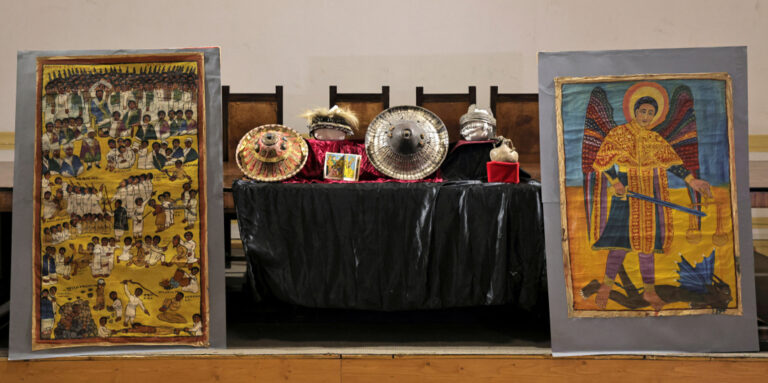
Germany has returned 12 royal-era cultural artefacts to Ethiopia in a ceremony in Addis Ababa, marking a formal step in ongoing cultural cooperation between the two countries.
Germany has handed over 12 cultural artefacts to Ethiopia at a ceremony in Addis Ababa, bringing home items that had remained in Germany for almost a century. The objects were laid out on tables inside Ras Makonnen Hall where officials, guests and staff walked around to look at the pieces before the formal handover began.
The collection was originally gathered by Franz Weiss, a German diplomat who lived in Ethiopia with his wife Hedwig during the 1920s. Their grandson, Professor Ramon Wyss, travelled to Addis Ababa to return the items himself, presenting them to Dr. Yohannes Adigeh, Director of the Institute of Ethiopian Studies. Some of the objects had stayed in private family possession for decades.
Minister of Tourism, Selamawit Kassa, said the returned pieces include gifts presented by Regent Tafari Makonnen, who later became Emperor Haile Selassie, along with items bought or commissioned by the Weiss family. Two crowns were among the most notable objects, along with decorated shields, a sword with its belt, traditional headgear, paintings and an old manuscript.
During her remarks, Selamawit thanked Wyss and his wife Alice for facilitating the return and said the cooperation between the Institute of Ethiopian Studies and the German Embassy had helped make the process possible. At the event, several guests paused to take a closer look at a set of swords displayed inside a glass case, while others examined paintings showing scenes from Ethiopia’s royal past.
Wyss said that his grandparents had taken the collection with them when they left Ethiopia nearly one hundred years ago and explained that the family believed the pieces should now be preserved and studied in the country they came from. He added that this had been discussed within the family for some time before the decision was made.
The return comes as the repatriation of African cultural property continues to draw wider international discussion. Officials did not go into detail about how each individual item was acquired in the 1920s, but both sides described the handover as part of a broader effort to support cultural heritage and ensure important works are kept where they hold the greatest historical value.
An exhibition titled “Ethiopia in the 1920s through the eyes of a German diplomat” will open at the Goethe Institut on 20 November. It will show 51 photographs from the private archive of Fritz and Hedwig Weiss, offering a wider look at the period in which the artefacts were taken to Germany and the setting in which the couple lived during their time in the country.
