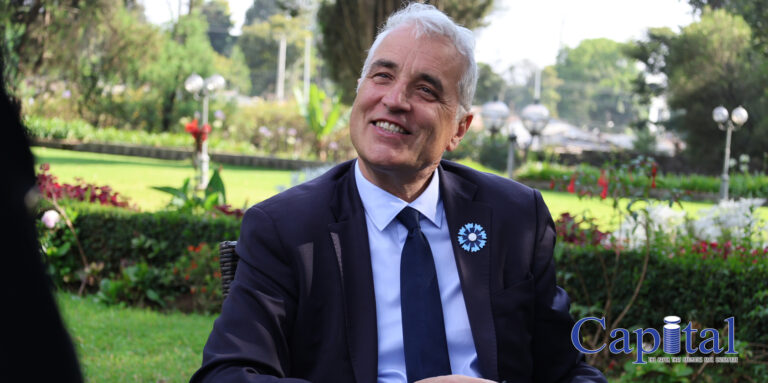
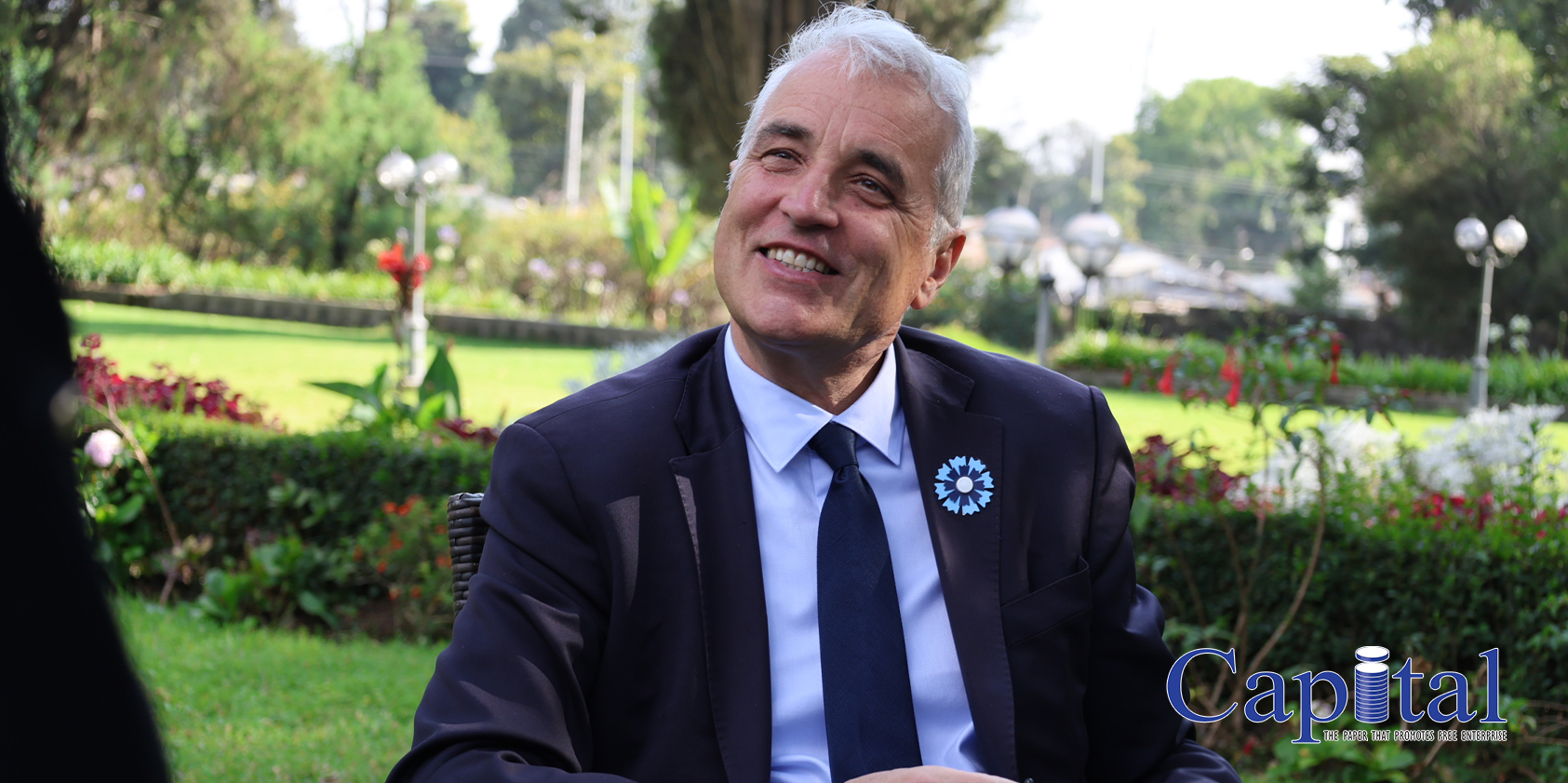
In a detailed interview with Capital, France’s Ambassador to Ethiopia, Alexis Lamek, highlights the country’s robust commitment to feminist diplomacy and its wide-ranging initiatives aimed at combating gender-based violence and promoting women’s empowerment in Ethiopia. Since officially adopting feminist diplomacy in 2019, France has transformed its diplomatic approach to emphasize women’s rights, health, and justice—efforts that have found tangible expression through grassroots partnerships, innovative social projects, and high-level international cooperation. Ambassador Lamek also underscores France’s ongoing support for Ethiopia’s economic reforms, gender-inclusive development, and climate action, presenting a comprehensive vision for strengthening Franco-Ethiopian ties in the pursuit of sustainable and equitable growth. Excerpts;
Capital: Could you elaborate on France’s recent initiatives in Ethiopia aimed at combating gender-based violence and advancing women’s empowerment?
Alexis Lamek: Six years ago, we made the pivotal decision to transform our diplomacy into a feminist diplomacy. While we were not the first—Sweden, Germany, and a few other countries had already taken this step—we officially joined the movement in 2019. This commitment means that we have focused our diplomatic efforts on women’s rights, combating violence against women, and addressing women’s health issues. This shift has significantly transformed our ministry, influencing how we operate and how we engage with these critical topics. Notably, just a few weeks ago, in October, we organized a summit on feminist diplomacy. However, this initiative did not arise out of nowhere; we have been actively working on these issues in various countries, including Ethiopia.
In Ethiopia, our efforts have been ongoing for years. From 2021 to 2023, we supported numerous grassroots initiatives led by Ethiopian civil society organizations aimed at protecting survivors of gender-based violence, raising awareness, and promoting women’s rights. We have collaborated closely with dynamic and capable civil society organizations in the country. Our goal has been to improve access to care and encourage women’s participation in local governance, particularly in conflict-affected areas where gender-based violence is most prevalent. We have focused on preventing violence and addressing its repercussions, ensuring access to an independent and effective justice system.
For instance, we launched the Judge Program, running from 2023 to 2025, to enhance the capacity of one-stop centers in hospitals.
These centers provide survivors of gender-based violence with crucial support, including medical care, psychological assistance, while also facilitating criminal investigations into their cases. We have been committed to this program for several years and continued our efforts this year by establishing a support fund called “Supporting Ethiopian Civil Society Organizations in the Fight Against Gender-Based Violence.” This fund enables 12 civil society organizations to implement initiatives across the country.
In summary, we have been actively engaged in addressing these issues in Ethiopia for many years, working effectively with local authorities and civil society organizations.
Finally, I would like to emphasize that like every year, we will celebrate on the 25th of November the International Day for the Elimination of Violence against Women, which will launch the 16 days of Activism against Gender-based Violence. It is an important initiative to raise awareness on this issue all around the world.
Capital: How does the French Embassy perceive its role in supporting civil society organizations that work on gender equality and women’s rights in Ethiopia?
Alexis Lamek: First, civil society organizations are the most efficient because they are closest to the people. They are often the first to identify needs and frequently develop innovative solutions to specific problems. We work extensively with these organizations, not only providing funding but also creating an enabling environment for Ethiopian civil society. For example, we help them strengthen their capacity, build networks, and share best practices. In short, we aim to empower them. However, it’s important to note that addressing gender-based violence cannot rely solely on civil society organizations.
These efforts must be complemented by strong government engagement, particularly in areas such as education, women’s empowerment, and access to justice. Therefore, our work extends beyond civil society; all relevant stakeholders, including the government, are our partners, underscoring the vital role of civil society organizations.
Capital: What concrete projects or partnerships have emerged from the 4th Ministerial Conference on Feminist Foreign Policies held in Paris?
Alexis Lamek: Regarding the recent conference, it was the first feminist diplomacy summit held in France but marked the fourth in a series that began with a summit in Germany, followed by events in the Netherlands and Mexico. This event was significant, attracting 500 participants and over 50 official delegations from various countries across all continents, including representatives from the private sector and philanthropic organizations. The conference had two primary objectives.
The first was to unite those committed to combating the backlash against women’s rights. Currently, several countries and entities are pushing back against the progress made since the Beijing Declaration 25 years ago. A coalition of conservative nations is attempting to weaken these advancements. However, the majority of the world’s countries remain united in their commitment to advancing women’s rights, and organizing such a summit provided an opportunity to mobilize support and ensure continued solidarity.
The second objective was to convey that feminist diplomacy is not solely a European or Western concept; it is an approach embraced by many countries from various regions.
Participants from Asia, Africa, and South America were present, highlighting that the commitment to women’s rights is widely shared.
The conference culminated in the signing of the Joint Paris Declaration by 31 countries from across the globe, reaffirming our collective commitment to the Sustainable Development Goals, the Beijing Platform for Action on Women’s Rights, and the Security Council Resolution on Women’s Participation in Peace Processes. Through this statement, we aimed to demonstrate our strong determination to advance gender equality worldwide.
Capital: Could you highlight the impact of France’s support in Ethiopia’s efforts to improve menstrual health management and access to reproductive rights?
Alexis Lamek: Yes, this issue has been a priority for us in Ethiopia. We are currently implementing two innovative projects that support Ethiopia’s focus on menstrual health management, which have become key initiatives in our cooperation.
The first project is a development impact bond launched in 2022 in the city of Adama, in partnership with BNP Paribas, a French bank that serves as a social impact investor. This project takes a holistic approach, addressing three main areas: raising awareness and advocacy, ensuring access to affordable hygiene products, and improving school facilities, such as providing suitable toilets for girls and resting rooms equipped with hygiene products and medication. This initiative has significantly improved school attendance for girls and enhanced their empowerment and well-being, and we are committed to supporting the government in scaling it up.
The second project focuses on creating a sustainable local value chain for the production and distribution of biodegradable and affordable sanitary pads. This initiative aims to generate jobs in Ethiopia, particularly for women. It is based on a public-private dialogue platform designed to identify and eliminate regulatory, tax, and customs hurdles that currently hinder the development of this local industry.
Capital: How does France intend to deepen its diplomatic and economic partnership with Ethiopia in the context of ongoing national reforms and regional development efforts?
Alexis Lamek: We are deeply committed to supporting Ethiopia’s economic reform agenda. Six years ago, during the first Homegrown Economic Reform Program, we collaborated with the IMF and the World Bank to support its implementation. Now, we are engaged in the second Homegrown Economic Reform Program, providing budget support to the Ethiopian government to ensure it has the capacity to implement these reforms. We strongly support Ethiopia’s ambition to transform its economy into a more open one, believing that this will make the country more attractive for investors and improve the quality of life for its citizens.
While it is the government’s responsibility to make the necessary efforts, we aim to accompany them in this process. Our support for the Homegrown Economic Reform is central to our efforts. Additionally, we have been working closely with our Chinese partners on restructuring Ethiopia’s debt. This is crucial, as Ethiopia’s default on its debt limited its access to loans. Addressing the debt issue through restructuring will enable Ethiopia to regain access to international funding necessary for implementing its policies.
We have made significant progress, with a memorandum of understanding adopted a few months ago, and we are now close to completing the debt restructuring process.
Capital: Will it be completed soon?
Alexis Lamek: Yes, the memorandum of understanding is finalized. Several agreements now need to be signed with the relevant countries. We have already signed ours, and a significant part of the process is complete. There has been substantial progress, and I must say that we, together with the Chinese, are very proud of what we have achieved.
There are two additional aspects regarding the deepening of our diplomatic and economic partnership with Ethiopia. Firstly, alongside our European partners, we have been supporting Ethiopia’s energy sector, which is crucial for development. Ethiopia has remarkable energy potential that must be harnessed. Last December, we approved an 80 million euros loan to modernize the power grid, enhance vocational training in the electrical field, and expand optical fiber coverage. This initiative is important as it aligns with the Global Gateway flagship program for Ethiopia.
The Global Gateway is an ambitious European initiative aimed at developing infrastructure in various countries, particularly in Africa. We are proud to play a central role in this effort concerning Ethiopia.
Secondly, we are working to encourage French and European investors to consider Ethiopia for investment opportunities. Last week, a European-Ethiopian investment forum was held in Paris, attended by two Ethiopian ministers. The event aimed to promote Ethiopia’s potential and encourage French and European companies to explore new opportunities here.
Of course, there is much work to be done to ensure Ethiopia remains an attractive destination for business, particularly in terms of the investment climate and conditions. However, there is strong political will on the Ethiopian side to address potential challenges. I was pleased to see significant interest from companies in France and Europe. We aim to continue this momentum.
Capital: What contribution do French companies and investments make toward advancing gender equality and social inclusion in Ethiopia?
Alexis Lamek: Approximately 40 French companies operate in Ethiopia, investing in various sectors such as energy, agro-food, and manufacturing. For example, BGI Castel is a prominent player, employing over 7,000 people directly and creating many more indirect jobs. Some companies are playing an instrumental role in shaping new value chains while contributing to social inclusion.
One example is Soufflet, a malt-producing company that works with over 70,000 smallholder farmers and trains 7,300 women in malt barley production, thereby empowering them.
Another example is TotalEnergies , which supports social inclusion and gender equality through initiatives like scholarships for women, internships for young women with disabilities, donations of sanitary pads and educational materials, employee volunteering, and community development projects. These French companies are integral to the corporate social responsibility efforts in the region.
Capital: In what ways is France helping Ethiopia address social challenges such as gender-based violence through cultural and educational cooperation?
Alexis Lamek: We have approached these social challenges in various ways. Firstly, we aim to encourage the training and capacity building of women to ensure they can fully participate. For instance, we have a scholarship program specifically for women, which strengthens the capabilities of female teachers pursuing master’s degrees.
Over the past few years, female scholarship recipients have explored a wide range of subjects, including mathematics, robotics, agricultural economics, and microbial biology. We also support skills development for women in policymaking.
An example of this is our French language training program for female Ethiopian diplomats at the Ministry of Foreign Affairs. Additionally, we work to integrate gender equality into educational materials, ensuring that French language content is free from stereotypes and inclusive. All our educational cooperation projects include a gender equality component, in line with our feminist diplomacy.
On January 26 of next year, a group of female creators and entrepreneurs will participate in an incubation program focused on cultural and creative industries. We emphasize education and capacity building because we believe that education is crucial in the fight against gender-based violence and for the empowerment of women. Importantly, this education is not only necessary for women but also for men and boys, as they play a vital role in combating gender-based violence and supporting women’s empowerment. Therefore, our programs also include training sessions for them.
Capital: How does the French Embassy plan to strengthen and expand its support for women entrepreneurs and local civil society initiatives?
Alexis Lamek: We support young and emerging civil society organizations in Ethiopia through a dedicated fund called the Civil Society Innovation Fund. This fund helps them implement projects focused on human rights, justice, media reliability, and gender equality, while also enhancing their professionalism and sustainability. This initiative strengthens civil society organizations overall. Furthermore, we are launching a joint initiative with the European Union aimed at bolstering the ecosystem of startups and small to medium-sized enterprises in Ethiopia, with a particular focus on supporting women and youth entrepreneurs.
Capital: What lessons from France’s own experience with feminist diplomacy are being shared with Ethiopian stakeholders to promote lasting social change?
Alexis Lamek: In our view, ensuring the achievement of sustainable development goals hinges on the implementation of feminist diplomacy priorities. This is a crucial lesson we have learned: if we want to influence any aspect of development, we must prioritize these initiatives.
That’s why we approach feminist diplomacy in the broadest sense. Our approach is structured around several key pillars. The first pillar focuses on defending rights and freedoms. The second emphasizes fostering women’s participation in decision-making processes. The third addresses rights issues, including combating inequalities and gender-based violence. Lastly, the fourth pillar ensures equal access to resources.
In Ethiopia, we concentrate primarily on the second and third pillars: encouraging women’s political and economic participation and combating gender-based inequality and violence. Through these initiatives, we share insights drawn from our experiences, supporting local actors through capacity building, fostering peer-to-peer cooperation, and promoting sustainable social change.
Our goal is to empower Ethiopian stakeholders to drive long-term transformative changes that advance gender equality throughout society.
However, the most critical element is local ownership. There is no one-size-fits-all model of feminist diplomacy, and we hope our approach can inspire Ethiopia to develop its own tailored strategy that addresses its specific challenges and contexts.
Capital: From your perspective, what are the main challenges and opportunities in further strengthening France–Ethiopia cooperation on gender equality and sustainable development?
Alexis Lamek: Our aim, as previously stated, is to promote sustainable development, and we believe that gender equality is essential for success in this area. We want this focus to be central to our cooperation with Ethiopia.
To achieve this goal, we work with civil society in Ethiopia, which is dynamic and includes a growing network of women-led organizations. We also collaborate with the government, which has demonstrated strong political will to address gender equality. Both in France and Ethiopia, we recognize that a major challenge is ensuring that progress on women’s rights aligns with strong institutional ownership, adequate resources, and profound societal change. We need to advance all these areas simultaneously.
One pressing issue today is gender-based violence, along with early marriage and ensuring equal access to education and employment. Addressing these challenges requires a coordinated response from the government, civil society organizations, and international partners to tackle the various facets of these difficulties, including ensuring victim-centered justice.
Another significant challenge is ensuring that women are fully represented and actively participating in decision-making processes—not just as beneficiaries but as leaders and agents of change.
This shift in mindset is crucial, and since you mentioned sustainable development, I also want to take this opportunity to highlight some aspects of climate action.
It’s very timely to discuss this as COP 30 has begun in Belém, Brazil, during a particularly challenging moment in our global fight against climate change. COP 30 presents a significant opportunity to energize climate action, promote inclusivity, and acknowledge the vital role of local communities and indigenous knowledge in developing climate solutions.
Next month, we will also celebrate the 10th anniversary of the Paris Agreement, to which Ethiopia is a signatory. Together with Ethiopia, we aim to advance sustainable and inclusive policies that focus on green growth, climate resilience, and community-based adaptation, demonstrating that sustainability and gender equality can go hand in hand.
Additionally, Ethiopia is a candidate to host COP 32 in 2027, reflecting its growing commitment to global climate action. In a time marked by rising climate skepticism and a backlash against women’s rights, it is more crucial than ever for France and Ethiopia to collaborate in reaffirming our shared ambitions for climate action and gender equality.
Capital: What is your assessment of the macroeconomic reform?
Alexis Lamek: Regarding Ethiopia, I touched upon this earlier. We seek to support the country’s ambitious project to transform its economy into a more open and attractive one. While there are many challenges and difficulties ahead, we are committed to being part of this process. We are impressed by the political will demonstrated by the Ethiopian authorities, and we want to maximize the chances of success. Transforming an economy into an attractive one is not a sudden change; it requires significant effort. We are working together to identify the necessary steps, alongside French companies that have been investing here.
I must emphasize that we work closely and efficiently with the Ethiopian authorities. The most crucial factor is the political will, which I see present. That is why I choose to believe in this endeavor, and we are eager to support it.
Capital: What is your assessment of the security situation in northern Ethiopia?
Alexis Lamek: This is a concern for everyone in the country—Ethiopians and non-Ethiopians alike. No one wants to see war, and it must be avoided at all costs. Wars can always be prevented; they occur when people give up. There are always ways to avert conflict. France, as a partner, and I believe I can speak for many other allies and friends of Ethiopia, is ready and willing to collaborate with Ethiopia to prevent any outbreak of war. Such conflict would be catastrophic for the country and its people, making it imperative to avoid it. As a friend of Ethiopia, France will stand by the nation in this effort.