Tuesday, May 12, 2026
Home Blog Page 622

India hosts forum in Addis to address health challenges in Ethiopia

0

The Embassy of India in Addis Ababa recently organized a forum focused on the critical issue of health provision in Ethiopia, emphasizing the need for collaborative solutions and innovative strategies to strengthen the country’s health systems. Titled “Building Better Health, Culture, Innovation and Cooperation,” the event brought together key stakeholders, including government officials, international organizations, and health professionals, to discuss the challenges and opportunities facing Ethiopia’s health sector.

The forum’s primary message highlighted the urgent need to expand access to modern health systems, particularly for underserved communities. Access to quality healthcare remains a significant challenge globally, especially in developing countries like Ethiopia. Limited resources, inadequate infrastructure, a shortage of trained health professionals, and geographic barriers often hinder efforts to provide equitable and accessible health services.

Despite notable progress in improving health outcomes in Ethiopia, significant gaps persist—especially in rural areas where access to basic health services is often limited. This disparity underscores the necessity for targeted interventions and collaborative partnerships aimed at bridging the healthcare gap.

India’s Ambassador to Ethiopia, Anil Kumar Rai, emphasized the importance of public-private partnerships in enhancing the health sector. He noted that the private sector plays a vital role in complementing government efforts through its specialization, resources, and innovative potential. Ambassador Rai reaffirmed India’s commitment to supporting Ethiopia’s health sector by sharing knowledge and experience through collaborative projects and capacity-building initiatives.

“Our commitment reflects India’s growing role as a global health partner,” he stated. “We are actively engaged in knowledge transfer and technical assistance to help developing countries improve their health outcomes.”

During the forum, Ramiz Alakbarov, UN Assistant Secretary-General and Coordinator for Humanitarian Affairs in Ethiopia, highlighted the shared responsibility of all stakeholders—including governments, international organizations, civil society, and citizens—in building a strong and sustainable health system. He emphasized that local communities are best positioned to identify their unique needs and priorities, thereby underscoring the importance of community engagement in health policies and programs.

The forum also addressed the critical need for strengthening regional institutions such as the Africa Centers for Disease Control and Prevention (Africa CDC) to enhance regional capacity for effectively dealing with public health threats and improving health outcomes across the continent.

As discussions unfolded at the forum in Addis Ababa, participants were reminded of the urgent need for joint efforts to improve access to healthcare in Ethiopia. By fostering dialogue, promoting collaboration, and highlighting innovative approaches, the forum contributed significantly to ongoing conversations about building stronger and more equitable health systems.

India’s influence on global health is rapidly expanding. Beyond its reputation as the “pharmacy of the world,” India is emerging as a leader in cutting-edge medical technologies such as medical devices, robotics, artificial intelligence (AI), and telemedicine. The country is also making significant strides in biotechnology, genomics, and traditional medicine.

Furthermore, India has become a top destination for medical tourism by providing high-quality care at competitive prices. The G-20’s vision of “One Earth, One Health” aligns with India’s commitment to promoting accessible healthcare for all.
Ethiopia to permit three operators to enter multimodal transport sector

0

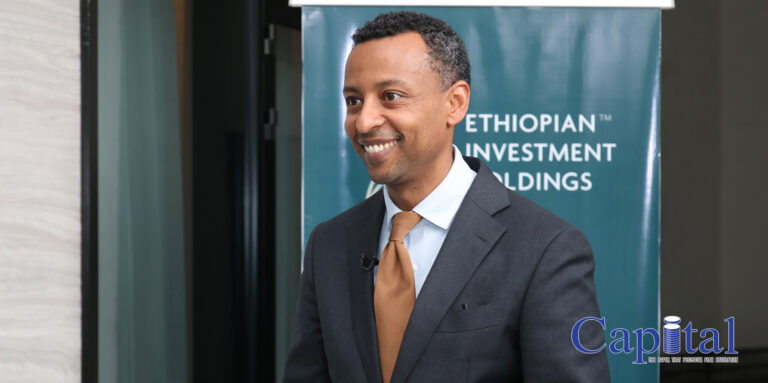
The Ethiopian Investment Holdings (EIH), the country’s sovereign wealth fund, has announced its commitment to fostering competition in the multimodal transport sector when new operators enter the market alongside the state-owned Ethiopia Shipping and Logistics (ESL).

This decision represents a significant shift in Ethiopia’s logistics landscape, which has long been dominated by ESL.

However, despite the Ethiopian Maritime Authority (EMA) issuing operational licenses to the selected companies weeks ago, technical and procedural delays have hindered the commencement of their operations.

Three private companies—Panafric Global, Tikur Abay Transport, and Cosmos Multimodal Transport Operators—have been chosen to participate in the sector and are currently awaiting official notification letters to begin operations.

These letters will be sent to relevant authorities and stakeholders to formalize their participation.

Dawit Woubeshet, CEO of Cosmos Multimodal Transport Operators, confirmed that his company has requested formal notification from the authorities to inform stakeholders about its licensing.

“To conduct business and issue bills of lading, we need permits from customs and the central bank,” he explained. “Additionally, other stakeholders, including security, standards, and health authorities, must be informed about our operations.”

EMA experts recently conducted inspections of the selected companies to assess their readiness to meet licensing standards.

However, industry experts have expressed concerns regarding the delay in notifying relevant authorities about the new operators.

Some speculate that the regulatory body may be awaiting feedback or consent from ESL, the state-owned logistics giant, regarding the extent of the sector’s liberalization. “There may be a desire to protect certain areas of the market for the state-owned operator,” noted one expert.

During a recent CEO networking event organized by the European Chamber in Ethiopia, Brook Taye, CEO of EIH, which oversees ESL and other major public enterprises, emphasized the importance of fair competition in the sector.

Drawing parallels with the liberalization of Ethiopia’s telecom sector, Brook highlighted how increased competition has strengthened Ethio Telecom.

“The full opening of the multimodal sector will allow the state-owned operator to become stronger and more competitive,” he stated.

The introduction of private operators into the multimodal transport sector is viewed as a step toward modernizing Ethiopia’s logistics industry and enhancing efficiency. However, delays in formalizing the entry of new players have raised questions about the pace of implementation. Stakeholders are now awaiting further clarity from the authorities to ensure a smooth transition and a level playing field for all operators.

Sources indicate that the relevant government body is expected to meet with the new operators in the coming days or weeks.

Why choose 1xbet to start your sports betting in Ethiopia in 2025?

0

Arguably the best online betting platform in the country, 1XBet Ethiopia has forged a solid reputation as a reliable gambling operator with years of experience. This extremely popular betting platform features a wide variety of betting markets, including traditional sports like soccer, rugby, and basketball. You will find everything from intriguing betting options to attractive bonuses designed to keep the players yearning for more.

But is 1XBet worth trying for Ethiopians in 2025? Here is a preview of 1XBet Ethiopia and what it has to offer its customers.

Design and functionality

Design-wise, 1XBet Ethiopia features a clean web interface and a responsive mobile app for Android and iOS devices. That gives you a solid betting experience with a smooth browsing experience when going through different sports and leagues.

Generally, this bookmaker is specific about the absence of a casino section. That makes it more focused on players interested in online sports betting, making the platform super fast and easy to view your selections.

Live Betting

The live betting section is among the top features of 1XBet Ethiopia and it has evolved to deliver smooth and engaging gaming experiences. This in-play betting section features over 900 markets daily and it features an easy-to-use user interface. Players can also access extensive match statistics on the head-to-head tab, showing information like past match results, scoring efficiency, and compared win rates. Additionally, there is a live streaming section to watch the games while betting for calculated decision-making.

Bonuses and promotions

1XBet Ethiopia features a range of bonuses and promotions for new and existing players. Your first deposit gives you a chance to claim up to 3500 Br for you to place bets and there’s a promo code for Ethiopians in 2025 at Wincomparator.

Payment methods

Whether you want to fund your account or withdraw your winnings, there are plenty of payment options to choose from at 1XBet Ethiopia. That includes bank cards like Mastercard and VISA, and e-wallets like Perfect Money, Skrill, Neteller, Paysafe card, and Ecopayz. You can also deposit your funds using digital assets like Dogecoin, Tether, Ethereum, Litecoin, and Bitcoin.

The minimum deposit at 1XBet Ethiopia is $1.00 and the funds will reflect in your betting account instantly. 1XBet also doesn’t charge any commissions for deposits or withdrawals. Additionally, the minimum withdrawal limit is $1.50 and the processing time is about 15 minutes except when using bank cards.

Customer service

1XBe Ethiopia features good customer service with professional staff that swiftly handles any issue you might experience. You can contact the support team through the chat section or via telegram. They will also answer your email or telephone to give you instant answers to your queries.

Is 1XBet Ethiopia worth it?

1XBet Ethiopia is among the best online betting platforms with a generous welcome bonus and plenty of betting markets. The website and mobile app feature user-friendly designs that perform to a high standard, allowing you to navigate through the betting options seamlessly. Additionally, there are plenty of payment methods that you can use with low deposit and withdrawal limits, making it ideal for casual bettors and high rollers.

Sukuk comprise around 25% of Global Islamic Finance Assets

0

The global Sukuk market continues to expand as demand for Shariah-compliant financial instruments remains strong, supported by increasing financing needs in key Islamic finance markets and the rising adoption of sustainable Sukuk. As an ethical and innovative alternative to conventional bonds, Sukuk allows investors to earn returns without interest (Riba) or excessive uncertainty (Gharar), attracting both Muslim and non-Muslim investors. This market has established itself as a fundamental financing tool for infrastructure development, sovereign funding, and corporate investments.

Global demand for Sukuk continues to rise, driven by key markets across the Middle East, Southeast Asia, Africa, and Europe. In 2023, the market expanded from $904.5 billion and projected to reach $2,160.55 billion by 2028, backed by sustainable financing initiatives, government-driven economic transformations, and the rise of digital issuance and green Sukuk.