Wednesday, November 25, 2026
Home Blog Page 623

Bioenergy developers call for policy stability to unlock Africa’s green growth potential

0

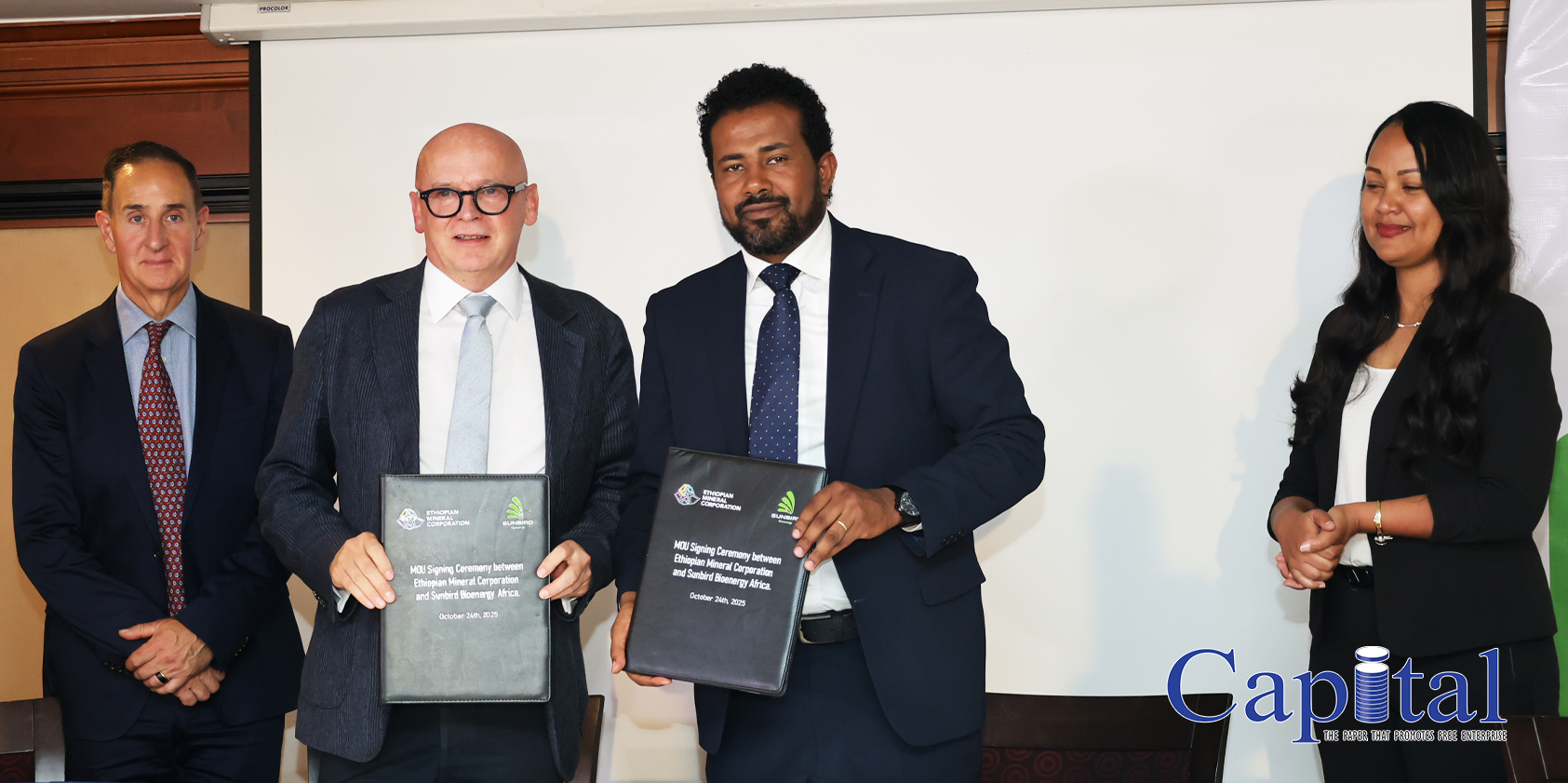
Leading bioenergy developers have urged African governments to maintain long-term policy certainty, particularly on feedstock supply and biofuel blending mandates, to fully realize the continent’s vast green energy potential. This message was underscored during the signing ceremony of a cooperation agreement between the Ethiopian Mineral Corporation (EMC) and Sunbird Bioenergy Africa, aimed at advancing bioenergy projects in Ethiopia.

Tewodros Getachew, CEO of EMC, and Richard Bennett, CEO of Sunbird Bioenergy Africa, emphasized the crucial role of government support in attracting private investment vital to Africa’s sustainable energy transition. Speaking at the event, Tewodros framed challenges such as climate change and sustainable development not as crises, but as calls to leadership and action. “Our vision is clear and unwavering: to transform Ethiopia into a beacon of green prosperity powered by clean energy, driven by a circular bioeconomy and innovation,” he said.

Drawing on EMC’s 18 years of experience, Tewodros noted that the corporation has been instrumental in the country’s wealth creation and is now aligning national goals with global sustainability objectives. The partnership with Sunbird Bioenergy Africa marks a significant step toward leveraging Ethiopia’s rich agricultural resources to produce clean energy.
Sunbird Bioenergy Africa brings extensive expertise in developing large-scale bioethanol and biofuel projects across the continent. Richard Bennett expressed strong confidence in Ethiopia’s market, attributing it to favorable policy frameworks. He thanked the Ethiopian government, ministries, and partners including the World Bank for fostering a conducive environment, highlighting key policies related to biofuels, blending obligations, and private sector participation.

“The existence of a raw material policy, biofuel blending mandates, and authorization of private investment has made it much easier for us to enter the market,” Bennett noted.

Sunbird’s business model integrates three core elements: an agricultural unit partnering with both large farms and small producers to ensure sustainable feedstock supply; a biorefinery converting agricultural raw materials into renewable fuels; and a fuel business focused on distribution.

The company is already the largest agricultural employer in Sierra Leone, operating a plant that produces 60 million liters of renewable fuel annually. In Zambia, Sunbird is developing a cassava-based biofuel project aimed at meeting 20% of the country’s petroleum demand. This initiative supports 500 direct jobs and 20,000 small-scale farmers.

Bennett explained that the model centers on replacing imported fuel paid for in foreign currency with locally produced alternatives: “Stop spending money in other countries. Buy from your local farmers.”

With EMC’s backing, bioenergy development in Ethiopia is gathering pace. The initial project phase will focus on converting cassava into ethanol. Cassava is favored due to its sustainability, suitability for smallholder farmers, and ability to maximize community involvement while minimizing carbon footprint.

The first phase aims to produce 60 million liters of ethanol annually, utilizing approximately 10,000 hectares of farmland and providing income for 10,000 farmers. This ethanol will meet E10 transportation fuel standards and growing demand for clean cooking fuel.

Highlighting the urgency of advancing the clean cooking sector, Bennett noted that despite established cookware factories backed by partners like Project Gaia, a shortage of local biofuels continues to constrain the market.

Bioethanol cooking fuel offers a sustainable alternative to charcoal, which remains a major contributor to urban air pollution and deforestation. Looking ahead, the partnership plans to conduct a feasibility study for a sustainable aviation fuel (SAF) project designed to produce 40 million liters annually, supporting the aviation industry’s increasing need for renewable fuel blending.

Domestic workers remain excluded from basic labor protections

0

Ethiopia’s domestic workers, a workforce largely composed of young women, continue to face exclusion from fundamental labor protections, underscoring urgent calls for changes in national labor laws. Recent studies and reports reveal widespread exploitation, including low wages, excessive overtime, and physical and sexual abuse, fueling demand for a more robust legal framework to protect this vulnerable sector.

A multi-year study conducted by the Forum for Social Studies (FSS) highlights the harsh realities confronting domestic workers in the country. Despite being a significant source of employment—especially in urban areas—the sector remains largely unregulated and invisible to labor protections. The study documents ongoing patterns of abuse, revealing a critical gap in Ethiopian labor law that historically excludes domestic work from standard legal safeguards.

In 2005, conservative estimates showed that at least 248,600 people were employed as domestic workers in Ethiopian cities. This predominantly young female workforce often migrates from the Amhara, Oromia, and Tigray regions to Addis Ababa, where between 6,500 and 7,500 child workers reside. The FSS study reports troubling instances of physical abuse, including slapping, kicking, spitting, and throwing objects. According to the findings, female employers or housewives most often perpetrate abuse, sometimes triggered by interpersonal grievances or suspicions about relationships between domestic workers and household members.

Fear of retaliation and job loss discourages many workers from reporting abuse. The historical stigma attached to domestic work is reflected in the derogatory term ‘maid’, which was officially banned after the 1967 revolution but continues to influence social attitudes.

Central to the problem is the complete exclusion of domestic workers from Ethiopia’s primary labor legislation. Current Labor Proclamation No. 1156/2019 does not cover domestic work contracts. Instead, protection is limited to humanitarian provisions in the Civil Code of 1960, which are insufficient to address the sector’s widespread exploitation.

Moreover, Ethiopia has yet to ratify International Labour Organization (ILO) Convention No. 189, a critical international standard advocating decent work and fundamental human rights protections for domestic workers. The absence of such a legal framework has created an environment where exploitation can flourish unchecked.

The government acknowledges this legislative gap as the root cause of abuses faced by domestic workers. The Ministry of Labour and Skills is currently preparing a new legal framework intended to extend labor rights to this marginalized sector, including the establishment of legal contracts and rights protections.

This domestic labor vulnerability parallels on-the-ground challenges faced by Ethiopian migrant workers abroad. Ethiopia is among the largest sources of low-paid migrant domestic workers in the Middle East. According to IGAD Secretary General Workneh Gebeyehu, Ethiopian migrant workers in Gulf countries suffer from contract substitution, wage theft, and exploitation under the restrictive Fala sponsorship system.

Driven by high domestic unemployment and economic hardship, approximately 1.5 million Ethiopians migrate annually to the Middle East and Gulf states—often through informal and dangerous channels. Reports of physical, psychological, and sexual abuse of migrants continue to rise, with many returnees suffering serious mental health conditions, including severe depression, post-traumatic stress disorder (PTSD), and generalized anxiety.

Recognizing these widespread issues, the Ministry of Labour and Skills has announced the completion of its preliminary work on a dedicated legal framework designed to protect domestic workers’ rights and ensure legally binding contracts. This proposed reform offers hope for addressing longstanding abuses and providing greater security to one of Ethiopia’s most vulnerable labor groups.

Financial system struggles in Africa’s fastest-growing economy due to market and legal weaknesses

0

Ethiopia is projected to achieve Africa’s highest annual GDP growth rate at 7.4% over the next five years, but its financial system is being tested by significant structural weaknesses, according to the latest ABSA African Financial Markets Index (AFMI) 2025 report.

The report praises Ethiopia’s promising macroeconomic outlook but ranks the country last among 29 African nations assessed, with a total score of 35 points. This low ranking reflects key vulnerabilities in Ethiopia’s financial infrastructure that threaten to undermine its economic potential.

One of the most critical issues highlighted is the country’s shallow capital market. Ethiopia scored only 10 points—the lowest possible—on the market depth pillar. This indicates a weak capital market unable to adequately mobilize domestic savings or attract substantial foreign investment. The lack of a deep and liquid market restricts long-term financing opportunities and hampers economic diversification.

In addition, Ethiopia earned a similarly low score of 10 points on legal standards and enforcement. Deficiencies in the legal framework reduce the reliability of processes critical to financial transactions, increase risks, and erode investor confidence. Strengthening legal institutions is vital to fostering a robust environment for business and investment.

Another area of concern is Ethiopia’s underdeveloped pension fund sector, scoring just 11 points. Pension funds serve as major institutional investors, providing stable, long-term capital for government and corporate debt markets. The sector’s weakness suggests Ethiopia struggles to channel domestic savings into productive investments, leaving the financial market overly reliant on short-term liquidity and foreign financing.

The AFMI report also flags Ethiopia’s urgent challenges in macroeconomic stability and foreign exchange (FX) management. The country is identified as one of three currently facing debt distress in Africa, which remains a significant impediment to integrating more deeply into capital markets. Although macroeconomic environment and transparency scores showed modest improvement—reaching 71 points—the debt crisis continues to limit progress.

Despite these challenges, the report recognizes Ethiopia’s strides toward reform. On market transparency, taxation, and regulatory environment, Ethiopia scored 55 points, reflecting meaningful efforts to improve the availability and reliability of financial information. The Central Bank has modernized its FX framework by formally adopting the FX International Regulation, a voluntary regime that promotes best practices in foreign exchange markets. This initiative seeks to enhance market confidence, reduce transaction costs, and boost cross-border trading.

The ABSA AFMI 2025 report concludes that building transparency, strengthening legal stability, and expanding domestic institutional investment are essential to unlocking Ethiopia’s—and Africa’s—economic potential. To translate its high GDP growth forecasts into a sustainable and robust financial system, Ethiopia must prioritize resolving its acute debt issues and addressing significant shortfalls in market depth.

While progress in foreign exchange regulation and information transparency is promising, the report underscores the urgent need for Ethiopia to rapidly develop its market infrastructure and legal frameworks. Only through these reforms can the country fully harness its economic promise and foster a resilient financial ecosystem capable of supporting inclusive growth.

The report’s findings sound a call to action for policymakers, investors, and international partners: Ethiopia’s path to becoming an economic powerhouse depends not only on growth rates but on building a deep, transparent, and stable financial system.

Water scarcity driven by climate change cited as root cause of Konso Conflict

0

The long-standing conflict in Ethiopia’s Konso Zone is primarily driven by water scarcity worsened by climate change, highlighting the complex links between resource depletion, local displacement, and ethnic tensions in the region.

Tirsit Sahledegngel (PhD), a researcher at the Institute of Ethiopian Studies at Addis Ababa University, challenges the conventional view that political or ethnic factors are the main causes of conflict in Konso. She argues that although political and ethnic issues play a role, the underlying root cause is competition over dwindling natural resources like water.

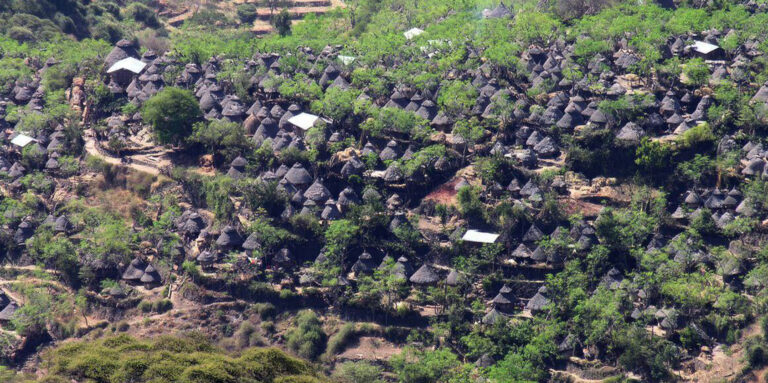
Konso, part of southern Ethiopia, is renowned for its ancient cultural terrace farming system designed to cope with harsh environmental conditions. However, since 2016, the area has suffered severe droughts marked by three consecutive years of inadequate rainfall, worsening the persistent water shortages that fuel conflict, Dr. Tirsit explained.

These insights were shared during the second stakeholder workshop of the Gender, Climate Change and Nutrition (GCAN) initiative, organized by the Forum for Social Studies (FSS). The event focused on the intersections of gender and climate impacts, featuring a study titled “The Nexus Between Climate Change, Gender, and Mobility in Southern Ethiopia,” authored by Tirsit.

The research highlights that in Konso’s rural communities, the burden of collecting water falls largely on women and young girls. Due to water scarcity, these individuals must walk four to five hours daily to remote, often unsafe water sources. This exhausting task has serious consequences, including girls dropping out of school due to the time-consuming water collection.

Moreover, the pressure of domestic labor leads many young girls to seek early marriage as an escape from relentless household duties, Tirsit notes. The study emphasizes that climate change impacts are “disproportionate” because of entrenched gender roles and societal expectations.

Tirsit links this local resource crisis directly to social instability and conflict. Konso’s farming communities depend heavily on rain-fed agriculture, which deteriorates sharply with prolonged droughts. As rains fail, displaced populations increasingly migrate in search of alternative water and fertile land.

Geographically, only two of Konso’s five districts have perennial rivers, exacerbating regional water scarcity. This uneven resource distribution forces communities from dry areas to encroach temporarily or permanently on fertile lands traditionally used by other ethnic groups, often sparking disputes.

Although conflicts are commonly framed as ethnic due to Ethiopia’s federal system linking land to ethnicity, the study shows they primarily represent “resource conflicts” over essential water and land. The conflicts since 2016 have caused extensive displacement and loss of life, representing extreme consequences of ongoing resource depletion, climate change–intensified droughts, and population pressures.

Tirsit describes mobility as an emergent adaptation strategy, with migration becoming crucial when local agriculture can no longer sustain livelihoods.

The study also critiques the use of the term “climate change” as potentially being a donor-driven “buzzword” detached from local realities. From an anthropological perspective, it asks what climate change means for affected communities. Locals interpret it through tangible experiences such as extended dry seasons, unusual flooding, rising temperatures, or disrupted rainy seasons—not abstract scientific concepts.