Tuesday, May 12, 2026
Home Blog Page 638

Awash Bank awards innovative entrepreneurs

0

Awash Bank has concluded its second “Tatariwochu/Qaxaleewwan” entrepreneurship competition, recognizing the vital role of small and micro businesses in Ethiopia’s economic future. The competition, aimed at fostering innovation and addressing unemployment, culminated in an awards ceremony celebrating the achievements of young Ethiopian entrepreneurs.

Awash Bank CEO Tsehay Shiferaw highlighted the bank’s 30-year commitment to contributing to Ethiopia’s economic development and improving the lives of its citizens. She emphasized the success of the first competition’s winners, who have successfully implemented their projects using loans facilitated by the bank.

This year’s competition provided all participants with training in essential business skills, including developing sustainable business plans, presentation techniques, and communication skills. The top eight finalists engaged in intense competition, receiving additional training to transform their ideas into viable businesses.

The top five winners received prizes ranging from 200,000 to one million Birr, along with eligibility for collateral-free loans of up to five million Birr, depending on their project’s needs. Contestants ranking from 6th to 8th place were also awarded prizes ranging from 80,000 to 100,000 Birr.

The winner of the second round of the competition received 1 million ETB and a clean loan of up to 5 million ETB to scale up the business.

Awash Bank is providing ongoing support to the winners through designated relationship managers, assisting them in securing loans and successfully launching their businesses. The bank has partnered with “First Consult” to lead the competition for the next two years. The competition encourages entrepreneurs who have creative skills but could not implement them due to lack of finance. The bank is dedicated to providing sustainable support to entrepreneurs, addressing challenges related to initial and working capital and skill development.

The competition is open to any youth who have problem-solving or business ideas and who are above 18 years of age or above the tenth grade[1][5]. Registration for the second round of the competition was open from October 23 to November 23, 2023. The registration deadline for the second round of this Awash Bank Entrepreneurship Competition is December 10, 2023!

While there are only a few commercial banks in Ethiopia that are active in the support ecosystem, Awash Bank runs its Tatariwochu/Qaxaleewwan youth business training program.

Dashen Bank, M-Pesa, CashGo team up to simplify international remittances

0

Dashen Bank has partnered with M-Pesa Safaricom and CashGo to launch a streamlined international remittance service, making it easier and more efficient for Ethiopians to send and receive money from abroad. The partnership, officially launched on February 5, 2025, integrates Dashen Bank’s financial infrastructure with M-Pesa’s mobile money platform and CashGo’s digital transfer technology.

The new service allows users to conveniently send and receive international money transfers directly through the CashGo mobile app using the M-Pesa network, reducing the complexities and costs associated with traditional remittance methods. Under the agreement, Dashen Bank will serve as the exclusive settlement and acquiring bank, handling remittance transactions received via CashGo. CashGo will provide the digital remittance platform that facilitates the transfer of funds, while M-Pesa Safaricom will ensure that customers can access their funds instantly through their M-Pesa mobile money accounts.

To celebrate the launch, Dashen Bank is offering a 10% additional markup on average exchange buying rates for a limited time. M-Pesa Safaricom is also providing one gigabyte of internet access to users of the new service.

Dashen Bank’s Chief Executive Representative and Chief Retail and MSME Officer, Yingalem Akanaw, highlighted the bank’s commitment to facilitating remittances and its contribution to Ethiopia’s socio-economic development. Dashen Bank’s Chief Digital and Information Officer, Yohannes Million, explained how the service simplifies international money transfers, enabling users to easily send and receive funds through the CashGo app and the M-Pesa option.

Elsa Muzollini, CEO of M-Pesa Safaricom, stated that the collaboration aligns with the company’s mission to promote financial inclusion and provide innovative digital financial solutions.

The collaboration between Dashen Bank, M-Pesa Safaricom, and CashGo is expected to significantly improve access to reliable and affordable international remittance services for millions of Ethiopians, allowing recipients to access their money instantly on their phones, enhancing financial accessibility and ease of use.

Ethiopian youth empowered through freelancing program, addressing digital skills gap

0

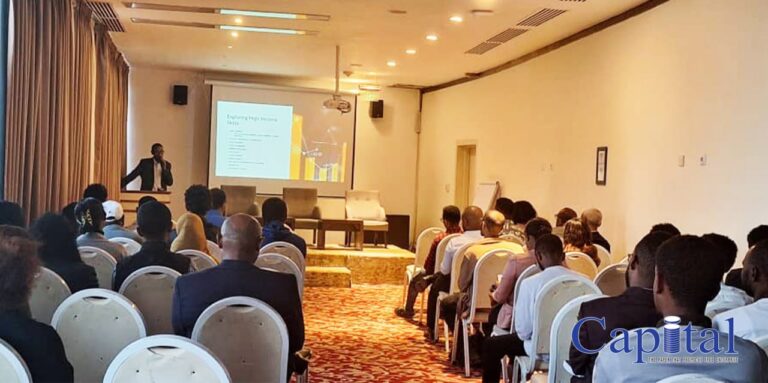
A recently concluded freelancing initiative has successfully equipped hundreds of young Ethiopians with the skills and knowledge to pursue online freelance careers, addressing the critical digital skills gap and fostering economic growth in the country. The program, which included an intensive series of webinars, targeted aspiring and beginner freelancers under the age of 35, with a focus on achieving 40% female representation.

According to Nebiu Enquanhone, PMP and National Consultant for the NTF V Ethiopia ITO/BPO & Freelancing Project, the primary goal was to “empower a cohort of 150-300 young Ethiopian aspiring or beginner freelancers… to build successful online freelance careers.” However, the webinar series attracted 350 participants which shows the hunger and need for these skills. Participants gained expertise in high-demand freelance categories, including content creation, marketing & sales, data management, customer service, design & development, and transcription.

Key achievements of the project included raising awareness about freelancing as a viable career path, equipping participants with essential skills for online success, fostering a strong community of freelancers for networking and support, and providing access to valuable resources. “We’re incredibly proud of the impact this project has had on the lives of young Ethiopians and the growth of the freelance ecosystem in the country,” Nebiu said.

Challenges during implementation included ensuring reliable internet connectivity across all regions and addressing potential language barriers. Despite these obstacles, the online format proved effective in reaching a wide audience and providing accessible learning opportunities.

The project aligns with the International Trade Centre’s (ITC) NTF V Program objectives by promoting sustainable job creation and economic development through technology and innovation. The development of a skilled freelance workforce can contribute significantly to Ethiopia’s economic growth by increasing export potential, attracting foreign investment, and fostering innovation.

Key takeaways from the initiative highlight the potential for empowering youth through freelancing, the high demand for digital skills, the significant potential for economic growth through a thriving freelance sector, the importance of digital skills development, the effectiveness of online learning, and the need for continued support for aspiring freelancers.

Several platforms for Ethiopians to start freelancing include Upwork, Fiverr, and Ethio Freelancing. Some Ethiopians have been able to establish their own online businesses and can work with international clients. Digital Livelihoods in Ethiopia is another program partnering with local refugees to equip them with advanced ICT skills and experiential learning for income generation. Skills.et is an online platform connecting Ethiopian freelancers and has raised a seven-figure ETB in a seed round. Gebeya Inc. and UNHCR have teamed up to establish a refugee talent cloud called “Boundless Skills” to unlock the potential of the digital economy for businesses and refugees.

This initiative demonstrates the transformative potential of freelancing in Ethiopia, providing a pathway for young people to achieve financial independence and contribute to the country’s economic growth. It also underscores the importance of continued investment in digital skills development and the creation of sustainable support systems for aspiring freelancers.

Israel pledges support to unlock Ethiopia’s economic potential through enhanced cooperation

0

A recent visit by a high-level Israeli delegation to Ethiopia has underscored the commitment of both nations to strengthen cooperation and unlock Ethiopia’s vast economic potential. Discussions between Israeli officials and their Ethiopian counterparts centered on key sectors such as water, energy, and mining, identifying both opportunities and challenges for increased investment and partnership.

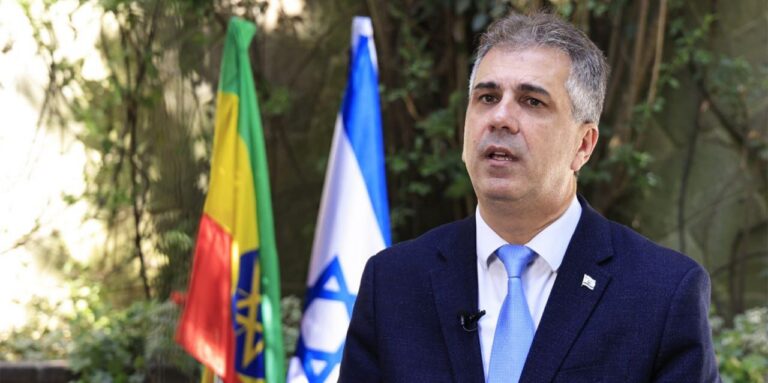
Eli Cohen, Israel’s Minister of Energy and Infrastructure, emphasized his country’s readiness to support Ethiopia in realizing its economic aspirations. While acknowledging that some Israeli companies operating in Ethiopia face hurdles, he expressed optimism that enhanced government-to-government cooperation could overcome these obstacles and pave the way for a stronger economic alliance.

“Ethiopia has a lot of resources but still cannot fully unlock its potential,” Cohen stated, highlighting Israel’s global leadership in innovation and its willingness to share its expertise. He pointed to Israel’s success in transforming arid landscapes into water-sufficient regions as a model for potential collaboration.

The discussions focused on government-to-government cooperation, particularly in the energy sector, with the aim of breaking down barriers and creating a conducive environment for Israeli companies to thrive in Ethiopia. Cohen expressed his expectation for tangible results from recent agreements within the next two years.

During the visit, Cohen signed an agreement with Ethiopia’s Minister of Water and Energy, Habtamu Itefa, to foster cooperation in the energy, water, and innovation sectors. This agreement aims to strengthen bilateral relations and facilitate the inclusion of Israeli companies in infrastructure expansion projects across Ethiopia. Areas identified for potential collaboration include groundwater exploration and extraction, wastewater treatment technologies, and renewable energy development, particularly solar power generation in rural areas.

Minister Cohen also held talks with State Minister of Mines, Million Mathewos, Minister of Irrigation and Lowlands, Abraham Belay, and Minister of Innovation and Technology, Belete Molla. Representatives from the World Bank, the African Bank, and the United Nations Development Programme also participated in consultations with Israeli and Ethiopian business leaders.

These collaborative efforts signify a renewed commitment to strengthening economic ties between Ethiopia and Israel, leveraging Israeli expertise to support Ethiopia’s development goals. As Leo Vinovezky, Israel’s Director of Economic Affairs for Africa, Latin America, and the Caribbean, noted, Ethiopia has been a key player in Israel’s broader policy in Africa, serving as a strategic partner in the Horn of Africa. The strengthened partnership promises to foster economic growth, innovation, and sustainable development for both nations.